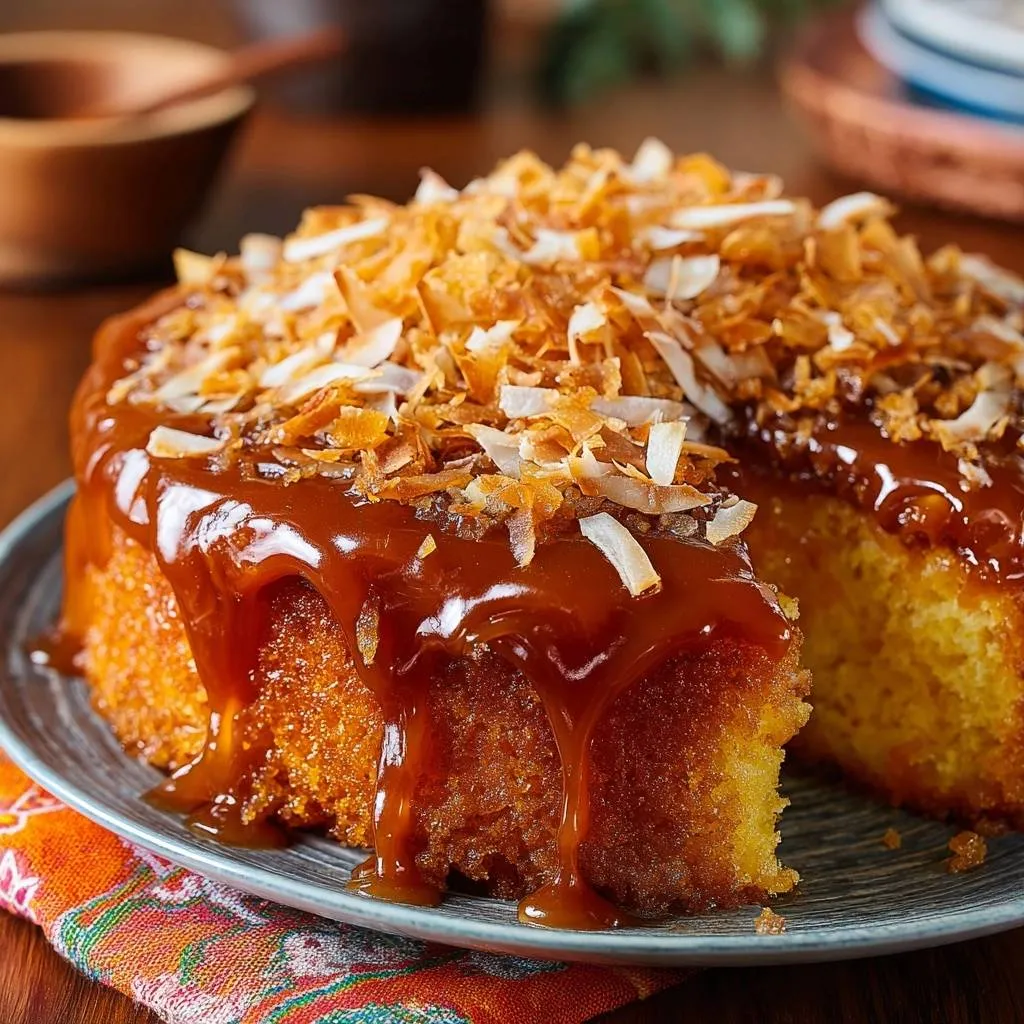
Tired of coconut cakes that turn out dry and crumbly? This toasted coconut caramel cake fixes that frustration fast. You get a tender, moist crumb every single time, thanks to a simple post-bake soak with warm caramel-coconut syrup. It locks in moisture without making things soggy.
So why does this work so well? Most recipes skip the soak, leaving the cake to dry out as it cools. Here, the warm syrup seeps deep into poked holes, creating that perfect juicy texture. Plus, the toasted coconut adds irresistible crunch on top.
The real secret lies in using the skewer for those halfway-deep holes right after baking. It lets the syrup travel through osmosis, hydrating the crumb evenly. You’ll taste the difference in every bite of this coconut caramel cake.
Core Components for Toasted Coconut Caramel Cake
Cake Base: Flour, Butter, Coconut Milk Breakdown
Start with 2 cups all-purpose flour for structure that holds up to the soak. It gives a sturdy yet tender crumb. In addition, 1 cup softened unsalted butter creams with 1 cup granulated sugar to trap air for lift.
Four large eggs add richness and bind everything. However, room-temperature eggs prevent curdling when you mix in 1 cup full-fat coconut milk. Full-fat keeps the batter moist and tropical; light versions make it drier.
Don’t skip the 2 teaspoons baking powder and 1/2 teaspoon salt. They ensure even rise and balance flavors. Source quality coconut milk from the Asian aisle for creamier results.
Caramel Coconut Soak: Brown Sugar Magic
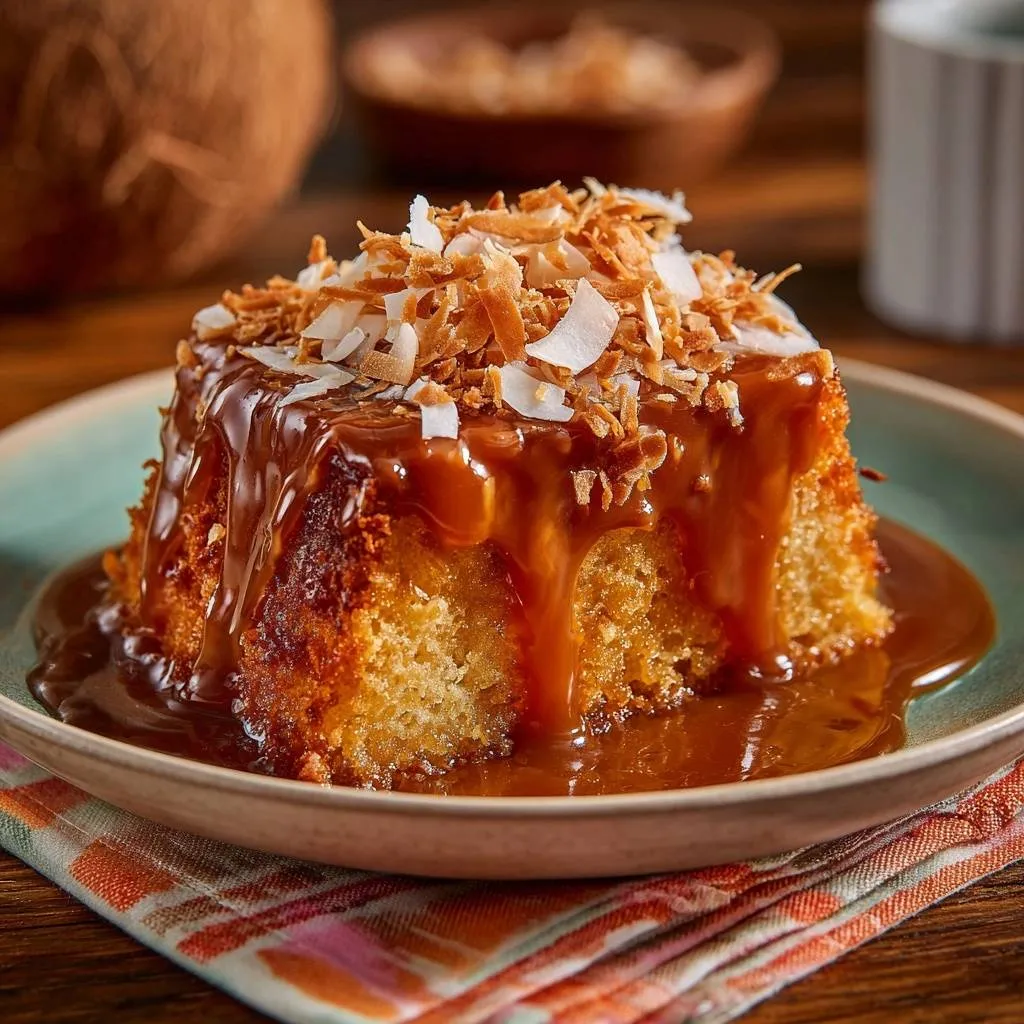
Brown sugar’s molasses in 1 cup brings chewiness and deep caramel notes to the soak. It melts smoothly with 1/2 cup butter over medium heat. Therefore, it creates a sticky syrup that clings to the cake.
Stir in 1/2 cup coconut milk and 1/2 cup sweetened condensed milk next. The condensed milk thickens without separating, thanks to its concentrated fats. Simmer 3 to 4 minutes until it coats the spoon lightly.
Keep ratios exact to avoid sogginess. This emulsion stays stable, so the soak penetrates perfectly without pooling.
Toasted Shredded Coconut: Crunch Factor
Two cups sweetened shredded coconut toasts to golden perfection in a dry skillet. The sugar helps it brown evenly and adds subtle sweetness. Therefore, it contrasts the moist cake beautifully.
Stir over medium heat for 4 to 5 minutes until fragrant and nutty. Untoasted stays chewy and bland, so don’t skip this. Store extras in an airtight jar for up to a week.
Pro tip: Toast in small batches to prevent burning and keep that fresh crunch.
Science of Moist Toasted Coconut Caramel Cake
Post-Bake Soak Locks in Tenderness
Poking 20 to 30 holes halfway deep lets warm syrup absorb via osmosis. The cake’s warm pores open up, pulling in moisture fast. Cold soak sits on top and wastes away.
Toasting triggers the Maillard reaction, building nutty flavors in the coconut. However, apply the soak warm to match the cake’s temperature for even penetration. You’ll see the crumb transform from dry to lush.
This method keeps the cake moist for days. It’s simple science that beats traditional baking every time.
Emulsion Stability in Caramel Coconut Syrup
Butter’s fat emulsifies with the milks and sugar during simmering. Brown sugar’s acidity stabilizes the mix, preventing separation. Therefore, it stays smooth for pouring.
Simmer gently to blend without breaking. If ratios shift, it curdles; stick to 1:1:1 for butter, milks, and sugar base. This creates a glossy soak that shines on the cake.
Equipment Essentials for Perfect Results
9-Inch Round Pan and Wire Rack Precision
A metal 9-inch round pan conducts heat evenly for uniform baking. Glass holds heat too long and dries edges. Grease and flour it well to release the cake cleanly.
Transfer to a wire rack after 10 minutes cooling. It prevents steam pockets that make the bottom gummy. Use a skewer for poking; it’s thicker than a toothpick for better holes.
Mixing Tools: Stand Mixer vs Handheld
Beat butter and sugar 3 minutes with a stand mixer paddle for max air incorporation. Handheld works too, but tireless mixing lifts the cake higher. Therefore, fluffy batter bakes tender.
Fold dry ingredients with a spatula to avoid overmixing. A heavy-bottomed saucepan heats caramel evenly without hot spots.
Step-by-Step: Building Toasted Coconut Caramel Cake
Phase 1: Creaming Butter and Batter
Preheat your oven to 350 degrees F. Grease and flour a 9-inch round pan thoroughly. In a large bowl, beat 1 cup softened butter with 1 cup sugar until pale and fluffy, about 3 minutes.
Add 4 eggs one at a time, beating well after each. Mix in 1 cup coconut milk and 1 teaspoon vanilla. The batter smells tropical already.
Whisk 2 cups flour, 2 teaspoons baking powder, and 1/2 teaspoon salt. Fold into wet mix until just combined. Pour into pan; smooth the top.
Phase 2: Baking and Initial Cool-Down
Bake 30 to 35 minutes in the center rack. Test with a toothpick; it comes out clean when done. Cool in pan 10 minutes to set structure.
Then invert onto a wire rack. Don’t rush this; immediate removal risks crumbling. The cake feels springy and smells divine.
Phase 3: Caramel Coconut Soak Preparation
While baking, melt 1/2 cup butter with 1 cup brown sugar over medium heat. Stir until dissolved, about 2 minutes. Add 1/2 cup coconut milk and 1/2 cup condensed milk.
Simmer 3 to 4 minutes, stirring often. It thickens to coat a spoon; remove from heat. Warm and glossy, ready for action.
Poking Holes for Deep Moisture Penetration
Poke 20 to 30 holes in the warm cake top and sides with a skewer, halfway deep. Pour 3/4 of the soak slowly, letting it seep in. Wait 30 minutes; it absorbs fully without drips.
Phase 4: Toasting and Final Assembly
Toast 2 cups shredded coconut in a dry skillet over medium heat. Stir 4 to 5 minutes until golden; smells nutty. Sprinkle over cake generously.
Drizzle reserved soak for shine. Slice with a serrated knife for clean cuts. Oh man, that first bite is pure bliss, moist and crunchy.
Avoiding Pitfalls in Toasted Coconut Caramel Cake
Preventing Dry or Gummy Crumb
Overmixing develops gluten, making crumb tough. Fold gently until no flour streaks show. Underbaking leaves gummy centers; use the toothpick test early.
Too much soak sops it up; measure 3/4 precisely. If dry anyway, poke more holes next time. These fixes keep it perfect.
Toasting Without Burning Coconut
Medium heat only, stir every 30 seconds. Larger pans spread heat evenly; small ones scorch fast. If burnt, pick out dark bits and use the rest.
Soak Separation Troubleshooting
Curdling happens from cold ingredients. Whisk vigorously over low heat to re-emulsify. Match all temps to room level first.
Flavor Twists on Toasted Coconut Caramel Cake
Nut Additions for Texture Boost
Toast 1/2 cup chopped pecans with the coconut. It adds buttery crunch without overwhelming. Sprinkle half in batter for hidden bites.
Citrus Zest Swaps for Brightness
Add 1 tablespoon lime zest to the batter. It cuts caramel richness perfectly. Or stir into soak for zingy moisture.
Chocolate Drizzle Variations
Melt 4 ounces dark chocolate, thin with reserved soak. Drizzle for glossy contrast. Keeps it simple yet decadent.
Storage and Make-Ahead for Coconut Caramel Cake
Room Temp vs Fridge Longevity
Store in an airtight container at room temp up to 5 days. It stays moist thanks to the soak. Fridge dries coconut; avoid unless humid.
Freezing Whole Cake Guide
Freeze pre-soak, wrapped tightly, up to 3 months. Thaw overnight, then soak and toast. Portions freeze best in slices for quick treats.
Pairing Sides with Toasted Coconut Caramel Cake
Fruit Compotes for Contrast
Simmer pineapple chunks with sugar for tangy reduction. It balances the caramel sweetness. Ready in 10 minutes, perfect foil.
Creamy Toppings and Whips
Whip coconut cream to soft peaks. It holds without stabilizers if chilled well. Dollop for airy luxury.
Toasted Coconut Caramel Cake FAQ
Can I Use Cake Flour Instead?
Yes, cake flour’s lower protein yields extra tender crumb. Use the same 2 cups, but increase soak slightly for structure. It works great, though all-purpose holds nuts better if adding them.
How to Fix Over-Soaked Cake?
Bake at 300 degrees F for 10 to 15 minutes to evaporate excess. Blot top gently with paper towels first. Prevent by measuring soak precisely and poking fewer holes next time.
Gluten-Free Toasted Coconut Adaptation?
Swap with 1:1 gluten-free flour blend. Add 1/2 teaspoon xanthan gum to batter for binding. Soak stays the same; texture mimics original closely, stays moist 4 days.
Scaling for Layer Cake Version?
Double batter for two 9-inch pans, bake 25 to 30 minutes. Soak each layer with half the syrup post-poke. Yields 12 to 16 servings; stack with cream if desired.
Why Toast the Coconut Separately?
Skillet control gives even golden color and nutty depth without oven hot spots. Faster than baking whole cake top. Save time by pre-toasting and storing.
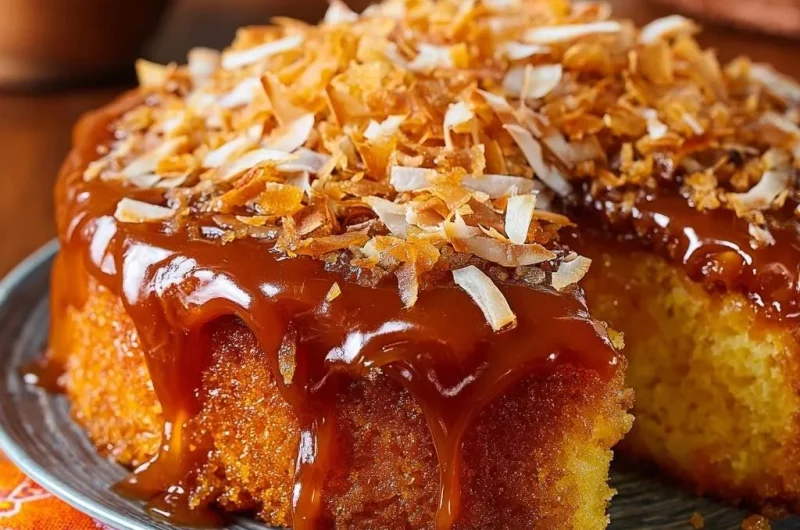
Toasted Coconut Caramel Cake
Course: DessertCuisine: AmericanDifficulty: easy8
servings20
minutes35
minutes60
Minutes450
kcalAmerican
Ingredients
Cake:
2 cups all-purpose flour
1 cup granulated sugar
1 cup unsalted butter, softened
4 large eggs
1 cup coconut milk
1 teaspoon vanilla extract
2 teaspoons baking powder
1/2 teaspoon salt
Caramel Coconut Soak:
1 cup brown sugar
1/2 cup unsalted butter
1/2 cup coconut milk
1/2 cup sweetened condensed milk
Topping:
2 cups sweetened shredded coconut, toasted
Directions
- Preheat oven to 350 degrees F. Grease and flour a 9-inch round cake pan.
- In a large bowl, beat softened butter and granulated sugar until light and fluffy, about 3 minutes. Add eggs one at a time, beating well after each. Mix in coconut milk and vanilla.
- In another bowl, whisk flour, baking powder, and salt. Gradually fold dry ingredients into wet until just combined. Pour batter into prepared pan.
- Bake 30 to 35 minutes until a toothpick inserted in center comes out clean. Cool in pan 10 minutes, then transfer to a wire rack.
- While cake bakes, make the soak: In a saucepan over medium heat, melt butter with brown sugar, stirring until dissolved. Stir in coconut milk and sweetened condensed milk. Simmer 3 to 4 minutes until slightly thickened, then remove from heat.
- Here’s the No More Dry Cake! secret: Poke 20 to 30 holes all over the warm cake top and sides using a skewer or toothpick, going about halfway deep. Slowly pour 3/4 of the warm caramel coconut soak evenly over the cake, letting it seep into holes for full moisture lock-in. Let sit 30 minutes to absorb fully. Reserve remaining soak.
- Toast shredded coconut in a dry skillet over medium heat, stirring 4 to 5 minutes until golden. Sprinkle generously over cake. Drizzle with reserved soak for extra shine. Slice and serve. Cake stays moist for days!
Notes
- Poke holes in the warm cake and pour soak slowly for perfect moisture absorption. Cake stays moist for days! Toast coconut carefully to avoid burning.