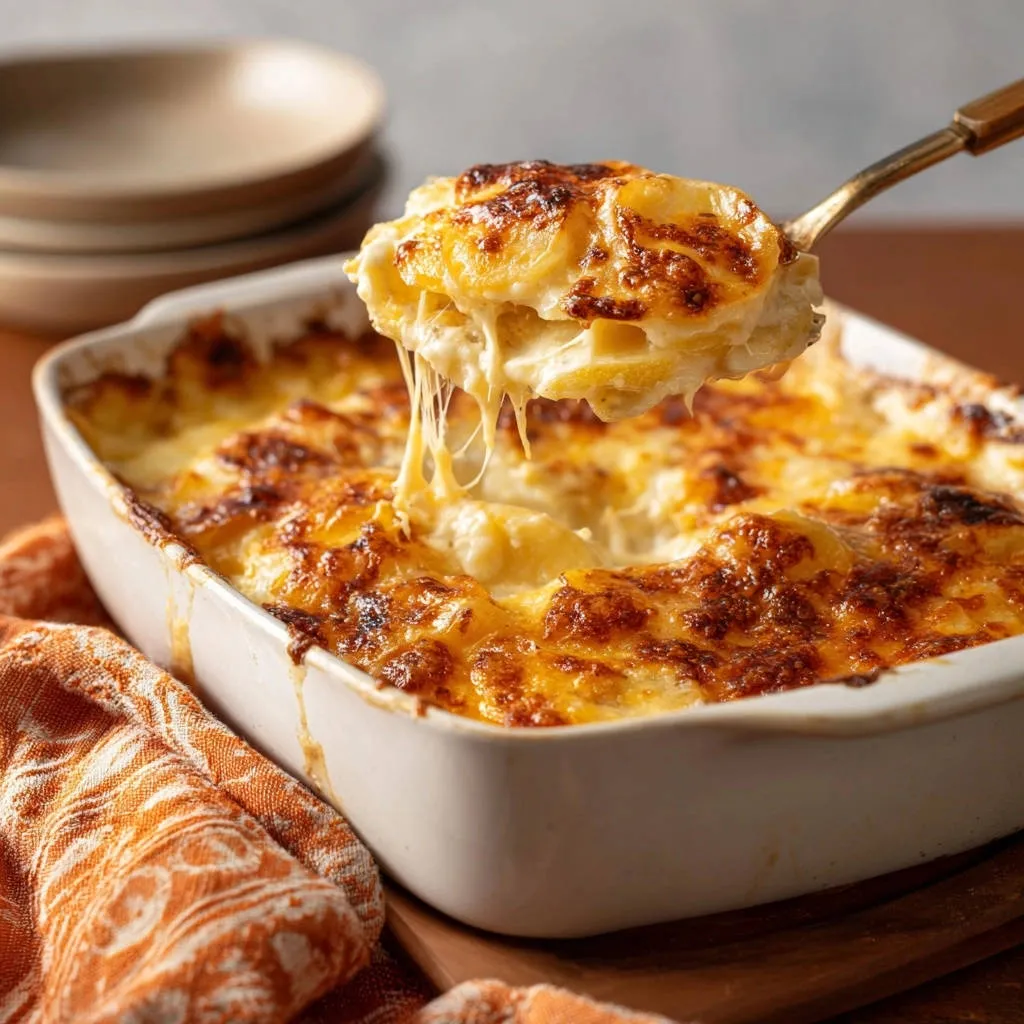
There is nothing more frustrating than pulling a pan of scalloped potatoes from the oven only to find the edges bubbling beautifully and the center a watery, separated mess. I learned the hard way that the secret to truly luxurious texture lies in stabilizing the sauce base before the baking even begins.
This foolproof method, rooted in classic technique, guarantees that your Ultimate Cheesy Scalloped Potatoes will be perfectly creamy, never soupy, every single time. Once you master this simple trick, it will forever change how you approach this beloved holiday side dish.
The Game-Changer: Why This Recipe Solves the Soupy Potato Problem
The Culinary Science of Sauce Stability
Potatoes are approximately 80% water, and during the long, slow baking process, they release a significant amount of moisture into the surrounding sauce. This excess liquid dilutes a simple cream mixture, causing it to break, curdle, or turn thin.
Our solution utilizes a classic French roux-a cooked paste of butter and flour-to create a stable matrix. This framework locks in the liquid dairy, preventing dilution and ensuring the sauce maintains its luxurious thickness even after the potatoes release their moisture.
Unlocking the “Never Soupy” Secret: Starch Retention
While the roux handles the chemical stability of the liquid, the natural starch found on raw potatoes provides vital mechanical support. When you rinse sliced potatoes, you wash away this binding agent.
In this recipe, we intentionally leave the natural potato starch intact. As the starch heats and gelatinizes, it works alongside the roux to form a dense, creamy bond around each slice, guaranteeing an incredibly rich texture in the final dish.
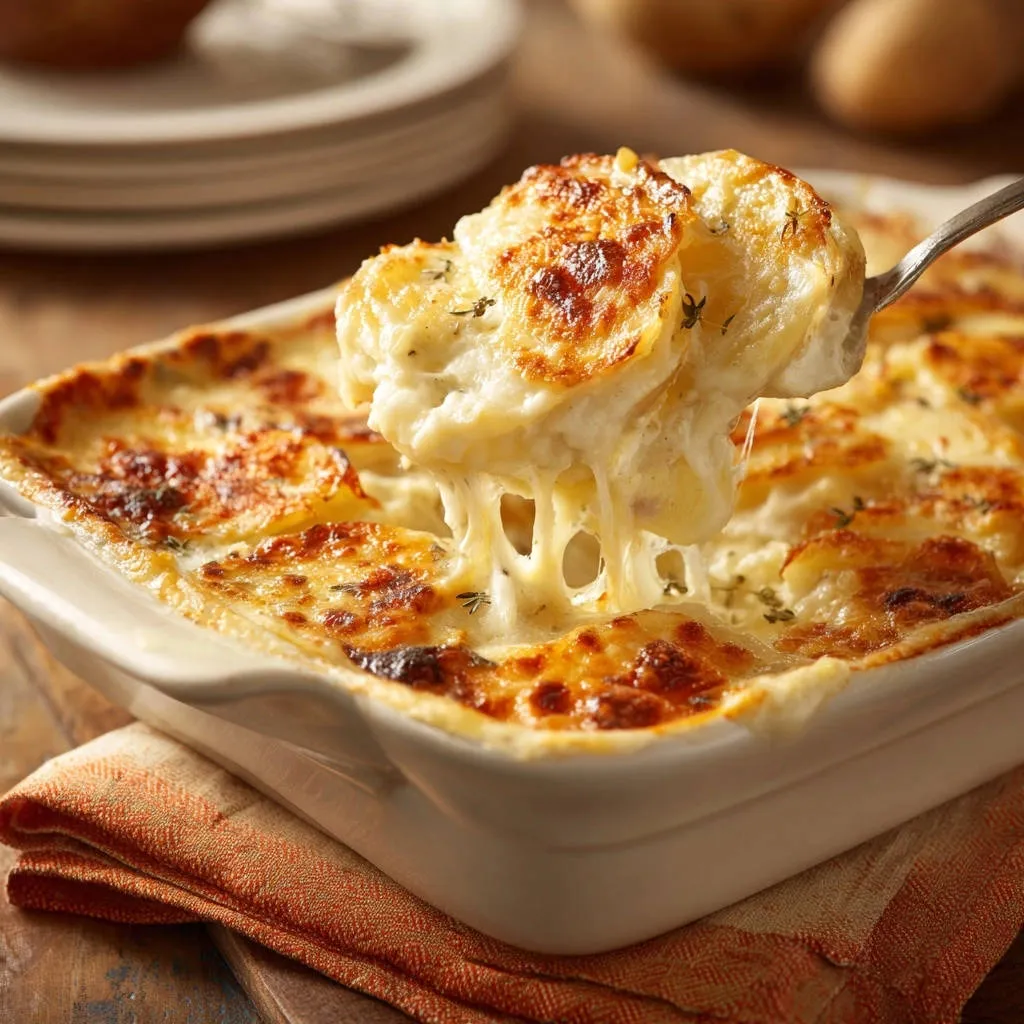
The Building Blocks of Flavor: Essential Ingredients for the Ultimate Dish
Selecting the Right Spuds: Russets vs. Yukon Golds
Russet potatoes are excellent due to their high starch content, which helps them almost melt into the sauce, creating a fluffy and cohesive final texture.
Yukon Golds are a fantastic alternative, offering a slightly sweeter, buttery flavor profile and a waxy texture that helps them hold their clean slice shape better. Regardless of choice, aim for about three pounds total and focus on uniform size for even cooking.
The Perfect Cheese Blend for Melt and Flavor
Gruyère cheese is my top recommendation because it provides superior stretch and a sophisticated, nutty flavor that deeply complements the creamy sauce and nutmeg.
If you opt for a sharp cheddar, ensure it is high quality to provide that necessary tang. Crucially, always shred your own cheese from the block; pre-shredded cheese contains anti-caking agents that inhibit a truly smooth, velvety melt, resulting in a grainy sauce.
Dairy and Seasoning for Maximum Richness
The 2:1 ratio of heavy cream to whole milk provides optimal richness without allowing the final casserole to become overly heavy or greasy.
A subtle pinch of freshly grated nutmeg is non-negotiable; it is the traditional secret weapon that enhances the flavor of both the dairy and the starchy potato. Freshly minced garlic adds essential aromatic depth, ensuring the dish is savory and balanced.
Crafting Perfection: Step-by-Step Ultimate Cheesy Scalloped Potatoes
-
Preparation: Thin Slicing and Starch Retention
Preheat the oven to 375°F and lightly grease a 9×13 inch baking dish. Focus on slicing the potatoes uniformly thin-1/8 inch thickness is ideal-using a mandoline if available for best consistency.
CRITICAL NOTE: Do not rinse the slices. Pat them dry if needed, but the natural starch must remain on the surface to aid in binding the final sauce, as detailed in the recipe’s USP.
-
The Stabilization Step: Building the Roux
In a medium saucepan, melt the butter over medium heat. Whisk in the flour and cook for exactly one minute, ensuring the smooth roux paste forms and you cook out the raw flour taste.
This simple step is the foundation of the non-soupy result, creating an essential stable base before the potatoes start releasing moisture during the oven process.
-
Seasoning and Thickening the Dairy
Slowly whisk in the heavy cream and milk until the mixture is completely smooth. Bring the mixture to a simmer, stirring constantly for 2-3 minutes until the sauce visibly thickens and coats the back of a spoon (Nappe consistency).
Remove the pan from the heat immediately. Stir in the minced garlic, salt, pepper, and the crucial pinch of nutmeg.
-
Layering for Even Saturation (The Coating Technique)
Instead of layering dry potatoes and pouring the sauce over the top, dip and gently toss the raw potato slices directly into the warm sauce until they are fully coated.
This coating technique guarantees that every single piece of potato is saturated with the binding power of the thickened roux, ensuring uniformity in texture and flavor across the entire casserole.
-
Assembly and Initial Bake
Layer the coated potatoes and one-third of the main cheese mixture in thirds across the prepared baking dish. Pour any remaining sauce from the bowl over the top layer.
Cover the dish tightly with aluminum foil and bake for 45 minutes. This steaming process is essential for perfectly tenderizing the potatoes before the high heat browning stage.
-
The Golden Finish and Resting Period
Remove the foil. Sprinkle the final 1/2 cup of shredded cheese evenly over the top layer and return the dish to the oven, uncovered.
Bake for an additional 20 to 25 minutes, or until the topping is deeply golden brown and bubbly. Allow the finished dish to rest for a mandatory 10 minutes before serving; this crucial step permits the dairy sauce to fully set up and prevents it from running when sliced.
Chef’s Secrets: Elevate Your Ultimate Cheesy Scalloped Potatoes Game
-
Mastering Mandoline Use: Uniform slicing is the most important mechanical step for scalloped potatoes. If you use a mandoline to achieve that perfect 1/8-inch thickness, always wear a protective slicing glove. Uneven slices will inevitably lead to some pieces being crunchy while others turn mushy.
-
Pre-Baking Temperature Check: When you remove the foil after 45 minutes, gently pierce the center with a fork or cake tester to check for tenderness. If the potatoes still feel firm in the center, return them to the oven covered for another 10 to 15 minutes before proceeding to the browning stage.
-
For a Garlic Power Boost: To achieve a mellow, deeply infused garlic flavor, gently sauté the minced garlic in the melted butter (before adding the flour) for 30 seconds. This step removes the sharp, raw edge of the garlic and infuses the entire roux base with a sweet, savory aroma.
-
The Final Garnish: Right before serving the rich casserole, a light sprinkle of finely chopped fresh chives or parsley adds a bright green contrast. This garnish cuts through the intensity of the cream and cheese, offering a welcome lift to the flavor profile.
Troubleshooting Common Scalloped Potato Issues
Why is My Sauce Grainy or Separated?
This is typically caused by adding the cheese too early or too quickly to liquid that is too hot, which causes the milk solids to tighten and seize. Always remove the dairy sauce from direct heat before stirring in the shredded cheese, allowing the residual warmth to melt it slowly and gently.
If separation occurs during the baking process, it may indicate that the dish was slightly over-baked during the initial covered stage, causing the fat and liquid to separate.
The Edges Are Burning Before the Center is Tender
Ensure your baking dish is the correct size (9×13 inches) and that the center layers are not too thick. If you notice early browning, it means the edges are drying out faster than the center is steaming.
To prevent this, you can loosely wrap the edges of the baking dish with an extra layer of aluminum foil during the first 45 minutes of covered cooking.
Potatoes Tasted Raw Even After the Full Bake Time
Raw centers are almost always the result of slicing the potatoes too thickly or inconsistently, preventing the steam from fully penetrating the middle layers. If your slices are thicker than the recommended 1/8 inch, you must significantly increase the covered baking time.
Start by adding 10 to 15 minutes to the initial covered bake (up to 75 minutes total) to allow the steam to fully tenderize the potatoes before the browning stage begins.
Make-Ahead Magic and Perfect Serving Suggestions
Can I Prepare Ultimate Cheesy Scalloped Potatoes Ahead of Time?
Yes, this recipe is perfect for preparation up to 24 hours in advance. Fully assemble the entire dish, cover it tightly with foil, and refrigerate it immediately after assembly.
Since the roux is already stabilized, the dairy sauce holds up remarkably well under refrigeration. When ready to bake, allow the dish to sit at room temperature for 30 minutes, and then add 10 to 15 minutes to the initial covered bake time to account for the chilled temperature.
Storing, Freezing, and Reheating Leftovers
Store leftovers in an airtight container in the refrigerator for up to four days. For reheating, individual portions can be warmed gently in the microwave.
Alternatively, cover the entire dish with foil and heat in a 350°F oven until warmed through. Freezing is generally not recommended for potato casseroles with dairy, as the cream sauce often separates upon thawing, resulting in a watery, gritty texture.
The Ideal Main Dish Pairings
Scalloped potatoes are intentionally rich, making them the perfect, satisfying counterpoint to lean or robust proteins. They shine alongside holiday staples like roasted turkey or a honey-baked ham.
For a weeknight meal, pair these creamy potatoes with a simple pan-seared chicken breast or a beautifully crusted beef tenderloin.
Ultimate Cheesy Scalloped Potatoes FAQs
Why does the recipe use both heavy cream and milk?
Using a blend of heavy cream and whole milk provides optimal richness while preventing the final au gratin potatoes from feeling overly heavy or saturated with fat. Heavy cream adds necessary stability and fat content, while the whole milk contributes moisture and keeps the overall texture luxurious yet light.
Are Russets essential for this recipe?
Russets are highly recommended because their high starch content further contributes to the overall creamy texture and body of the dish. However, Yukon Golds are a fantastic, slightly sweeter alternative if you prefer the potatoes to maintain a cleaner, more defined shape after baking.
Always avoid waxy new potatoes, as they lack the starch necessary to absorb the sauce properly.
Can I make this gluten-free?
Absolutely. The all-purpose flour used to create the foundational roux can be replaced 1:1 with a high-quality all-purpose gluten-free flour blend. Ensure your chosen blend contains xanthan gum for the best thickening and stability results.
Ready to Impress? Share Your Ultimate Cheesy Scalloped Potatoes Masterpiece!
You now have the exact, expert technique required to bypass common scalloped potato pitfalls and achieve guaranteed creamy results every time. Say goodbye to soupy middles and separated sauces forever.
By focusing on proper sauce stabilization and crucial potato starch retention, you are now equipped to deliver the creamiest, most flavorful Ultimate Cheesy Scalloped Potatoes possible.
Dive into this recipe and impress your guests and family with a truly unforgettable holiday side. If you try the recipe, please share your success and favorite pairings!
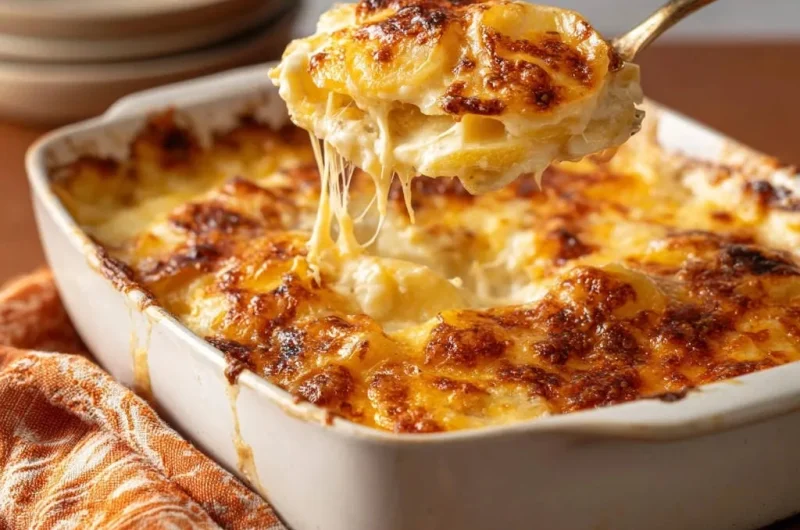
Ultimate Cheesy Scalloped Potatoes
Course: Side DishCuisine: American CuisineDifficulty: easy8
servings20
minutes1
hour60
minutesAmerican Cuisine
Ingredients
3 large Russet or Yukon Gold potatoes (about 3 pounds total)
3 tablespoons unsalted butter
3 tablespoons all-purpose flour
2 cups heavy cream
1 cup whole milk
2 cloves garlic, minced
1/2 teaspoon salt
1/4 teaspoon black pepper
Pinch of nutmeg
2 cups shredded Gruyere or sharp cheddar cheese (or a blend)
1/2 cup extra shredded cheese for topping
Directions
- Prepare the Potatoes. Preheat the oven to 375 degrees F. Lightly grease a 9×13 inch baking dish. Peel the potatoes and slice them uniformly thin (about 1/8 inch thick). A mandoline slicer works best for this consistency. Important Tip: Do not rinse the sliced potatoes. Leaving the starch on the potatoes actually helps bind the final sauce and prevents weeping.
- Build the Sauce Base (The Non-Watery Fix). In a medium saucepan, melt the butter over medium heat. Whisk in the flour and cook for 1 minute until a smooth paste (a roux) forms. Slowly whisk in the heavy cream and milk until the mixture is smooth and combined. This initial roux step is the trick that guarantees thickness by stabilizing the liquid before the potatoes release their moisture during baking.
- Season and Thicken the Sauce. Bring the mixture to a simmer, stirring constantly, and cook for 2 to 3 minutes until the sauce has noticeably thickened and can coat the back of a spoon. Remove from the heat. Stir in the minced garlic, salt, pepper, and nutmeg.
- Layer the Casserole. Dip the raw potato slices directly into the warm sauce and toss gently until they are all fully coated. This ensures every layer has the thickening power of the roux.
- Assemble. Layer one third of the sauced potatoes evenly across the prepared baking dish. Sprinkle with one third of the 2 cups of shredded cheese. Repeat this layering process twice more until all potatoes and cheese are used. Pour any remaining sauce from the bowl over the top layer.
- Bake. Cover the baking dish tightly with aluminum foil. Bake for 45 minutes to steam and soften the potatoes completely.
- Finish the Dish. Remove the foil. Sprinkle the final 1/2 cup of shredded cheese evenly over the top. Return the dish to the oven, uncovered, and bake for an additional 20 to 25 minutes, or until the potatoes are tender when pierced with a fork and the cheese topping is bubbly and deeply golden brown. Let rest for 10 minutes before serving.
Notes
- Do not rinse the sliced potatoes; the starch helps bind the sauce. Using a roux ensures a creamy, non-watery center.