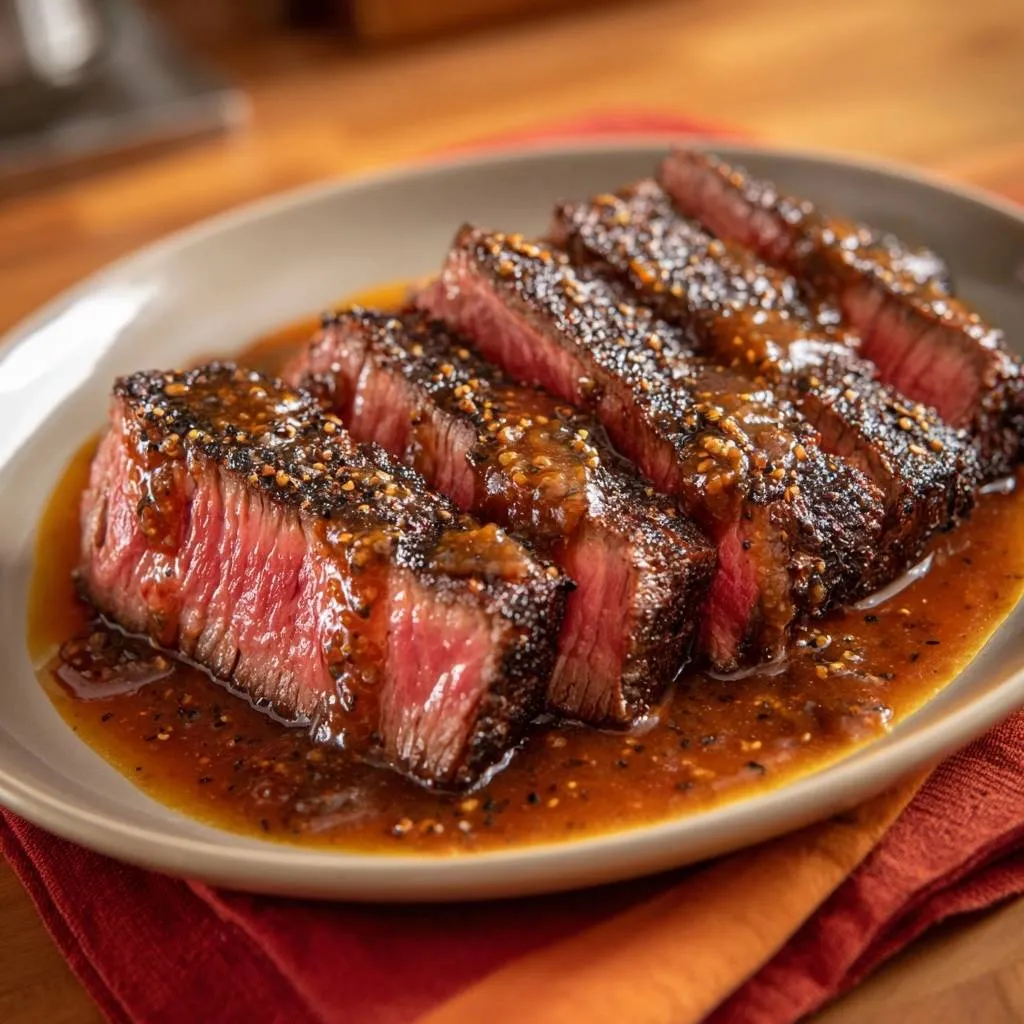
Picture this: you’re aiming for that perfect seared pepper steak to impress on date night, but you end up with dry, tough meat that spills juices everywhere. Frustrating, right? This seared pepper steak recipe fixes that with a foolproof sear and rest method. You’ll get pink, tender centers under a crunchy pepper crust every time, and it takes just 25 minutes of active cooking for two servings.
Therefore, busy cooks love it because you control the freshness and quality, beating steakhouses hands down. Each serving packs about 600 calories and high protein from the ribeye. The science of the sear and rest locks in all that goodness, so no more disappointments.
Here’s the expertise booster: pat those steaks bone-dry first. That simple step removes surface moisture, preventing steam and guaranteeing the crispiest crust on your seared pepper steak. Oh man, it makes all the difference.
Why Seared Pepper Steak Succeeds
The Maillard reaction kicks in during the high-heat sear, browning proteins and sugars for nutty, deep flavors that trap juices inside. Ribeye’s marbling melts just right, keeping things juicy unlike pan-fried failures that steam instead of sear. In addition, coarsely crushed peppercorns add bite without overwhelming.
Most folks mess up pepper steak sear by skipping the dry surface or rushing the rest. However, this method nails it. You’ll notice the difference in every juicy bite.
Choosing Ribeye for Seared Pepper Steak
Ribeye shines in seared pepper steak thanks to its fat cap and marbling. That intramuscular fat bastes the meat during the sear, ensuring juiciness. Sirloin, being leaner, often turns dry under high heat.

Therefore, stick to 1-inch thick cuts. They cook evenly without charring the outside before the center hits medium-rare. Perfect every time.
Resting Transforms Seared Pepper Steak
Resting for 8-10 minutes under a loose foil tent lets juices redistribute from the center to the edges. Skip it, and everything spills out when you slice. Aim for 130F internal for medium-rare; carryover cooking finishes the job.
So, that physics keeps your seared pepper steak tender, busting the myth that immediate slicing preserves moisture. It doesn’t.
Essential Ingredients for Seared Pepper Steak
Start with two 12-ounce, 1-inch thick ribeye steaks. Source quality ones with good marbling for that melt-in-your-mouth texture in seared pepper steak ingredients. Next, 3 tablespoons coarsely crushed black peppercorns provide the signature crust; crush them by hand to release oils.
In addition, 1 teaspoon kosher salt draws out moisture for better browning. Use 2 tablespoons neutral oil like avocado, with its high smoke point around 520F, to handle the intense heat without burning.
For the sauce, grab 4 tablespoons unsalted butter, divided, to control saltiness and emulsify smoothly. Finally, 1/2 cup beef broth builds umami; swap veggie broth if you want vegan. These seared pepper steak ingredients transform a simple steak into something special.
Crushed Peppercorns vs. Whole in Sauce
Coarsely crushed peppercorns stick to the steak for a crunchy crust bite. Whole ones in the sauce give subtle pops without grit, releasing aroma compounds as they toast. It’s the perfect balance.
Butter’s Role in Pepper Steak Sauce
Cold unsalted butter, added off heat one tablespoon at a time, creates the monte au beurre emulsion. It thickens the sauce to glossy perfection without breaking. Hot butter would separate it.
Science of the Perfect Sear
Preheat your cast-iron skillet over high heat for 5 minutes until it smokes at 500F or more. A dry steak surface evaporates moisture instantly, forming a no-steam crust via the sear. Add oil when it shimmers; that’s your cue.
Therefore, internal temperature rises during the 8-10 minute rest via carryover cooking. Use a thermometer for precision in seared pepper steak science. It prevents guesswork and dry meat.
Pro tip: ventilate well, as the sear creates smoke. That aroma signals success.
Maillard Magic on Pepper Steak
At 300F and up, Maillard browning on pepper steak creates nutty flavors from proteins and sugars reacting. Peppercorns amplify the savoriness and help seal in juices. You’ll smell it happening.
Why Cast-Iron Excels for Searing
Cast-iron retains heat five times better than stainless, distributing it evenly for consistent crust. It builds flavorful fond for the sauce too. Carbon steel works well; nonstick fails here.
Step-by-Step: Mastering Seared Pepper Steak
Prep phase: pat steaks dry with paper towels. Season with salt, press on crushed peppercorns, and let sit at room temp for 30 minutes. This tempers them for even cooking.
Sear phase: heat skillet screaming hot, add oil, and lay in steaks without crowding. Sear undisturbed 4 minutes for deep crust, flip, and do 3-4 minutes more to 130F.
Rest them tented with foil 8-10 minutes. Meanwhile, build sauce: medium heat, add 1 tablespoon butter and whole peppercorns, stir 1 minute. Deglaze with broth, simmer to reduce by half, then swirl in cold butter off heat until glossy. Slice against the grain and spoon sauce over.
Prep: Dry, Season, Temper Steaks
Pat dry to remove moisture; it evaporates fast for crisp sear. Salt draws out more via osmosis, and 30 minutes at room temp ensures even cooking. Press pepper firmly.
Sear Phase: High-Heat Crust Build
Sear side one 4 minutes undisturbed for golden crust. Flip, 3-4 minutes. No poking; basting with butter is optional for extra flavor.
Critical Rest for Juicy Pepper Steak
Tent loosely with foil 8-10 minutes. Juices reabsorb; test by pressing, they stay put.
Quick Peppercorn Sauce Assembly
Medium heat, toast peppercorns in butter 1 minute. Add broth, scrape fond, reduce by half. Off heat, emulsify cold butter for shine.
Avoiding Seared Pepper Steak Pitfalls
Common seared pepper steak mistakes include soggy crust from wet steaks, dry centers without rest, broken sauce from hot butter, or mouth-burn from over-peppering. Pat dry thoroughly, always rest, add butter cold, and taste pepper amount first.
However, visuals help: look for translucent onions? No, here it’s smoking oil and deep brown crust. Fixes keep it foolproof.
Fixing Overcooked or Uneven Sear
Use a thermometer always. If overcooked, lower heat next time or batch cook thinner steaks. Oven-finish thick ones at 400F post-sear.
Sauce Emulsion Troubleshooting
Work off heat, whisk in cold butter slowly. If broken, whisk into fresh butter over ice water to rescue.
Flavor Twists on Seared Pepper Steak
Try green peppercorns for a milder twist or baste with garlic-herb butter during sear. For Asian flair, add ginger-soy to the sauce reduction. Even portobello mushrooms mimic seared pepper steak as a veggie option.
These keep the core juicy crust while varying tastes. Experiment confidently.
Spice Level Adjustments for Pepper Steak
Halve peppercorns for mild, or mix in pink ones with cayenne for heat. Taste crust before saucing.
Ideal Pairings for Seared Pepper Steak
Pair seared pepper steak with roasted asparagus for crisp bitterness against the richness, or creamy garlic mash to soak up sauce. A peppery arugula salad with blue cheese cuts through the fat perfectly.
In addition, sparkling cranberry juice refreshes the palate. Simple sides elevate it.
Vegetable Sides Enhancing Pepper Steak
Charred broccolini brings bitter notes to balance richness. Sautéed mushrooms echo the fond flavors beautifully.
Seared Pepper Steak Storage Guide
Store leftover seared pepper steak in an airtight container in the fridge up to 3 days; keep sauce separate to avoid sogginess. Reheat gently in a low oven at 250F, tented with foil, for 10-15 minutes to retain juiciness. Skip microwave; it dries the meat.
Freeze steak and sauce separately up to 2 months. Thaw overnight in the fridge, then reheat as above. Quality holds well.
Frequently Asked Seared Pepper Steak Questions
How do I store seared pepper steak leftovers?
Fridge in airtight containers up to 3 days, sauce separate. Reheat low oven tented at 250F 10-15 minutes. Freeze steak/sauce apart up to 2 months; thaw fridge overnight. Avoids dryness perfectly.
Why is my seared pepper steak dry in the center?
You likely skipped the rest or overcooked. Always rest 8-10 minutes tented for juice redistribution, and pull at 130F for medium-rare. Carryover finishes it juicy.
Can I substitute ingredients in seared pepper steak?
Swap ribeye for grass-fed (shorter sear), beef broth for veggie or mushroom stock. No neutral oil? Use grapeseed. Keeps the method intact.
Why won’t my pepper steak sauce emulsify?
Added butter too hot or fast. Off heat, swirl cold butter one tablespoon at a time with constant whisking. Rescues by blending into cold broth if needed.
Can I grill seared pepper steak instead?
Yes, preheat to 500F+ direct heat, same sear times. Crust differs slightly but stays crunchy. Watch flare-ups from fat.
Best thermometer for pepper steak?
Instant-read like Thermapen for quick checks. Probe style monitors rest carryover accurately.
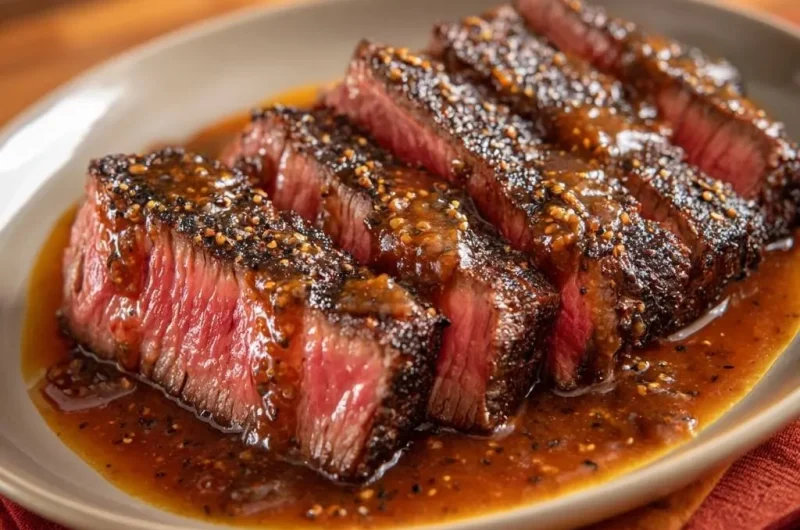
Seared Pepper Steak
Course: Main CourseCuisine: AmericanDifficulty: easy2
servings40
minutes15
minutes55
Minutes650
kcalAmerican
Ingredients
2 ribeye steaks (1-inch thick, about 12 ounces each)
3 tablespoons coarsely crushed black peppercorns
1 teaspoon kosher salt
2 tablespoons neutral oil (like avocado or canola)
4 tablespoons unsalted butter, divided
1/2 cup beef broth
1 tablespoon whole black peppercorns (for sauce)
Directions
- Pat steaks completely dry with paper towels. This removes surface moisture for the crispiest crust and prevents steaming. Season both sides generously with salt, then press crushed peppercorns evenly onto all surfaces. Let sit at room temperature for 30 minutes.
- Heat a heavy cast-iron skillet over high heat for 5 minutes until smoking hot. Add oil and swirl to coat. Place steaks in pan without crowding. Sear undisturbed for 4 minutes for deep crust. Flip and sear other side 3-4 minutes for medium-rare (internal temp 130F if using thermometer).
- Transfer steaks to a plate and tent loosely with foil. Rest 8-10 minutes. THIS IS THE KEY: Resting redistributes juices from center to edges, guaranteeing no dry meat even if slightly over-seared. Juices will reabsorb instead of spilling out when cut.
- While resting, make sauce: Reduce heat to medium. Add 1 tablespoon butter and whole peppercorns to skillet, stirring 1 minute to release flavor without scorching. Pour in beef broth, scraping up browned bits. Simmer 3 minutes until reduced by half.
- Off heat, swirl in remaining 3 tablespoons cold butter one at a time until glossy and emulsified. This monte au beurre technique thickens sauce perfectly.
- Slice steaks against grain. Spoon sauce over top. Serve immediately for that restaurant-worthy juicy bite.
Notes
- Resting is key to juicy steak. Use a thermometer for precision: 130F for medium-rare. Pat dry for the crispiest crust.