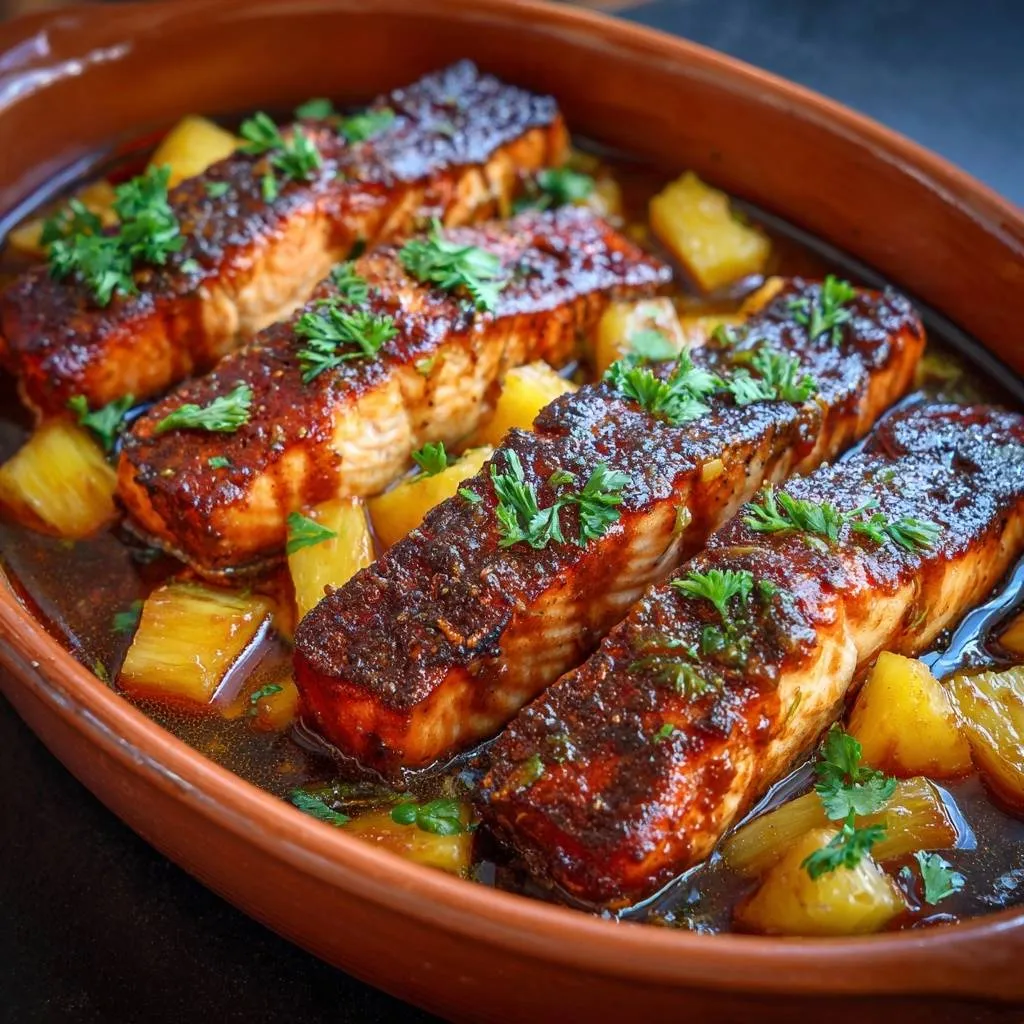
Why Pineapple Glazed Salmon Transforms Dinner
Picture this: dry, flaky salmon that turns every glaze into a disappointment. But not anymore. This pineapple glazed salmon fixes that with a foil-covered bake that traps steam from fresh pineapple chunks, keeping the fish juicy and tender. You’ll have dinner ready in under 30 minutes, way faster than takeout.
So why does this work so well? The pineapple’s natural enzymes gently tenderize the salmon while the glaze caramelizes under the broiler. That sweet-tangy shine over golden fillets? It hits different. Plus, you control the freshness, no restaurant markup.
Here’s the pro tip that seals it: pat the salmon extra dry before seasoning. This ensures the skin crisps up perfectly during broil, while the foil steam keeps the flesh moist. Oh man, that first bite melts in your mouth.
Key Ingredients for Pineapple Glazed Salmon Success
Fresh pineapple chunks are the star here. They release enzymes called bromelain that tenderize the salmon proteins, plus their juices create steam for ultimate moistness. Grab 2 cups, ripe and juicy.
Low-sodium soy sauce, about 1/2 cup, brings umami that balances the fruit’s sweetness without overpowering the delicate fish. In addition, 1/4 cup pineapple juice amps up that tropical vibe.
Honey, 3 tablespoons, fuels the caramelization under the broiler for that glossy, sticky glaze. Grated fresh ginger and minced garlic add sharp aromatics, while lime juice brightens everything. Don’t skip the cornstarch slurry; it thickens to perfection.
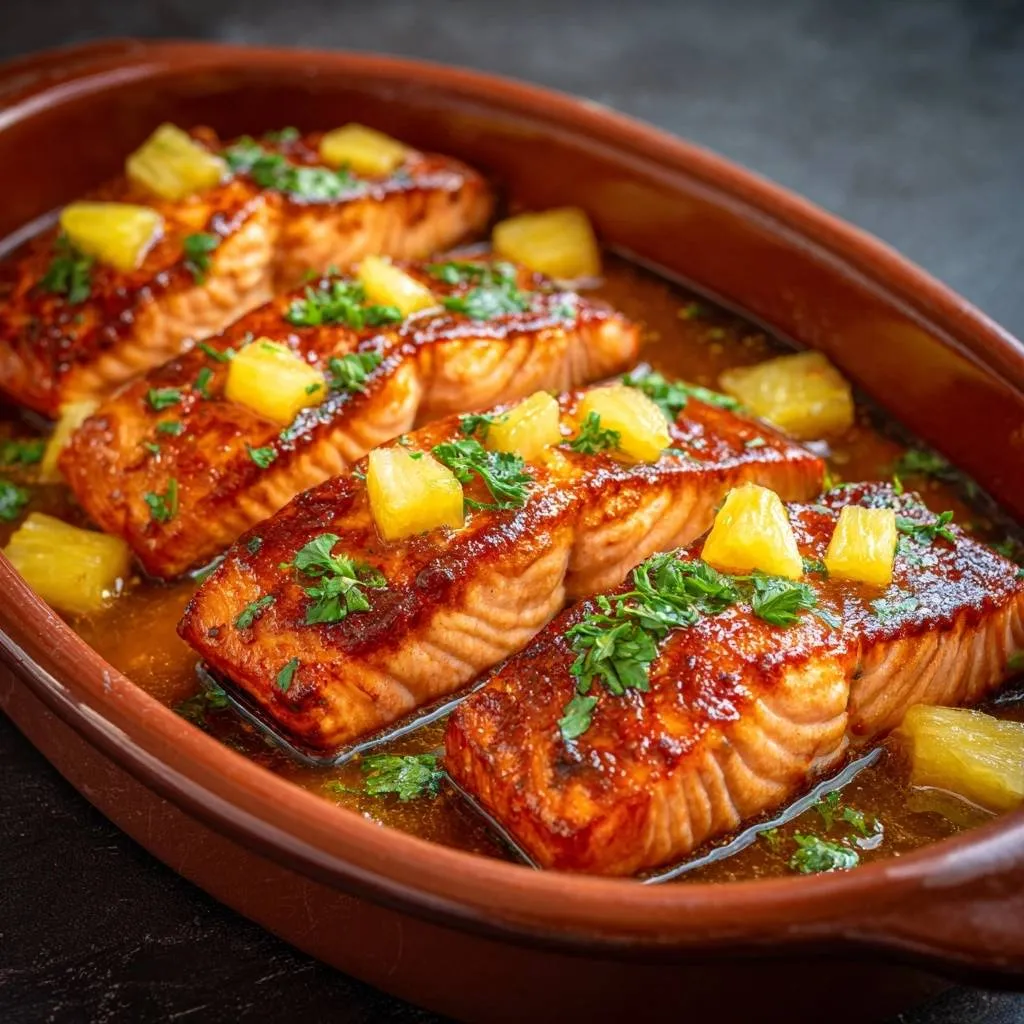
Finally, 4 skin-on salmon fillets, 6 ounces each, hold up best. Season with salt and pepper, and finish with chopped cilantro for freshness.
Fresh Pineapple Chunks vs. Canned
Fresh pineapple wins because its bromelain enzyme breaks down salmon proteins for tenderness. Canned lacks this due to heat processing, so it won’t infuse the same juiciness during steaming. Therefore, choose fresh for flaky results.
Soy Sauce and Pineapple Juice Balance
Soy’s umami tempers the pineapple’s acidity and sugars, creating harmony. Low-sodium keeps the fish from getting salty. Pineapple juice doubles down on sweetness, making the glaze irresistible.
Science of Steaming Pineapple Glazed Salmon
The foil traps pineapple steam, mimicking sous-vide for total moisture retention. This prevents the 30% loss you’d see uncovered. Meanwhile, broiling triggers Maillard reaction for a caramelized crust.
Pineapple’s acids balance pH, stopping albumin from coagulating and drying out the fish. Hit 145 degrees F internal to preserve omega-3s. That’s why this beats pan-searing, which often overcooks edges.
For a fresh take, consider broccoli crusted salmon baked in the oven.
Pro tip: position the rack close to the broiler for even char on your pineapple glazed salmon. Watch closely; sugars burn fast but reward with bubbles.
Moisture Lock from Pineapple Steam
Foil seals in a humid world where pineapple volatiles infuse the salmon. This keeps it flaky-tender. Uncovered baking dries it out quick, so don’t skip this step.
Broil Caramelization Chemistry
High heat browns honey-soy sugars via Maillard. Bubbles signal doneness; pull it then to avoid char. Perfect crust every time.
Essential Tools for Flawless Pineapple Glazed Salmon
A 9×13 baking dish spreads heat evenly for pineapple glazed salmon. Heavy-duty foil seals steam tight. Use a small saucepan for glaze simmering.
Grab an instant-read thermometer for 145 degrees F precision. Microplane grates ginger fine. Oven broil trumps stovetop; no flipping needed. Budget foil works fine.
Building the Pineapple Glaze Base
Combine 1/2 cup low-sodium soy sauce, 1/4 cup pineapple juice, 3 tablespoons honey, 2 minced garlic cloves, 1 tablespoon grated ginger, and 1 tablespoon lime juice in a saucepan. Bring to simmer over medium heat.
Stir in 1 tablespoon cornstarch mixed with 2 tablespoons water. Cook 2 minutes until thick and glossy. Taste; adjust lime if needed. This glaze clings perfectly.
Tip: low heat prevents separation. It’ll smell heavenly, sweet and zingy.
Perfecting the Cornstarch Slurry
Mix 1:2 ratio vigorously to dodge lumps. Stir fast after adding for shine. Arrowroot works too, but cornstarch gives the best cling.
Prepping and Arranging for Baking
Preheat oven to 400 degrees F. Pat 4 salmon fillets dry, season both sides with salt and pepper. Grease dish with 1 tablespoon olive oil.
Layer 2 cups pineapple chunks in the 9×13 dish. Place salmon skin-side down on top. Brush with half the glaze; save the rest. Skin-down crisps edges nicely.
Cover tight with foil, no leaks. This setup infuses flavor deep.
Mastering the Bake-to-Broil Transition
Bake covered at 400 degrees F for 12 minutes. Pineapple steam keeps pineapple glazed salmon juicy; you’ll smell the tropics.
Uncover, brush with remaining glaze. Switch to high broil. Broil 3-4 minutes until bubbly and caramelized. Check temp at 145 degrees F.
Rotate dish halfway for even char. Watch close; it transforms fast from glossy to perfect.
Achieving Crispy Glaze Edges
Top rack, 3-4 inches from broiler. Broil in 30-second bursts if needed. Bubbles mean crispy edges without burn.
Avoiding Pitfalls in Pineapple Glazed Salmon
Over-broiling dries edges; use a timer and check often. Thin glaze? Add more slurry next time. Soggy skin happens if not patted dry enough.
Bitter pineapple means unripe fruit; pick golden ones. Therefore, always thermometer-check to 145 degrees F. No guesswork.
Pro tip: spoon extra glaze post-broil for rescue if slightly dry.
Fixing Overcooked or Dry Fillets
Signs: firm, white edges. Prevent with timer and thermometer. Rescue by spooning reserved glaze; it re-moistens beautifully.
Flavor Twists on Pineapple Glazed Salmon
Add chili flakes for heat; it cuts the sweet. Swap lime for orange juice for milder tang. Try mango chunks instead of pineapple for variety.
Basil over cilantro freshens it up. Cut honey for less sweet, more savory. Method stays the same for juicy results.
Ideal Pairings for Pineapple Glazed Salmon
Coconut rice soaks up that glaze perfectly. Grilled zucchini adds crisp balance to the sweet. Quinoa salad boosts protein.
Simple green beans keep it light. Sparkling cranberry juice complements the tropical notes. Plate salmon over rice, spoon sauce generously.
Pineapple Glazed Salmon FAQs
Can Pineapple Glazed Salmon Be Frozen?
Yes, freeze pre-baked portions in airtight bags up to 2 months. Thaw overnight in fridge, then broil fresh for crisp glaze. Texture stays juicy if not over-thawed.
Best Substitutes for Fresh Pineapple?
Use pineapple juice concentrate mixed with drained canned chunks. It mimics juiciness but lacks bromelain tenderness. Fresh is best for enzyme magic.
How Do I Store Leftovers?
Keep in an airtight container in the fridge up to 3 days. Reheat gently in a 300 degrees F oven with foil to retain moisture; microwave toughens it. Doesn’t freeze well post-broil due to texture loss.
Why Is My Salmon Dry?
Usually over-broiling or no foil steam. Solution: bake covered exactly 12 minutes, broil just until bubbly, and hit 145 degrees F internal. Pat dry pre-bake for skin crisp without drying flesh.
Can I Use Skinless Salmon Fillets?
Absolutely, but reduce broil time by 1 minute since no skin protection. Same foil steam keeps it moist. Season flesh side extra for flavor.
Can I Make the Glaze Ahead?
Yes, store in fridge up to 3 days. Reheat gently on stove, stirring to loosen. Don’t assemble salmon early; bake fresh for best texture.
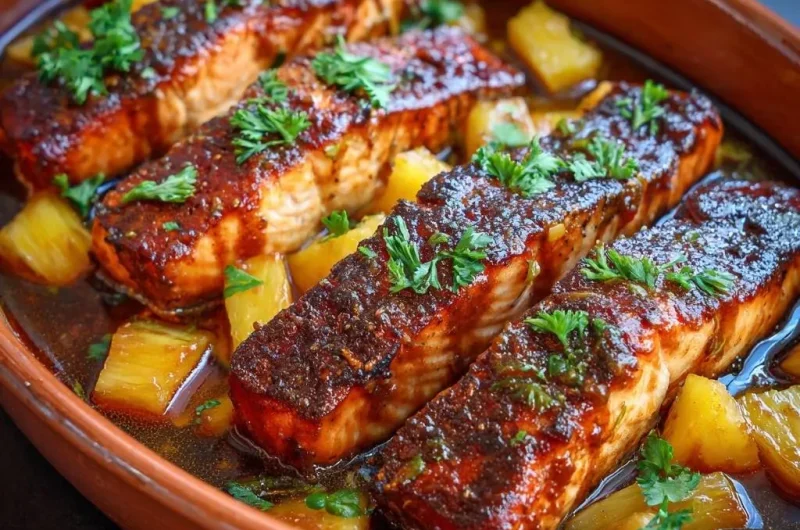
Pineapple Glazed Salmon
Course: Main CourseCuisine: AmericanDifficulty: easy4
servings15
minutes20
minutes450
kcal35
MinutesDry salmon ruins every glaze attempt. This foolproof method uses foil-covered baking to trap pineapple steam and sauce moisture for juicy results, then a quick broil for perfect caramelization.
Ingredients
4 skin-on salmon fillets (6 ounces each)
2 cups fresh pineapple chunks
1/2 cup low-sodium soy sauce
1/4 cup pineapple juice
3 tablespoons honey
2 garlic cloves, minced
1 tablespoon grated fresh ginger
1 tablespoon lime juice
1 tablespoon cornstarch mixed with 2 tablespoons water (slurry)
2 tablespoons olive oil
1/4 cup chopped fresh cilantro
Directions
- Preheat oven to 400 degrees F. Pat salmon fillets dry with paper towels and season both sides with salt and pepper. Grease a 9×13-inch baking dish with 1 tablespoon olive oil.
- In a small saucepan over medium heat, combine soy sauce, pineapple juice, honey, garlic, ginger, and lime juice. Bring to a simmer, then stir in cornstarch slurry. Cook 2 minutes until thickened. Remove from heat.
- Arrange pineapple chunks in the baking dish. Place salmon fillets skin-side down on top. Brush generously with half the glaze, reserving the rest.
- Cover dish tightly with foil. Bake 12 minutes. This steam-trapping step infuses moisture from the pineapple and glaze, guaranteeing juicy salmon that stays flaky-tender.
- Remove foil. Brush with remaining glaze. Switch oven to broil on high. Broil 3 to 4 minutes until glaze bubbles and caramelizes (watch closely to avoid burning). Internal salmon temp should reach 145 degrees F.
- Garnish with cilantro. Serve hot with sauce spooned over top.
Notes
- Watch closely during broiling to avoid burning. Internal temperature should reach 145°F for safe doneness.