
Ever scooped up a bowl of loaded potato soup only to find it thick and gluey, like wallpaper paste? You’re not alone. This cast iron version fixes that frustration fast. It delivers ultra-creamy broth with tender, chunky potatoes that hold their shape.
Here’s why it works so well. Uniform dicing and a gentle simmer prevent excess starch from turning your loaded potato soup into mush. Then, targeted mashing thickens just enough for perfection.
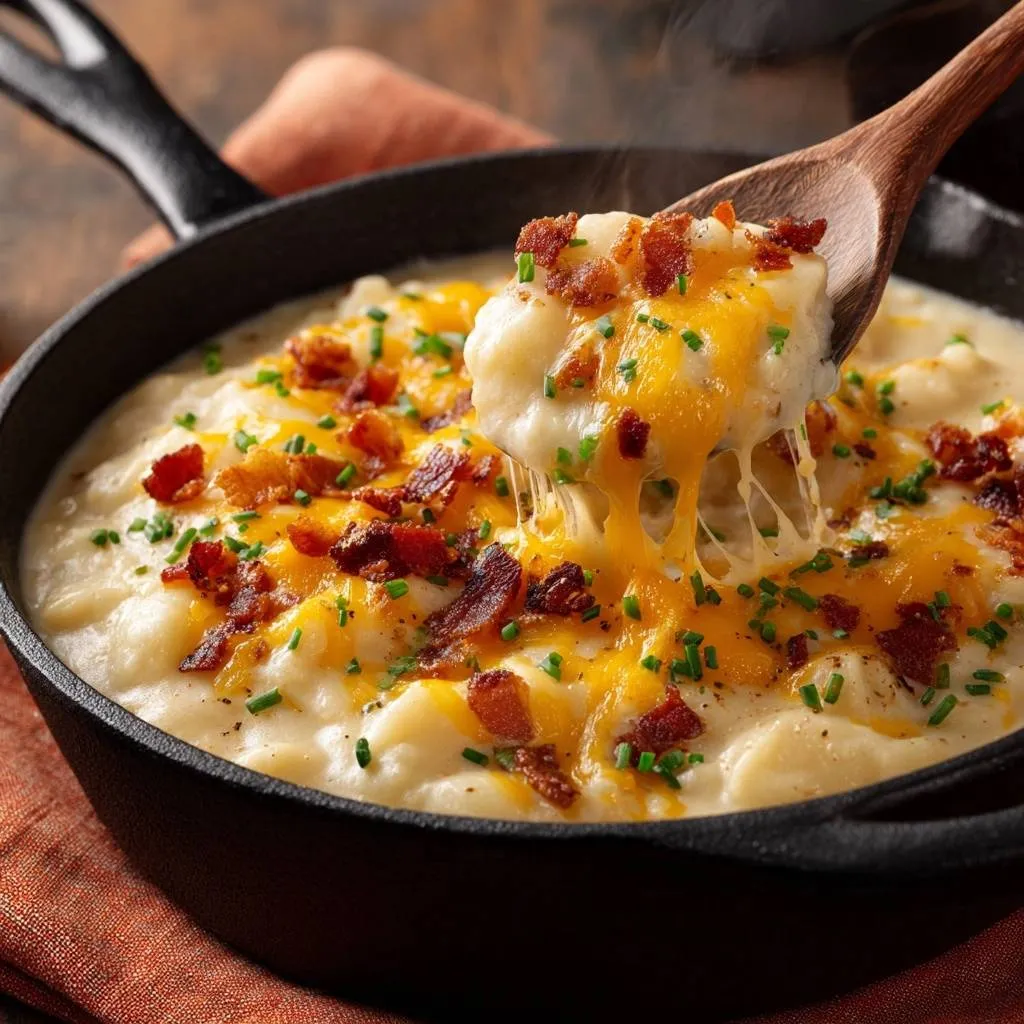
The real secret lies in partial mashing off the heat. You crush only about one-third of the potatoes right in the pot. That controls starch release and locks in that craveable chunky texture every time.
Why Loaded Potato Soup Demands Cast Iron Precision
Cast Iron’s Role in Even Heat Distribution
Cast iron shines for loaded potato soup because it distributes heat evenly. Unlike stainless steel pots that create hot spots, cast iron maintains a steady, gentle simmer. This prevents the hard boils that burst potato cells and flood the broth with starch.
Therefore, your soup stays creamy without glue. I’ve seen stainless versions turn gummy fast. Stick with cast iron, and you’ll notice the difference in every spoonful.
Uniform Dicing: Foundation of Chunky Texture
Start with 1/2-inch cubes for your loaded potato soup. This size ensures even cooking, so no raw centers or mushy edges. Russets beat waxy potatoes here; their higher starch content fluffs up nicely during the simmer.
In addition, peeling removes tough skins that disrupt texture. Dice precisely, and you’ll get that ideal tender-chunky bite.
Key Ingredients for Loaded Potato Soup Success
Russet Potatoes: Starch Control Masters
Six medium russets, peeled and diced, form the heart of loaded potato soup. They offer perfect starch balance for creaminess without gumminess. Plus, they’re packed with potassium and vitamin C for a nutritious bowl.
Fresh russets absorb broth beautifully. Avoid old ones; they release too much starch early.
Bacon and Cheese: Building Bold Flavor Layers
Chop 12 ounces of bacon for smoky depth that infuses the whole pot. Three cups of sharp cheddar melt smoothly, adding tangy richness. Whole milk paired with chicken broth creates a velvety base that won’t curdle.
Butter, at four tablespoons, emulsifies everything. It binds fats and liquids for that restaurant-quality mouthfeel in your loaded potato soup.
Green Onions and Seasonings: Fresh Finish
Half a cup of chopped green onions brings sharp bite and color. One teaspoon salt and half teaspoon pepper amplify flavors without overpowering.
These simple touches elevate loaded potato soup from basic to bold. Sprinkle extra on top for crunch.
Science of Preventing Gluey Loaded Potato Soup
Starch Granule Behavior During Simmering
Potato starch granules swell and gelatinize in liquid. A hard boil ruptures them, releasing gobs of starch that make loaded potato soup gluey. However, a gentle simmer keeps them intact longer.
That’s why we cook uncovered for 10 to 12 minutes. It allows steam to escape, maintaining low agitation. Food science backs this: controlled heat preserves structure.
In addition, russets’ starch type holds up better. You’ll see fork-tender cubes that transform the broth just right.
Why Partial Mashing Locks in Creaminess
After simmering, mash only one-third of the potatoes off heat. This releases enough starch for thickness without overdoing it. Full blending? Disaster, total gumminess.
Pro tip: Use a potato masher for control. The result looks chunky yet creamy, with visible potato pieces swimming in smooth broth.
Step-by-Step: Mastering Loaded Potato Soup in Cast Iron
Phase 1: Crisping Bacon Base
Heat your cast iron skillet over medium. Add chopped bacon and cook eight minutes until crispy. The sizzle fills your kitchen with smoky aroma.
Scoop it out with a slotted spoon to drain. Leave two tablespoons fat, then melt in butter. This fat base coats potatoes perfectly, preventing sticking.
Phase 2: Gentle Simmer for Tender Potatoes
Toss in diced potatoes, pour four cups whole milk and two cups chicken broth. Season with salt and pepper. Bring to a gentle simmer; never let it boil hard.
Cook uncovered 10 to 12 minutes. Stir once only. Test with a fork; they should pierce easily but hold shape. Over-stirring wakes up starch too soon.
Phase 3: Targeted Mashing Technique
Remove from heat. Grab a potato masher and crush about one-third of the potatoes gently. Don’t overdo it; chunks are the goal.
An immersion blender works too, but pulse briefly. Minimal stirring post-mash keeps texture intact.
Phase 4: Melting Cheese and Bacon Integration
Stir in two cups shredded cheddar and half the bacon. The cheese melts into stretchy bliss over low heat. Taste and tweak seasoning.
Sharp cheddar’s acidity cuts richness perfectly here.
Phase 5: Plating with Crunchy Toppings
Ladle hot loaded potato soup into bowls. Top with remaining cheddar, bacon, and green onions. Serve immediately for that gooey cheese pull.
Oh man, the contrast of cool onions and warm chunks hits every time.
Avoiding Common Mistakes in Loaded Potato Soup
Over-Stirring and Boiling Pitfalls
Gluey soup screams over-stirring or boiling. Symptoms include pasty texture and no chunks. Fix by starting fresh or thinning with cream, but prevention rules.
Checklist: Simmer gently, stir once, mash off heat. Your loaded potato soup stays perfect.
Potato Prep Errors to Skip
Uneven dice lead to half-cooked disasters. Always aim for 1/2-inch cubes. Waxy reds won’t fluff like russets; they stay firm but lack creaminess.
Peel russets fully. Skins toughen during cooking.
Flavor Variations for Loaded Potato Soup
Smoky or Spicy Twists
Swap bacon for turkey bacon to lighten it up. Add diced jalapeños or a teaspoon smoked paprika for heat. These keep the chunky vibe of loaded potato soup intact.
For vegan, use plant milk and coconut bacon bits. Simmer same way; flavor pops.
Cheese and Herb Swaps
Try gouda for nutty melt or blue cheese for tang. Chives sub green onions seamlessly. Boost low-carb with cauliflower chunks mixed in.
These tweaks refresh loaded potato soup without losing essence.
Make-Ahead and Freezing Loaded Potato Soup
Batch Cooking and Storage Strategies
Double the recipe for meals all week. Fridge in airtight containers up to four days. Reheat gently on stovetop with a splash of milk to revive creaminess.
Portion before freezing; toppings separate.
Freezer Guidelines for Best Texture
Cool completely, then freeze in airtight bags up to three months. Thaw overnight in fridge. Reheat low and slow; add fresh toppings after.
Less mashing means better post-freeze chunks.
Perfect Pairings for Loaded Potato Soup
Crusty Breads and Salads
Tear into sourdough or garlic knots; they sop up broth like magic. A crisp green salad with vinaigrette cuts the richness perfectly.
These sides make loaded potato soup a full meal.
Light Sides to Complement
Roasted broccoli or apple slaw adds crunch. Herbal teas or sparkling water refresh the palate alongside.
Balance keeps every bite exciting.
Troubleshooting Loaded Potato Soup Issues
Soup Too Thin? Fixes Here
Mash a bit more potatoes or simmer five extra minutes uncovered. Cornstarch slurry works as last resort: one teaspoon in cold water, stirred in.
Texture firms right up.
Cheese Separation Solutions
Always use low heat and freshly grated cheese. Add a pinch cornstarch before stirring for stability.
Smooth melt guaranteed.
Potatoes Still Crunchy?
Check dice size; smaller cubes cook faster. Extend simmer by three minutes. At high altitude, add five more.
Fork-tender wins.
Loaded Potato Soup FAQ
Can I Use Red Potatoes Instead?
Red potatoes are waxy, so they stay firmer and release less starch. Your loaded potato soup will have more bite but less natural creaminess than russets. For best results, stick with russets; reds work if you prefer chunkier texture overall.
Is Loaded Potato Soup Freezer-Friendly?
Yes, but freeze before adding toppings. Cool fully, portion into airtight containers, and store up to three months. Thaw in fridge, reheat gently with extra milk; minimal mashing preserves chunks better than fully mashed versions.
How to Make Dairy-Free Loaded Potato Soup?
Swap whole milk for full-fat coconut milk or oat milk, use vegan cheddar shreds, and plant-based bacon. Keep the gentle simmer and partial mash. Butter becomes plant-based; flavor stays bold and creamy without dairy.
Why Avoid Boiling the Milk?
Boiling curdles milk proteins, creating grainy lumps. Gentle simmering below 180°F keeps it smooth. This preserves the velvety broth in loaded potato soup; always watch the heat closely.
Best Toppings for Extra Crunch?
Beyond bacon and onions, try crushed crackers, toasted nuts, or fried shallots. They add texture contrast to the creamy loaded potato soup. Sprinkle just before serving for maximum snap.

Loaded Potato Soup
Course: Main CourseCuisine: AmericanDifficulty: easy6
servings20
minutes25
minutes45
Minutes550
kcalAmerican
Ingredients
– 6 medium russet potatoes, peeled and diced into 1/2-inch cubes
– 12 ounces bacon, chopped
– 3 cups shredded sharp cheddar cheese
– 1/2 cup chopped green onions (plus extra for garnish)
– 4 cups whole milk
– 2 cups chicken broth
– 4 tablespoons butter
– 1 teaspoon salt
– 1/2 teaspoon black pepper
Directions
- In a large cast iron skillet over medium heat, cook chopped bacon until crispy, about 8 minutes. Remove bacon with a slotted spoon to a paper towel-lined plate, leaving 2 tablespoons bacon fat in the skillet. Add butter and melt.
- Add diced potatoes to the skillet. Pour in chicken broth and milk. Season with salt and pepper. Bring to a gentle simmer (do not boil hard), stirring once to combine.
- Simmer uncovered for 10 to 12 minutes until potatoes are just fork-tender. Avoid over-stirring to prevent starch release.
- Remove from heat. Using a potato masher, lightly crush about one-third of the potatoes directly in the pot. This locks in creamy thickness without making the soup gluey, as minimal mashing controls starch.
- Stir in 2 cups shredded cheddar and half the cooked bacon until cheese melts smoothly. Taste and adjust seasoning.
- Ladle into bowls. Top with remaining cheddar, bacon, and green onions. Serve hot for perfect stretchy cheese and chunky texture every time.
Notes
- Use a cast iron skillet for best results. Avoid over-stirring and boiling hard to prevent gluey texture. Mash only about one-third of the potatoes for perfect creaminess.