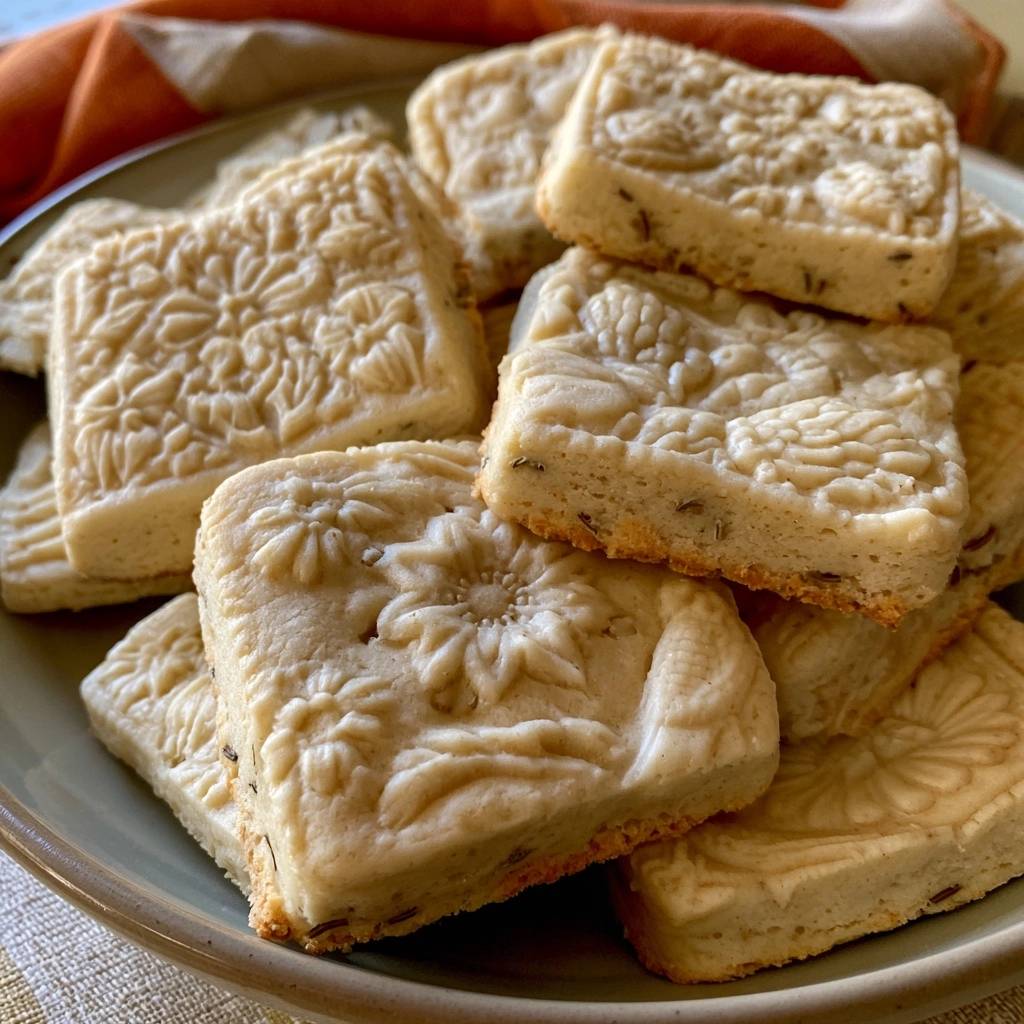
Anise springerle are thick, pale German cookies with a detailed molded pattern, crisp tops, and bottoms that turn lightly golden. Ground anise seasons the dough, while anise seeds beneath the cookies add another gentle note as they bake.
The defining detail is the uncovered rest after molding. As the tops dry, their impressions become more likely to hold through baking, giving each cookie a clear design. Handle the dough gently and pay attention to how it feels, since the recipe card provides the exact amounts and timing.
What gives springerle their texture and flavor
Room-temperature eggs beat more readily into a thick, pale mixture. Gradually adding confectioners’ sugar helps build a smooth base; continue until the mixture falls from the beaters in ribbons, as directed on the recipe card. This texture gives you a useful visual cue before the dry ingredients go in.
All-purpose flour gives the cookies their structure, and spooning and leveling it helps keep the dough from becoming overly packed. Baking powder contributes lift, while fine salt balances the sweetness. Ground anise carries the flavor through the dough; anise seeds scattered on the parchment add a light aromatic accent beneath the cookies.
Fold the flour mixture into the egg mixture in batches. Stop once a stiff dough forms, rather than stirring vigorously or continuing after the ingredients are combined. A covered rest at room temperature lets the dough settle before you roll and mold it.
Make clean impressions and preserve the pattern
Work on a lightly floured surface and aim for an even thickness across each portion. Consistent thickness helps the cookies bake more evenly and gives the mold a uniform surface to press into. Dust the springerle mold lightly with flour whenever it begins to stick; excess flour can obscure the design, so use only enough to help it release.
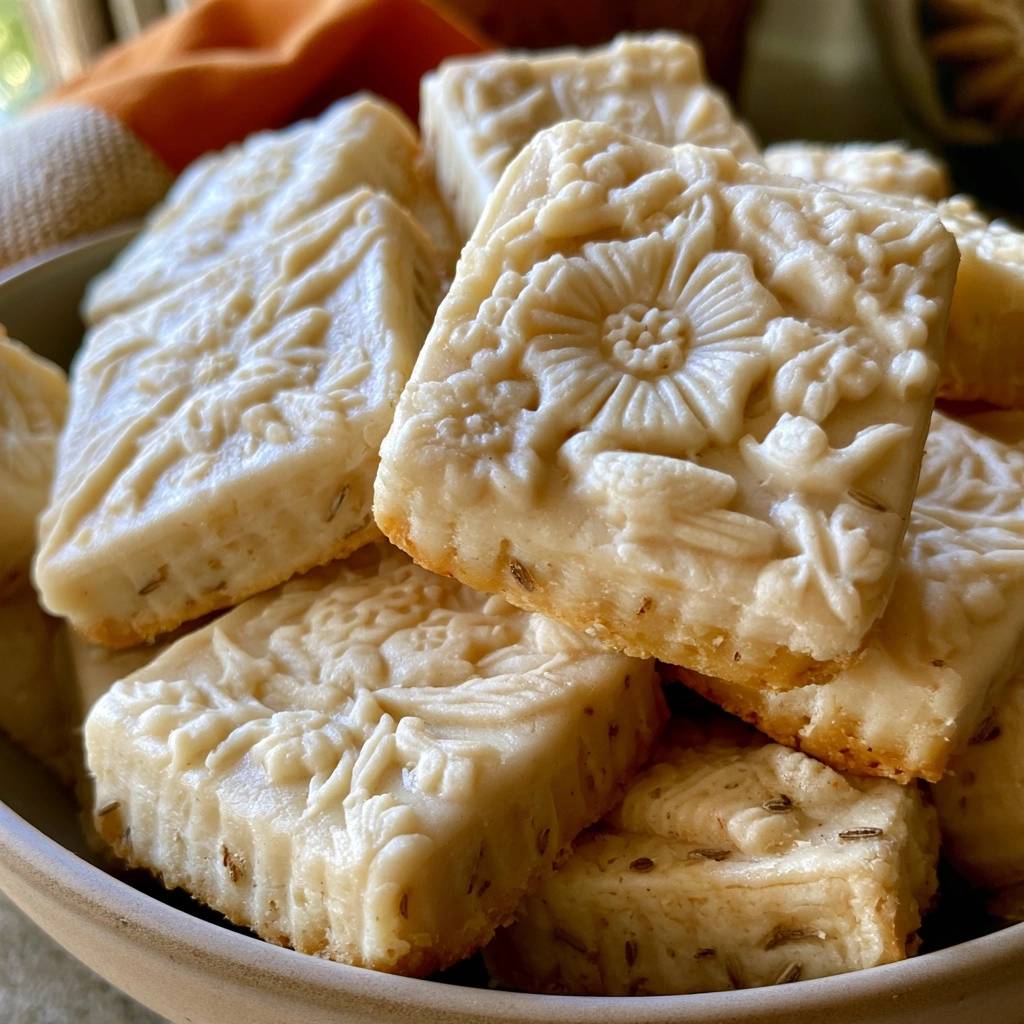
Press firmly enough to capture the carved details, then cut around each imprint. Arrange the cookies over the anise seeds with room between them. Keep the seeds on the parchment rather than mixing them into the dough; they belong beneath the molded cookies during baking.
Leave the shaped cookies uncovered until their tops feel dry and the impressions hold when touched lightly. That tactile check matters more than guessing: if a pattern smudges under a gentle touch, it needs more drying. Avoid handling the tops while they dry so the molded details stay defined.
Bake for pale tops and lightly golden bottoms
Springerle should stay pale on top while their bottoms become faintly golden. The contrast is part of their characteristic appearance, so look at both surfaces when judging doneness. Follow the recipe card’s rack changes and pan rotations to help the cookies bake evenly across the sheets.
Let the cookies cool on the pans as directed before transferring them to a rack. Moving them too soon can disturb their shape while they are still settling. If the embossing is less distinct than you hoped, check the dough’s thickness and make sure the tops felt dry and the imprints held before baking; those details support a crisp, recognizable pattern.
Frequently Asked Questions
Why do the springerle need to dry before baking?
The uncovered rest lets the molded tops become dry to the touch, helping the impressions hold as the cookies bake. Check gently: if the pattern smudges, give the cookies more time before they go into the oven.
What should I do if the mold sticks to the dough?
Dust the springerle mold lightly with flour before making each impression. A light coating helps the carved design release cleanly; if you use too much, it can leave flour on the dough and make the pattern harder to see.
How can I tell when the cookies are baked?
Look for tops that remain pale and bottoms that turn faintly golden, following the recipe card’s baking and pan-rotation directions. Let them cool on the pans as directed before transferring them to a rack.
Anise Springerle with Crisp Embossed Tops
Course: DessertCuisine: GermanDifficulty: Easy24
cookies35
minutes18
minutes130
kcal9
hours33
minutesThese thick, pale springerle have crisp embossed tops, lightly golden bottoms, and a gentle anise flavor. Letting the molded dough dry before baking helps preserve its detailed pattern.
Ingredients
4 large eggs, at room temperature
2 cups confectioners’ sugar
4 cups all-purpose flour, spooned and leveled, plus more for dusting
1 tsp baking powder
1/2 tsp fine salt
1 tsp ground anise
2 tsp anise seeds
Directions
- In a large bowl, beat the eggs with an electric mixer on high speed until thick and pale, about 8 minutes. Gradually beat in the confectioners’ sugar and continue beating until the mixture falls from the beaters in ribbons, about 5 minutes.
- In a separate bowl, whisk together the flour, baking powder, salt, and ground anise. Fold the flour mixture into the egg mixture in batches until a stiff dough forms. Cover the dough and let it rest at room temperature for 30 minutes.
- Line two baking sheets with parchment and scatter the anise seeds over the parchment. Divide the dough into portions and roll each on a lightly floured surface to 1/2 inch thick. Dust a springerle mold with flour, press it firmly into the dough, and cut around each imprint. Arrange the cookies over the anise seeds, leaving about 1 inch between them.
- Leave the cookies uncovered at room temperature for 8 hours, until the tops feel dry and the imprints hold when touched lightly. Near the end of the drying time, heat the oven to 300°F with racks in the upper and lower thirds.
- Bake for 18 minutes, switching the pans between racks and rotating them front to back after 9 minutes. The tops should stay pale while the bottoms turn faintly golden. Cool the cookies on the pans for 10 minutes, then transfer them to a rack.
Notes
- If your springerle mold sticks, dust it lightly with flour before each impression so the carved details release cleanly.