Apricot-Glazed Cornish Hens with Wild Rice Stuffing
Juicy Cornish hens roasted on wild rice stuffing with dried apricots and pecans, then finished with a sticky apricot preserves glaze for crisp, golden skin.
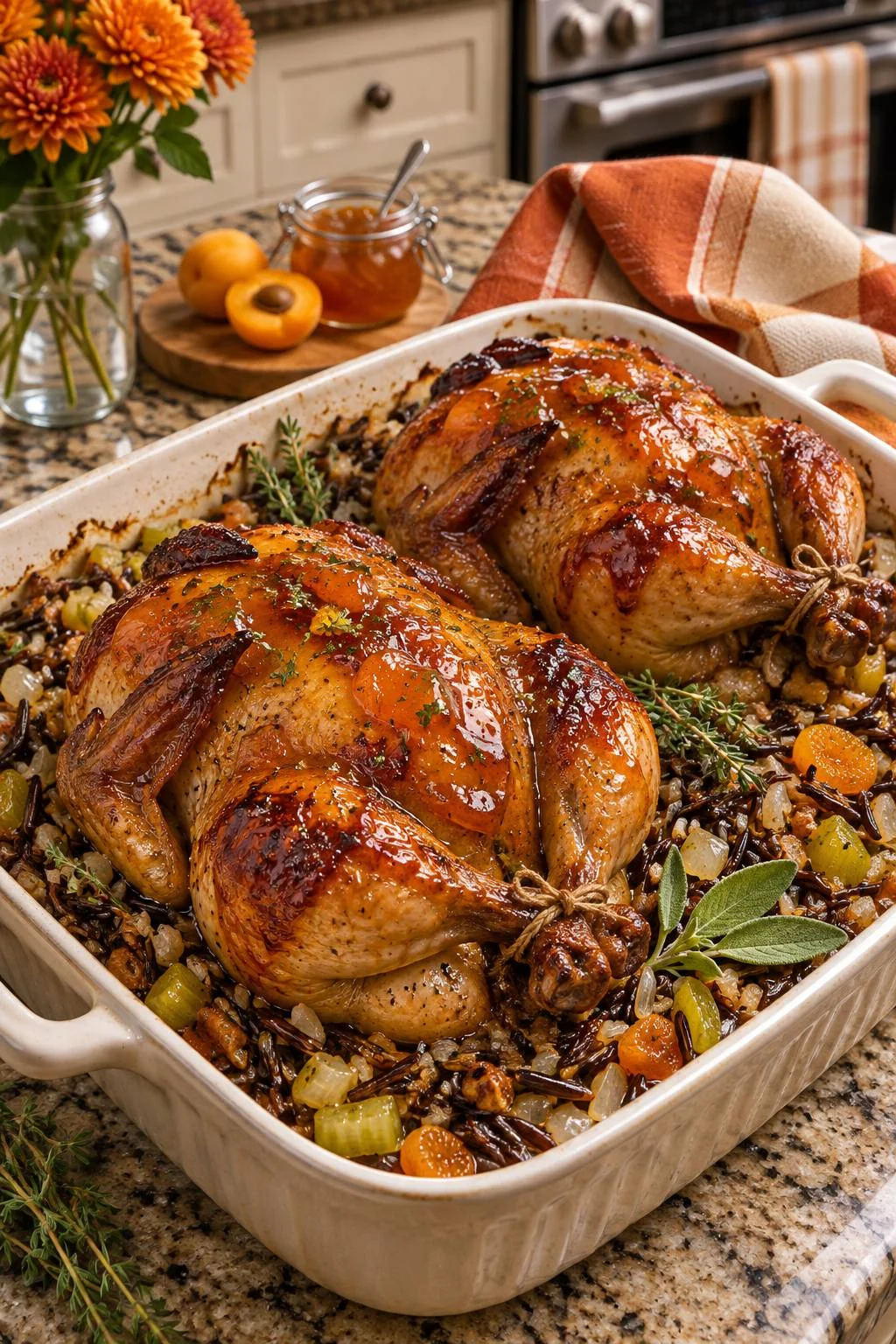
Cornish hens feel like a special occasion without demanding much fuss. These small birds roast quickly, look impressive on the platter, and offer a welcome change from the chicken breasts and thighs you cook most weeks. Here they rest on a savory bed of wild rice, celery, onion, dried apricots, and pecans, then finish with a sticky apricot glaze.
The payoff is contrast in every bite: chewy grains, soft fruit, toasty nuts, and glossy, golden skin. This is a dinner for when you want something a bit more festive than a sheet pan of chicken, but you still want a straightforward, reliable recipe.
Why wild rice makes a sturdy base
Wild rice is actually the seed of an aquatic grass, and it has a firmer, nuttier bite than white or brown rice. That sturdiness matters. The grains hold their shape under the roasting hens and soak up pan juices without turning mushy. Rinse the rice first to clear away debris, and cook it until the grains are tender and split open. Drain any leftover liquid so the stuffing doesn't turn soggy.
Sauteed onion and celery build the savory base, while chopped dried apricots and pecans add sweetness and crunch. Chop the apricots fairly small so each spoonful carries a little fruit. Fresh sage brings an earthy, herbal note that suits poultry well.
Building crisp, golden skin
Moisture is the enemy of crisp skin. Pat the hens dry with paper towels before seasoning, even though it feels like a minor step. A light coat of olive oil helps the seasoning cling and promotes even browning. Kosher salt and black pepper do most of the flavor work, while garlic powder adds a gentle savory background that doesn't compete with the fruit.
Making the apricot glaze
Apricot preserves are thick and sugary, which is exactly what makes them ideal for glazing. As the hens roast, the sugar caramelizes into a lacquered shine, but that same sugar also means the glaze can darken quickly near the end. Keep an eye on the skin during the final stretch, and if it browns faster than you like, loosely tent the birds with foil.
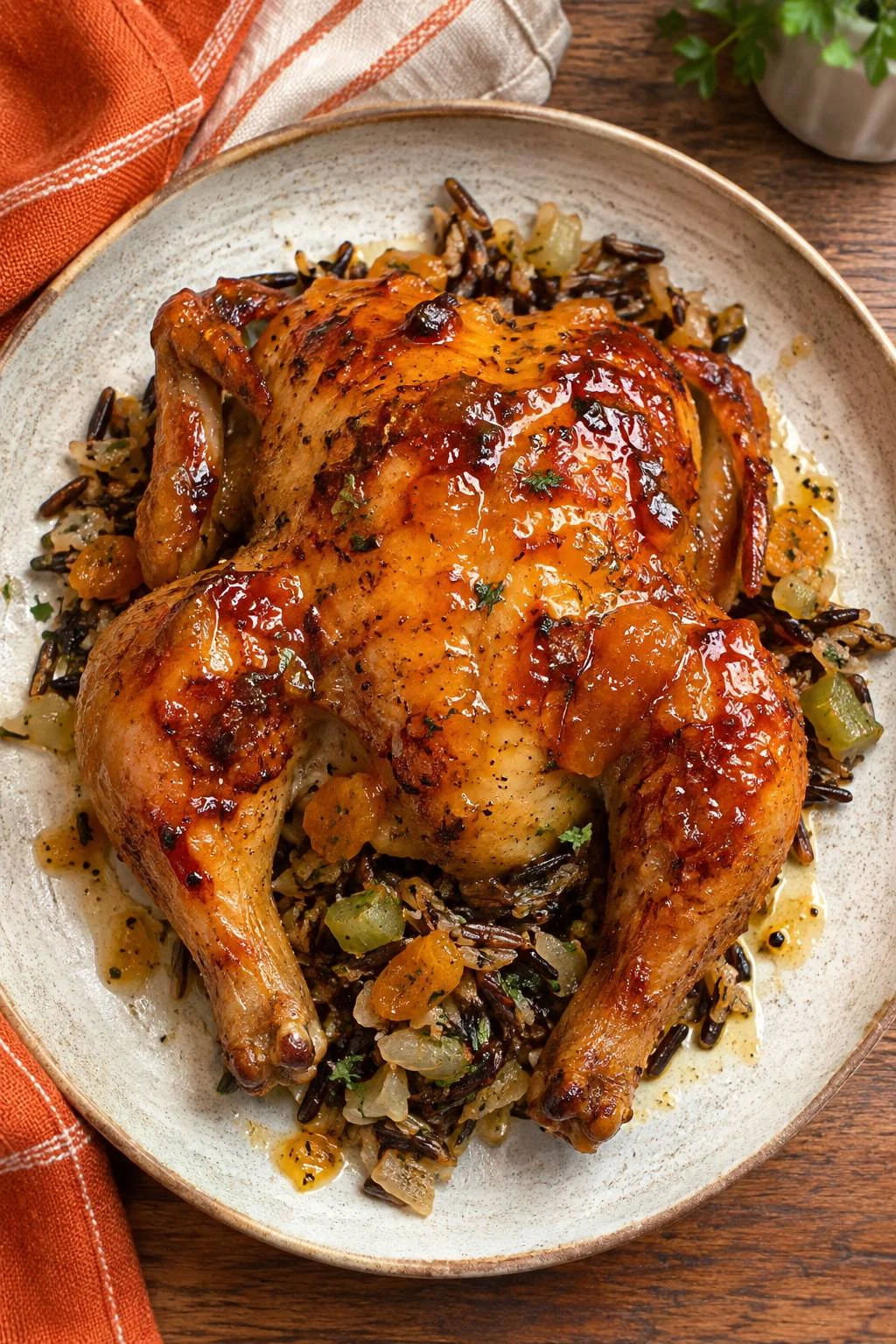
The apple cider vinegar keeps the glaze from tasting cloying, and melted butter gives it a smooth, rich finish. If the preserves are too stiff to brush, a brief warm-up in the microwave, stirred until smooth, makes spreading easy.
Checking doneness and carving
An instant-read thermometer is the most reliable way to know when the hens are ready. Place the probe in the thickest part of the thigh, keeping it away from the bone. Because Cornish hens vary in size, start checking early instead of trusting the clock alone. Let the birds rest under loose foil before carving so the juices settle. Kitchen shears make it easy to halve each hen lengthwise, and spooning the pan juices over the top adds extra moisture and flavor.
Frequently Asked Questions
How do I know when the hens are done?
Check the thickest part of the thigh with an instant-read thermometer, keeping the probe away from the bone. Look for the doneness temperature listed on the recipe card and confirm the juices run clear. Because hens vary in size, start checking early rather than waiting for the timer.
Why is my glaze darkening so quickly?
Apricot preserves contain a lot of sugar, so they brown fast near the end of roasting. Watch the skin during the final stretch, and if it darkens more than you like, loosely tent the hens with foil. The foil protects the glaze while the skin finishes cooking.
Why do I need to pat the hens dry?
Surface moisture steams the skin instead of letting it brown, so drying the birds with paper towels is an important first step. Dry skin also lets the olive oil, salt, pepper, and garlic powder cling evenly. The result is the golden, glossy finish this recipe is known for.
Recipe
Apricot-Glazed Cornish Hens with Wild Rice Stuffing
Whole Cornish hens are roasted on a bed of wild rice, celery, onion, dried apricots and pecans, then brushed with an apricot preserves glaze until the skin is lacquered and the thighs reach 165°F. Each hen is halved to serve four.
- Course
- Main Course
- Cuisine
- American
- Difficulty
- Easy
- Servings
- 4 servings
- Prep time
- 25 mins
- Cook time
- 1 hr 40 mins
- Total time
- 2 hr 9 mins
- Calories
- 870 kcal
Ingredients
Wild rice stuffing
Cornish hens
Apricot glaze
Instructions
Prep
Heat the oven to 375°F with a rack in the lower-middle position. Place the rinsed wild rice and 4 cups chicken broth in a 3-quart saucepan and bring to a boil over medium-high heat.
Wild rice
Reduce the heat to low, cover and simmer for 50 minutes, until the grains are tender and split open. Drain off any liquid that remains in the pan.
While the rice simmers, melt 3 tablespoons butter in a large skillet over medium heat. Add the onion and celery and cook for 6 minutes, stirring occasionally, until softened.
Assemble
Spoon the drained rice into a 9x13-inch baking dish. Stir in the sauteed onion and celery, chopped apricots, pecans, sage, 1 teaspoon salt and 1/2 teaspoon pepper. Pour 1/2 cup chicken broth over the mixture and spread it evenly.
Hens
Pat the hens dry with paper towels. Rub them with olive oil, then season with 3/4 teaspoon salt, 1/2 teaspoon pepper and the garlic powder. Tuck a thyme sprig into the cavity of each hen and tie the legs together with kitchen twine.
Set the hens breast side up on top of the rice mixture, spacing them apart. Roast for 35 minutes.
Glaze
While the hens roast, stir together the apricot preserves, apple cider vinegar and melted butter in a small bowl. If the preserves are too thick to brush, microwave the glaze for 20 seconds and stir until smooth.
Brush the hens generously with half of the glaze. Roast for 10 minutes, then brush again with the remaining glaze and roast for 5 more minutes, until the thickest part of the thigh registers 165°F on an instant-read thermometer and the juices run clear.
Finish
Transfer the hens to a cutting board and tent loosely with foil. Let them rest for 10 minutes before cutting. Halve each hen lengthwise with kitchen shears or a sharp knife, arrange the halves over the stuffing and garnish with thyme sprigs. Spoon any pan juices over the top.
Notes
- Check the hens with an instant-read thermometer in the thickest part of the thigh, not touching the bone. Cornish hens vary in size, so start checking a few minutes early.
- Apricot preserves contain a lot of sugar, so the glaze can darken quickly in the last part of roasting. If the skin browns faster than you like, loosely tent the hens with foil.
- Patting the hens dry before seasoning removes surface moisture, which helps the skin brown instead of steaming.
- If the wild rice is still firm after 50 minutes, add 1/4 cup broth and simmer for 5 to 10 more minutes before draining.
Recipe: https://dishwhisperer.com/apricot-glazed-cornish-hens-with-wild-rice-stuffing/