Baked Salmon with Greek Yogurt Dill Sauce
Bake smoky, seasoned salmon until flaky, then spoon on a cool Greek yogurt dill sauce with cucumber and lemon for a simple, satisfying weeknight dinner.
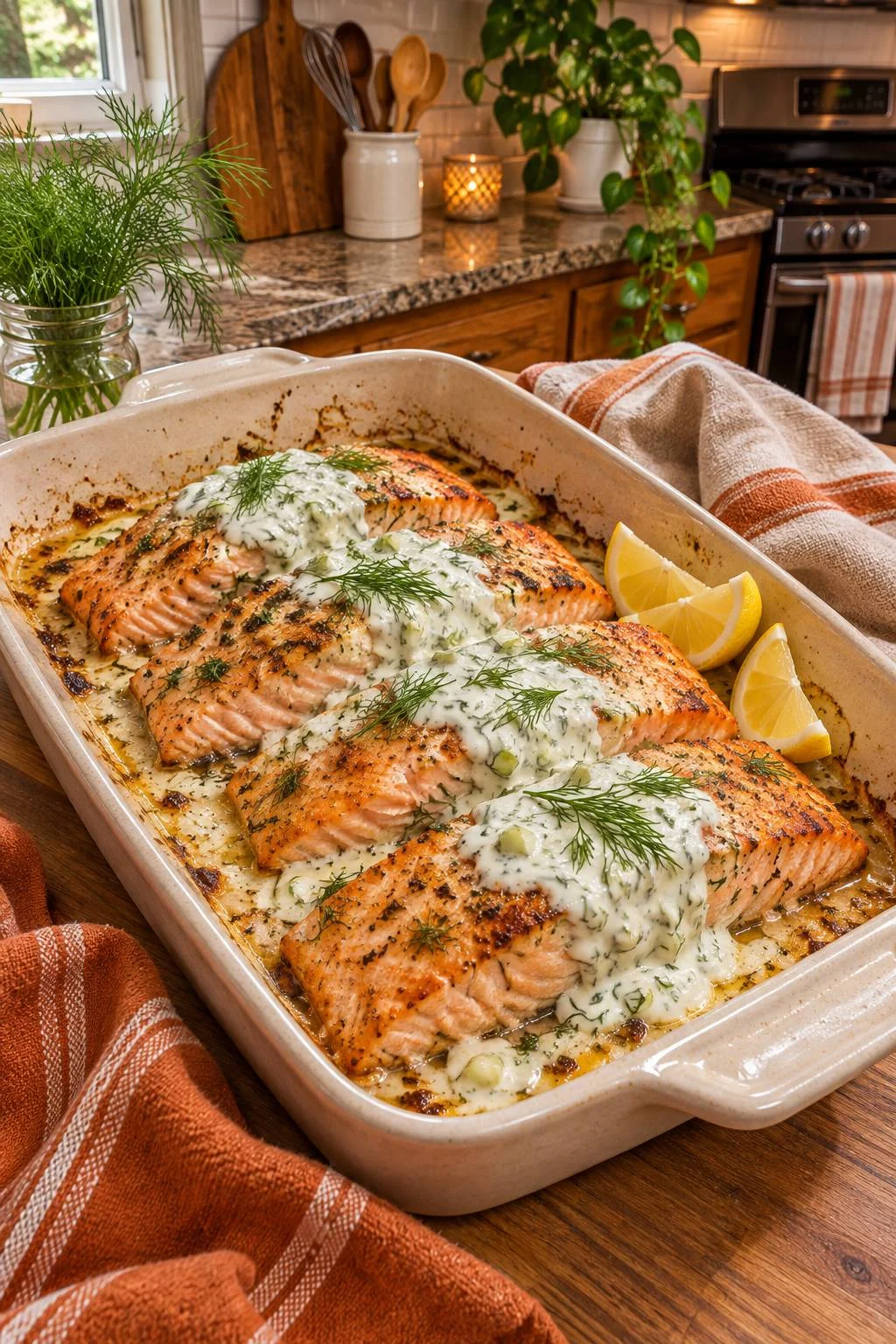
Some weeknights call for a dinner that feels special without a lot of fuss, and this baked salmon fits that role nicely. Seasoned fillets go into the oven until they turn flaky and lightly browned, and a bright, cool sauce made with Greek yogurt, fresh dill, cucumber, and lemon sits on top. It is a welcome change of pace if your usual rotation leans toward chicken and ground beef.
Because the flavors are simple, the details matter. The recipe card has the exact amounts and timing, so this article focuses on the choices behind them and the small habits that keep the salmon moist and the sauce fresh-tasting. Read through the card once before you start, and the rest of the cooking will feel calm and organized.
Choosing and Seasoning the Salmon
Salmon fillets are forgiving whether you buy them with skin on or off. Skin-on pieces help the fillet hold its shape on the baking dish, while skinless fillets are a good choice if your family prefers a softer bite without the crisp edge. Look for fish with a bright, moist appearance and firm flesh, and pat it dry with paper towels before seasoning so the rub grips the surface instead of sliding off.
The seasoning is intentionally simple. Smoked paprika adds a gentle, woodsy warmth and a touch of color, garlic powder rounds out the flavor, and olive oil helps everything cling to the fish. Rub the mixture over the flesh and the skin alike, then let the fillets rest while you prepare the sauce. Use the amounts on the recipe card as your starting point, and adjust the salt and pepper to suit your taste.
Building a Cool, Creamy Dill Sauce
Plain Greek yogurt is the backbone of the sauce, and it is thick enough to hold its shape without any cornstarch, flour, or cream. That natural body gives you a spoonable sauce that sits neatly on top of warm fish. Fresh dill brings a clean, herbal flavor that pairs naturally with salmon, while the lemon zest and juice add brightness that cuts through the richness of the fish.
The cucumber deserves a little attention. English cucumber has thin skin and relatively few seeds, so it adds crunch without releasing a lot of extra moisture. Even so, pat the diced pieces dry or use only a modest amount, or the sauce can loosen and turn thin and watery. Let the sauce chill in the refrigerator while the fish prepares so the garlic mellows and the flavors blend together.
Keeping Salmon Tender Instead of Dry
Overcooked salmon is the most common disappointment with this dish. Once the flesh turns dry and tough, no sauce can fully rescue it, so it pays to check early rather than late. Thinner fillets cook faster than thicker ones, so keep a close eye on the smaller pieces in particular. The fish is ready when the thickest part flakes easily with a fork and an instant-read thermometer reads the target temperature listed on the recipe card.
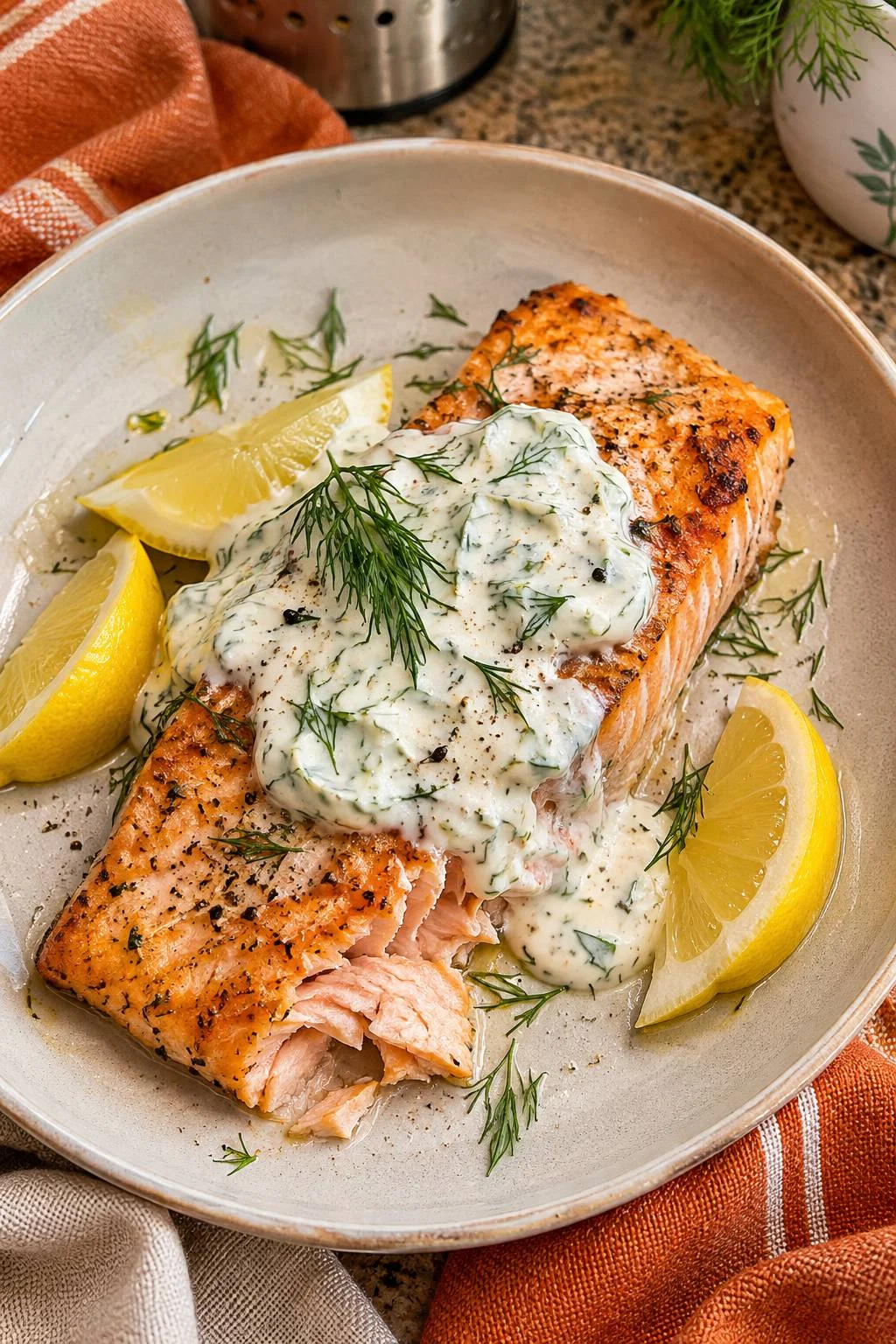
Spacing the fillets with a little room between them helps the heat reach each piece more evenly, and placing skin-on fillets skin side down gives you a tidy result that is easy to serve. Resist the urge to open the oven door often, since repeated peeking slows the process and makes timing harder to judge. When the fish is ready, spoon the chilled sauce over the warm fillets but leave some salmon exposed, so each serving shows off its golden surface.
Frequently Asked Questions
Can I use skinless salmon for this recipe?
Yes. The recipe works with skin-on or skinless fillets. Skin-on pieces are easier to handle on the baking dish, while skinless fillets look more uniform on the plate. Either way, start checking for doneness at the time listed on the recipe card.
Why does the sauce need to be cold before serving?
The sauce is meant to be chilled while the salmon bakes, so the flavors of garlic, lemon, and dill have time to blend. Its cool, creamy contrast with the warm fish is the whole point. Spoon it over the fillets just before serving so it stays cool and fresh.
How can I tell when the salmon is done without guessing?
Use two checks together. The thickest part should flake easily when pressed with a fork, and an instant-read thermometer should reach the target temperature listed on the recipe card. If the center still looks translucent or resists flaking, give it a little more time and check again.
Recipe
Baked Salmon with Greek Yogurt Dill Sauce
Seasoned salmon fillets bake in a 9x13-inch dish until flaky and lightly browned, then get spooned with a sauce of Greek yogurt, fresh dill, cucumber and lemon. Lemon wedges finish the dish.
- Course
- Main Course
- Cuisine
- American
- Difficulty
- Easy
- Servings
- 5 servings
- Prep time
- 15 mins
- Cook time
- 15 mins
- Total time
- 40 mins
- Calories
- 480 kcal
Ingredients
For the salmon
For the Greek yogurt dill sauce
Instructions
Adjust an oven rack to the center position and preheat the oven to 400°F. Brush a 9x13-inch baking dish with the 1 teaspoon olive oil.
Make the sauce: In a medium bowl, stir together the Greek yogurt, chopped dill, diced cucumber, minced garlic, lemon zest, lemon juice, 1/4 teaspoon salt and a pinch of pepper. Refrigerate the sauce while you prepare the fish so the flavors can meld, about 10 minutes.
Pat the salmon fillets dry with paper towels. In a small bowl, combine the 1 tablespoon olive oil, the smoked paprika, garlic powder, 3/4 teaspoon salt and 1/2 teaspoon pepper. Rub the mixture over the flesh and skin of each fillet.
Arrange the fillets in the prepared baking dish, skin side down if they have skin, with a little space between each piece.
Bake for 12 to 15 minutes, until the thickest part of the salmon flakes easily with a fork and reaches 145°F on an instant-read thermometer.
Spoon the chilled dill sauce over the warm fillets, leaving some of the salmon exposed. Garnish with dill sprigs and serve with the lemon wedges and any pan juices.
Notes
- Greek yogurt is already thick, so the sauce needs no cornstarch, flour or cream to hold its body. Pat the diced cucumber dry or use a small amount so the sauce does not become thin and watery.
- Salmon becomes dry and tough when overcooked. Start checking at 12 minutes, since thinner fillets cook faster than thick ones.
Recipe: https://dishwhisperer.com/baked-salmon-with-greek-yogurt-dill-sauce/