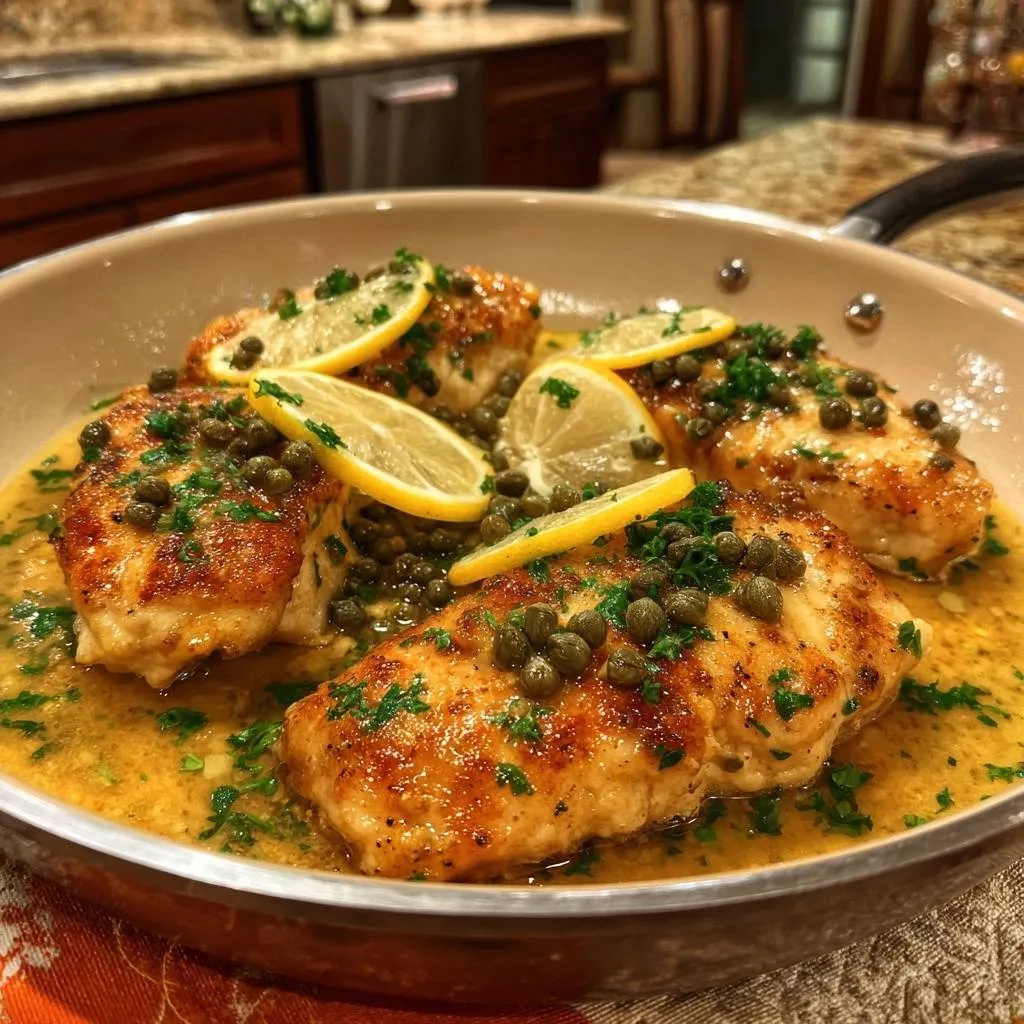
Ever bitten into chicken piccata that’s tough and dry on the edges while the center stays raw? Most recipes skip the pounding step, leaving you with uneven cooking and disappointment. But this chicken piccata changes everything with a simple pound to 1/4-inch thickness and a high-heat sear.
Therefore, you get tender, juicy chicken piccata that’s golden outside every time. In addition, it takes under 30 minutes for restaurant-quality results. The Italian roots shine through in the bright lemon-caper sauce, teasing the Maillard reaction that creates that craveable crust.
Here’s the expertise: pound between plastic wrap first. This ensures even heat penetration, locking in juices without a thermometer. You’ll nail chicken piccata that’s foolproof and fresh.
Why Pounding Transforms Chicken Piccata
Even Thickness for Juicy Chicken Piccata
Pounding chicken breasts to 1/4-inch creates uniform thickness. Therefore, heat penetrates evenly, cooking the center perfectly before edges dry out. Unpounded breasts turn rubbery fast; pounded ones stay juicy in chicken piccata.
Imagine the difference: thick pieces overcook outside while staying pink inside. However, even cutlets sear to golden perfection. This science keeps your chicken piccata moist and tender.
Tools for Perfect Chicken Piccata Pound
Grab a meat mallet for control or a rolling pin for even pressure. Always use plastic wrap to prevent tearing and sticking. Pat dry afterward; it helps the dredge adhere for a crisp chicken piccata sear.
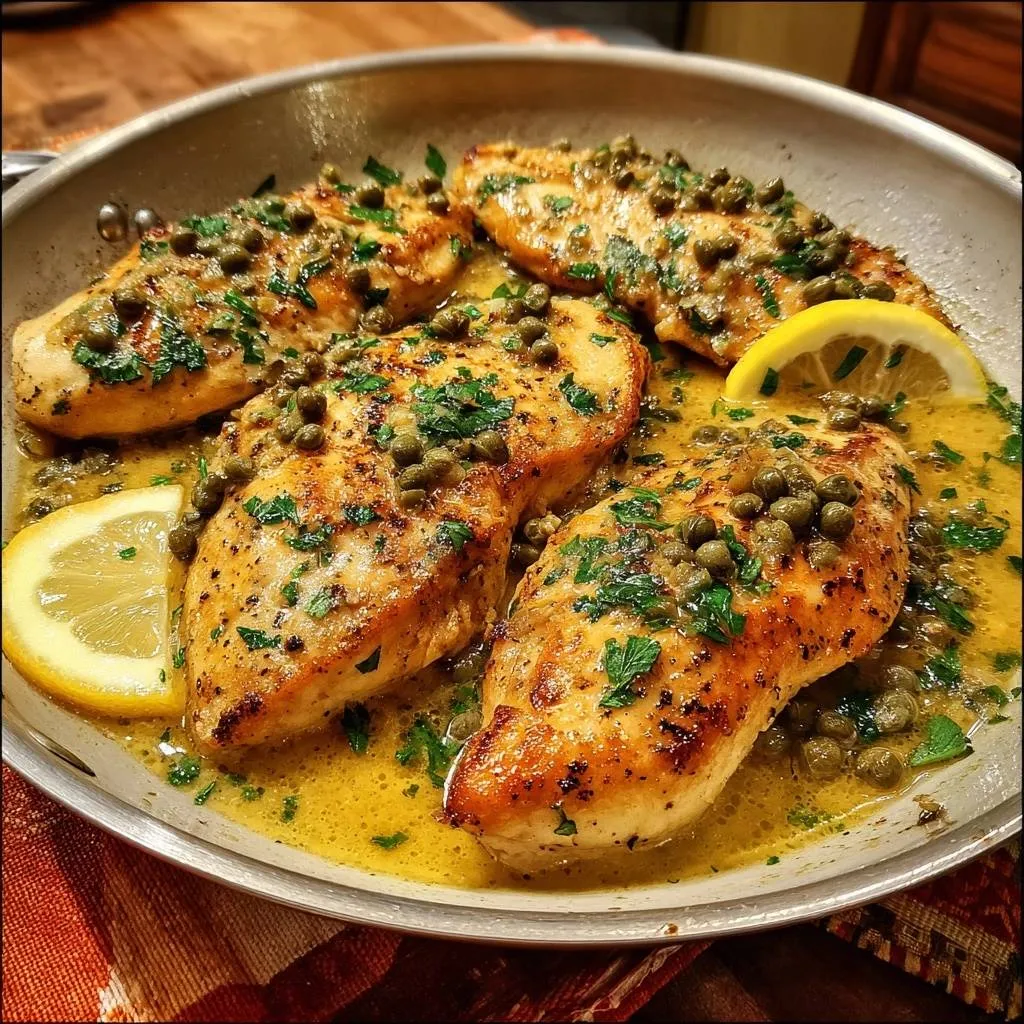
These steps retain juiciness. No fancy tools needed, just these basics transform your results.
Key Ingredients for Authentic Chicken Piccata
Chicken Breasts: Selecting Best for Piccata
Choose boneless, skinless chicken breasts around 6-8 ounces each. Uniform size pounds evenly for consistent chicken piccata. Fresh beats frozen; it sears crisper without excess water.
Flour Dredge and Seasoning Essentials
Mix 1/2 cup all-purpose flour with 1 teaspoon salt and 1/2 teaspoon pepper. A light dredge creates a crust without gumminess in chicken piccata. Salt draws out surface moisture for better browning.
Shake off excess flour. Therefore, you avoid a pasty coating and get that golden sear.
Lemon, Capers, Broth: Piccata Sauce Builders
Fresh lemon juice from 2 lemons gives bright acidity; bottled tastes flat. Capers add briny pop, 1/4 cup drained. Chicken broth, 1 cup, builds depth with 4 tablespoons unsalted butter for smooth emulsion.
Olive oil, 3 tablespoons, starts the sear hot. In addition, unsalted butter prevents oversalting the chicken piccata sauce. These create silky brightness.
Science of Searing Juicy Chicken Piccata
High-Heat Shimmer for Golden Crust
Medium-high heat makes oil and butter shimmer in 2 minutes. This triggers the Maillard reaction for nutty flavor and juice-sealing crust on chicken piccata. Sear 3 minutes per side to 165F inside.
Don’t overcrowd; it drops heat and steams instead. Batches keep the pan hot for perfect results.
Browned Bits Fuel Piccata Sauce Depth
Fond, those browned bits, pack umami. Scrape them up for rich chicken piccata sauce. Without it, flavors stay bland.
High-heat sear builds this gold. Therefore, your sauce sings with depth.
Step-by-Step: Mastering Chicken Piccata Sear
Prep and Dredge Chicken Piccata Cutlets
Place each of 4 chicken breasts between plastic wrap. Pound to 1/4-inch with a mallet or pin; feel the even thinness. Pat dry thoroughly for crisp chicken piccata.
Dredge in flour-salt-pepper mix. Shake off excess to prevent greasiness. You’re set for searing now.
Batch Searing for Perfect Chicken Piccata
Heat 3 tablespoons oil and 2 tablespoons butter until shimmering. Add chicken in batches; sear 3 minutes per side till golden. The crust forms fast, sealing juices inside.
Transfer to a plate. Keep heat high; no steaming here for moist chicken piccata.
Building Bright Lemon Caper Sauce
De glaze and Simmer Piccata Pan Juices
Drop to medium heat. Add 2 tablespoons butter, 1/4 cup capers, 1 cup broth, and 1/4 cup lemon juice. Scrape fond; simmer 3-4 minutes till slightly thick and aromatic.
Don’t boil hard; it dulls brightness in chicken piccata sauce.
Infuse Chicken in Piccata Sauce Finish
Return chicken to the skillet. Spoon sauce over; cook 1 minute to rewarm and soak flavors. Garnish with lemon slices and parsley for fresh pop.
Serve hot. The chicken piccata shines juicy and saucy.
Equipment Choices for Flawless Chicken Piccata
Skillet Size Impacts Piccata Success
Use a 12-inch or larger skillet. It prevents crowding and steaming for proper sear in chicken piccata. Stainless builds fond better than nonstick.
Other Tools Elevate Chicken Piccata Prep
Tongs flip without piercing. A microplane zests lemon if you want extra punch. Basics get you flawless chicken piccata.
Avoiding Pitfalls in Chicken Piccata
Prevent Dry Overcooked Chicken Piccata
Low heat or thick pieces dry out chicken piccata. Fix with even pounding and high sear. Never overcrowd; batches keep it juicy.
Sauce Fixes for Chicken Piccata Balance
Too sour? Add butter for emulsion. Thin sauce needs longer simmer. Rinse capers if briny overload hits your chicken piccata.
Flavor Twists on Classic Chicken Piccata
Herb and Citrus Swaps for Piccata
Stir in minced garlic with capers for aroma. Swap some broth for white grape juice if needed. Add artichokes or mushrooms; they soak up lemon in chicken piccata.
Keep the core bright. These twists excite without overpowering.
Gluten-Free Chicken Piccata Adaptation
Use almond flour for dredge; it crisps nicely. Tapioca starch thickens sauce if desired. Your gluten-free chicken piccata stays silky and golden.
Pairing Sides with Chicken Piccata
Starchy Bases Complement Piccata Sauce
Angel hair pasta twirls sauce perfectly. Rice or mashed potatoes absorb lemon brightness in chicken piccata. Boil pasta while searing to time it right.
Vegetable Sides Balance Chicken Piccata
Steamed asparagus adds snap. Sautéed spinach or roasted broccoli cuts richness. Greens refresh the tangy chicken piccata plate.
History and Evolution of Chicken Piccata
Italian Roots of Lemon Caper Chicken
Piccata hails from Italy as veal in lemon-caper sauce. Americans swapped chicken for affordability. Capers and lemon endure for zesty punch in chicken piccata.
Modern Twists on Traditional Piccata
Global spins add soy for Asian flair or jackfruit for vegan. Core stays timeless in chicken piccata evolutions.
Troubleshooting Chicken Piccata Issues
Sauce Not Thickening in Piccata
Simmer longer or whisk in a cornstarch slurry. High heat evaporates too fast; medium fixes it for chicken piccata.
Pale Crust on Chicken Piccata
Pat dry well and crank heat to shimmer. Wet chicken steams; dry sears golden.
Overly Sour Lemon Piccata Taste
Balance with extra butter or a pinch of sugar. Fresh lemons vary; taste as you go.
Chicken Piccata Too Salty
Dilute with more broth. Rinse capers thoroughly next time for balanced chicken piccata.
FAQ
How do I store leftover chicken piccata?
Keep in an airtight container in the fridge for up to 3 days. Reheat gently in a skillet with a splash of broth to revive sauce moisture; avoid microwave to prevent toughness. It doesn’t freeze well; the lemon sauce separates and chicken gets mushy upon thawing.
Why is my chicken piccata dry and overcooked?
Thick, unpounded breasts cook unevenly, drying edges first. Always pound to 1/4-inch and sear on high heat in batches. Check doneness at 3 minutes per side; juices run clear when golden and at 165F inside for juicy chicken piccata every time.
Can I substitute ingredients in chicken piccata?
No chicken breasts? Thin turkey cutlets work similarly. Skip capers? Green olives mimic brininess. Use lime for lemon if needed, but fresh is best for authentic tang. Almond flour swaps for gluten-free dredge without losing crisp.
What’s the best skillet for chicken piccata?
A 12-inch stainless steel skillet excels; it holds high heat for searing and builds fond for sauce. Nonstick works but fond is weaker. Avoid small pans; they steam instead of crisp your chicken piccata.
How do I make chicken piccata sauce thicker?
Simmer 3-4 minutes on medium while scraping fond; natural reduction happens. If needed, mix 1 teaspoon cornstarch with cold broth, stir in, and cook 1 minute. Butter emulsifies for silkiness without dulling lemon brightness.
Can I make chicken piccata ahead of time?
Prep and pound cutlets up to 4 hours ahead; refrigerate covered. Sear fresh for best crust. Sauce reheats well but make it last to preserve zing in chicken piccata. Full dish holds 30 minutes tented with foil.
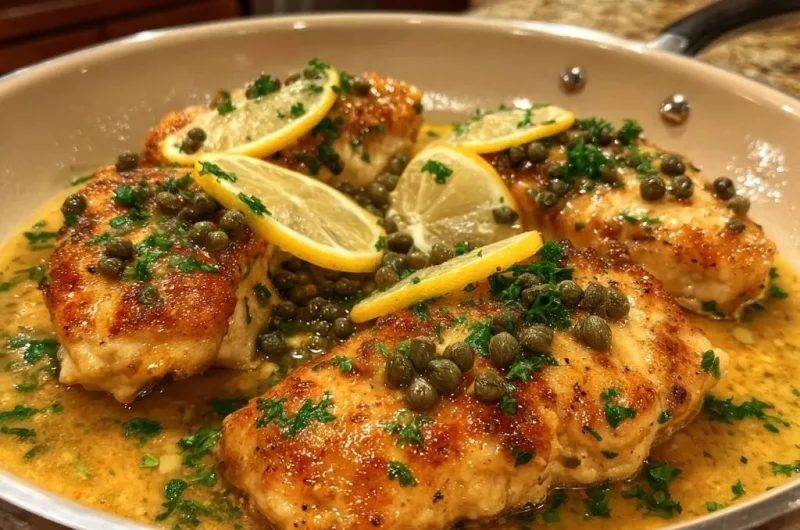
Chicken Piccata
Course: Main CourseCuisine: Italian-AmericanDifficulty: easy4
servings15
minutes20
minutes35
Minutes450
kcalItalian-American
Ingredients
4 boneless skinless chicken breasts
1/2 cup all-purpose flour
1 teaspoon salt
1/2 teaspoon black pepper
3 tablespoons olive oil
4 tablespoons unsalted butter, divided
1/4 cup capers, drained
1 cup chicken broth
1/4 cup fresh lemon juice (from 2 lemons)
Lemon slices and fresh parsley for garnish
Directions
- Place each chicken breast between two sheets of plastic wrap. Pound to an even 1/4-inch thickness using a meat mallet or rolling pin. This critical step ensures even cooking so the chicken stays juicy inside while getting a perfect sear outside, solving dryness completely. Pat dry with paper towels.
- Mix flour, salt, and pepper in a shallow dish. Dredge chicken pieces lightly, shaking off excess.
- Heat olive oil and 2 tablespoons butter in a large skillet over medium-high heat until shimmering hot (about 2 minutes). Add chicken in batches. Sear 3 minutes per side until golden and cooked through (internal temp 165F). Do not overcrowd or lower heat, keeping high temp for crust that seals juices. Transfer to a plate.
- Reduce heat to medium. Add remaining 2 tablespoons butter, capers, chicken broth, and lemon juice to skillet. Scrape up browned bits and simmer 3-4 minutes until sauce thickens slightly.
- Return chicken to skillet. Spoon sauce over top and cook 1 minute to rewarm and infuse flavors, keeping it moist.
- Garnish with lemon slices and chopped parsley. Serve immediately.
Notes
- Pound chicken to exactly 1/4-inch thickness for even cooking. Maintain high heat for searing to seal in juices and prevent dryness. Use fresh lemons for the best flavor.