Coconut Black Rice Breakfast Bowls with Mandarins
Creamy black rice breakfast bowls with fresh mandarin segments and toasted coconut flakes. Helpful tips for a silky, purple-black coconut porridge.
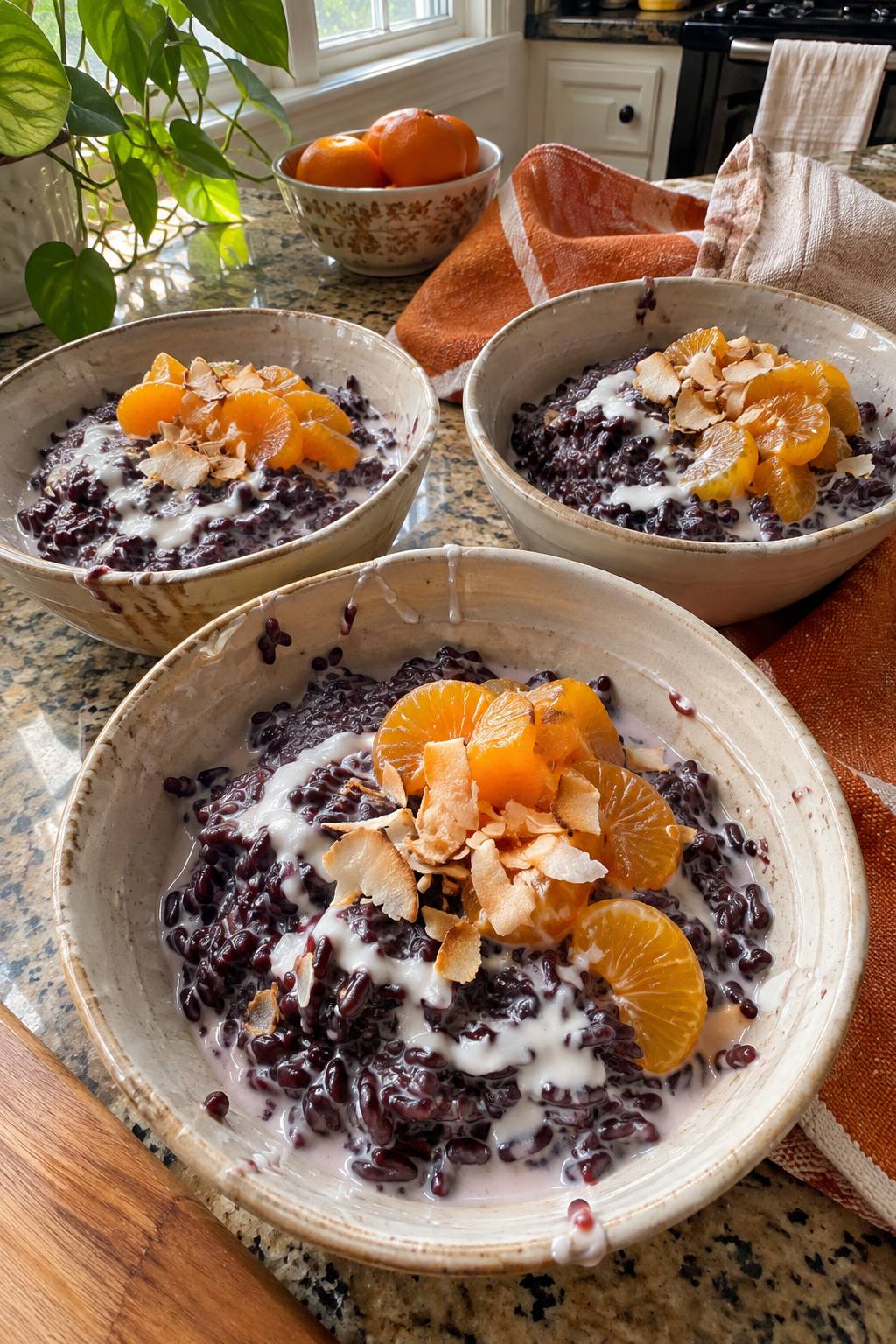
Black rice is one of those ingredients that surprises people the first time they cook it. As it simmers, the grains soften and deepen into a rich purple-black, and the cooking water takes on a dramatic inky tint. Finished in sweetened coconut milk, the rice becomes a creamy, lightly chewy porridge that feels special enough for a slow weekend morning.
This breakfast bowl is warm, filling, and surprisingly bright. Fresh mandarin segments add juicy sweetness and a little tang, while toasted coconut flakes bring crunch on top. The method is simple, but a few small habits make a real difference, so read through the tips below before you start.
Why Black Rice Needs Extra Patience
Black rice keeps its bran layer, which gives it its deep color, earthy flavor, and pleasant chew. That same bran is why it takes noticeably longer to become tender than white rice, so resist the urge to rush it. Check the grains for tenderness rather than trusting the clock alone, and expect the pot to look a little wetter at the end than you might assume.
Rinsing deserves more attention than it usually gets. Working the rice under cool running water in a fine-mesh strainer washes away surface dust and loose starch, which can cloud the cooking liquid and make the porridge taste slightly dusty. Rinse until the water runs mostly clear, then drain it thoroughly so extra water does not dilute the pot.
Building a Creamy Porridge Without Scorching
The porridge gets its silky body in two stages. First the rice rests off the heat, which lets the grains drink up the last of the water. Then the coconut milk goes in, and a gentle, uncovered simmer thickens everything into a spoonable porridge. The goal is a texture that clings to the spoon, not a loose soup.
Stir often during this final stage, especially near the bottom of the pan, because the starch thickens quickly and can scorch. Stir the coconut milk well before measuring, too. Full-fat cream rises and separates in the can, and if you pour off only the thin liquid, the porridge will taste flat and watery. A smooth, well-mixed can gives you rich, consistent bowls.
Toasting Coconut and Finishing with Mandarins
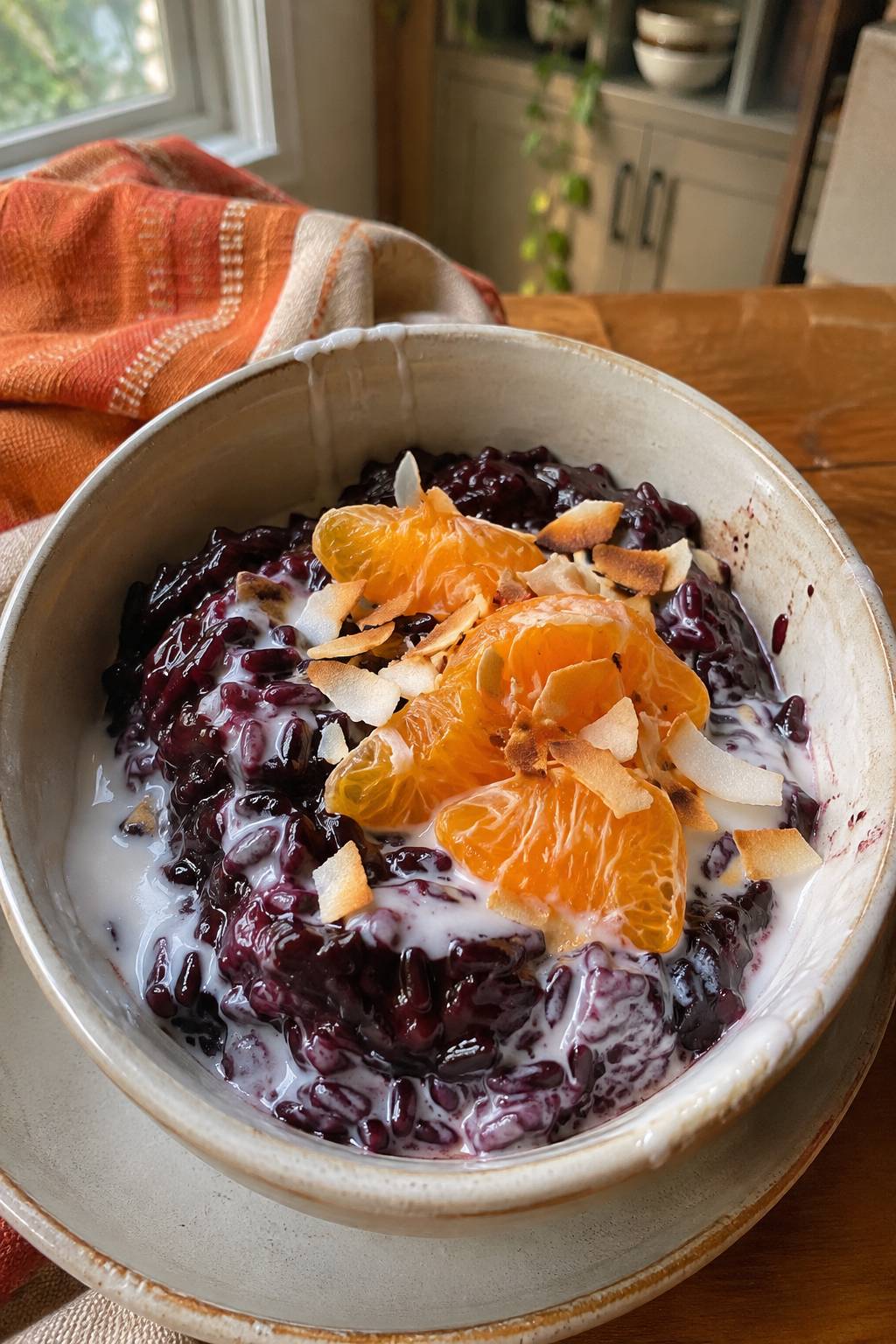
Coconut flakes burn fast, so toast them with your full attention. Stir constantly in a dry skillet and move them out of the pan the moment they turn golden and smell toasty, because residual heat keeps working. Flakes that tip into dark brown will taste bitter and can spoil the whole bowl.
Mandarins are best added at the last moment. Peel them, separate the segments, and set them on top just before serving so their juice stays bright instead of soaking into the warm porridge. The zest stirred into the pot adds a fragrant citrus note that pairs beautifully with coconut, while vanilla bean powder and maple syrup keep the sweetness rounded rather than sugary.
Frequently Asked Questions
Why does my porridge look thin?
The porridge thickens as it simmers uncovered, so give it time and stir often, especially near the bottom of the pan. It should be creamy and thick enough to coat a spoon. If it still looks loose, keep it at a gentle simmer until the starch has done its work and the texture matches the recipe card.
Why do I need to stir the coconut milk before measuring?
Full-fat coconut milk separates in the can, with thick cream rising to the top and thinner liquid settling below. Stirring it well before measuring makes sure each portion has the same richness, so the porridge tastes balanced and the reserved drizzle pours smoothly over each bowl.
How should I store leftover porridge?
Keep leftovers in an airtight container in the refrigerator and eat them within a few days. Reheat the porridge in a saucepan over low heat with a splash of water or milk, stirring until warm. Add fresh mandarin segments just before serving so they stay bright and juicy.
Recipe
Coconut Black Rice Breakfast Bowls with Mandarins
Black rice simmers in water until tender, then finishes in sweetened coconut milk for a creamy, purple-black porridge. It is topped with fresh mandarin segments and toasted coconut flakes.
- Course
- Breakfast
- Cuisine
- American
- Difficulty
- Easy
- Servings
- 4 servings
- Prep time
- 10 mins
- Cook time
- 39 mins
- Total time
- 59 mins
- Calories
- 430 kcal
Ingredients
For the black rice
For the toppings
Instructions
Cook the rice
Rinse the black rice in a fine-mesh strainer under cool running water until the water runs mostly clear, then drain well.
Combine the rice, water and salt in a 3-quart saucepan. Bring to a boil over medium-high heat, stir once, then reduce the heat to low. Cover and simmer for 30 minutes, until the grains are tender and most of the water is absorbed.
Remove the pan from the heat and let it stand, covered, for 10 minutes so the rice finishes absorbing the remaining water.
Stir in 1 cup of the coconut milk, the maple syrup, vanilla bean powder and mandarin zest. Return the pan to low heat and simmer uncovered for 5 minutes, stirring often, until the porridge is creamy and thick enough to coat a spoon.
Toast and assemble
Toast the coconut flakes in a dry skillet over medium-low heat for 3 to 4 minutes, stirring constantly, until golden. Watch them closely, since they can burn quickly.
Divide the black rice porridge among 4 bowls. Drizzle each with some of the remaining 1/2 cup coconut milk, then top with mandarin segments and toasted coconut flakes. Serve warm.
Notes
- Black rice keeps its bran layer, so it needs a longer simmer than white rice. Rinsing it first removes surface dust and excess starch. Stir the coconut milk well before measuring because the cream separates in the can.
- Leftover porridge keeps in an airtight container in the refrigerator for up to 3 days. Reheat it in a saucepan over low heat with a splash of water or milk, stirring until warm, and add fresh mandarin segments just before serving.
Recipe: https://dishwhisperer.com/coconut-black-rice-breakfast-bowls-with-mandarins/