
This Ethiopian spiced chicken stew is the kind of dinner that rewards a little patience. Bone-in chicken simmers in a deep red sauce built on slowly cooked onions, garlic, ginger, and berbere, the warm, chile-rich spice blend that gives so much Ethiopian cooking its character. The sauce thickens into a rich stew that spoons beautifully over rice or injera.
The hard-boiled eggs are the part that makes people stop and look twice. Halved and nestled into the sauce near the end, they soak up color and spice while the stew deepens around them. It is a satisfying main course for a weeknight or a relaxed weekend meal, and it feels special without demanding fussy technique.
Why the Onions Need Patience
Most of the flavor in this stew comes from the onions, so give them the attention they deserve. Cook them gently in the butter and olive oil, stirring often, until they soften and turn a deep golden brown. Rushing this stage leaves sharp, raw notes behind, while patient cooking gives you the sweet, mellow base that holds the sauce together. Keep the heat moderate so the onions color evenly instead of scorching on the bottom of the pot.
Building Flavor with Berbere and Tomato Paste
Berbere varies a great deal from brand to brand. Some blends run hot, while others lean earthy and sweet, so a familiar recipe can taste different from one pot to the next. Tomato paste adds body and a deeper red color, and it should cook with the spices until fragrant and darkened rather than sitting raw or scorching. Taste the sauce before adding the final seasoning, because salt enhances flavor but does not calm heat. If the stew tastes too spicy, a small splash of broth or water will dilute it.
Keeping Dark Meat Tender and Juicy
Bone-in dark meat has more fat and connective tissue than chicken breast, which is why it handles a gentle, extended simmer so well. Thighs and drumsticks stay moist and pull easily from the bone as the sauce works around them. Dry the pieces well and season them with lemon juice and salt before they go in, so the flavor starts in the meat.
Turn the chicken once during cooking so each side picks up sauce evenly. Resist the urge to crank up the heat, since a low, steady simmer keeps the meat tender. An instant-read thermometer tested near the bone is the most reliable way to confirm the chicken is ready.
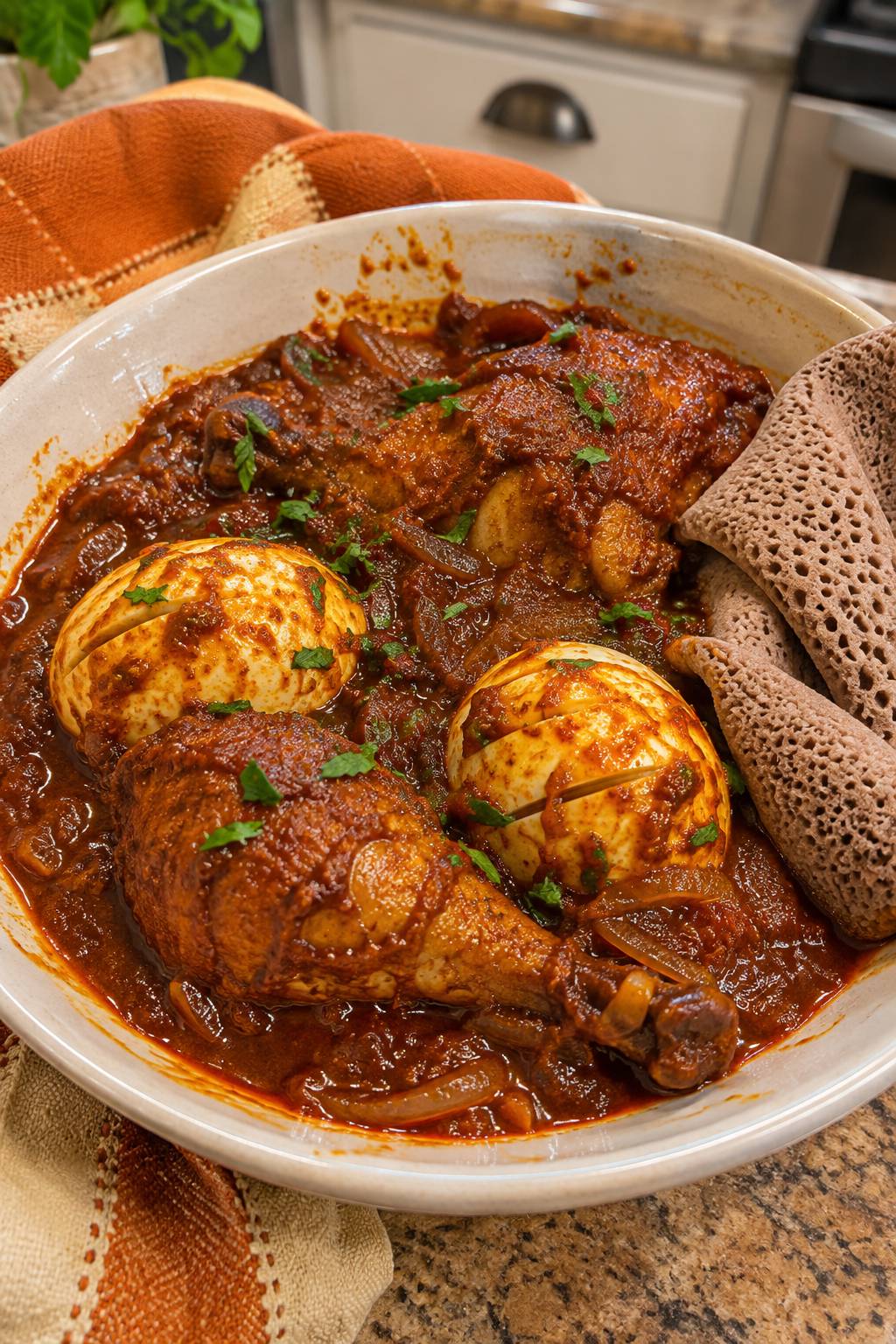
Finishing the Sauce and Eggs
The sauce starts out loose and thickens as it simmers uncovered, so give it time to reduce before you judge the texture. Nestle the cut eggs into the sauce and spoon it over them so they take on color and spice. Once the stew reaches a thick, spoonable consistency, stir in the final salt and taste again. If it has grown too thick, loosen it gradually with a little broth or water. Finish with fresh cilantro and serve hot with injera or steamed rice.
Frequently Asked Questions
Why do the eggs get cut before they go into the stew?
Shallow lengthwise cuts through the white give the sauce a way into each egg, so the whites pick up color and spice. Cutting only through the white keeps the yolk tucked in and tidy, and the eggs look attractive when you serve the stew.
What if the stew tastes too spicy?
Stir in a small splash of chicken broth or water, then taste again. Salt adds seasoning but will not reduce heat, so hold off on the final salt until the balance feels right. Because berbere blends vary so widely, tasting as you go is the best safeguard.
What should I serve with this stew?
Serve it hot with injera for scooping or with steamed white rice for a softer base. Chopped fresh cilantro sprinkled over the top adds a bright, green note against the deep red sauce.

Ethiopian Spiced Chicken Stew with Hard-Boiled Eggs
Course: Main CourseCuisine: EthiopianDifficulty: Easy6
servings20
minutes1
hour8
minutes460
kcal1
hour38
minutesBone-in chicken thighs and drumsticks simmer in a deep red onion and berbere sauce, with halved hard-boiled eggs added at the end. The sauce thickens to a rich stew that is served with injera or rice.
Ingredients
- For the eggs
6 large eggs
Ice water, for cooling the eggs
- For the chicken
3 lb bone-in chicken thighs and drumsticks, skin removed (about 8 pieces)
1 tbsp fresh lemon juice (from about 1/2 lemon)
1 tsp kosher salt
- For the sauce
2 tbsp olive oil
1/4 cup unsalted butter
3 large yellow onions, finely chopped (about 4 1/2 cups)
6 garlic cloves, minced
1 tbsp grated fresh ginger
3 tbsp tomato paste
1/4 cup berbere spice blend
1 tsp smoked paprika
1/2 tsp ground cardamom
1/2 tsp freshly ground black pepper
1 1/2 cups low-sodium chicken broth
1 tsp kosher salt, plus more to taste
- For serving
1/4 cup chopped fresh cilantro
Injera or steamed white rice, for serving
Directions
- Pat the chicken pieces dry with paper towels. Rub them with the lemon juice and 1 tsp kosher salt, then set aside while you prepare the eggs and onions.
- Place the eggs in a saucepan and cover with cold water by 1 inch. Bring to a boil over medium-high heat, reduce the heat to a steady simmer, and cook for 10 minutes.
- Transfer the eggs to a bowl of ice water and cool for 10 minutes. Peel the eggs, then make 3 or 4 shallow lengthwise cuts in each one, cutting just through the white.
- Melt the butter with the olive oil in a large Dutch oven over medium heat. Add the onions and cook uncovered for 15 minutes, stirring often, until soft and deep golden.
- Add the garlic and ginger and cook for 1 minute, stirring constantly. Stir in the tomato paste, berbere, smoked paprika, cardamom and black pepper, and cook for 2 minutes until fragrant and darkened.
- Pour in the chicken broth and scrape up any browned bits from the bottom of the pot. Add the chicken with any juices and stir to coat with the sauce. Cover, reduce the heat to low, and simmer for 30 minutes, turning the chicken once, until the meat is tender and an instant-read thermometer inserted near the bone reads 175°F.
- Nestle the cut eggs into the sauce. Simmer uncovered for 10 minutes, spooning the sauce over the eggs, until the sauce thickens to a stew-like consistency. Stir in the remaining 1 tsp kosher salt or more to taste.
- Sprinkle with the chopped cilantro and serve hot with injera or steamed white rice.
Notes
- Berbere blends vary widely in heat, so taste the sauce before adding the final salt. If it tastes too thick, stir in a splash of chicken broth or water, a tablespoon at a time. If it tastes too spicy, a small splash of broth or water will dilute the heat, so add it and retaste; salt adds seasoning but does not reduce heat.
- Bone-in dark meat has more fat and connective tissue than chicken breast, so it tolerates a longer simmer and tends to stay moist at 175°F.