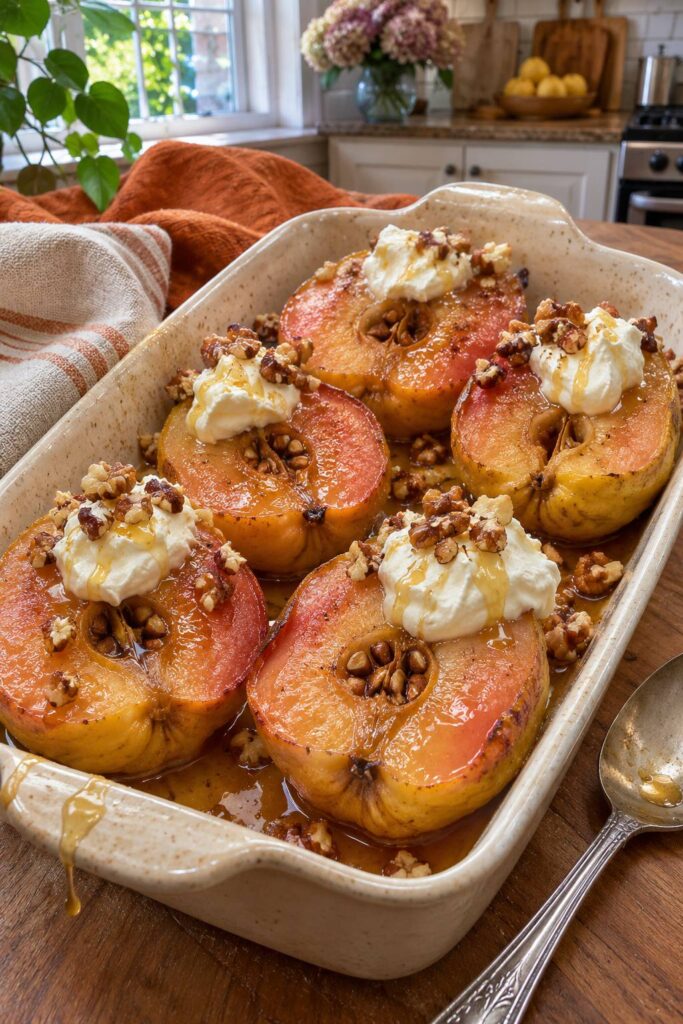
Quince is one of those fruits many home cooks walk past at the market. Raw, it is firm, fragrant and far too tough to eat out of hand, but gentle oven heat changes it completely. Slow baking turns the flesh tender and gives it a soft rosy color, and the honey-spiced syrup in the pan becomes something you will want to spoon over everything.
This dessert is a good fit for a cozy night after a hearty chicken or ground beef dinner. It needs little more than a baking dish and simple pantry staples, and the cool, rich clotted cream on top makes the warm fruit feel like a proper treat.
Choosing and Preparing Firm Quince
Look for quince with smooth, golden-yellow skin and a sweet perfume. The fuzz on the skin rubs off easily with a clean towel, and it should come off before you cut so it does not end up in your dessert. Because the fruit is so firm, use a sharp paring knife and work slowly. The core is tough, so cut it out cleanly rather than forcing the blade.
Acidulated water is the key to keeping cut quince looking appealing. Lemon juice stirred into cold water slows browning on exposed flesh, so keep each piece submerged as you work. The halves stay pale and fresh-looking until they go into the dish.
How the Syrup Builds Flavor and Texture
The syrup is simple: apple juice, honey, melted butter, cinnamon and salt. Honey and apple juice bring natural sweetness and a fruity backbone, while butter adds richness and helps the syrup cling to the fruit. Salt is there to sharpen the sweetness, so use it with restraint rather than letting the dessert taste salty.
Covering the dish matters. Foil traps steam, which softens the firm flesh gradually so it turns tender without falling apart. Once you uncover it, the liquid reduces and begins to caramelize on the edges. Spooning the pan juices over the fruit during that stage keeps the surface glossy and evenly colored. Watch for golden, lightly caramelized edges and a knife that slides easily into the thickest part, because those signs tell you more than the clock does.
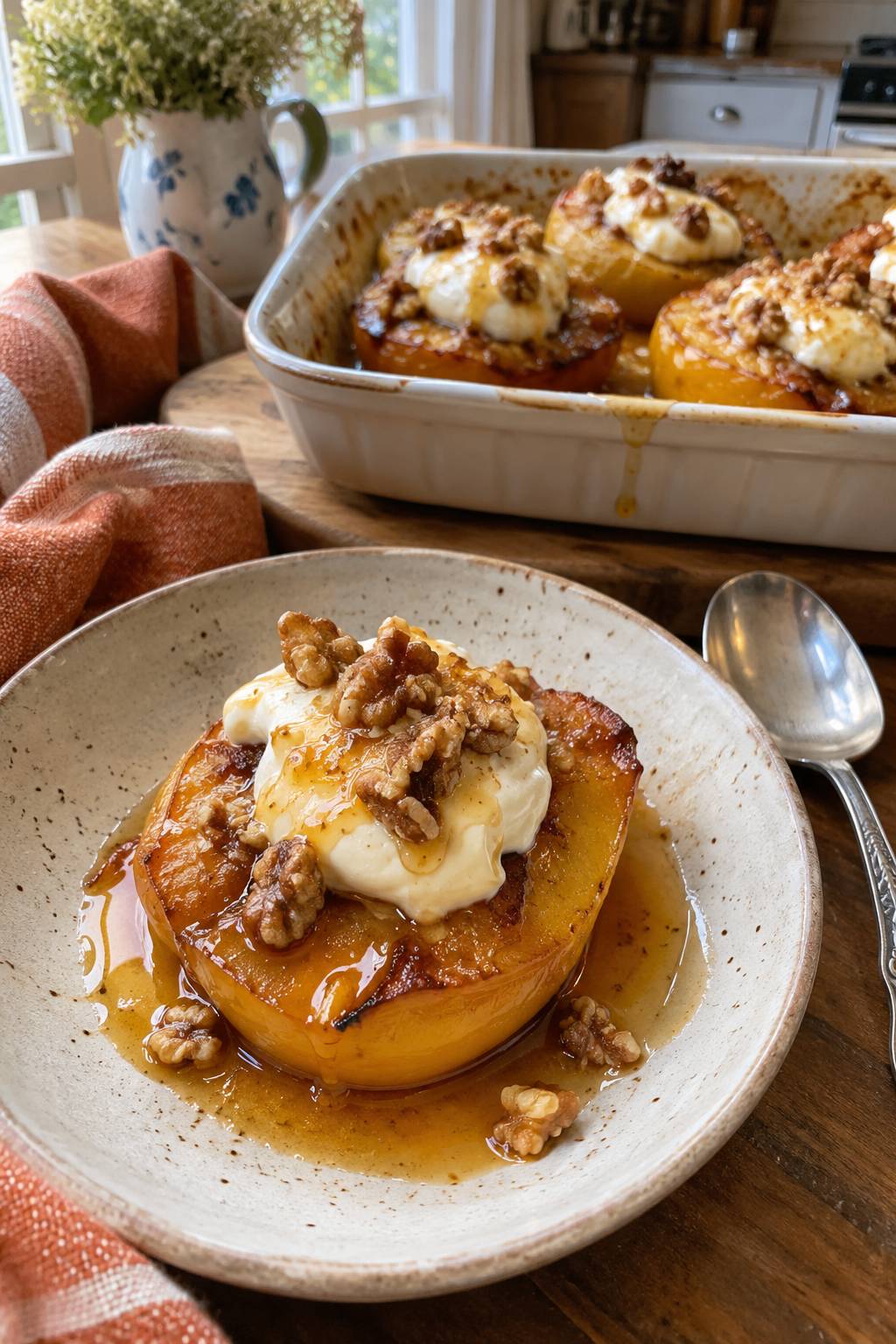
Finishing with Walnuts, Clotted Cream and Honey
Walnuts need only a dry skillet over medium heat. Stir them often, since nuts can move from toasted to bitter in moments. Pull them when the kitchen smells nutty and they look a shade deeper in color, then let them cool before sprinkling so they stay crisp.
Clotted cream is thick, rich and mildly tangy, so it contrasts nicely with the sticky fruit. Spoon a generous dollop on each half so it softens slightly against the warm syrup. Let the quince rest in the pan first so the syrup thickens. Serve warm or at room temperature, and finish with a light drizzle of honey for shine.
Frequently Asked Questions
Why do I need to soak the quince in lemon water?
Cut quince turns brown quickly when exposed to air. Keeping the halves submerged in cold water with lemon juice slows that browning, so the flesh stays pale until it goes into the dish. Drop each piece in as you cut it and keep it there until everything is arranged.
What if I cannot find clotted cream?
Look for it in jars at many grocery stores and specialty shops first. If you still cannot find it, whip cold heavy cream with powdered sugar to soft peaks and spoon that on top instead. The texture will be lighter than true clotted cream, but it still pairs well with the warm fruit.
How do I know when the quince is ready?
Test the thickest part with a thin knife. It should slide in with little resistance, and the edges should look golden and lightly caramelized. If the flesh still feels firm, keep baking uncovered and check again, spooning the pan juices over the fruit as you go.
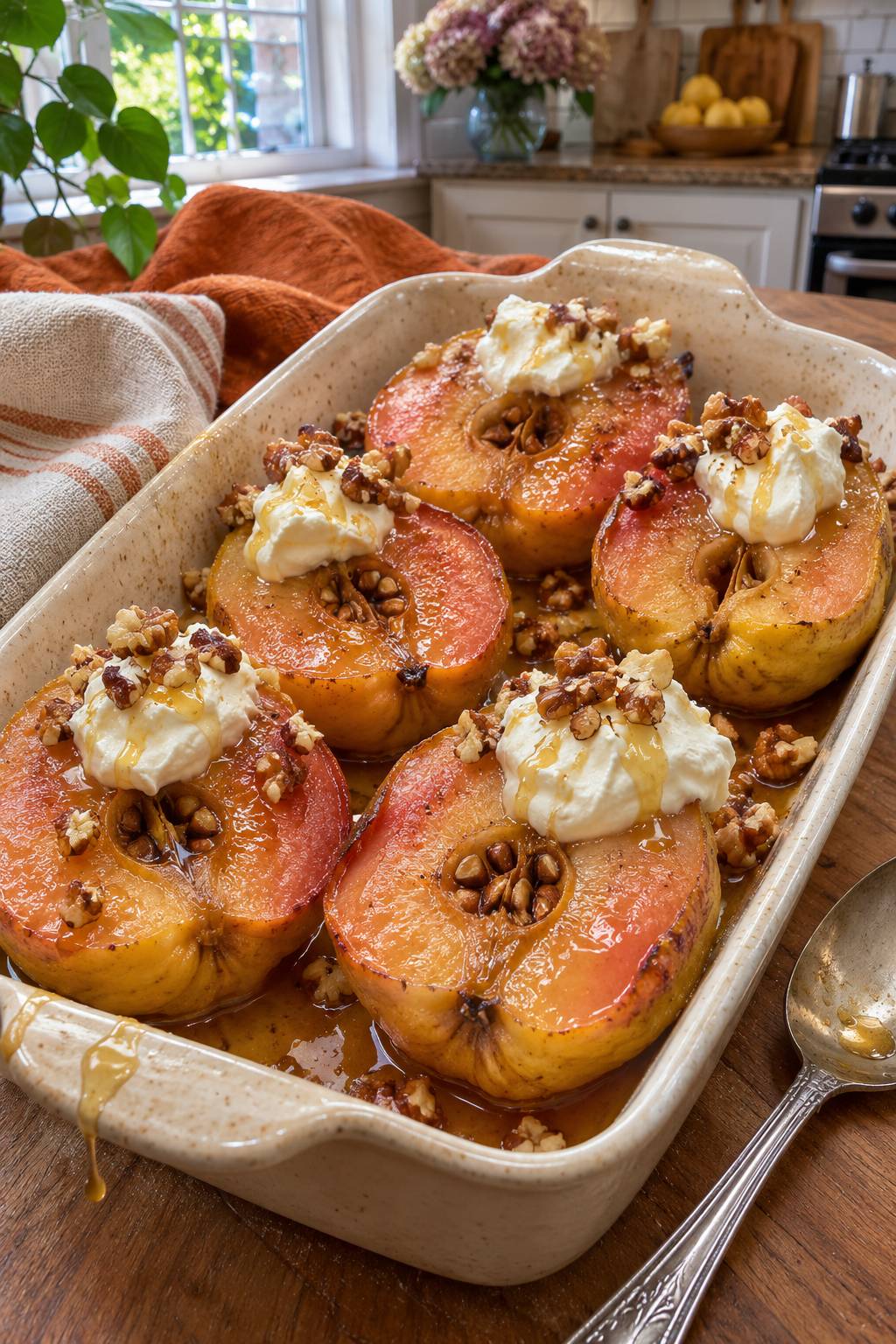
Honey Baked Quince with Clotted Cream and Walnuts
Course: DessertCuisine: AmericanDifficulty: Easy6
servings20
minutes1
hour425
kcal1
hour30
minutesHalved quince are baked in a honey, apple juice and cinnamon syrup until tender and rosy, then topped with clotted cream, toasted walnuts and a drizzle of honey. The pan juices are spooned over each half.
Ingredients
- For the quince
3 medium quince (about 2 lb total)
1 lemon, juiced (about 2 tbsp), plus 4 cups cold water for soaking
1 cup apple juice
1/3 cup honey
2 tbsp unsalted butter, melted
1/2 tsp ground cinnamon
1/4 tsp kosher salt
- For the topping
1/2 cup walnut halves, coarsely chopped
1 cup clotted cream, chilled
1 tbsp honey, for drizzling
Directions
- Preheat the oven to 375°F with a rack in the center. Stir the lemon juice into the 4 cups of cold water in a large bowl.
- Rub the fuzz off each quince with a clean towel. Cut each quince in half from stem to blossom end. Use a paring knife or melon baller to cut out the tough core and seeds. Place the halves cut side up in a 9×13-inch baking dish, or in a dish that holds them in a single layer. Drop each half into the lemon water as you work so the flesh does not brown.
- Whisk the apple juice, honey, melted butter, cinnamon, salt and 1 tbsp of the lemon water together in a bowl. Pour the mixture evenly over and around the quince halves. Cover the dish tightly with foil.
- Bake covered for 30 minutes, until the quince starts to soften.
- Remove the foil. Spoon the pan juices over the quince and bake uncovered for 30 minutes, basting every 10 minutes, until a knife slides easily into the thickest part and the edges are golden and lightly caramelized.
- While the quince bakes, toast the chopped walnuts in a dry skillet over medium heat for 3 to 4 minutes, stirring often, until fragrant. Set aside to cool.
- Let the quince rest in the pan for 10 minutes so the syrup thickens slightly.
- Spoon a portion of the pan juices over each half. Top each with a generous spoonful of clotted cream, a sprinkle of toasted walnuts and a drizzle of honey. Serve warm or at room temperature.
Notes
- Clotted cream is sold in jars in many grocery stores and specialty shops. If you cannot find it, whip 1 cup cold heavy cream with 1 tbsp powdered sugar to soft peaks; the texture will be lighter than true clotted cream.
- Acidulated water slows browning on cut quince. Keep the halves submerged until you place them in the dish.
- Covering the dish traps steam, which softens the firm flesh. Uncovering lets the syrup reduce and caramelize on the fruit.