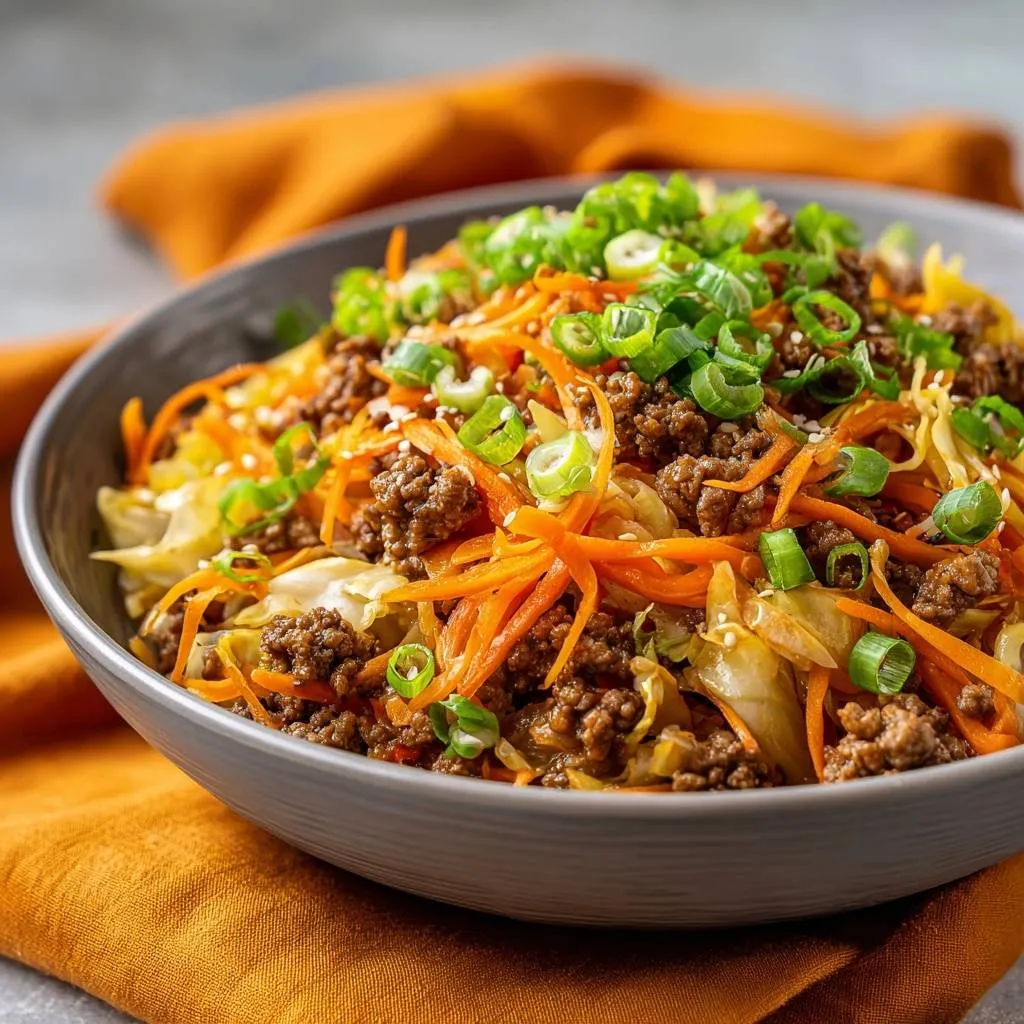
Why This Korean Beef Cabbage Bowl Stays Crisp
Picture this: you crave a Korean beef cabbage bowl, but end up with limp, watery veggies that drown the bold flavors. It happens all the time with low-heat stir-fries that steam instead of sear. This recipe fixes that with a high-heat blast, delivering crisp-tender cabbage and carrots in just 15 minutes.
Therefore, you get juicy crumbled beef soaked in umami-packed sauce, plus that satisfying char on the edges. No more soggy disappointments. In addition, each bowl clocks in around 400 calories, loaded with protein and crunch.
Here’s the expertise kicker: preheat your wok until it’s smoking hot, no oil yet. That instant sizzle evaporates moisture fast, locking in texture while the Maillard reaction builds deep flavor. This Korean beef cabbage bowl beats generic bulgogi bowls every time, hands down.
Key Ingredients for Korean Beef Cabbage Bowl
Start with 1 pound ground beef, ideally 80/20 for juiciness that renders just enough fat. It crumbles perfectly under high heat, carrying all those Korean beef bowl flavors.
Next, grab 4 cups shredded napa cabbage. It’s superior to green cabbage because its crinkly leaves hold shape and crispness better. In addition, 2 cups julienned carrots cook evenly, adding sweet crunch without mush.
Don’t skip 1/4 cup soy sauce, 2 tablespoons brown sugar, 3 minced garlic cloves, 1 tablespoon sesame oil, and 1 teaspoon black pepper for the sauce. Soy brings umami, sugar balances with caramel notes, and sesame oil toasts nutty under heat. Finally, 4 sliced green onions and 2 tablespoons sesame seeds garnish with fresh pop and toastiness.
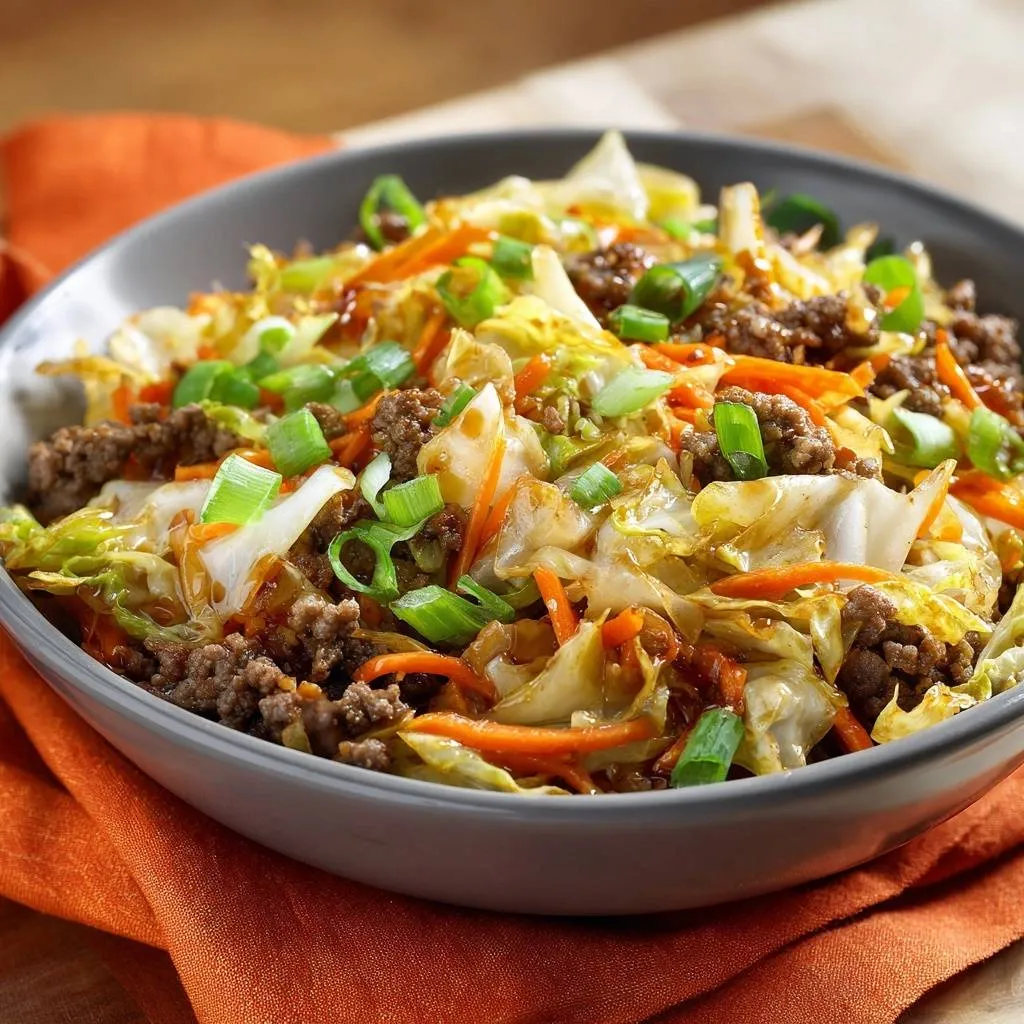
For low-sodium, swap soy for tamari. However, use room-temp ingredients so the sugar dissolves smoothly. These Korean beef bowl ingredients transform basics into bold territory.
Napa Cabbage and Carrots: Crispness Foundation
Shred napa cabbage finely with a knife or mandoline for quick, even cooking. Julienne carrots into thin matchsticks, not thick chunks, so they soften just right.
Pat them dry with a towel before adding to the pan. That prevents steaming and keeps your Korean beef cabbage bowl vibrant. You’ll smell the sweet veggie release right away.
Sauce Components: Umami Balance
Mix soy sauce, brown sugar, garlic, sesame oil, and pepper cold first. The 2:1 soy-to-sugar ratio delivers sweet-savory punch without overwhelming the beef.
Sesame oil’s aroma blooms on high heat, while garlic infuses deeply. Therefore, this synergy coats everything perfectly in your Korean beef cabbage bowl.
High-Heat Science in Korean Beef Cabbage Bowl
The magic happens via Maillard reaction: proteins and sugars in beef brown deeply at high temps, creating savory compounds. Veggies char lightly too, boosting flavor without sogginess.
A smoking-hot wok evaporates cabbage’s 95% water content instantly. Unlike low-heat steaming, this dry blast keeps everything crisp-tender. It’s like Korean jjim techniques, adapted for speed in your Korean beef cabbage bowl technique.
Physics-wise, constant tossing ensures even exposure. No lid traps steam. Result? Textures pop, flavors concentrate.
Maillard Browning on Ground Beef
Sear beef 5-7 minutes on high. Proteins denature, forming crusty bits packed with hundreds of flavor compounds. That deep brown hue signals success.
Dry Heat for Veggie Texture
Cabbage wilts fast from moisture release. But a 2-minute high-heat toss chars edges while structure holds. Therefore, crisp-tender wins every time.
Equipment Choices for Perfect Korean Beef Cabbage Bowl
Carbon steel wok or cast-iron skillet shines here. They retain scorching heat for true stir-fry action, unlike nonstick that cools too quick.
Preheat 2 minutes to smoke point, no oil initially. Skip lids to let steam escape. If no wok, a large skillet works, but toss vigorously for your Korean beef cabbage bowl wok needs.
Pro tip: wipe with a paper towel post-preheat to confirm readiness. Heat distribution prevents hot spots.
Wok vs. Skillet Showdown
Woks heat sides evenly for tossing ease. Skillets offer better flat browning. Both excel if preheated right; choose based on what you grab first.
Step-by-Step: Building Korean Beef Cabbage Bowl
Follow these Korean beef cabbage bowl steps precisely for foolproof results. High heat demands safety: use long tongs, stand back from splatters. Total time? Under 15 minutes.
Phase 1: Sauce Prep and Beef Sear
Whisk sauce cold until sugar melts. Heat wok 2 minutes till smoking, add beef, crumble fast. Cook 5-7 minutes for deep brown; drain excess fat but keep crispy bits.
Phase 2: Isolated Carrot Stir-Fry
Push beef aside. Toss carrots solo 1 minute on high. They soften with a slight give, no water released yet.
Phase 3: Cabbage High-Heat Toss
Add cabbage, stir with beef and carrots 2 minutes nonstop. Edges char, cabbage stays crisp. Smell that sweet smoke?
Phase 4: Sauce Integration and Finish
Pour sauce over all, toss 1 minute till thick and glossy. Off heat immediately to halt cooking.
Phase 5: Bowl Assembly and Garnish
Divide into bowls. Scatter green onions and sesame seeds. Toast seeds lightly first for extra crunch.
Avoiding Soggy Fails in Korean Beef Cabbage Bowl
Top Korean beef cabbage bowl mistakes kill texture. First, overcrowding traps steam; use a big wok or batch cook. Second, low heat releases water; test with smoke.
Third, wet veggies steam everything. Pat dry always. Fourth, skip draining beef fat; it greases up. Fifth, over-saucing dilutes char. Less is more.
Spot limp cabbage? It looks translucent and pools liquid. Fix next time with full high-heat commitment.
Overcrowding and Steam Trap
Minimum 14-inch wok for 4 cups cabbage. If tight, cook veggies in batches. Space equals crispness.
Low-Heat Water Release
No smoke after 2 minutes? Heat longer. Flick water; it should dance, not sit.
Flavor Twists on Korean Beef Cabbage Bowl
Personalize your Korean beef bowl variations easily. Add 1 teaspoon gochujang to sauce for spicy kick, balanced by extra sugar if needed.
Stir in chopped kimchi post-beef for fermented tang. Swap beef for crumbled tofu, pressing dry first. Boost with grated ginger in sauce.
Low-carb? Serve over cauliflower rice. Vegan? Tempeh works too. All keep the crisp core intact.
Spicy Gochujang Upgrade
Mix 1 teaspoon gochujang into sauce. It ferments sweet heat without overpowering. Taste and adjust sugar.
Low-Carb Cauliflower Base
Rice cauliflower finely, sauté dry 3 minutes. Swap under bowl. Drops carbs 20 grams per serving.
Pairing Sides with Korean Beef Cabbage Bowl
Balance richness with cool cucumber salad: slice thin, dress in rice vinegar and sesame. Steamed rice soaks up sauce perfectly.
Pickled radish adds bright crunch. Miso soup warms gently. Top with fried quail eggs for runny yolk pop. These Korean beef cabbage bowl pairings contrast textures smartly.
Make-Ahead Strategies for Korean Beef Cabbage Bowl
Prep sauce and chop veggies day before; store separate airtight. Cook beef/veggies fresh for crispness, or fridge cooked bowl 3 days.
Freeze beef and sauce separate up to 1 month; skip veggies, they sog. Reheat beef high-heat with splash water, stir-fry veggies new for meal prep bowls.
Troubleshooting Korean Beef Cabbage Bowl Issues
Beef greasy? Drain fat twice. Sauce too sweet? Add soy splash. Veggies soggy? Heat wasn’t hot enough; retry preheat.
Scaling for 4+? Double, but two batches. Storage beyond 3 days? Freeze components, not assembled.
Common Questions on Korean Beef Cabbage Bowl
How do I store leftovers of Korean Beef Cabbage Bowl?
Store in airtight containers fridge-side up to 3 days. Reheat in hot skillet, not microwave, to revive crispness; add splash water if dry. Don’t freeze full bowls, veggies turn mushy, but beef/sauce freeze well 1 month. Thaw overnight, stir-fry fresh cabbage.
Why are my veggies soggy in Korean Beef Cabbage Bowl?
Common issue: low heat or wet veggies. Pan must smoke before adding; pat cabbage/carrot super dry. Toss nonstop 2 minutes exactly. If limp, overcrowding steamed them; use bigger wok next time.
Can I substitute ingredients in Korean Beef Cabbage Bowl?
Yes, ground turkey for beef, but drain fat well. Gluten-free? Tamari for soy sauce. No napa? Shredded green cabbage works, but less crisp. Sesame oil swap: neutral oil plus seeds toasted separate.
Is Korean Beef Cabbage Bowl kid-friendly?
Absolutely, make mild by halving sugar and pepper. Kids love the sweet beef and crunchy veggies. Hide garlic mince fine; add fun shapes to carrots. Scales easy for picky eaters.
What’s the nutrition for one Korean Beef Cabbage Bowl?
Per serving (1/4 recipe): about 400 calories, 25g protein, 20g carbs, 25g fat. High iron from beef, vitamin A from carrots, low-carb friendly at under 10g net if skipping rice.
Can I make Korean Beef Cabbage Bowl without a wok?
Sure, large cast-iron or stainless skillet does it. Preheat same way to smoke, toss with tongs or spatula. Wider surface aids even cooking; just keep heat screaming high.
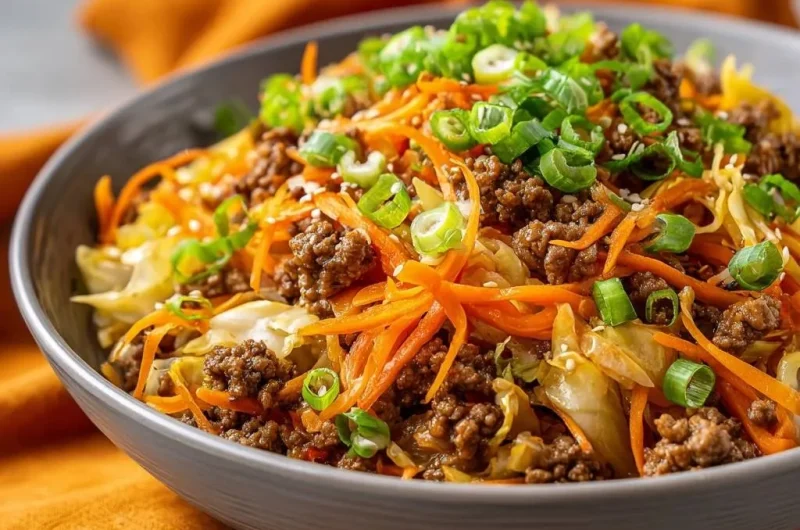
Korean Beef Cabbage Bowl
Course: Main CourseCuisine: KoreanDifficulty: easy4
servings10
minutes15
minutes25
Minutes450
kcalKorean
Ingredients
1 pound ground beef
4 cups shredded napa cabbage
2 cups julienned carrots
4 green onions, thinly sliced
2 tablespoons sesame seeds
1/4 cup soy sauce
2 tablespoons brown sugar
3 garlic cloves, minced
1 tablespoon sesame oil
1 teaspoon black pepper
Directions
- Mix soy sauce, brown sugar, garlic, sesame oil, and pepper in a small bowl for the sauce. Set aside.
- Heat a large wok or skillet over high heat for 2 minutes until smoking hot, no oil needed yet. Add ground beef, breaking it up with a spoon. Cook 5-7 minutes, stirring constantly, until deeply browned and crumbled. Spoon out any excess fat, leaving flavorful bits in pan.
- Push beef to one side. Add julienned carrots to empty side. Stir-fry carrots alone on high heat for 1 minute to soften slightly without water.
- Add shredded cabbage to pan with carrots. Stir-fry everything together on screaming high heat for exactly 2 minutes, tossing nonstop. The intense dry heat chars edges and keeps cabbage crisp-tender, no cover or low heat to avoid sogginess.
- Pour in sauce and browned beef. Toss 1 minute to coat and thicken. Remove from heat immediately.
- Divide into bowls. Top with sliced green onions and sesame seeds. Serve hot for perfect texture.
Notes
- Use a wok or large skillet for best high-heat results. Do not cover the pan or reduce heat to keep veggies crisp. Napa cabbage is recommended for best texture.