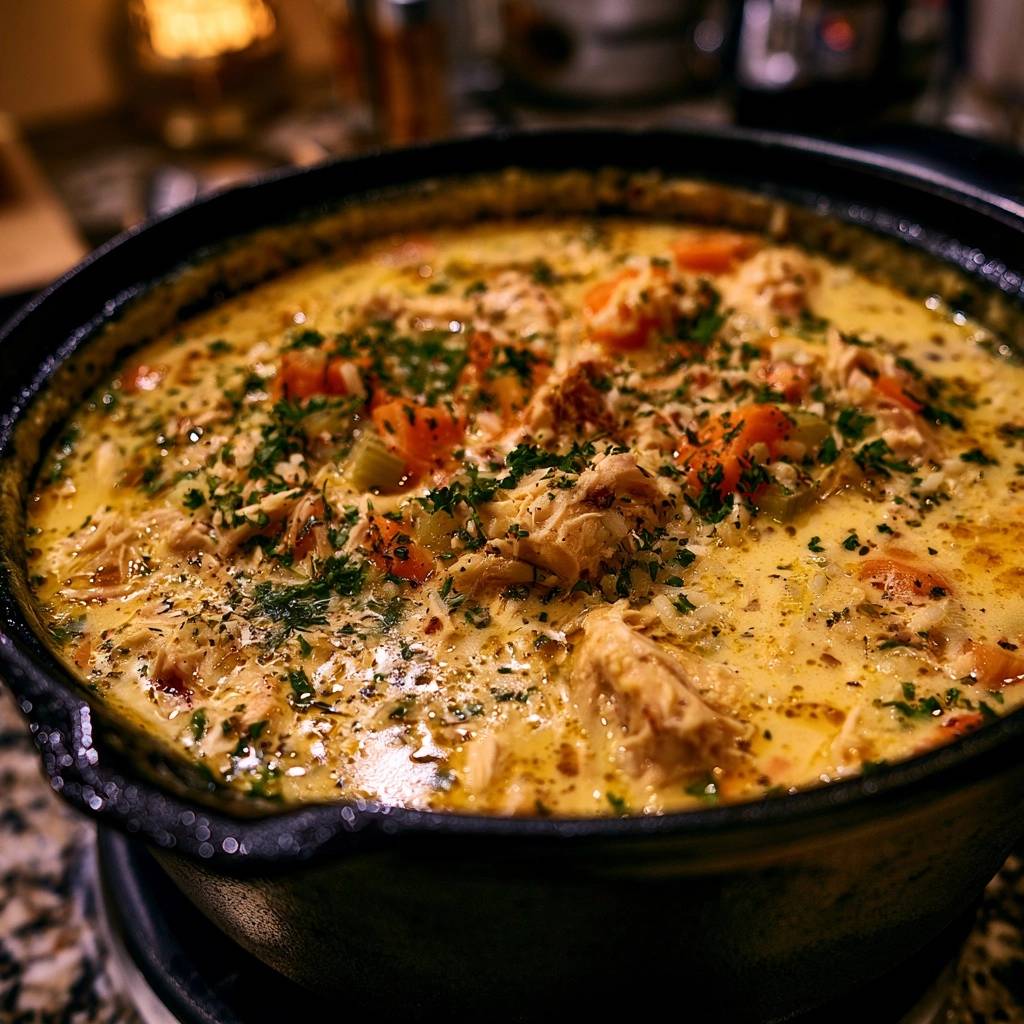
The secret to a truly spectacular Creamy Chicken and Wild Rice Soup lies in the contrast between the nutty, resilient texture of the rice and a broth that feels like liquid velvet. Most home cooks struggle with cream-based soups that either end up thin and watery or, even worse, separate into a grainy, curdled mess. When you achieve that perfect emulsion, every spoonful carries a rich weight that coats the back of a spoon without feeling heavy or greasy.
You want a soup that maintains its integrity from the first simmer to the final bowl. Achieving this requires more than just dumping ingredients into a pot; it demands a specific sequence of fat-to-starch bonding. By focusing on the structural stability of the broth, you ensure that the dairy integrates seamlessly rather than floating on top in oily droplets.
The real trick to this recipe is the “Starch-Lock” method. Instead of adding a slurry at the end, you must coat your sautéed aromatics in flour before any liquid touches the pan. This creates a reinforced roux that bonds to the vegetables, providing a microscopic scaffolding that holds the heavy cream in place later. This single step prevents the dreaded “breaking” of the soup during the long simmer.
The Anatomy of a Non-Curdling Cream Base
Creating a stable cream base is a lesson in molecular chemistry. When you sprinkle flour over the butter-slicked carrots, onions, and celery, you are creating a suspension. The fat surrounds the starch granules, which prevents them from clumping together when the chicken broth is introduced. This results in a smooth, uniform thickening throughout the entire pot.
This “Starch-Lock” method is superior to a late-stage cornstarch slurry because it allows the flour to cook thoroughly, removing any raw, pasty flavor. As the soup simmers, the starch molecules swell and trap the water molecules in the broth. This creates a thick, stable environment that can easily welcome the heavy cream without the proteins in the dairy denaturing and clumping into curds.
Furthermore, the presence of the butter provides a necessary fat barrier. This fat acts as a buffer between the acidic components of the broth and the delicate proteins in the cream. By establishing this emulsion early in the cooking process, you create a soup that remains creamy even when reheated the next day.
Why Wild Rice Requires Patience
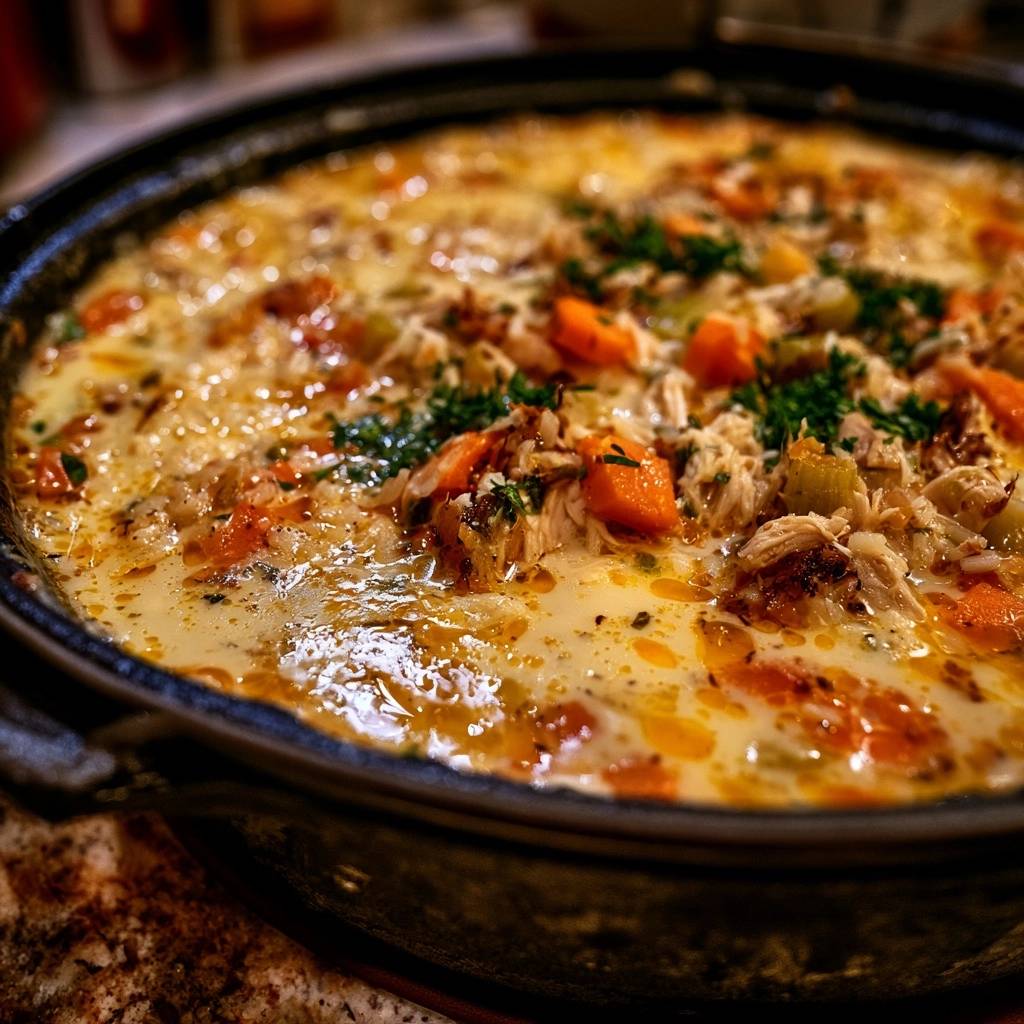
It is important to remember that wild rice isn’t actually rice at all; it is the seed of an aquatic grass. Because of its unique botanical structure, it behaves differently than white or brown rice. The outer hull is incredibly tough and fibrous, which is why it requires a significantly longer cooking time to reach a palatable texture.
You are looking for the “bloom.” This occurs when the dark outer hull finally bursts open, revealing a pale, tender interior. If you rush the process, you’ll end up with grains that feel like pebbles. A 45-minute simmer is the non-negotiable sweet spot where the rice becomes tender while still retaining a pleasant, chewy “pop” that defines this dish.
If you are using a true black wild rice rather than a blend, be prepared to add an extra 15 minutes to your timer. True wild rice is even more resilient and takes its time to hydrate. Don’t be tempted to turn up the heat to speed things up; a gentle simmer is necessary to prevent the chicken from becoming rubbery while the rice does its work.
Essential Components for the Perfect Pot
Quality ingredients are the backbone of a soup this simple. I always recommend using a low-sodium chicken broth. This gives you total control over the salt levels, which is vital because the broth concentrates as it simmers. If you start with a full-sodium broth, the final product often ends up aggressively salty after the rice has absorbed its share of the liquid.
One ingredient you might find surprising is smoked paprika. While it doesn’t make the soup spicy, it provides a deep, golden-amber hue. Without it, cream-based wild rice soups can often look pale, gray, or unappetizing. The paprika works with the orange of the carrots to give the broth a rich, sun-kissed glow that looks as good as it tastes.
Fresh herbs make a world of difference here. While dried thyme and oregano provide the earthy base notes, the fresh parsley added at the end provides a necessary hit of chlorophyll and brightness. It cuts through the richness of the heavy cream and butter, balancing the palate so you can eat a full bowl without feeling overwhelmed by the fat content.
Selecting and Prepping the Poultry
While many people reach for chicken thighs for soups, I actually prefer boneless skinless chicken breasts for this specific recipe. Because we poach the breasts whole directly in the seasoned broth, they stay incredibly moist. The gentle heat of the simmering liquid cooks the meat from the outside in, allowing the fibers to stay relaxed rather than seizing up.
Poaching the chicken whole also allows the meat to absorb the herbal notes of the thyme and oregano. If you were to use pre-cooked or rotisserie chicken, the meat would simply sit in the soup as a separate entity. By cooking it in the pot, the chicken and the broth become a singular, cohesive flavor profile. Once shredded, the jagged edges of the meat help to further thicken the soup by catching the creamy broth.
The Mirepoix: Building a Flavor Foundation
The foundation of any great soup is the mirepoix: the onion, carrots, and celery. You want to dice these relatively small and uniform. This ensures that you get a bit of everything in every spoonful. A fine dice also allows the vegetables to soften more quickly and release their natural sugars into the butter.
Don’t rush the sautéing phase. You need about 6 to 8 minutes over medium heat to properly sweat the vegetables. You aren’t looking for deep brown caramelization, but rather a translucent, soft appearance. This step removes the sharp bite of the raw onion and creates a mellow, sweet base that supports the savory chicken and nutty rice.
Step-by-Step: Executing the Velvet Texture
Achieving a professional-grade texture requires following a specific sequence of transformations. You are essentially building a series of emulsions that stack on top of each other. If you follow these phases carefully, you will avoid the common pitfalls of home-cooked cream soups.
Phase 1: The Roux-Vegetable Integration
Once your vegetables are soft, you’ll sprinkle the flour over them. It will look a bit messy at first, like a thick paste coating the carrots and celery. Keep stirring for at least two minutes. You are looking for a specific sensory cue: a faint, nutty aroma. This indicates the flour is “toasted” and the raw starch flavor is gone.
This phase is critical because it ensures the flour is fully hydrated by the butter before the broth is added. If you skip this and try to whisk flour into the liquid later, you will almost certainly end up with lumps. The flour-coated vegetables act as a distribution system, ensuring the thickener is spread evenly throughout the pot.
Phase 2: The Long Simmer and Grain Hydration
As you slowly whisk in the broth, the mixture will initially look thin. However, as it comes to a boil and then drops to a simmer, the starch begins to gelatinize. Over the next 45 minutes, the wild rice will release its own natural starches, which act as a secondary thickener. The broth will transform from a watery liquid into a silky, opaque base.
During this time, keep the lid on the pot. This traps the steam, ensuring the rice stays submerged and the chicken poaches evenly. Around the 40-minute mark, check a grain of rice. It should be split open and tender. If it still feels like a grain of sand in the center, give it another 10 minutes. Patience here is the difference between a mediocre soup and a masterpiece.
Phase 3: The Tempering Technique
This is the most important technical step in the entire recipe. Never pour cold heavy cream directly into a boiling pot of soup. The extreme temperature difference causes the milk proteins to seize and clump, resulting in a curdled appearance. Instead, you must temper the cream.
Ladle about a cup of the hot soup liquid into a separate bowl containing your room-temperature heavy cream. Whisk them together until smooth. This gradually raises the temperature of the cream and stabilizes it. When you finally pour this warm, tempered mixture back into the main pot, it will integrate perfectly, creating a flawless, velvet finish.
Troubleshooting Common Soup Consistency Issues
If your soup feels too thin after the rice has cooked, don’t panic. You can let it simmer uncovered for an additional 10 minutes. This allows some of the water to evaporate, concentrating the starches. Alternatively, you can mash a few of the cooked vegetables against the side of the pot to release more thickness into the broth.
On the other hand, if the soup becomes too thick (which often happens as the rice continues to absorb liquid), simply whisk in a splash of extra broth or water. Wild rice is incredibly thirsty. If you find the soup has turned into a porridge-like consistency while sitting, a little extra liquid and a gentle stir over low heat will bring it back to life.
Flavor Variations and Ingredient Swaps
If you want to experiment with the flavor profile, try replacing the yellow onion with two large leeks. Leeks offer a more delicate, buttery sweetness that pairs beautifully with wild rice. You can also add a cup of sliced cremini mushrooms during the sauté phase. Mushrooms provide an earthy umami boost that complements the nuttiness of the rice.
For those who need a gluten-free option, you can omit the flour entirely. Instead, dice a large russet potato very small and add it at the beginning of the simmer. The potato will break down and release enough starch to thicken the soup naturally. You can also use a heavy cream reduction method, though the potato method is more reliable for achieving that specific “chowder” feel.
Optimal Pairings for a Hearty Meal
Because this soup is so rich and creamy, you want side dishes that offer a sharp textural or acidic contrast. A thick slice of toasted sourdough is the classic choice, as the tangy crumb and crunchy crust are perfect for dipping. The acidity of the sourdough helps to cleanse the palate between bites of the savory soup.
A bright arugula salad with a simple lemon vinaigrette is another excellent pairing. The peppery bite of the greens and the hit of citrus cut right through the heavy cream. Avoid sides that are also soft or creamy, like mashed potatoes or macaroni. You want crunch and acid to balance the velvet-smooth experience of the wild rice and chicken.
Storage, Reheating, and Freezing Protocols
This soup keeps beautifully in the refrigerator for up to four days. In fact, many people find the flavor improves on the second day as the herbs have more time to infuse the broth. However, be aware that the rice will continue to swell. You will almost certainly need to add a half-cup of broth or water when reheating to restore the original consistency.
Reheating should always be done over low heat. If you blast the soup in the microwave or boil it aggressively on the stove, you risk breaking the emulsion and causing the cream to separate. Stir it frequently as it warms to keep the fats and liquids unified. I do not recommend freezing this soup; the freezing and thawing process often causes the dairy to grain out, and the rice can become unpleasantly mushy.
Expert Troubleshooting and Preparation FAQ
Can I use pre-cooked chicken or rotisserie leftovers?
Yes, you can use pre-cooked chicken, but you will lose some of the depth of flavor. To compensate, add the shredded chicken during the last 10 minutes of simmering just to warm it through. Since you aren’t poaching the meat, you might want to use a slightly higher-quality chicken stock to make up for the lost collagen and savory notes that raw chicken provides during the simmer.
What if my wild rice is still crunchy after 45 minutes?
Several factors can cause this, including high altitude, hard water, or simply the age of the rice. Older rice takes longer to hydrate. If it’s still crunchy, add another half-cup of broth and continue simmering with the lid on. Check it every 10 minutes. In extreme cases, some true wild rice varieties can take up to 75 minutes to fully bloom.
How do I fix a soup that has already curdled?
If the soup breaks and looks grainy, you can sometimes save it using a “hail mary” technique. Remove a few ladles of the soup (try to avoid the rice and chicken) and run it through a high-speed blender with a tablespoon of heavy cream or a small piece of cold butter. Whisk this re-emulsified liquid back into the pot over very low heat. The fresh fats can sometimes help pull the broken emulsion back together.
Is there a dairy-free alternative that maintains this thickness?
Full-fat coconut milk is the best substitute for heavy cream, though it will add a slight coconut flavor. For a more neutral profile, use cashew cream. Soak raw cashews in water, then blend them until perfectly smooth. This provides a high-fat, high-protein base that mimics the mouthfeel of heavy cream without the risk of curdling in the same way dairy does.
Why is my soup turning a purple or gray tint?
This is caused by the anthocyanins (natural pigments) in the black hull of the wild rice leaching into the broth. It is completely natural and safe to eat. To counter this, ensure you are using the smoked paprika and plenty of carrots. The orange and red tones of these ingredients act as a color-corrector, shifting the gray tones back toward a warm, appetizing golden-brown.
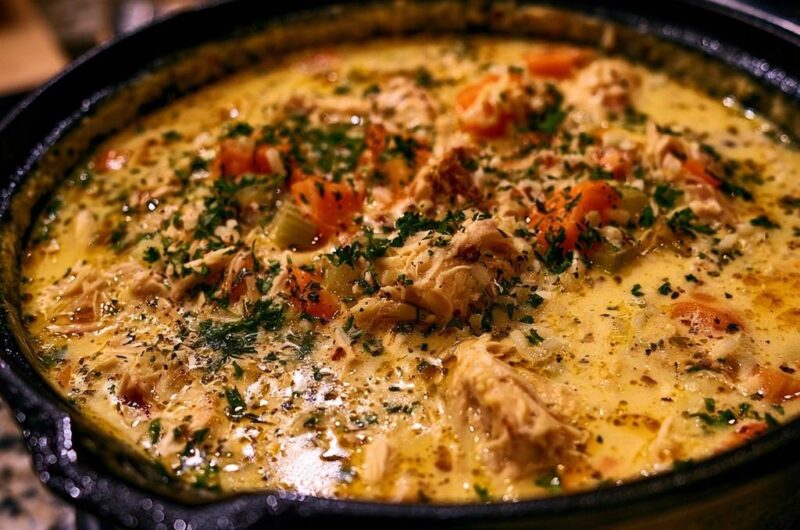
Creamy Chicken and Wild Rice Soup
Course: Main CourseCuisine: AmericanDifficulty: easy6
servings15
minutes55
minutes70
Minutes410
kcalAmerican
Ingredients
1.5 lbs boneless skinless chicken breasts
1 cup wild rice blend, uncooked (Note: If using a true black wild rice, increase simmer time by 15 minutes)
2 large carrots, sliced into rounds
2 stalks celery, diced
1 medium yellow onion, finely chopped
4 cloves garlic, minced
6 cups low-sodium chicken broth
1 cup heavy cream
1/4 cup all-purpose flour
4 tablespoons unsalted butter
1 teaspoon dried thyme
1 teaspoon dried oregano
1/2 teaspoon smoked paprika (for the golden hue shown in the image)
Salt and black pepper to taste
1/2 cup fresh parsley, finely chopped for garnish
Directions
- In a large Dutch oven or heavy pot, melt the butter over medium heat. Add the onion, carrots, and celery. Sauté for 6 to 8 minutes until the vegetables begin to soften.
- Stir in the minced garlic, thyme, oregano, and smoked paprika. Cook for 1 minute until fragrant.
- To solve the watery soup problem, sprinkle the flour directly over the sautéed vegetables and stir constantly for 2 minutes. This creates a roux-base that bonds to the ingredients, preventing the broth from staying thin.
- Slowly pour in the chicken broth while whisking to ensure no flour lumps remain. Add the uncooked wild rice and the chicken breasts whole.
- Bring the mixture to a boil, then reduce heat to low. Cover and simmer for 40 to 45 minutes. (Wild rice requires a longer simmer than white rice to bloom and become tender; this also ensures the chicken is tender enough to shred easily). The chicken is done when it reaches 165°F (74°C) in the thickest part.
- Remove the chicken breasts to a plate, shred them with two forks, and return the meat to the pot.
- To prevent curdling, do not pour cold cream into the hot soup. Instead, use the tempering method: whisk one cup of the hot soup liquid into your heavy cream in a separate bowl first.
- Slowly pour the tempered cream mixture back into the pot while stirring. This stabilizes the dairy and guarantees a perfectly smooth, thick texture.
- Season generously with salt and pepper. Let it simmer uncovered for 5 more minutes to reach peak thickness.
- Garnish heavily with fresh parsley and an extra crack of black pepper before serving to match the visual presentation.
Notes
- If using a true black wild rice, increase simmer time by 15 minutes. Always temper the cream to prevent curdling.