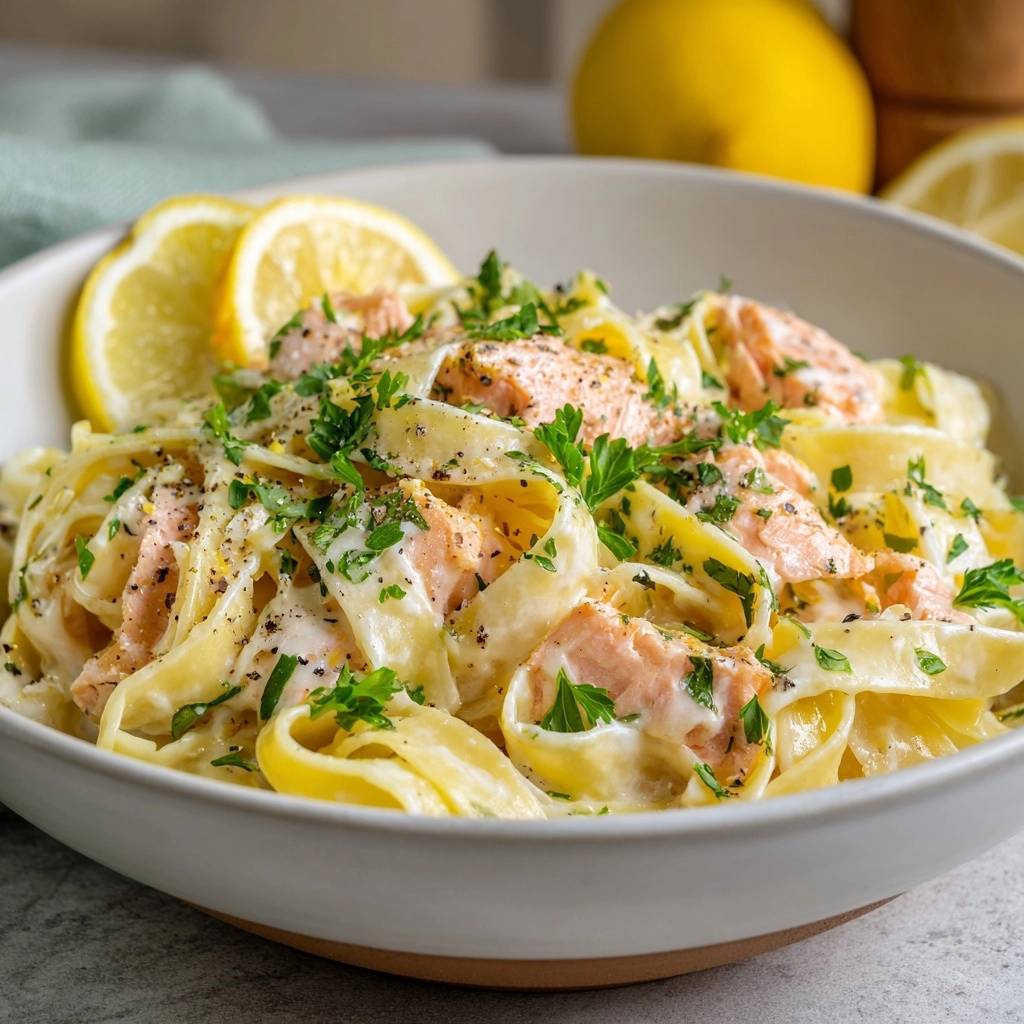
We have all been there. You spend good money on fresh salmon and high-quality pasta, only to have the sauce turn into a thin, watery puddle at the bottom of your bowl. It is incredibly frustrating when a dish that should be luxurious and velvety ends up looking like a broken soup. Most recipes fail because they don’t account for the delicate balance between citrus acidity and dairy fats, leading to a sauce that either curdles or simply refuses to cling to the noodles.
This Creamy Lemon Salmon Fettuccine changes the game by focusing on a specific emulsion technique that guarantees a restaurant-quality finish every single time. By combining the brightness of fresh lemon with the richness of Atlantic salmon, we create a flavor profile that is both refreshing and deeply satisfying. However, the real secret lies in the physics of the sauce, which we are going to master through a careful reduction process.
For a similar silky sauce, check out this lemon salmon tagliatelle.
The key to success here is understanding that a great cream sauce isn’t just about mixing ingredients; it is about creating a stable bond. I have found that the most common mistake home cooks make is draining their pasta water too soon. That cloudy, starchy liquid is actually the “glue” that prevents your sauce from breaking, and once you learn how to use it, you will never have a watery pasta dish again.
The Science of a Stable Cream Sauce
To understand why cream sauces often separate, we have to look at what is happening inside the pan. Heavy cream is an emulsion of milk fat and water. When you add an acid like lemon juice, it can cause the proteins in the dairy to clump together, resulting in that dreaded curdled texture. Furthermore, if the sauce isn’t reduced properly, the excess water content in the cream remains, leaving you with a thin liquid that slides right off the fettuccine.
Therefore, we use a reduction technique to evaporate that excess water. By simmering the heavy cream for several minutes before adding the pasta, we concentrate the fats and proteins. This creates a much more stable base that can handle the addition of lemon juice without breaking. Heavy cream is non-negotiable here because it has a higher fat content than milk or half-and-half, which provides the structural integrity needed for a thick, glossy coating.
In addition to reduction, we utilize starchy pasta water as a molecular bridge. As pasta cooks, it releases amylose and amylopectin into the water. When you whisk this starchy liquid into your cream and cheese, it acts as an emulsifier. It binds the fats from the cream and butter to the carbohydrates in the pasta, ensuring the sauce stays unified and velvety rather than separating into oil and water on your plate.
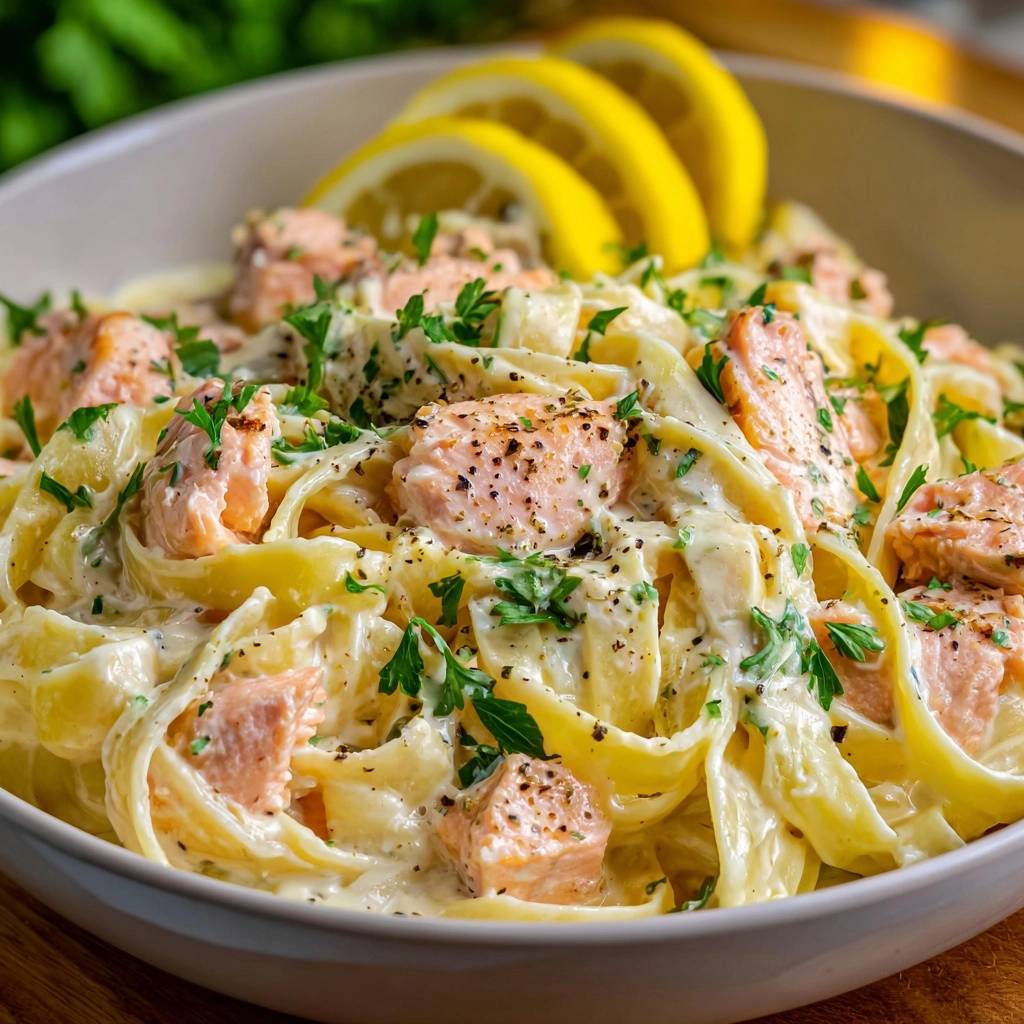
Essential Components for the Perfect Emulsion
Quality ingredients are the foundation of this dish. For the best results, always choose fresh salmon fillets over frozen ones. Fresh salmon has a firmer cell structure, which means it won’t release as much moisture during the searing process, helping you achieve that beautiful golden crust. If you must use frozen, ensure it is completely thawed and patted bone-dry with paper towels before it touches the pan.
The cheese you choose also plays a massive role in the final texture. Please avoid the pre-shredded Parmesan found in plastic tubs. Those products are coated in anti-caking agents like cellulose, which prevent the cheese from melting smoothly and can lead to a grainy sauce. Instead, buy a wedge of Parmesan and grate it yourself. It melts almost instantly into the warm cream, contributing to that silky mouthfeel we are after.
Lastly, pay attention to your lemons. We use both the zest and the juice for a reason. The zest contains essential oils that provide a deep, floral citrus aroma without adding acidity. The juice provides the sharp tang that cuts through the heavy cream. By adding the zest early and the juice only after the sauce has thickened, we maximize flavor while minimizing the risk of curdling the dairy.
Selecting and Preparing the Salmon Fillets
When you are at the fish counter, look for salmon that is bright in color and firm to the touch. I prefer skinless fillets for this recipe because they allow for a more uniform sear on all sides of the chunks. Cutting the salmon into 1.5-inch pieces is the “sweet spot” for pasta. It is large enough to stay juicy in the center but small enough to distribute evenly so you get a bit of fish in every forkful.
Before you season the fish, make sure to pat it dry. Any surface moisture will turn into steam the moment it hits the hot butter, which prevents the salmon from browning. A dry surface ensures a quick, hard sear that locks in the juices and creates a savory crust that contrasts beautifully with the creamy sauce.
The Role of Starchy Pasta Water
Think of your pasta water as “liquid gold.” Most people pour it down the drain, but in this recipe, it is a vital ingredient. As the fettuccine boils, the water becomes saturated with starch. This starch is a natural thickener that is far superior to flour or cornstarch because it doesn’t alter the flavor of the sauce. It creates a smooth transition between the noodles and the cream, helping the sauce “grip” the pasta so every strand is perfectly coated.
Step-by-Step: Searing Salmon for Maximum Tenderness
The secret to perfect salmon in pasta is to avoid overcooking it during the initial sear. You want to melt your butter over medium-high heat until it is foaming but not brown. Place your seasoned salmon chunks in the pan and let them sit undisturbed for about two minutes. You are looking for the Maillard reaction—that beautiful golden-brown crust that develops when proteins hit high heat.
Flip the pieces and cook for just another minute or two. The salmon should still be slightly translucent and underdone in the very center. This is intentional! If you cook it all the way through now, it will become tough and rubbery once it sits in the hot sauce. By removing it early, you allow the residual heat of the pasta to finish the cooking process gently, keeping the fish buttery and tender.
Don’t wash the pan after removing the salmon. Those little browned bits stuck to the bottom are called “fond,” and they are packed with concentrated salmon flavor. When you add your garlic and cream, you will scrape those bits up, incorporating all that savory goodness directly into your lemon sauce.
The Reduction Method: Building the Lemon Cream Base
Once your garlic is fragrant, pour in the heavy cream and add the lemon zest. This is where patience pays off. You want to maintain a steady simmer, not a rolling boil. As the cream bubbles gently, the water evaporates, and the sauce begins to thicken naturally. You will know it is ready when it passes the “spoon test”—dip a metal spoon into the cream, and it should coat the back of it thickly enough that you can draw a clear line through it with your finger.
This reduction process usually takes about three to four minutes. During this time, the aroma of the garlic and lemon zest will intensify, filling your kitchen with a bright, savory scent. Only after the cream has thickened should you whisk in the Parmesan cheese and lemon juice. The cheese adds saltiness and further body, while the juice provides that final hit of acidity to balance the richness of the fats.
Integrating the Fettuccine and Achieving the Glaze
Now comes the most important part: the marriage of the pasta and the sauce. Transfer your al dente fettuccine directly from the water into the skillet with the cream. Do not rinse the pasta! The surface starch on the noodles is essential for the sauce to stick. Pour in a splash of that reserved pasta water and start tossing the mixture vigorously with tongs.
As you toss, the starch in the water and on the pasta works with the fats in the cream to create a glossy glaze. You will actually see the sauce transform from a liquid sitting at the bottom of the pan into a thick coating that clings to every single noodle. If it looks too dry, add another tablespoon of pasta water. If it looks too thin, keep tossing over the heat for another minute until it tightens up.
Troubleshooting Common Creamy Pasta Pitfalls
Even with the best techniques, things can sometimes go sideways. If you find that your sauce has become too thick or “clumpy,” it usually means the heat was too high or it sat for too long. Don’t panic; simply whisk in a little more warm pasta water one tablespoon at a time. The starch will help re-emulsify the sauce and bring back that smooth, pourable consistency.
If your sauce starts to look oily or “broken,” it means the fat has separated from the liquid. This often happens if the sauce gets too hot after the cheese is added. To fix this, immediately remove the pan from the heat and add a splash of cold heavy cream or a teaspoon of water, then whisk vigorously. The slight drop in temperature and the addition of fresh liquid can often pull a broken sauce back together.
Another common issue is the pasta absorbing all the sauce before you can serve it. Fettuccine is like a sponge. If you aren’t serving the dish immediately, the noodles will continue to soak up the moisture. Always aim for a sauce that looks slightly “too wet” in the pan, as it will thicken significantly the moment it hits the serving bowls.
Flavor Variations and Ingredient Substitutions
While this recipe is incredible as written, you can easily adapt it to your preferences. If you want more acidity and a salty pop, try adding two tablespoons of drained capers when you add the salmon back into the pan. For a bit of color and extra nutrition, toss in a few handfuls of baby spinach during the final tossing stage; the heat from the pasta will wilt the leaves in seconds without thinning out the sauce.
If you don’t have fettuccine on hand, linguine or pappardelle are excellent substitutes because their wide surfaces provide plenty of room for the sauce to cling. For a faster weeknight version, you can even swap the fresh seared salmon for high-quality smoked salmon. Simply flake the smoked salmon and fold it in at the very end—no searing required. Just be mindful of the salt, as smoked salmon is much saltier than fresh fillets.
Optimal Side Dishes for Rich Seafood Pasta
Because this pasta is quite rich and creamy, you want to pair it with side dishes that offer a crisp, acidic contrast. A simple arugula salad with a lemon-balsamic vinaigrette is a perfect choice. The peppery bite of the arugula and the sharpness of the vinegar act as a palate cleanser, making every bite of the creamy pasta feel as fresh as the first.
Roasted vegetables also work beautifully. Try roasted asparagus spears seasoned with just sea salt and a squeeze of lemon, or charred broccolini with a pinch of red pepper flakes. These green vegetables provide a nice textural crunch and an earthy flavor that complements the fatty salmon without competing with the lemon cream sauce.
Expert Tips for Reheating and Storage
Cream-based pastas are notoriously difficult to reheat because the microwave tends to break the emulsion, leaving you with oily noodles and dry fish. If you have leftovers, store them in an airtight container in the fridge for up to two days. I do not recommend freezing this dish, as the cream and the salmon will both suffer in texture once thawed.
To reheat, place the pasta in a small skillet over low heat. Add a splash of water or a tablespoon of milk to the pan. Cover it with a lid for a minute to let the steam loosen the noodles, then gently toss until the sauce becomes creamy again. This slow, gentle heating prevents the salmon from becoming rubbery and helps the sauce re-emulsify into its original velvety state.
Frequently Asked Questions
Can I use milk instead of heavy cream?
I strongly advise against using milk for this specific recipe. Heavy cream has a fat content of about 36%, which allows it to reduce and thicken into a stable sauce. Milk has a much higher water content and lacks the proteins needed to create a thick emulsion. If you use milk, the sauce will likely remain thin and watery, and the lemon juice will almost certainly cause it to curdle.
Why did my lemon juice curdle the sauce?
Curdling happens when the acid in the lemon juice reacts with the proteins in the dairy. To prevent this, we do two things: first, we use heavy cream, which is more resistant to curdling than lighter dairy. Second, we reduce the cream first and add the Parmesan cheese before the lemon juice. The melted cheese acts as a buffer, coating the dairy proteins and protecting them from the acid, ensuring a smooth result.
Is it possible to make this gluten-free?
Yes, you can use your favorite gluten-free fettuccine or linguine. However, keep in mind that gluten-free pasta water often contains different types of starches (like rice or corn starch) which can be even thicker than wheat starch. Start with half the amount of pasta water called for in the recipe and add more gradually until you reach your desired sauce consistency.
How do I know when the salmon is perfectly seared?
The salmon is ready to be removed from the pan when the sides have turned opaque but the very center still looks a bit dark and translucent. If you press on a chunk with a fork, it should have some “give” rather than feeling firm. Remember, the salmon will continue to cook when you fold it into the hot pasta and sauce, so pulling it off the heat early is the key to a melt-in-your-mouth texture.
Can I add vegetables directly into the sauce?
Absolutely! If you want to add peas or asparagus, add them to the boiling pasta water during the last 2-3 minutes of cooking. This blanches them perfectly. If you prefer to sauté vegetables like mushrooms or bell peppers, do so in the skillet after you remove the salmon but before you add the cream. This ensures they are fully cooked without watering down your finished sauce.
Lemon Salmon Fettuccine
Course: Main CourseCuisine: Italian-AmericanDifficulty: easy4
servings10
minutes15
minutes620
kcal25
MinutesThis recipe uses a reduction method and starchy pasta water to create a silky emulsion that perfectly coats the fettuccine and tender seared salmon chunks.
Ingredients
1 pound fettuccine pasta
1 pound fresh salmon fillet, skin removed and cut into 1.5-inch chunks
2 tablespoons unsalted butter
3 cloves garlic, minced
1.5 cups heavy cream
1 large lemon, zested and juiced
1/2 cup freshly grated Parmesan cheese
1/2 cup fresh parsley, roughly chopped
1 teaspoon cracked black pepper
1/2 teaspoon sea salt (plus more for pasta water)
1/2 cup reserved starchy pasta water
Directions
- Bring a large pot of heavily salted water to a boil. Cook the fettuccine until just shy of al dente (usually 1-2 minutes less than package instructions). Important: Before draining, scoop out 1 cup of the cloudy pasta water and set it aside. This starch is the secret to a thick, stable sauce.
- While the pasta cooks, season the salmon chunks with salt and half of the cracked black pepper. In a large skillet over medium-high heat, melt 1 tablespoon of butter. Sear the salmon for about 2 minutes per side until golden on the outside but slightly underdone in the center. Remove the salmon from the pan and set aside; it will finish cooking in the sauce’s residual heat to stay tender.
- In the same skillet, lower the heat to medium and add the remaining tablespoon of butter and minced garlic. Sauté for 1 minute until fragrant, scraping up any browned salmon bits from the bottom of the pan.
- Pour in the heavy cream and lemon zest. To solve the watery sauce problem, let the cream simmer for 3-4 minutes to reduce by one-third. This concentrates the fats and proteins so the sauce stays thick and velvety.
- Lower the heat to medium-low. Whisk in the Parmesan cheese and 2 tablespoons of the lemon juice until the cheese is fully melted and the sauce is smooth.
- Add the cooked pasta directly into the skillet. Pour in 1/4 cup of the reserved pasta water. Toss the pasta vigorously for 1-2 minutes. The starch in the water acts as a bridge between the fat in the cream and the pasta, creating a thick glaze that clings to the noodles. If the sauce becomes too thick, add a splash more pasta water.
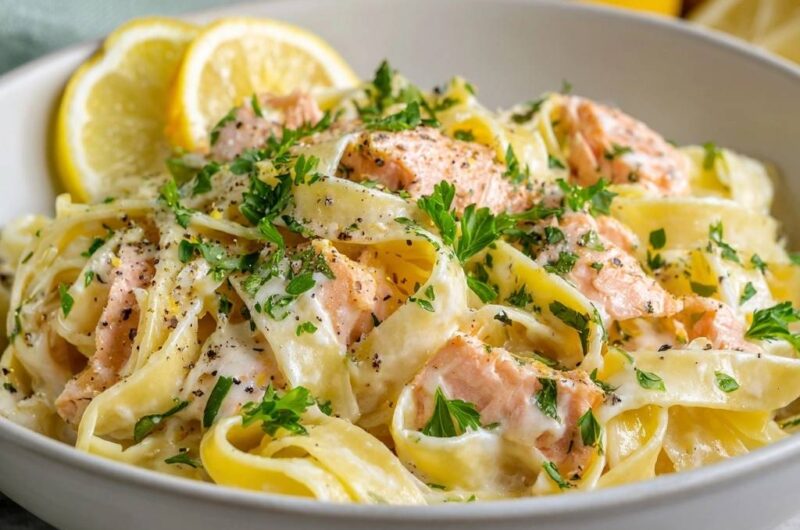
- Gently fold the seared salmon and the fresh parsley into the pasta. Season with the remaining cracked black pepper. Serve immediately in warm bowls, garnished with fresh lemon slices as shown in the image.
Notes
- The secret to the stable sauce is reserving the starchy pasta water and reducing the heavy cream by one-third before adding the cheese and lemon juice.