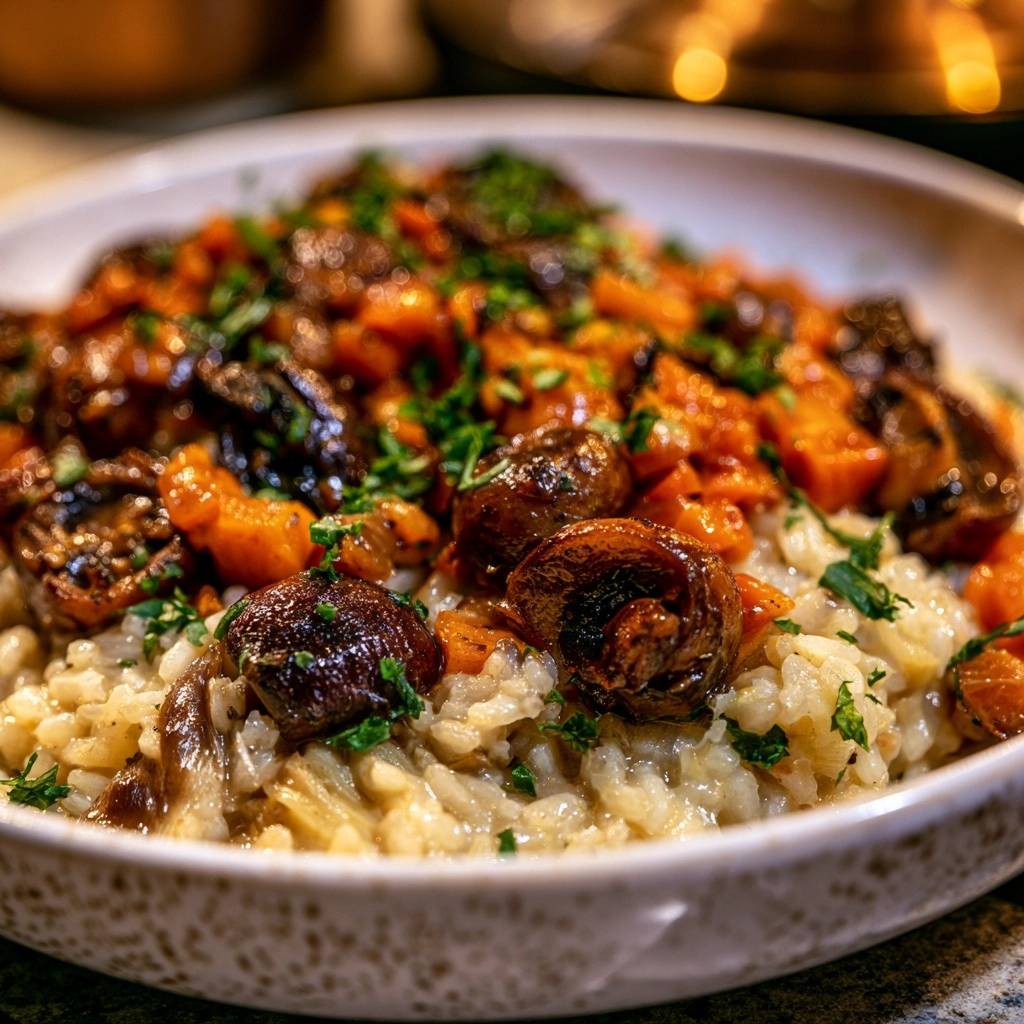
Most home cooks approach risotto with a mix of excitement and genuine fear. You’ve likely seen it on a restaurant menu and wondered why your own version at home turns into a sticky, gluey mess that resembles wallpaper paste more than a gourmet meal. The culprit isn’t your skill level; it’s usually a misunderstanding of how starch behaves when it meets liquid.
This Creamy Roasted Mushroom and Carrot Risotto solves the “gummy rice” problem by focusing on temperature control and gentle handling. By roasting the vegetables separately in a balsamic glaze, we achieve a deep, dark caramelization that provides a stunning visual contrast to the pale, velvety rice. The result is a dish that feels incredibly indulgent while remaining light enough for a weeknight dinner.
The real secret to success lies in the temperature of your broth. If you add cold liquid to a hot pan of rice, you shock the grain, causing the exterior to break down into a mushy film while the center stays unpleasantly hard. Keeping your vegetable stock at a low simmer on the burner next to your rice ensures a smooth, even release of starch every single time.
The Chemistry of Non-Gummy Arborio Rice
To understand risotto, you have to understand amylopectin, which is the specific type of starch found in high concentrations in Arborio rice. When you cook these short, fat grains, they rub against each other and release this starch into the liquid. This process creates that signature creamy sauce without the need for heavy cream or thickeners.
However, there is a fine line between creamy and gummy. If you stir the rice vigorously and constantly, you knock too much starch off the grain too quickly, leading to a heavy, pasty texture. I prefer a “gentle folding” method where you stir just enough to keep the rice from sticking to the bottom of the pot. This preserves the structural integrity of each individual grain.
A professional-grade risotto should always be served al dente. This means the rice should have a slight, firm bite in the very center, known as the “chalky core.” If you cook the rice until it is soft all the way through, you’ve gone too far. The goal is a texture that is fluid and “wavy” rather than a stiff mound that sits motionless on the plate.
Essential Components for Earthy Vegetable Risotto
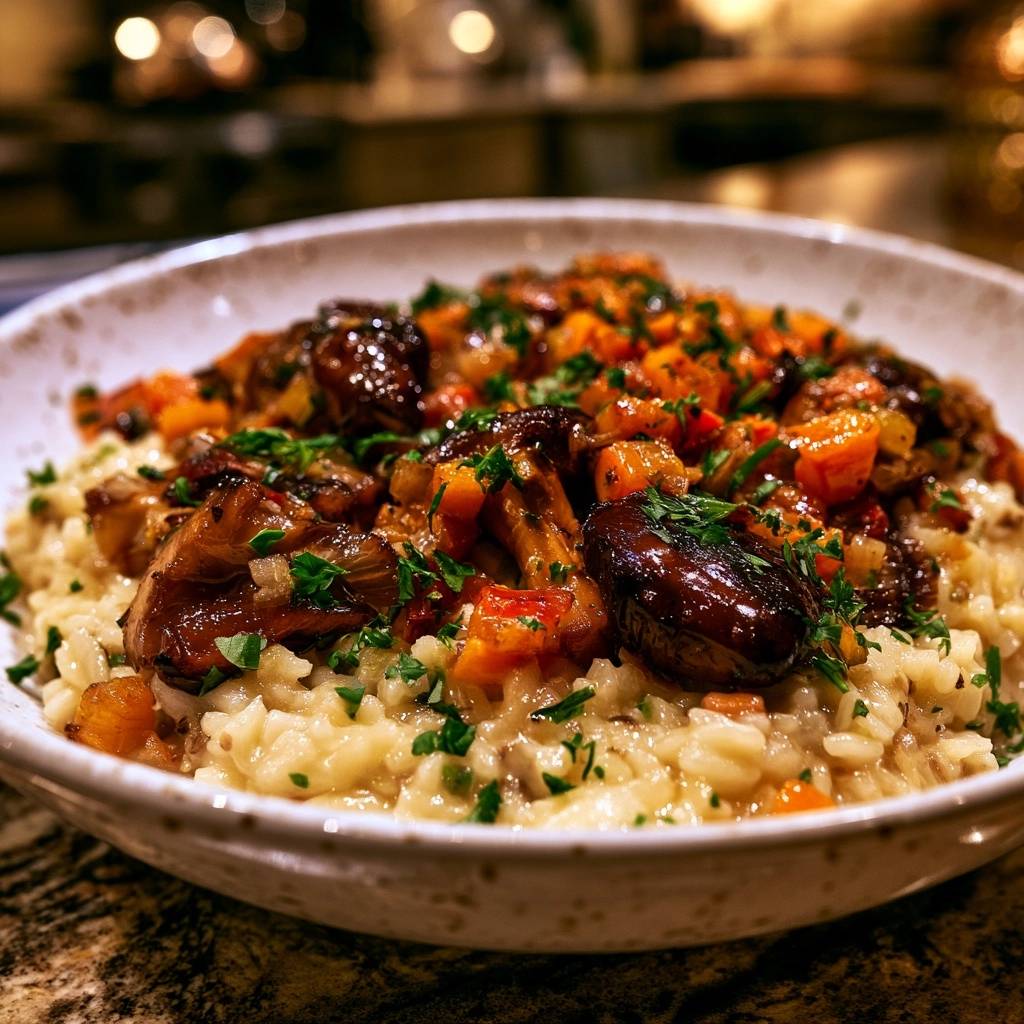
Quality ingredients are the backbone of this dish because there are so few of them. I always reach for Cremini mushrooms, often sold as “Baby Bellas,” instead of standard white button mushrooms. Creminis are simply more mature, which means they have a lower water content and a much deeper, earthier flavor that stands up well to the roasting process.
Carrots bring a necessary sweetness to the plate, balancing the savory umami of the mushrooms. When you toss them in balsamic vinegar and olive oil, the natural sugars in the carrots react with the acid in the vinegar. This facilitates the Maillard reaction, creating those charred, caramelized edges that make the vegetables pop against the creamy rice.
Your vegetable broth acts as the seasoning base for the entire dish. I recommend using a high-quality, low-sodium broth so you can control the salt levels yourself. Since the liquid reduces as the rice absorbs it, a full-sodium broth can often become overly salty by the time the rice is finished cooking.
Selecting the Right Fat and Acid
Unsalted butter is a mandatory tool for the home cook because it allows you to season with precision. Since the Parmesan cheese already adds a significant amount of salt, using salted butter can easily push the dish over the edge. You want to taste the creaminess of the dairy, not just the salt.
A dry white wine is equally important for providing a bright acidic lift. A crisp Sauvignon Blanc or Pinot Grigio works beautifully here. The acid cuts through the richness of the starch and cheese, cleansing your palate between bites and making the earthy flavors of the mushrooms feel more vibrant.
Phase One: Caramelizing Mushrooms and Carrots
Preheat your oven to 400°F to ensure the vegetables roast rather than steam. If the oven is too cool, the mushrooms will release their moisture and sit in a pool of liquid, becoming rubbery. At 400°F, that moisture evaporates quickly, allowing the balsamic vinegar to thicken into a sticky, flavorful glaze.
Keep an eye on the visual cues during the 20 to 25-minute roasting window. You are looking for the mushrooms to shrink slightly and turn a deep, mahogany brown. The carrots should be tender enough to pierce with a fork but still hold their cubed shape. Roasting them separately ensures they stay crisp and colorful rather than getting lost in the rice.
Phase Two: Toasting the Grains and Deglazing
The foundation of flavor starts with the “Soffritto,” which is simply your minced onion and garlic softened in butter. Once the onions are translucent, it is time for the “Tostatura,” or the toasting of the rice. This is a critical step that many people skip, but it is vital for preventing gumminess.
Add the dry Arborio rice to the butter and onions, stirring for about 2 to 3 minutes. You’ll notice the edges of the rice grains becoming translucent while the center remains bright white. This toasting creates a protective shell around the grain, helping it maintain its shape during the long simmering process that follows.
When you pour in the white wine to deglaze, you’ll hear a satisfying sizzle. Use your wooden spoon to scrape up any browned bits from the bottom of the pot. This “fond” is concentrated flavor that the rice will eagerly soak up. Continue stirring until the wine has almost completely evaporated before you add your first ladle of broth.
Phase Three: The Gradual Tempering of Starch
This is the most meditative part of the process. Add your hot broth one ladle at a time, roughly half a cup at a time. By adding the liquid gradually, you maintain a high temperature in the pot, which allows the starch to release slowly and create a natural emulsion.
Remember the “shock” factor we discussed earlier. If you use cold broth, the cooking process stops and starts repeatedly, which ruins the grain’s texture. You want a consistent, gentle simmer throughout the entire 20 to 25 minutes. You might not use every drop of broth, so let the texture of the rice be your guide.
As you reach the end of the cooking time, look for the “all’onda” or “wavy” consistency. When you pull a spoon through the rice, it should slowly flow back to fill the space. If it stays put like mashed potatoes, it is too dry; add a splash more broth. If it looks like soup, let it cook for another minute or two.
The Mantecatura: Finishing for Maximum Creaminess
The final step is the “Mantecatura,” an Italian term for the process of finishing the dish to create a creamy, whipped texture. The most important rule here is to remove the pot from the heat entirely. Adding your final knobs of butter and the grated Parmesan while the pot is still boiling can cause the fats to separate, making the dish greasy.
By folding in the cold butter and cheese off the heat, you create a stable emulsion. The cheese melts gently into the residual heat, and the butter adds a glossy sheen to the rice. This is what gives restaurant risotto that luxurious, silk-like mouthfeel that coats the back of a spoon.
Troubleshooting Common Risotto Textural Issues
If you find that your rice is still crunchy but you’ve run out of broth, don’t panic. You can use plain hot water to finish the cooking process. The rice has already absorbed plenty of flavor from the broth and wine, so a little water at the end won’t dilute the taste, but it will provide the moisture needed to reach al dente.
If your risotto has become too thick and stiff while sitting, simply stir in a tablespoon or two of hot broth right before serving. This will “loosen” the starches and bring back that beautiful wavy flow. Never rinse your Arborio rice before cooking; you would be washing away the very starch needed to make the dish creamy.
Another common mistake is over-stirring. If you stir like you’re whisking a cake, you’ll break the grains. Use a gentle, circular motion every minute or so just to ensure the rice at the bottom doesn’t scorch. Think of it as keeping the rice in motion rather than beating it into submission.
Optimal Pairings for Roasted Vegetable Risotto
Because this risotto is quite rich and earthy, it pairs best with sides that offer a sharp, acidic contrast. A simple arugula salad dressed with fresh lemon juice and a pinch of sea salt is the perfect companion. The peppery bite of the greens cuts through the buttery Parmesan finish of the rice.
A thick slice of toasted sourdough bread is also a great addition, perfect for mopping up any leftover creamy sauce. If you want to add a protein, a simple roasted chicken breast or a piece of pan-seared white fish like cod works well. Keep the seasoning on the protein light so it doesn’t compete with the balsamic-roasted vegetables.
Storage and Reheating Without Losing Texture
Risotto is notorious for being difficult to reheat because the rice continues to absorb moisture as it sits in the fridge. I do not recommend freezing risotto, as the delicate grains will break down and become grainy and unpleasant upon thawing. It is best enjoyed within two to three days of cooking.
To reheat, avoid the microwave at all costs, as it will turn the rice rubbery and dry. Instead, place the leftovers in a small saucepan over medium-low heat. Add a splash of broth or water and stir gently as it warms up. The extra liquid will help the starches relax, returning the dish to its original creamy state.
Expert Tips for Professional Plating
For the best presentation, use a flat plate or a very shallow bowl rather than a deep soup bowl. Once you spoon the risotto onto the plate, gently tap the bottom of the dish with the palm of your hand. This will cause the risotto to spread out evenly in a perfect circle, a classic technique used in high-end Italian kitchens.
Instead of stirring the roasted mushrooms and carrots into the pot, place them in a generous mound right in the center of the rice. This keeps the vegetables from getting stained by the rice and preserves their beautiful roasted color. Finish with a heavy garnish of fresh parsley and a final crack of black pepper to make the colors pop.
Frequently Asked Questions
Can I substitute Arborio with Carnaroli rice?
Yes, you absolutely can. In fact, many professional chefs prefer Carnaroli over Arborio. Carnaroli has a higher starch content and a firmer grain, which makes it even more resistant to overcooking. It is often called the “king of Italian rice” and will result in an even creamier texture with a more defined “bite.”
Why is my risotto taking longer than 25 minutes?
Cooking times can vary based on several factors, including the width of your pot and the age of the rice. A wider pot allows for more evaporation, which can speed things up, while older rice grains may take longer to hydrate. Always trust your taste buds over the timer; if the rice is still crunchy, it needs more time and liquid.
Is there a non-dairy alternative for the finish?
To keep the dish creamy without dairy, you can substitute the butter with a high-quality extra virgin olive oil. For the Parmesan, try using two tablespoons of nutritional yeast or a dollop of cashew cream. While the flavor profile will shift toward a more nutty, fruity note, the texture will remain satisfyingly smooth.
Can I use dried mushrooms instead of fresh?
Dried mushrooms, like porcini, are a fantastic way to add even more umami. Rehydrate them in hot water for 20 minutes, then squeeze them dry and sauté them with the onions. Be sure to strain the mushroom soaking liquid through a coffee filter and add it to your vegetable broth for an incredible boost of earthy flavor.
What is the best way to dice carrots for even cooking?
Consistency is key for roasting. Aim for a 1/2-inch cube. Start by peeling the carrot and cutting it into long planks, then into sticks (batonnet), and finally into cubes. This size ensures the carrots become tender and caramelized in the same amount of time it takes for the mushrooms to brown and soften.
Creamy Roasted Mushroom and Carrot Risotto
Course: Main CourseCuisine: Italian-AmericanDifficulty: easy4
servings15
minutes40
minutes55
Minutes440
kcalItalian-American
Ingredients
1.5 cups Arborio rice
1 pound cremini mushrooms, halved (or whole if small)
2 large carrots, peeled and cut into 1/2-inch cubes
1/2 cup dry white wine (Pinot Grigio or Sauvignon Blanc)
5 to 6 cups vegetable broth, kept at a low simmer
2 tablespoons olive oil
1 tablespoon balsamic vinegar
4 tablespoons unsalted butter, divided
1 small yellow onion, finely minced
3 cloves garlic, minced
1/2 cup grated Parmesan cheese
1/4 cup fresh parsley, chopped
Salt and black pepper to taste
Directions
- Preheat your oven to 400°F. On a large baking sheet, toss the mushrooms and diced carrots with olive oil, balsamic vinegar, salt, and pepper. Roast for 20-25 minutes, tossing halfway through, until the mushrooms are deeply browned and the carrots are tender and caramelized. Set aside.
- While the vegetables roast, place your vegetable broth in a saucepan over medium-low heat. It is vital that the broth is hot when added to the rice; cold broth shocks the grain and creates a gummy exterior while leaving the inside hard.
- In a large heavy-bottomed pot or Dutch oven, melt 2 tablespoons of butter over medium heat. Add the onion and cook until translucent, about 4 minutes. Add the garlic and Arborio rice. Toast the rice for 2-3 minutes, stirring frequently, until the edges are translucent but the center is still white. This toasting creates a structural barrier that prevents the rice from breaking down into a paste.
- Pour in the white wine to deglaze the pan, stirring until the liquid is fully absorbed.
- Add the hot broth one ladle at a time (about 1/2 cup). Stir gently and infrequently. Constant vigorous stirring is the main cause of gummy rice because it knocks too much starch off at once. Stir just enough to prevent sticking. Wait until the liquid is almost fully absorbed before adding the next ladle.
- Continue this process for 20 to 25 minutes. You may not need all the broth. Stop when the rice is tender but still has a slight bite (al dente) and the consistency is “wavy”-fluid, not stiff.
- Remove the pan from the heat. This is the secret to the perfect finish. Fold in the remaining 2 tablespoons of butter and the Parmesan cheese.
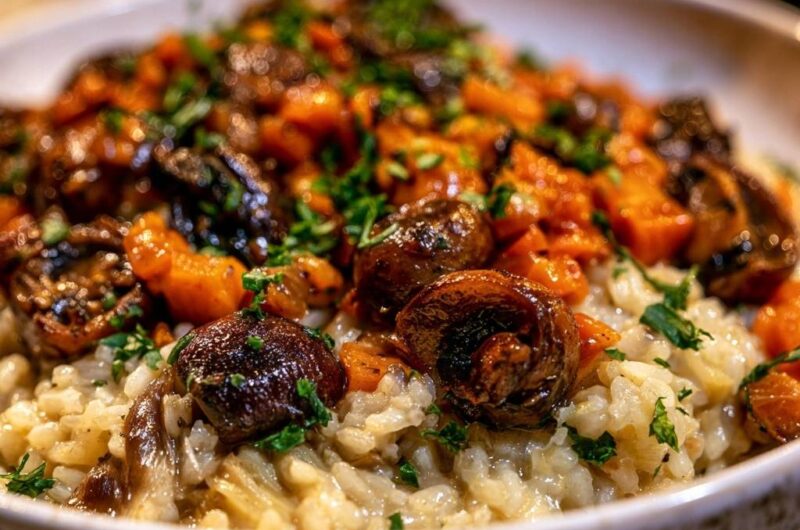
- To achieve the plated look in the image: Spoon the creamy risotto into warm bowls. Top the center of the rice with a generous portion of the roasted balsamic mushrooms and carrots. Garnish heavily with fresh parsley and an extra crack of black pepper. Serve immediately.
Notes
- To avoid gummy rice, ensure the broth is hot before adding it to the pot and avoid constant vigorous stirring, which releases too much starch.