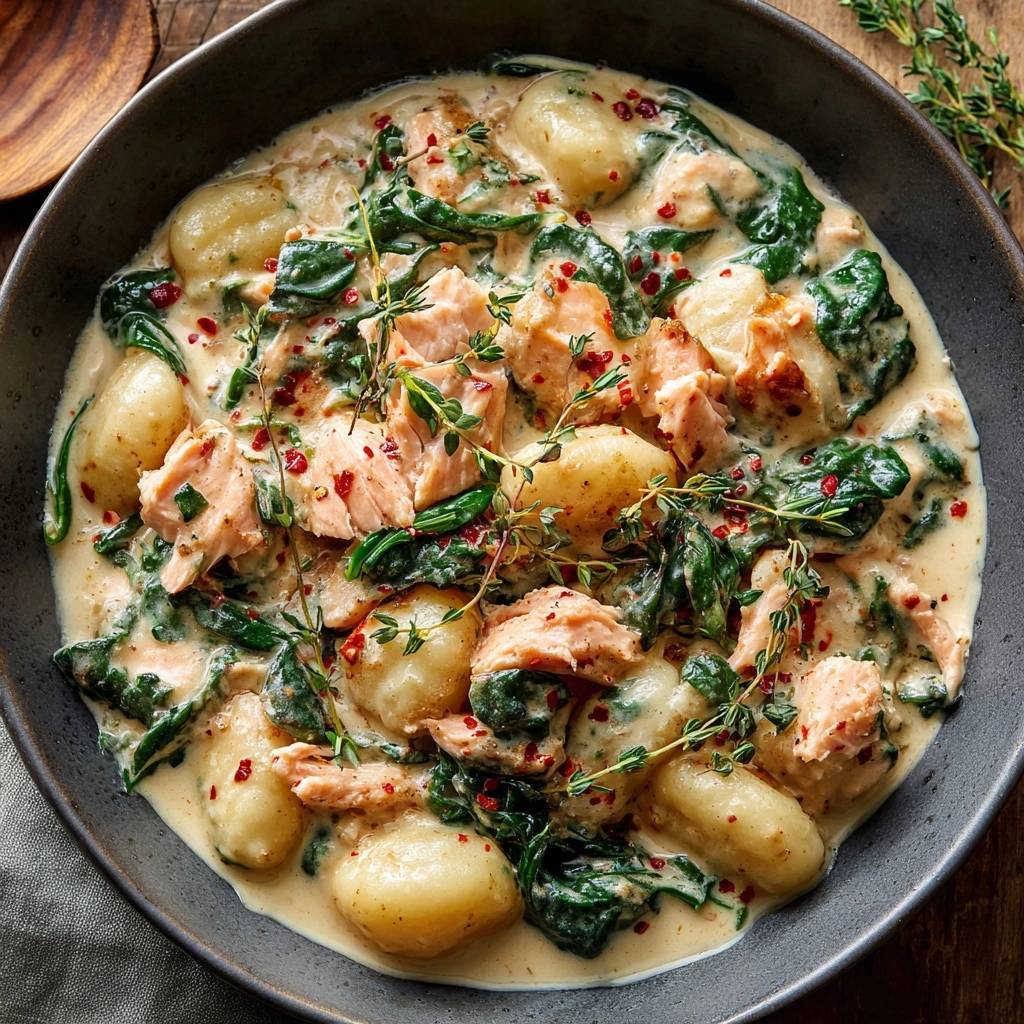
Forget everything you know about boiling water for pasta. If you’ve ever ended up with a plate of gummy, gluey potato lumps, you know how quickly a promising dinner can turn into a texture nightmare. This Creamy Salmon and Spinach Gnocchi flips the script by focusing on a golden, crispy exterior that shatters under your teeth before revealing a pillowy center. It’s a high-end, restaurant-quality meal that hits the table in just 25 minutes.
The magic lies in the contrast between the pan-seared gnocchi and the buttery, tender flakes of salmon. However, achieving that perfect mouthfeel requires a departure from traditional methods. Instead of the usual soft-on-soft texture, we’re building layers of crunch and silkiness that make every bite feel intentional and luxurious. It’s the kind of meal that feels like a weekend treat but fits perfectly into a busy Tuesday night.
For a different take on that rich salmon sauce, consider creamy salmon fettuccine.
The secret to success here is moisture control. I’ve found that the biggest mistake home cooks make is introducing too much water too early. By searing the gnocchi in a dry state, you lock in the shape and create a structural barrier that stands up to the rich cream sauce. This ensures your pasta stays firm and distinct rather than melting into a starchy mess.
For a similar sauce that avoids a watery finish, check out this creamy salmon fettuccine.
The Science of Searing vs. Boiling Gnocchi
When you boil gnocchi, the potato starch immediately begins to hydrate and swell. While this works for homemade pasta served instantly, it often leads to a “gluey” mouthfeel when paired with heavy sauces. Pan-searing triggers the Maillard reaction, a chemical process between amino acids and reducing sugars that gives browned food its distinctive flavor and crispy crust. This crust acts as a protective shield, preventing the gnocchi from over-hydrating once it hits the cream.
Furthermore, searing creates a unique culinary advantage for your sauce. As the gnocchi browns, tiny toasted starch particles cling to the bottom of the pan. When you later pour in the heavy cream, these particles act as a natural emulsifier. They help bind the fats from the butter and cream together, resulting in a sauce that is naturally thicker and more stable without needing a flour-based roux.
This method also preserves the integrity of the potato flavor. Boiling can sometimes wash away the delicate earthy notes of the gnocchi, but searing intensifies them. You’ll notice a nutty aroma filling your kitchen as the butter browns alongside the pasta, providing a sophisticated base for the seafood and greens to follow.
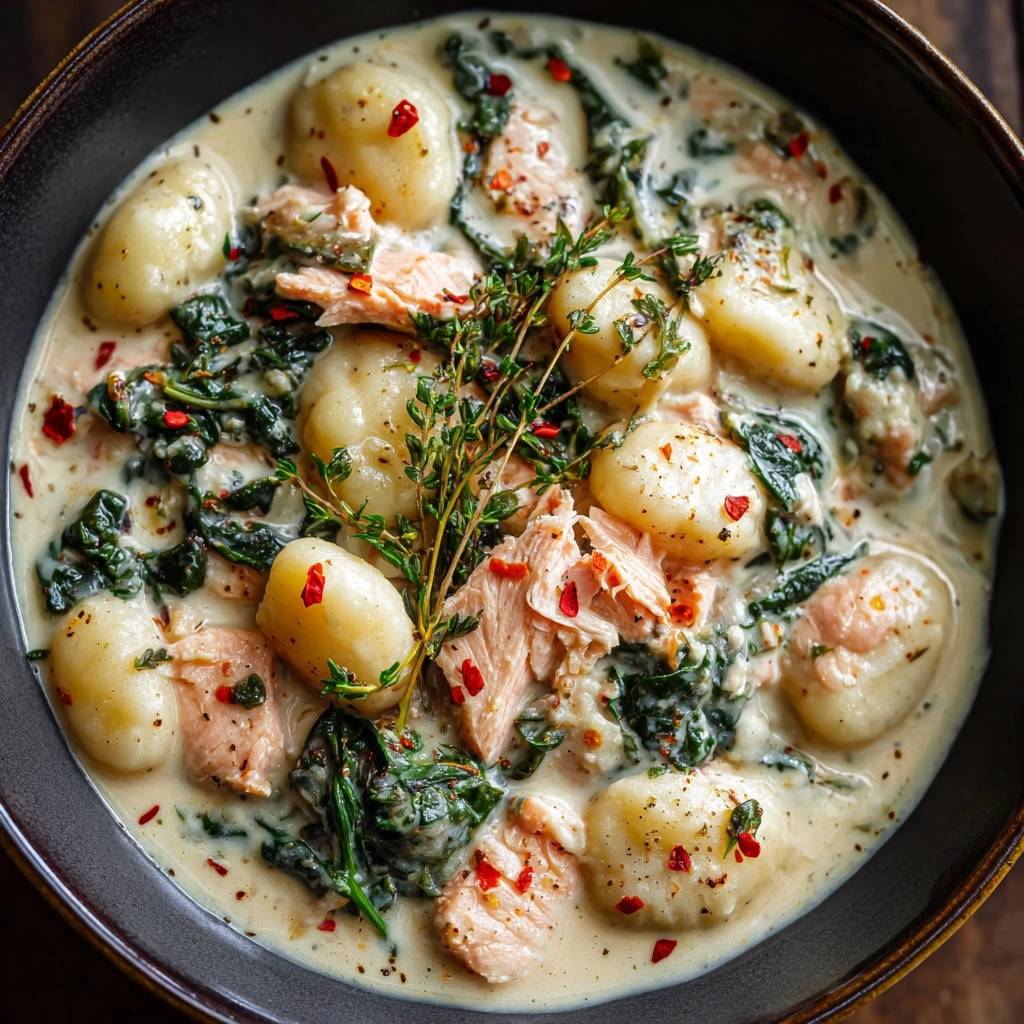
Why Shelf-Stable Gnocchi Performs Better Here
While fresh or refrigerated gnocchi has its place, shelf-stable varieties are actually the MVP for this specific searing technique. These packages have a lower moisture content and a firmer structure right out of the bag. This lower hydration level allows them to crisp up much faster in the skillet without the centers becoming mushy before the outside is browned.
Essential Components for the Creamy Salmon Base
Quality ingredients are the backbone of this dish, especially when it comes to the dairy. You’ll want to stick strictly to heavy cream rather than half-and-half or whole milk. Heavy cream has a higher fat content which prevents it from curdling when it meets the heat and the slight acidity of the lemon. Half-and-half often “breaks” or separates, leaving you with a watery, grainy mess instead of a velvety coating.
The Parmesan cheese serves a dual purpose here. Beyond its salty, umami punch, it acts as a stabilizer. As the cheese melts into the simmering cream, it creates a cohesive network that thickens the sauce instantly. Always use freshly grated Parmesan if possible; the pre-shredded stuff is coated in potato starch to prevent clumping, which can make your sauce feel gritty.
Finally, don’t overlook the fresh thyme. While dried herbs are fine for long-simmered stews, seafood thrives on the bright, floral notes of fresh sprigs. The thyme cuts through the richness of the cream and complements the natural sweetness of the salmon in a way that dried herbs simply can’t match.
Selecting and Preparing Your Salmon Fillets
For the best results, look for Atlantic salmon or King salmon, as these varieties have a higher fat content that stays moist during the two-stage cooking process. Sockeye is delicious but leaner, so you’ll need to be extra careful not to overcook it. Regardless of the variety, always remove the skin before slicing the fish into bite-sized chunks.
Before the salmon touches the pan, pat it bone-dry with paper towels. Any surface moisture will create steam, which prevents that beautiful golden crust from forming. You want a hard sear on the outside to lock in the juices, keeping the interior succulent while the sauce finishes the job.
The Role of Acidity and Heat
Balance is everything in a cream-based dish. The richness of the butter and heavy cream can easily become overwhelming without a counterpoint. That’s where the lemon juice and red pepper flakes come in. The lemon provides a necessary “lift,” brightening the entire flavor profile and highlighting the freshness of the spinach.
However, timing is crucial. Always add your lemon juice at the very end, after the heat is turned off. Adding it to boiling cream can cause the proteins to clump and curdle. The red pepper flakes provide a subtle, back-of-the-throat warmth that ensures the dish feels exciting rather than just heavy.
Step-by-Step: Achieving the Perfect Golden Sear
Start by getting your skillet properly hot over medium-high heat. When you add the butter and oil, they should shimmer and foam. Drop the gnocchi in and resist the urge to shake the pan immediately. Let them sit undisturbed for at least two minutes. You are looking for a deep, mahogany gold on that first side.
Crowding the pan is the fastest way to fail. If the gnocchi are piled on top of each other, they will release steam and turn soft. Use a large enough skillet so every piece has direct contact with the hot surface. Once they are crisp and look like toasted marshmallows, move them to a plate so they don’t lose that hard-earned texture while you prep the rest.
Managing Skillet Temperature for Seafood
After the gnocchi are out, drop the heat to medium before adding the salmon. Salmon is delicate and can go from perfect to rubbery in seconds. Sear the chunks for about two minutes, just until the edges are opaque. The centers should still look a bit translucent and underdone.
This “under-cooking” is a pro move. The salmon will continue to cook from residual heat once it’s removed from the pan, and it will get a final warm-up in the simmering cream sauce later. This ensures the fish flakes perfectly with a fork rather than becoming tough and dry.
Building the Velvety Spinach and Parmesan Sauce
Once the salmon is set aside, you’ll see browned bits stuck to the bottom of your pan. This is “fond,” and it’s pure flavor gold. Pour in your heavy cream and use a wooden spoon to gently scrape those bits up. As the cream simmers, it will turn a light tan color as it absorbs all that concentrated savory goodness.
Keep the cream at a gentle simmer—think small, lazy bubbles rather than a rolling boil. Whisk in the Parmesan cheese a handful at a time. If you dump it all in at once, it might clump. Whisking slowly ensures the cheese melts evenly into the liquid, creating a sauce that coats the back of a spoon like liquid silk.
Folding in the Baby Spinach
Spinach wilts in the blink of an eye. Add the four cups of fresh leaves to the sauce and toss them gently. It will look like a mountain of greens at first, but within 60 seconds, they will collapse into the sauce. Stop cooking the moment they turn bright green and soft.
Overcooking the spinach will cause it to release excess water, which can thin out your beautiful cream sauce. By keeping the cook time short, you preserve the vibrant color and the slight mineral bite that balances the fatty salmon and cream.
Troubleshooting Common Texture Issues
If you find your sauce has become too thick before you’ve even added the gnocchi back in, don’t panic. Simply whisk in a tablespoon of water or chicken broth to loosen it up. The sauce should be thick enough to cling to the pasta but fluid enough to pool slightly on the plate.
If your sauce “breaks” (meaning you see oily yellow spots on top), it usually means the heat was too high. You can often fix this by removing the pan from the heat and whisking in a tiny splash of cold heavy cream. This helps lower the temperature and re-emulsify the fats into the liquid.
Flavor Variations and Ingredient Swaps
While salmon is the star here, this technique works beautifully with other firm proteins. You can easily swap the salmon for chunks of halibut or even large shrimp. If you want to change up the greens, kale is a fantastic hearty alternative, though you’ll need to sauté it for 3-4 minutes longer than the spinach to soften the fibers.
For those avoiding dairy, you can achieve a similar richness using full-fat coconut cream. Swap the Parmesan for two tablespoons of nutritional yeast to maintain that savory, cheesy depth. The flavor profile will shift slightly toward a coastal, tropical vibe, but the searing technique for the gnocchi remains exactly the same.
Optimal Side Dishes for Creamy Pasta
Because this gnocchi is incredibly rich and satisfying, you want side dishes that offer a sharp, acidic contrast. A simple arugula salad tossed in a lemon-shallot vinaigrette is the perfect palate cleanser. The peppery bite of the greens cuts right through the heavy cream.
Round Out Your Meal
Consider these other satisfying dishes that share a focus on well-prepared comfort food.
- For a flavorful pasta experience with a different protein, explore the crispy pan-seared meatballs cooked in zesty marinara sauce.
- If you enjoy the idea of tender meatballs, the classic baked meatballs offer a straightforward and satisfying option.
Roasted asparagus with a drizzle of balsamic glaze or a shaved fennel salad also works wonders. These vegetables provide a crisp, fresh snap that prevents the meal from feeling too heavy. Avoid starchy sides like bread; the gnocchi provides more than enough hearty comfort on its own.
Storage and Reheating for Best Results
Cream-based dishes are notoriously tricky to reheat because the sauce tends to soak into the pasta overnight. If you have leftovers, store them in an airtight container in the fridge for up to two days. I do not recommend freezing this dish, as the cream will separate and the salmon will lose its delicate texture upon thawing.
To reheat, place the gnocchi in a small skillet over low heat. Add a splash of milk or water to the pan to help loosen the sauce. Cover the pan for a minute to let the steam warm the salmon through without drying it out. Avoid the microwave if possible, as it can turn the gnocchi rubbery and the salmon tough.
Expert Tips for Restaurant-Quality Presentation
Presentation is the final step in making this feel like a $30 bistro meal. When plating, use a shallow bowl rather than a flat plate to keep the sauce pooled around the gnocchi. Use tongs to place the salmon chunks on top of the pasta rather than burying them, so the golden-seared edges are visible.
Finish with a fresh dusting of red pepper flakes for a pop of red and the bright green thyme leaves. A final, tiny squeeze of lemon juice right before serving adds a glossy sheen to the sauce and ensures the first aroma to hit your nose is fresh and inviting. Serve it immediately while the gnocchi still retains that signature crunch.
Frequently Asked Questions
How do I keep the gnocchi from sticking to the pan?
The key is a combination of enough fat and patience. Use both butter and oil; the oil raises the smoke point while the butter adds flavor. Most importantly, do not try to flip the gnocchi too early. If they are sticking, they likely haven’t formed a crust yet. Once the crust forms, they will naturally release from the surface of the pan.
Can I use frozen gnocchi for this recipe?
Yes, you can use frozen gnocchi, but you should thaw them in the refrigerator first and pat them very dry. If you put frozen gnocchi directly into a hot pan, the ice crystals will melt and create steam, which will prevent them from getting crispy. Shelf-stable gnocchi remains the best choice for the ultimate crunch.
Why did my salmon fall apart in the sauce?
Salmon becomes very fragile once it is cooked. If you stir the dish too vigorously after returning the salmon to the pan, the chunks will break into small flakes. To keep the “bite-sized” look, use a gentle folding motion with a silicone spatula or simply shake the pan to coat the ingredients in the sauce.
Is there a substitute for heavy cream?
If you must substitute, use crème fraîche or full-fat Greek yogurt mixed with a little milk. However, be aware that these are more acidic and may change the flavor profile. Avoid using skim or 2% milk, as the sauce will be thin and will likely break when you add the Parmesan cheese.
How do I know when the sauce is thick enough?
Use the “nappe” test. Dip a metal spoon into the sauce and run your finger across the back of it. If the line stays clear and the sauce doesn’t run back into the cleared space, it is perfectly thickened. Remember that the sauce will continue to thicken slightly as it cools on the plate.
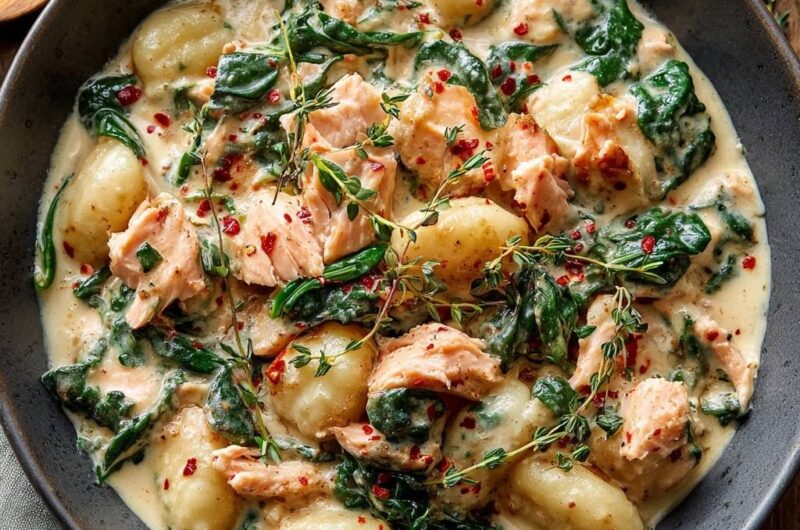
Salmon and Spinach Gnocchi
Course: Main CourseCuisine: Italian-AmericanDifficulty: easy4
servings10
minutes15
minutes580
kcal25
MinutesA rich and velvety pasta dish featuring pan-seared potato gnocchi, fresh salmon chunks, and baby spinach in a garlic parmesan cream sauce. By searing the gnocchi instead of boiling, you achieve a perfect golden crust and pillowy interior.
Ingredients
1 pound potato gnocchi (shelf-stable or refrigerated)
12 oz salmon fillet, skin removed and cut into bite-sized chunks
4 cups fresh baby spinach
1.5 cups heavy cream
1/2 cup freshly grated Parmesan cheese (to thicken and emulsify the sauce)
2 tablespoons unsalted butter
1 tablespoon olive oil
3 cloves garlic, minced
1 teaspoon red pepper flakes
4 sprigs fresh thyme
Salt and black pepper to taste
1/2 fresh lemon (for finishing)
Directions
- Heat the olive oil and 1 tablespoon of butter in a large skillet over medium-high heat. Add the dry gnocchi directly to the pan in a single layer. Do not boil them first.
- Sear the gnocchi for 4 to 5 minutes, tossing occasionally, until they are deeply golden brown and crisp on the outside. This “sear-first” technique is the essential step to prevent a gummy texture. Remove gnocchi from the pan and set aside.
- In the same skillet, add the remaining tablespoon of butter. Add the salmon chunks, seasoning with salt and pepper. Sear for 2 minutes until the edges are golden but the center is slightly underdone (it will finish in the sauce). Remove and set aside with the gnocchi.
- Lower the heat to medium. Add minced garlic and red pepper flakes to the residual fat in the pan, sautéing for 30 seconds until fragrant.
- Pour in the heavy cream and bring to a gentle simmer, scraping up any browned bits from the bottom of the pan. Whisk in the Parmesan cheese until the sauce is smooth and thickened.
- Stir in the fresh baby spinach and cook for 1 minute until wilted.
- Return the seared gnocchi and salmon to the skillet. Toss gently for 1 minute to coat. Squeeze a splash of fresh lemon juice over the dish to brighten the cream.
- Garnish generously with fresh thyme sprigs and extra red pepper flakes as shown in the image. Serve immediately while the gnocchi is still crisp.
Notes
- The secret to avoiding gummy gnocchi is skipping the boiling water. Sear the dry gnocchi directly in the pan to create a structural crust that holds up against the cream sauce.