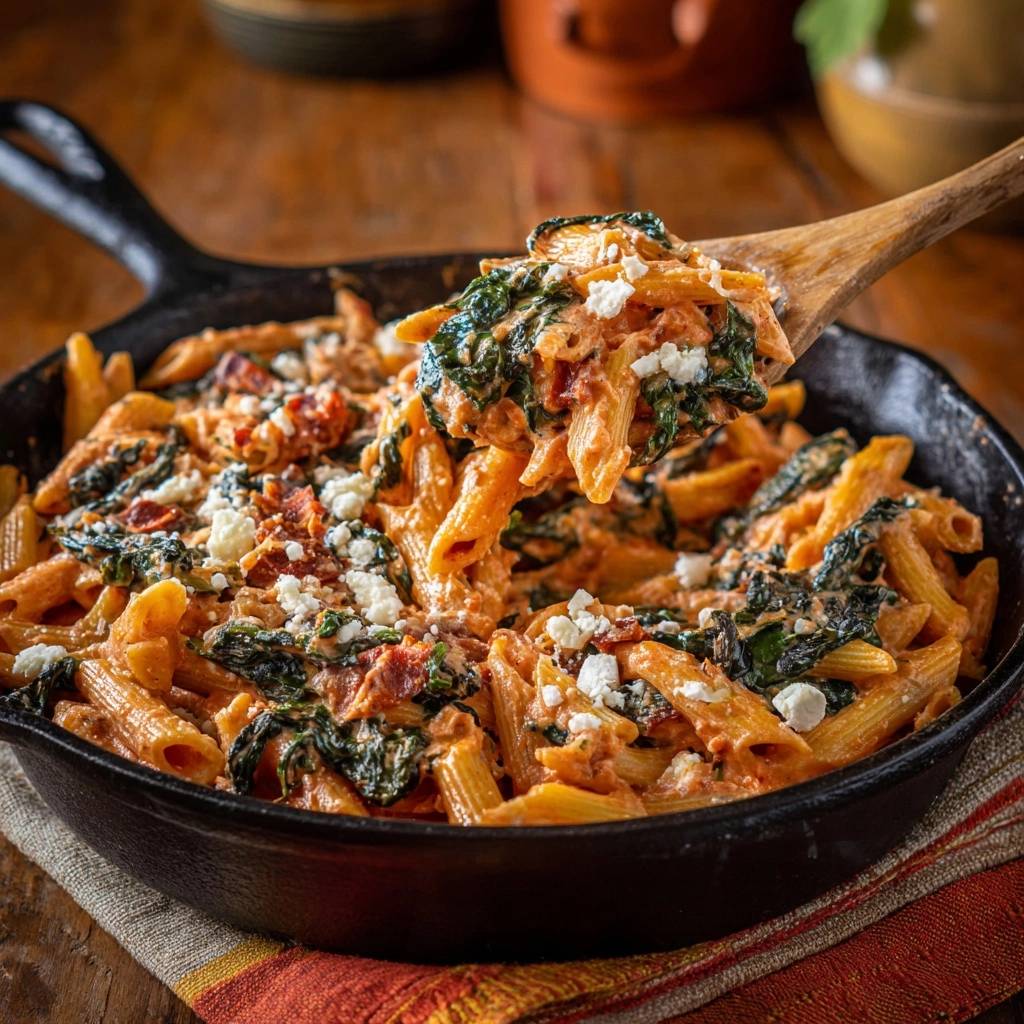
Imagine a forkful of pasta where every single ridge of the penne is coated in a thick, velvet-like sauce that tastes of concentrated summer. You get the sharp, salty pop of feta followed by the deep, caramelized sweetness of sun-dried tomatoes. It’s the kind of meal that feels like a splurge at a high-end bistro, yet it comes together in your own kitchen in about 30 minutes.
Most home cooks struggle with cream-based pastas because the sauce often “breaks,” leaving a sad, watery puddle at the bottom of the bowl. We’re solving that today by focusing on a cohesive emulsion that clings to the noodles rather than sliding off them. This dish bridges the gap between a quick weeknight fix and a sophisticated dinner party centerpiece.
The secret to this professional texture isn’t fancy equipment; it’s the “starchy water reserve” method. By saving a cup of the cloudy pasta water before draining, you’re capturing liquid gold filled with starch. When you whisk this into your cream and tomato paste, it acts as a natural binder that creates a glossy, restaurant-quality finish every single time.
The Science of Emulsion: Why This Sauce Never Separates
Creating a stable sauce is all about chemistry, specifically the interaction between fats and liquids. When you add heavy cream to a pan, the fats want to stay separate from the acidic components of the tomatoes. However, the amylose and amylopectin found in your reserved pasta water act as powerful emulsifiers that force these ingredients to play nice together.
In addition to the starch, we use the “toasting” method for the tomato paste. By cooking the paste in oil for a few minutes before adding liquid, you trigger the Maillard reaction. This doesn’t just deepen the flavor; it creates a structural foundation for the sauce. This toasted base provides a thickness that raw, stirred-in paste simply cannot achieve.
Essential Components for the Perfect Penne Base
Quality ingredients are the backbone of this dish, starting with the pasta shape itself. You should always reach for penne rigate—the version with visible ridges. Those tiny grooves are designed specifically to trap heavy cream sauces, ensuring you get plenty of flavor in every bite compared to smooth pasta.
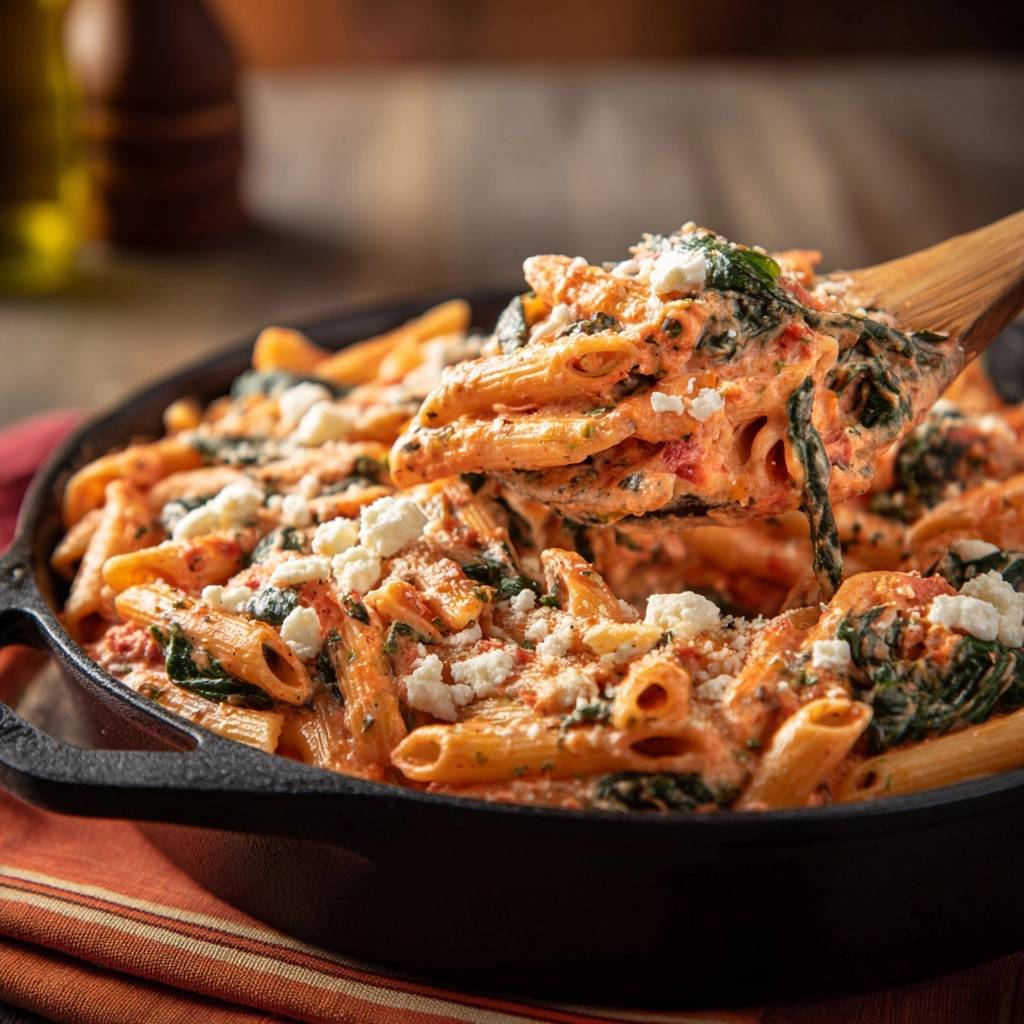
When it comes to the dairy, heavy cream is non-negotiable here. While it’s tempting to swap in half-and-half to save calories, lower-fat milks are prone to curdling when they hit the acidic sun-dried tomatoes. Heavy cream has enough fat to remain stable and smooth even as it simmers and reduces into that signature orange hue.
Selecting Sun-Dried Tomatoes: Oil-Packed vs. Dry
Always choose the sun-dried tomatoes packed in a jar of oil rather than the dry, shriveled ones in a pouch. The oil in that jar is a concentrated flavor bomb infused with the essence of the tomatoes. We actually use two tablespoons of that specific oil to sauté our garlic, which builds a much deeper flavor profile than plain olive oil ever could.
Before tossing them into the pan, give the tomatoes a rough chop. You want them small enough to distribute evenly throughout the pasta so that the acidity is balanced. If the pieces are too large, they can overwhelm the palate; smaller bits ensure a perfect ratio of sweet tomato to creamy sauce in every mouthful.
The Role of Feta and Parmesan Duo
This recipe uses a two-cheese approach to create layers of flavor. Parmesan is your structural cheese; it’s salty, nutty, and melts completely into the sauce to help it thicken. It provides the savory “umami” backbone that makes the dish feel incredibly satisfying and rich.
Feta, on the other hand, is all about contrast. Because feta doesn’t melt into a liquid state, it provides localized pops of tangy, creamy texture. By adding the crumbled feta at the very end, you preserve its integrity against the heat, allowing it to stand out against the velvety smoothness of the cream sauce.
Step-by-Step: Building the Sun-Dried Tomato Foundation
Start by heating your reserved tomato oil in a large skillet over medium heat. Add your minced garlic and red pepper flakes, but stay close to the stove. You only want to sauté them for about 60 seconds until the kitchen smells amazing; if the garlic turns dark brown, it becomes bitter and will ruin the delicate cream sauce.
Next, stir in the tomato paste and chopped sun-dried tomatoes. You’ll notice the paste starts as a bright, vibrant red. As you “toast” it for two minutes, it will transform into a deep, rusty orange color. This visual change is your cue that the sugars have caramelized and the base is ready for the cream.
The Critical “Two-Minute Under” Pasta Rule
One of the biggest mistakes you can make is boiling your pasta until it’s perfectly soft in the water. For this recipe, you must drain the penne about two minutes before the package says it’s “al dente.” The pasta should still have a firm, almost chalky bite in the very center when you pull it from the pot.
This is because we finish the cooking process “risotto-style” directly in the skillet. As the undercooked noodles simmer in the cream sauce, they act like little sponges. They absorb the flavorful liquid into their core, ensuring the pasta is seasoned from the inside out rather than just being coated on the exterior.
Integrating Fresh Spinach Without Adding Excess Moisture
Four cups of baby spinach might look like a mountain, but it will wilt down to almost nothing in seconds. Add the spinach to the skillet after the tomato paste has toasted but before you pour in the heavy cream. This allows the leaves to be coated in the flavorful oil and seasonings first.
Toss the leaves gently until they just begin to collapse and turn a vibrant, bright green. Timing is everything here; you want to move to the next step immediately. If you overcook the spinach at this stage, it can release too much water or turn a dull, unappetizing grey color.
If you’re aiming for perfectly cooked spinach, check out how to prepare spinach and ricotta stuffed shells.
Troubleshooting: Achieving the Ideal Sauce Consistency
Sauce consistency can be finicky depending on your stove’s heat, so use an “if this, then that” approach. If the sauce looks too thick or sticky, add your reserved pasta water one tablespoon at a time. The starch will loosen the sauce while keeping it glossy and bound to the noodles.
If the sauce appears too thin, don’t panic and don’t add flour. Simply keep the skillet at a gentle simmer and stir in your Parmesan cheese. The cheese and the natural reduction of the cream will tighten the emulsion. Remember that the sauce will continue to thicken significantly the moment you take it off the heat.
Flavor Variations and Ingredient Swaps
While spinach is the classic choice, you can easily swap it for kale or arugula. If you use kale, add it a few minutes earlier as it needs more time to soften. Arugula should be folded in at the very last second, as its peppery bite is best when it’s only slightly wilted by the residual heat.
If you want to add protein, sliced grilled chicken breast or a can of rinsed chickpeas work beautifully. Just be sure to keep your sauce-to-noodle ratio in mind; if you add a lot of extra “bulk,” you might need an extra splash of cream or pasta water to ensure everything stays properly coated and moist.
What to Serve with Creamy Tomato Pasta
Because this dish is quite rich and savory, you want side dishes that offer high acidity and crunch. A simple arugula salad tossed in a sharp lemon vinaigrette is the perfect palate cleanser. The bright citrus notes cut right through the heavy cream and cheese, making the whole meal feel lighter.
Avoid serving this with heavy, buttery garlic bread, which can lead to “carb overload.” Instead, opt for a few slices of toasted, crusty sourdough. The natural tang of the bread is excellent for mopping up any remaining orange emulsion left on your plate without adding too much extra fat to the meal.
Make Ahead, Storage, and Reheating Instructions
Cream sauces are notoriously tricky to reheat because the fats tend to separate and turn oily in the microwave. If you have leftovers, store them in an airtight container in the fridge for up to three days. I don’t recommend freezing this dish, as the dairy texture becomes grainy and the pasta gets mushy upon thawing.
To reheat, the stovetop is your best friend. Place the pasta in a small pan over low heat and add a splash of milk or water. Stir constantly as it warms up; the extra liquid will help “re-emulsify” the sauce, bringing back that velvety texture. Avoid high heat, which will cause the sauce to break and become greasy.
Expert Tips for Restaurant-Quality Presentation
For the best experience, adopt a “skillet to table” philosophy. This sauce is at its absolute peak the moment the Parmesan melts. Serving it directly from a warm cast iron skillet keeps the emulsion stable for longer. If you are plating individually, try warming your bowls in a low oven for a few minutes first.
Finish the dish with a generous grind of high-quality black pepper and a tiny drizzle of the leftover sun-dried tomato oil. The bright red oil against the orange sauce creates a beautiful visual swirl. A few fresh basil leaves or a final sprinkle of feta right before serving adds that professional, “just-ordered-this” look.
Frequently Asked Questions
Can I use whole wheat penne for this recipe?
You can certainly use whole wheat penne, but keep in mind it has a much heartier, nuttier flavor. Whole wheat pasta also tends to absorb more liquid than white pasta. You will likely need to use the full cup of reserved pasta water to ensure the sauce doesn’t become too dry or sticky as it finishes cooking.
Why is my sauce turning orange instead of red?
Don’t worry, the orange hue is exactly what you are looking for! When the white heavy cream mixes with the deep red of the toasted tomato paste, it creates a beautiful “sunset” orange color. This is a sign that your ingredients have emulsified correctly into a uniform, creamy sauce rather than staying separated.
Is there a substitute for heavy cream?
If you need an alternative, cashew cream is the best substitute because it has a high fat content and similar viscosity. I strongly advise against using whole milk or 2% milk. These lack the necessary fat to thicken properly and will likely result in a thin, watery liquid that pools at the bottom of your plate.
How do I prevent the garlic from burning?
Garlic burns very quickly in hot oil, which creates a bitter taste. To prevent this, you can use the “fragrance cue.” As soon as you can smell the garlic clearly, it is time to add the tomato paste. If you notice the garlic bits turning golden brown too fast, pull the pan off the heat for a few seconds to cool it down.
Can I add lemon juice to the sauce?
Adding straight lemon juice to a hot cream sauce is risky because the acid can cause the dairy to curdle instantly. If you want a bright, citrusy finish, it is much safer to stir in fresh lemon zest at the very end. This provides the aroma and flavor of lemon without the chemical reaction that breaks the sauce.
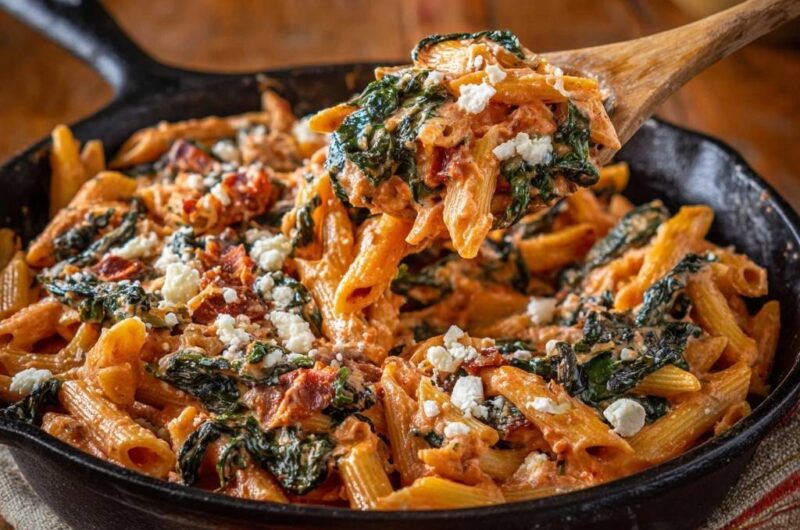
Creamy Sun-Dried Tomato and Spinach Penne
Course: Main CourseCuisine: Italian-AmericanDifficulty: easy4
servings10
minutes20
minutes510
kcal30
MinutesA rich and flavorful pasta dish featuring sun-dried tomatoes, fresh spinach, and a blend of parmesan and feta cheeses. The secret to this thick, orange-hued sauce is toasting the tomato paste and using reserved starchy pasta water to create a perfect emulsion.
Ingredients
12 ounces penne pasta
1 cup sun-dried tomatoes in oil, drained and chopped
2 tablespoons tomato paste (Essential for the visual color and thickness)
4 cups fresh baby spinach
3 cloves garlic, minced
1 cup heavy cream
1/2 cup grated parmesan cheese
1/2 cup crumbled feta cheese
2 tablespoons olive oil (from the sun-dried tomato jar for extra flavor)
1 teaspoon red pepper flakes
Salt and black pepper to taste
Reserved pasta water (The Secret Ingredient)
Directions
- Bring a large pot of salted water to a boil. Cook the penne for 2 minutes less than the package directions for al dente.
- CRITICAL STEP: Before draining the pasta, dip a measuring cup into the pot and save 1 cup of the cloudy, starchy pasta water. This starch is the “glue” that prevents a watery sauce. Drain the rest of the pasta.
- In a large cast iron skillet, heat the olive oil over medium heat. Add minced garlic and red pepper flakes, sautéing for 1 minute until fragrant.
- Stir in the tomato paste and sun-dried tomatoes. Cook for 2 minutes, stirring constantly, to “toast” the paste; this develops the deep orange color seen in the dish and thickens the base.
- Add the fresh spinach to the skillet. Toss until the spinach is wilted and coated in the tomato base.
- Pour in the heavy cream and bring to a gentle simmer. Whisk the cream into the tomato paste until the sauce is a uniform, thick orange color.
- Add the undercooked pasta directly into the skillet. Pour in half of your reserved pasta water.
- Stir vigorously for 2 to 3 minutes. The pasta will finish cooking inside the sauce, absorbing the cream while the starch in the water binds the fats and liquids together into a velvety coating.
- Stir in the parmesan cheese until melted. If the sauce is too thick, add a splash more pasta water.
- Remove from heat. Top with the crumbled feta cheese and extra cracked black pepper. Serve immediately directly from the skillet to maintain the emulsion.
Notes
- The reserved pasta water is the secret ingredient that prevents a watery sauce. Ensure you cook the pasta for 2 minutes less than the package directions so it finishes cooking in the sauce for maximum flavor absorption.