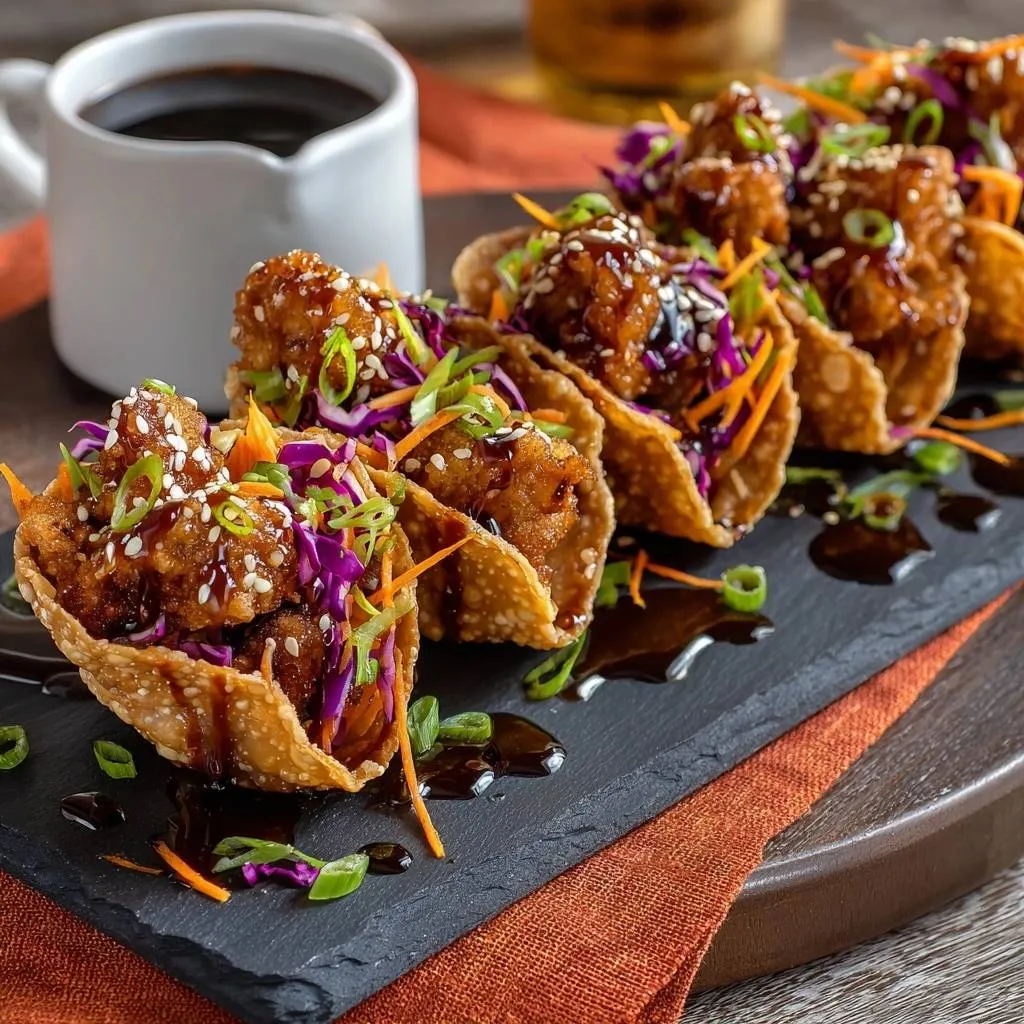
Imagine biting into a taco and hearing a distinct, glass-like shatter before hitting a center of succulent, glazed chicken. That’s the hallmark of a perfect fusion taco, yet so many home cooks end up with a greasy, limp mess that falls apart after two bites. If you’ve ever struggled with wonton wrappers that turn into soggy cardboard the moment the sauce touches them, you’re in the right place.
The secret to achieving that restaurant-quality crunch lies in the “Form-and-Fry” method. Instead of simply dropping dough into oil, we’re going to engineer a rigid, moisture-proof vessel that stands up to heavy glazes. This technique transforms a humble appetizer into a structural masterpiece that maintains its integrity from the first bite to the last.
I’ve found that the real trick isn’t just the fry time, but the temperature control and the specific way you drain the shells. By using a wire rack and an upside-down cooling position, you prevent oil from pooling in the “U” of the taco. This small adjustment ensures every millimeter of the wonton stays light, bubbly, and incredibly crisp.
Essential Components for Crispy Wonton Chicken Tacos
Success starts with the right building blocks. While it’s tempting to grab whatever is in the refrigerated aisle, square wonton wrappers are the gold standard here. Their shape provides the necessary surface area to create a deep pocket for the filling, whereas round wrappers often result in a shallow, difficult-to-fill taco.
Freshness is your best friend when it comes to the aromatics. Using freshly grated ginger and minced garlic cloves creates a vibrant, pungent base for the glaze that pre-packaged powders simply can’t replicate. These fresh ingredients release natural oils during the simmer, which helps the sauce cling to the chicken rather than sliding off.
For the frying medium, choose a neutral vegetable oil with a high smoke point. You need an oil that can handle 360°F without breaking down or imparting a heavy flavor. This allows the natural sweetness of the hoisin and the nuttiness of the sesame seeds to shine through without any burnt aftertaste.
Selecting the Right Wonton Wrappers
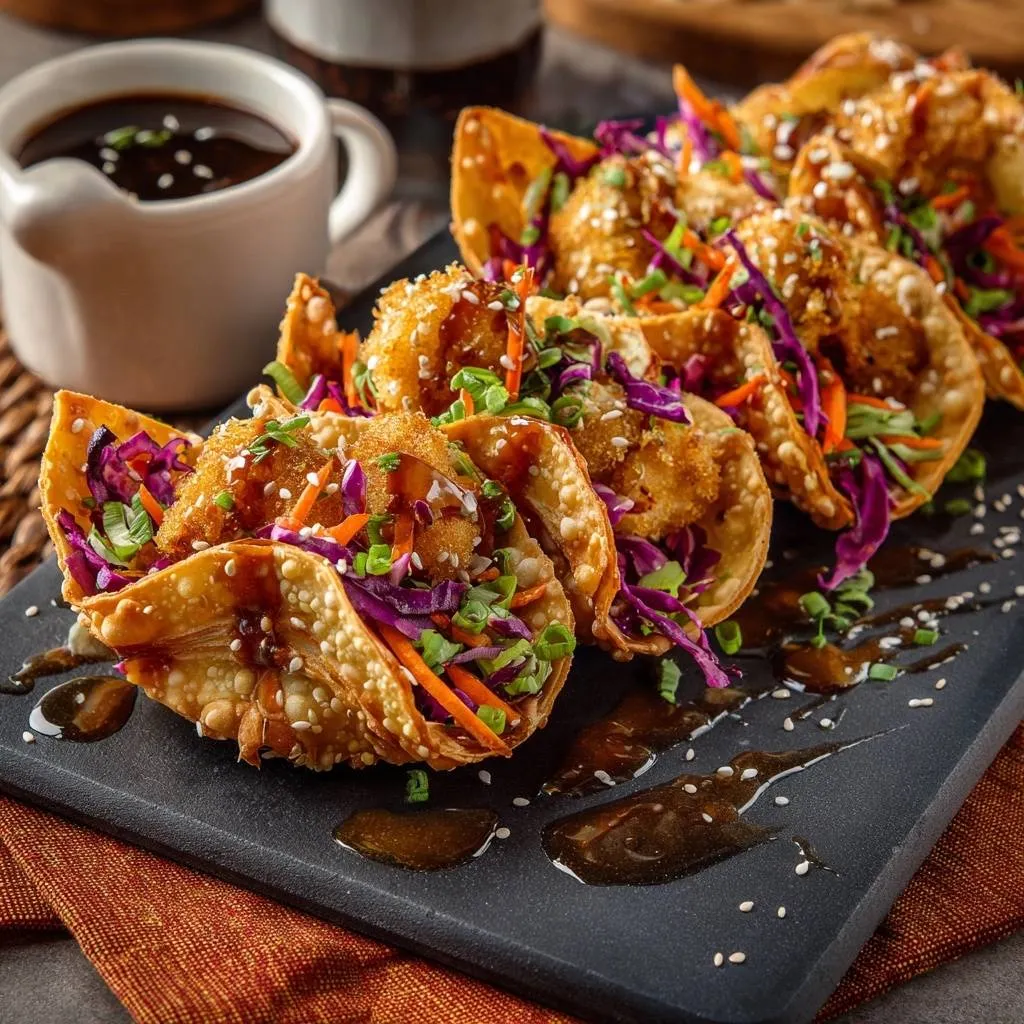
When shopping, look for wrappers that feel supple and aren’t sticking together in the package. Thin wrappers provide that delicate, bubbly texture we love, but they require a watchful eye during the fry. If you can only find larger egg roll wrappers, you can easily trim them down to 4-inch squares to achieve the same result.
The Role of Cornstarch in Texture
Cornstarch is the unsung hero of this recipe. Unlike all-purpose flour, which can become heavy and bread-like, cornstarch creates a thin, brittle crust that acts as a moisture barrier. This is vital because it prevents the hoisin glaze from soaking into the meat and making it mushy.
When you toss the chicken, don’t aim for a perfectly smooth coating. Those little uneven clumps and “craggy” bits are exactly what you want. They create extra surface area that catches the glaze and provides those extra-crunchy nuggets of flavor that make each bite interesting.
The Form-and-Fry Method for Rigid Shells
Creating the perfect taco shape requires a bit of physics and a steady hand. You’ll start by holding one corner of the wrapper with metal tongs and dipping the bottom half into the hot oil. Within about five seconds, the dough will begin to puff and stiffen, which is your cue to act.
Once that base is set, gently drape the wrapper over the edge of your tongs or a metal spatula to form the “U” shape. Submerge the entire thing for another 10 to 15 seconds. This two-step process ensures the bottom is strong enough to hold the weight of the chicken while the sides stay wide enough for easy assembly.
After frying, never place the shells flat on a paper towel. Instead, rest them upside down on a wire cooling rack. This allows any trapped oil to drip away completely. If oil sits in the bottom of the shell, it will soften the pastry within minutes, ruining that hard-earned shatter-crunch.
Maintaining Precise Oil Temperature
Keeping your oil at a steady 360°F is the “Goldilocks” zone for wontons. If the oil drops too low, the wrappers will act like sponges and soak up grease, leaving them heavy and chewy. If it’s too hot, the edges will burn before the center has a chance to crisp up.
I highly recommend using a clip-on fry thermometer to monitor the heat. Every time you add a batch of cold chicken or a new wrapper, the temperature will dip. Wait a few seconds for it to climb back up to the target before starting the next one to ensure consistent results.
Manual Shaping with Tongs
When you’re shaping the shells, remember the “5-second stiffen” rule. If you try to fold the wrapper too early, it will simply collapse or stick to itself. Wait for those first few bubbles to appear. This creates a structural “skeleton” that allows you to manipulate the shape without tearing the delicate dough.
Creating the Glossy Hoisin Glaze
The glaze is more than just a sauce; it’s a concentrated reduction of sweet and savory flavors. As you simmer the hoisin, honey, and soy sauce, the sugars begin to caramelize and thicken. You’re looking for a consistency that coats the back of a spoon and leaves a clear trail when you run your finger through it.
The rice vinegar is essential here to cut through the richness of the honey. It provides a bright acidity that balances the saltiness of the soy sauce. Once the glaze is glossy and dark, remove it from the heat immediately so it doesn’t over-reduce and become tacky or bitter.
Achieving the Craggy Chicken Texture
Frying the chicken in small batches is the key to maintaining that high heat. You want the exterior to turn a deep, golden amber. This color indicates that the cornstarch has fully dehydrated and formed a crisp shell around the juicy meat inside.
If you want to go the extra mile, you can perform a “double-fry.” Fry the chicken once until pale golden, let it rest for a few minutes, and then flash-fry it again at a slightly higher temperature for 60 seconds. This creates an almost indestructible crunch that stays loud even under a thick layer of sauce.
The Toss: Timing the Glaze Application
Timing is everything when it comes to the toss. You must add the hot chicken to the glaze the moment it comes out of the fryer. The residual heat from the meat helps the glaze “set” and bond to the cornstarch crust. If the chicken cools down first, the glaze will just sit on top and eventually make the coating soggy.
Assembly Strategy to Prevent Sogginess
The way you layer your taco is your final defense against a soggy bottom. I use the “Slaw Barrier” theory. By placing a generous pinch of the dry, shredded cabbage and carrots at the very bottom of the shell, you create a physical buffer. This prevents any excess glaze from the chicken from making direct contact with the wonton base.
This simple layering technique buys you extra time if you’re serving these at a party. The vegetables stay crisp, the chicken stays saucy, and the wonton stays perfectly rigid. It’s a small detail that makes a massive difference in the eating experience.
Garnishing for Visual and Textural Contrast
To give these tacos a professional look, slice your green onions on a sharp bias. This creates long, elegant slivers that add height to the dish. A heavy sprinkle of toasted sesame seeds adds a final layer of nuttiness that ties the earthy hoisin and fresh ginger together beautifully.
Flavor Variations and Ingredient Swaps
This recipe is incredibly versatile if you want to experiment with different proteins. Firm tofu makes an excellent substitute for chicken. Just be sure to press the tofu between heavy plates for at least 20 minutes to remove as much water as possible before dredging it in cornstarch.
If you prefer a bit of heat, you can easily whisk in a teaspoon of sriracha or a pinch of red chili flakes into the glaze while it simmers. This adds a spicy kick without breaking the emulsion of the sauce or affecting the final viscosity.
Vegetarian Protein Alternatives
When using tofu, the cornstarch dredge is even more important. Tofu has a higher moisture content than chicken, so a thick, uneven coating of starch is necessary to achieve that “craggy” look. Fry the tofu cubes until they are very firm to the touch before tossing them in the glaze.
Adjusting the Glaze Sweetness
If you don’t have honey on hand, agave nectar or maple syrup work as fantastic alternatives. Agave has a thinner consistency, so you may need to simmer the glaze for an extra minute or two. Maple syrup adds a lovely woody undertone that pairs surprisingly well with the soy and ginger.
What to Serve with Fusion Tacos
Since these tacos are rich and savory, they pair best with bright, refreshing side dishes. A chilled cucumber salad with a splash of rice vinegar and sesame oil is a classic choice. The cool crunch of the cucumbers cleanses the palate between the bold, saucy bites of the taco.
You could also serve these alongside steamed edamame finished with flaky sea salt or a bright citrus salad featuring mandarin oranges and mixed greens. These lighter sides ensure the meal feels balanced rather than overly heavy from the fried components.
Troubleshooting Common Texture Issues
If your wonton shells turn out chewy instead of crispy, it’s usually a sign that the oil wasn’t hot enough or the shells weren’t fried long enough. They should be a uniform golden brown. If they look pale, they still have too much moisture inside and will soften quickly.
If you find the glaze is sliding off the chicken and pooling at the bottom, the sauce likely wasn’t reduced enough. Give it another minute on the stove next time. Also, ensure your chicken is patted completely dry before the cornstarch hit; any surface moisture will prevent the starch from sticking properly.
Fixing a Broken Glaze
Sometimes, if the heat is too high, the sugars in the glaze can separate from the liquid. If your sauce looks oily or broken, whisk in a tiny splash of water or an extra tablespoon of hoisin sauce. This usually helps re-emulsify the mixture into a smooth, glossy coating.
Reviving Leftover Wonton Shells
If you made your shells a few hours in advance and they’ve lost their edge, don’t worry. You can revive them by placing them in a 325°F oven for about two minutes. This flash-heat draws out any absorbed moisture and restores that signature snap before you fill them.
Make Ahead and Storage Logistics
While the assembled tacos should be eaten immediately, you can definitely prep the components in advance. The fried wonton shells will stay fresh for up to two days if stored in a completely airtight container at room temperature. Just make sure they are 100% cool before you seal the lid.
The hoisin glaze can be made up to a week ahead of time and kept in a glass jar in the refrigerator. When you’re ready to use it, just warm it gently in a small saucepan. I don’t recommend freezing the cooked chicken, as the cornstarch crust will lose its texture upon thawing.
Prepping the Slaw in Advance
You can shred your cabbage and carrots a day early to save time. To keep them ultra-crisp, store them in a bowl covered with a damp paper towel in the fridge. Whatever you do, don’t add any dressing or salt to the slaw until the very last second, or it will release water and make your tacos soggy.
Expert Tips for Professional Results
When dredging the chicken, use the “dry-hand/wet-hand” method. Use one hand for touching the raw chicken and the other for tossing it in the cornstarch bowl. This prevents your fingers from becoming coated in thick paste, allowing you to work faster and keep the coating on the chicken where it belongs.
If you have a wok, use it for the frying steps. The sloped sides of a wok allow for better heat circulation and help minimize oil splatter on your stovetop. It also makes it much easier to fish out the small pieces of chicken once they reach that perfect amber hue.
How do I store leftover wonton tacos?
It is best to store the components separately. Keep the fried wonton shells in an airtight container at room temperature for up to 48 hours. Store the glazed chicken in the refrigerator for up to 3 days. When you are ready to eat, reheat the chicken in an air fryer or oven at 375°F for a few minutes to bring back the crunch before assembling. Do not freeze the assembled tacos, as the shells will become mushy.
Why did my wonton shells bubble up so much?
Bubbling is actually a good sign! It means the moisture in the dough is evaporating rapidly, creating those light, crispy pockets. However, if the bubbles are so large that they distort the shape of the taco, try pricking the raw wrapper once or twice with a fork before frying. Also, ensure your oil isn’t climbing above 375°F, as excessive heat can cause violent bubbling.
Can I use a different protein like shrimp or beef?
Absolutely. Shrimp works wonderfully with this method; they only need about 2-3 minutes of frying time. If using beef, choose a tender cut like flank steak or sirloin and slice it very thinly against the grain. The cornstarch dredge remains the same regardless of the protein to ensure that signature “craggy” texture and glaze adhesion.
What if I don’t want to deep fry the shells?
While deep frying provides the best texture, you can bake them for a lighter version. Drape the wrappers over the bars of an oven rack (place a baking sheet underneath to catch drips) and bake at 375°F for 5-7 minutes until golden. They won’t have the same bubbly, shattered texture as the fried version, but they will still be crisp and rigid enough to hold the filling.
My glaze is too thick to toss, what should I do?
If the glaze becomes too thick or tacky as it cools, simply whisk in a teaspoon of warm water or rice vinegar over low heat. This will loosen the sugars and return the sauce to a coatable consistency. Always aim to toss the chicken while both the meat and the sauce are warm for the best results.
Crispy Wonton Chicken Tacos
Course: Main CourseCuisine: Asian FusionDifficulty: easy4
servings20
minutes15
minutes35
Minutes485
kcalAsian Fusion
Ingredients
12 large square wonton wrappers
1 pound chicken breast, cut into 1-inch bite-sized pieces
1/2 cup cornstarch
1/2 teaspoon salt
1/2 teaspoon black pepper
1/2 cup hoisin sauce
2 tablespoons soy sauce
1 tablespoon honey
1 tablespoon rice vinegar
1 teaspoon fresh ginger, grated
1 clove garlic, minced
2 cups shredded red cabbage and matchstick carrots
1/4 cup green onions, thinly sliced on a bias
2 tablespoons toasted sesame seeds
Vegetable oil for frying (about 2-3 cups)
Directions
- The Shells: Heat 2 inches of vegetable oil in a deep skillet or heavy pot to 360°F. Using metal tongs, hold one wonton wrapper by a corner and submerge the bottom half into the oil for 5 seconds. Once it begins to bubble and stiffen, fold the wrapper over the edge of the tongs or a metal spatula to create a “U” shape. Submerge the entire folded shell for another 10-15 seconds until golden brown and rigid. Drain upside down on a wire rack. This ensures the shell is fully cooked and oil-free, preventing sogginess.
- The Glaze: In a small saucepan, combine the hoisin sauce, soy sauce, honey, rice vinegar, ginger, and garlic. Simmer over medium-low heat for 3-5 minutes until thickened into a glossy, dark syrupy glaze. Set aside.
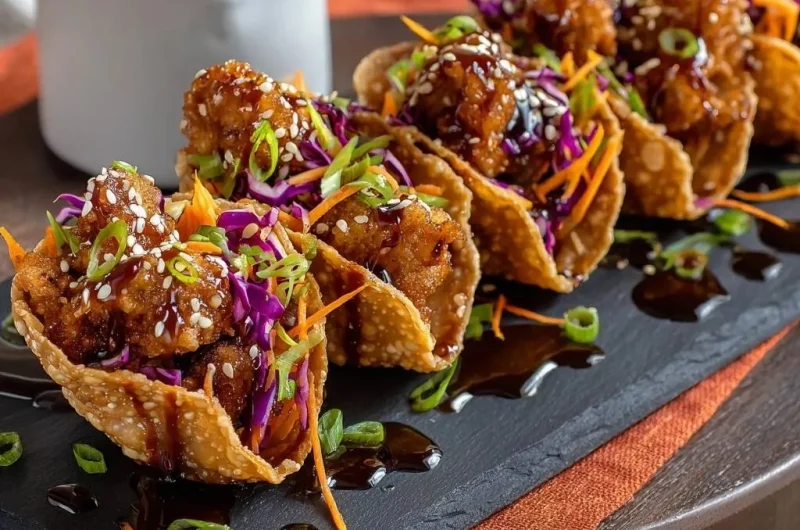
- The Chicken: Pat the chicken pieces dry. In a bowl, toss the chicken with cornstarch, salt, and pepper until every piece is heavily and unevenly coated (this creates the “craggy” texture seen in the image).
- The Fry: Working in batches, fry the chicken in the 360°F oil for 4-5 minutes until the exterior is deeply golden and very crunchy. Drain on paper towels.
- The Toss: Place the hot chicken in a large bowl and toss with half of the prepared glaze until thoroughly coated.
- Assembly: Place a generous pinch of the cabbage and carrot slaw into the bottom of each crispy wonton shell.
- The Finish: Top the slaw with 2-3 pieces of glazed chicken. Drizzle the remaining glaze generously over the top, allowing some to pool slightly. Garnish with a heavy sprinkle of sesame seeds and sliced green onions. Serve immediately for the ultimate crunch.
Notes
- The secret to the ‘Anti-Soggy Bottom’ is draining the fried wonton shells upside down on a wire rack and using a cornstarch dredge on the chicken to create a moisture barrier.