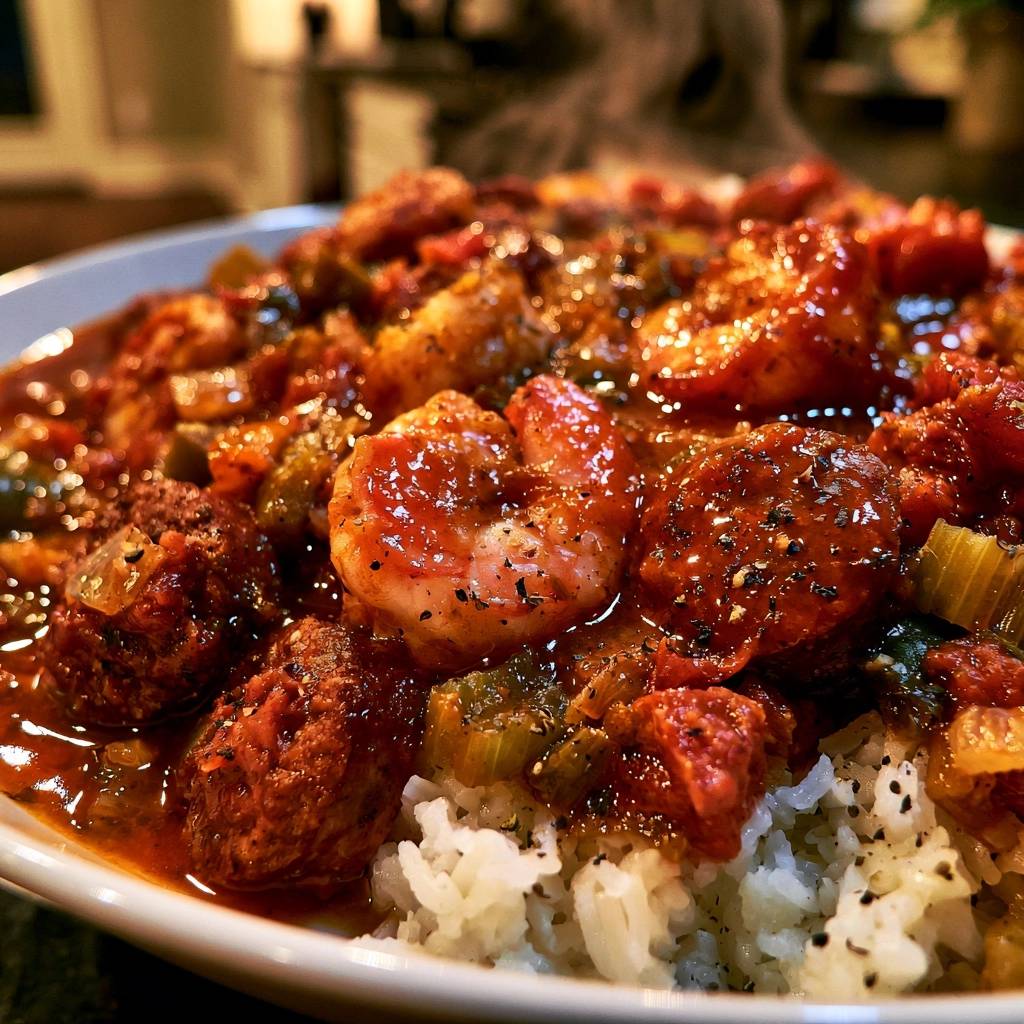
Most home-cooked Creole dishes end up as a thin, soupy mess that slides right off the rice. You expect a rich, hearty stew, but you get a watery bowl of vegetables that lacks that deep, concentrated soul of Louisiana cooking. This recipe changes that by focusing on a glossy, thick sauce that clings to every piece of shrimp and sausage.
The secret to a restaurant-quality Creole isn’t just the spice; it’s the reduction and the timing of your aromatics. We’re moving away from the “dump and simmer” method that releases too much moisture from the vegetables. Instead, we use a specific layering technique to build a robust base that stands up to the rice.
One pro tip to keep in mind: the tomato paste is your best friend here. By frying the paste until it turns a dark brick red, you create a natural thickener that binds the beef broth and crushed tomatoes together. This ensures your final plate has “skyscraper” height rather than a puddle at the bottom of the bowl.
The Holy Trinity and Essential Creole Components
In the world of Creole cooking, the “Holy Trinity” is the undisputed foundation of flavor. This blend of onion, green bell pepper, and celery provides the aromatic backbone for the entire dish. We use a specific ratio that favors the sweetness of the onion and the earthy crunch of the celery to balance the heat of the spices.
Dicing size is more important than you might think. You want a uniform, small dice so the vegetables soften at the same rate and eventually melt into the sauce. If the pieces are too large, they’ll stay crunchy and release water too late in the process, which thins out your beautiful reduction. Aim for pieces about a quarter-inch thick to ensure they become tender and translucent during the sauté.
Selecting High-Quality Shrimp and Smoked Sausage
For the best results, look for large shrimp, specifically U-15 or U-20 sizing. These larger shrimp stay juicy and provide a meaty bite that doesn’t get lost in the bold sauce. Peeling and deveining are non-negotiable steps because you want a smooth, refined texture in every spoonful without any grit or shells slowing you down.
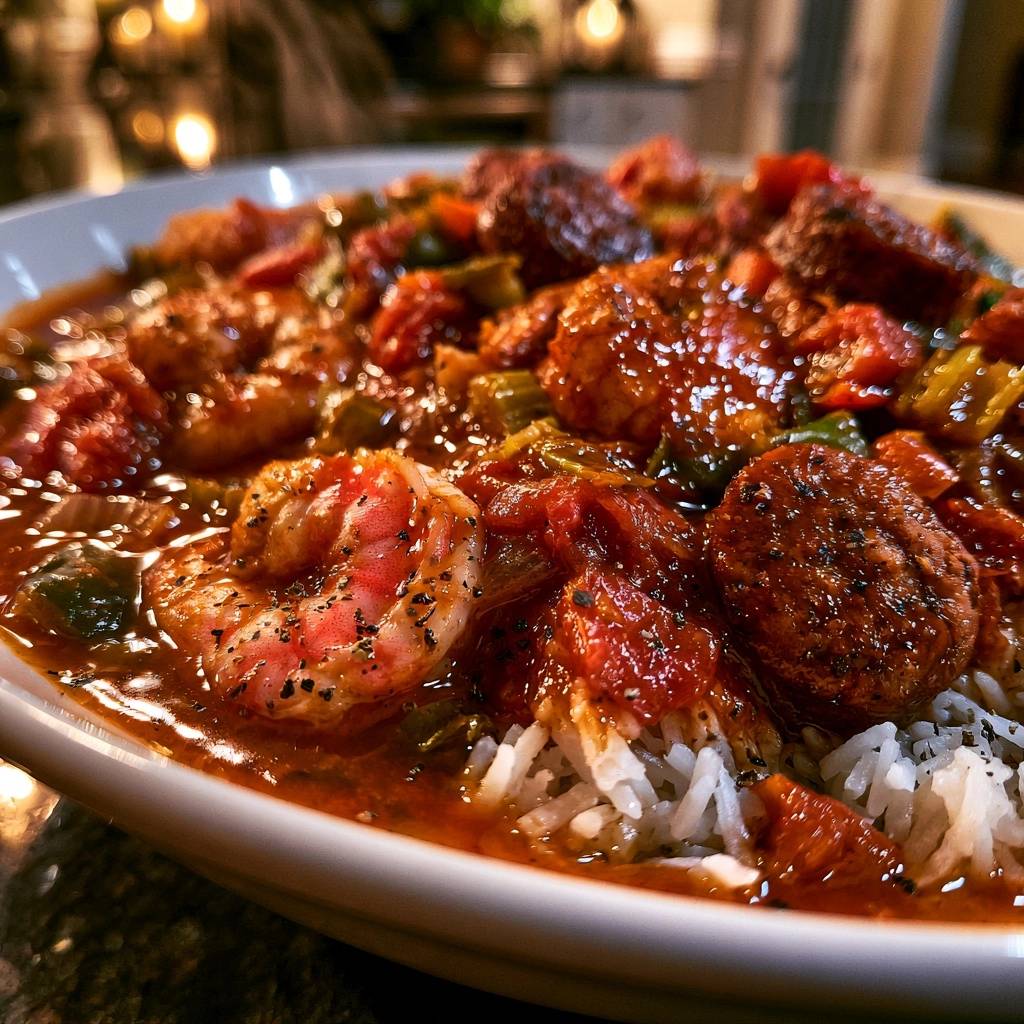
Since we are keeping this recipe pork-free, the choice of sausage is critical for that signature smoky depth. A high-quality beef Andouille or a well-seasoned smoked beef sausage is the perfect substitute. Look for a brand with a firm casing that offers a distinct “snap” when you bite into it. This provides a necessary textural contrast to the tender shrimp and soft vegetables.
The Pantry Staples: Spices and Aromatics
The Creole seasoning blend is where the heat lives, but it needs support from other pantry staples. Dried thyme offers a concentrated, woodsy note that holds up better during a long simmer than fresh herbs would. It infuses the liquid with a subtle earthiness that ties the tomatoes and beef broth together.
Cracked black pepper adds a different dimension of heat compared to the cayenne usually found in Creole blends. It provides a slow, back-of-the-throat warmth rather than a sharp sting. Meanwhile, the acidity in the crushed tomatoes cuts through the richness of the browned sausage, keeping the flavor profile bright and balanced.
The Science of a Non-Watery Creole Sauce
The primary reason home Creole fails is the uncontrolled release of moisture from the vegetables. When you simmer onions and peppers in a closed pot, they steam and leak water into your sauce. To combat this, we use the Maillard Reaction to our advantage by searing the sausage first. This creates a flavorful “fond” on the bottom of the pan.
The rendered fat from the beef sausage carries the smoky spices directly into the vegetables as they sauté. By cooking the vegetables uncovered, you allow the initial moisture to evaporate immediately. This leaves behind the concentrated sugars and flavors of the Trinity, ensuring the base of your sauce is flavorful rather than diluted.
Caramelizing Tomato Paste for Body and Color
The “Pincé” technique is a classic culinary move that involves browning tomato paste in fat. Instead of just stirring it into the liquid, you cook the paste for several minutes until it loses its bright red color and turns a deep, rusty brown. This process removes the raw, metallic taste often found in canned tomato products.
As the paste caramelizes, it transforms into a powerful binding agent. It acts as a bridge between the fats from the sausage and the water-based beef broth. This results in a sauce that is naturally thick and velvety without the need for heavy flours or starches that can dull the vibrant spices.
The Importance of the Uncovered Reduction
Evaporation is your most effective tool for achieving the perfect viscosity. Simmering the sauce uncovered for 15 to 20 minutes allows the excess liquid from the beef broth and tomatoes to escape as steam. This concentrates the flavors and thickens the texture until it reaches a glossy consistency.
You’ll know the sauce is ready when you can pull a wooden spoon through the center of the pan and it leaves a brief “trail” before the sauce flows back together. This visual cue tells you the sauce has enough body to sit proudly on top of the rice. If it’s still runny, give it another five minutes of heat.
Step-by-Step: Building the Spicy Shrimp and Sausage Creole
Phase 1: Searing the Sausage and Rendering Fat
Start by heating your olive oil over medium-high heat until it shimmers. Add your beef sausage rounds in a single layer to ensure they get a deep, dark sear. You aren’t just warming them through; you are looking for caramelized, crispy edges that will hold their texture in the sauce.
As the sausage browns, it will leave behind brown bits, or “fond,” on the bottom of the skillet. Do not scrape these away yet! These bits are concentrated flavor bombs that will dissolve into the sauce later, adding a rich, savory complexity that you can’t get from spices alone.
Phase 2: Softening the Trinity and Blooming Spices
Once you remove the sausage, toss in your onion, bell pepper, and celery. The vegetables will pick up the color from the pan and begin to soften. You’ll notice the onions turning translucent and the aroma filling your kitchen as they soak up the leftover sausage fat.
After the vegetables are tender, add your garlic and spices. This is called “blooming.” By frying the Creole seasoning and thyme in the oil for a minute, you release fat-soluble flavor compounds that simmering in water simply cannot extract. The kitchen should smell incredibly fragrant at this point.
Phase 3: Simmering for Concentrated Flavor
Pour in your crushed tomatoes and beef broth, stirring well to incorporate the caramelized tomato paste. Bring the mixture to a gentle simmer. You want to see small, lazy bubbles breaking the surface rather than a violent, rolling boil which can break down the vegetables too much.
Rushing this step is a mistake because the tomatoes need time to lose their “raw” edge. A 15 to 20-minute simmer allows the flavors to marry and the sauce to darken. If the liquid reduces too quickly, simply turn the heat down slightly to maintain that steady, gentle evaporation.
Phase 4: The 3-Minute Shrimp Flash Cook
When the sauce is thick and glossy, it’s time for the shrimp. Shrimp are mostly water and protein; if you cook them too long, the protein fibers tighten and squeeze out their internal moisture. This makes the shrimp rubbery and turns your thick sauce watery in seconds.
Gently fold the raw shrimp into the bubbling sauce. They only need about three minutes to turn pink and opaque. The residual heat of the thickened sauce is incredibly efficient at cooking them through. As soon as they curl into a “C” shape, pull the pan off the burner immediately.
Troubleshooting Common Creole Consistency Issues
If your sauce is still too thin after the reduction time, don’t panic. You can continue to simmer it for another few minutes, but keep the shrimp out until the very end. While a cornstarch slurry is an option, it can make the sauce look cloudy, so further reduction is always the preferred method for flavor.
If the dish tastes too salty, it’s likely because the beef broth or Creole seasoning had high sodium levels. You can balance this by adding a small squeeze of lemon juice or a tiny pinch of sugar. The acidity or sweetness will distract the palate from the salt without changing the overall savory profile.
Optimal Side Dishes for Spicy Creole Flavors
Standard long-grain white rice is the traditional choice for a reason. Its neutral flavor and fluffy texture act as a sponge for the spicy, tomato-based sauce. Make sure your rice is hot and fresh so it doesn’t cool down the Creole when you plate it up.
If you want to try something different, cauliflower rice works surprisingly well for a lighter option. For those who love to get every last drop of sauce, serve the dish with a piece of crusty French bread. The bread is perfect for mopping up the thick glaze that the rice might miss.
Storage and Reheating Without Losing Texture
Shrimp dishes can be tricky to reheat because the shrimp often turn into rubber balls in the microwave. If you have leftovers, try to store the shrimp in a separate small container from the sauce and sausage. This allows you to heat the sauce thoroughly first.
When you’re ready to eat, heat the sauce and sausage until steaming, then stir the cold shrimp in at the very last second. The heat from the sauce will warm the shrimp through without overcooking them. This dish stays fresh in the fridge for about two days, but the flavors actually deepen overnight.
Expert Tips for Maximum Flavor Impact
Using a heavy cast iron skillet or a Dutch oven is a game-changer for this recipe. These pans retain heat much better than thin stainless steel, which helps in creating a consistent sear on the sausage and a steady simmer for the sauce reduction.
If the pan looks a little dry after sautéing the vegetables, deglaze it with just a tablespoon of beef broth before adding the tomato paste. This ensures you lift every bit of that flavorful fond off the bottom so it integrates into the final glaze.
Let the dish rest for about five minutes after you take it off the heat. This brief waiting period allows the sauce to “set” and thicken even further as it cools slightly. It also gives the shrimp a moment to finish cooking perfectly in the residual heat.
Finally, always garnish with fresh parsley at the very last second. The bright, grassy flavor of the fresh herbs provides a necessary contrast to the deep, smoky, and spicy notes of the Creole. It adds a pop of color and a hit of freshness that makes the whole dish sing.
How do I store leftovers and does this freeze well?
Store your Spicy Shrimp and Sausage Creole in an airtight container in the refrigerator for up to 2 days. Because shrimp have a delicate texture, they can become rubbery if kept longer or reheated multiple times. It is not recommended to freeze this dish, as the shrimp will lose their snap and the vegetables can become mushy and watery upon thawing.
Why is my Creole sauce still watery?
The most common culprit for a watery sauce is skipping the reduction step or overcooking the shrimp. If you don’t let the sauce simmer uncovered for the full 15 to 20 minutes, the excess moisture from the broth and tomatoes won’t evaporate. Additionally, if shrimp are cooked too long, they release their internal juices into the sauce, thinning it out. Always ensure the sauce is thick enough to leave a trail with a spoon before adding the shrimp.
Can I use a different protein if I don’t have beef sausage?
Yes, you can substitute the beef sausage with any smoked poultry sausage, such as turkey or chicken Andouille. The key is to use a pre-cooked, smoked variety to ensure you get that essential smoky flavor profile. If you use a raw sausage, make sure to cook it completely during the searing phase before proceeding with the vegetables.
What can I use if I don’t have Creole seasoning?
If you don’t have a pre-made Creole blend, you can make a quick version using pantry staples. Mix together 1 teaspoon paprika, 1/2 teaspoon garlic powder, 1/2 teaspoon onion powder, 1/4 teaspoon dried oregano, and a pinch of cayenne pepper. Adjust the cayenne based on your preferred heat level. This will provide the earthy, spicy foundation the dish requires.
Is there a way to make this dish less spicy?
To reduce the heat, start by using a “mild” Creole seasoning or reducing the amount to half a tablespoon. You should also ensure your smoked sausage is a mild variety rather than a spicy Andouille. Adding an extra tablespoon of tomato paste can also help mellow out the spices by adding more sweetness and body to the sauce.
Can I use frozen shrimp for this recipe?
You can certainly use frozen shrimp, but they must be completely thawed and patted dry with paper towels before adding them to the pan. If the shrimp are still icy or wet, they will dump excess water into your concentrated sauce, ruining the thick consistency you worked hard to achieve. Thaw them in the fridge overnight for the best texture.
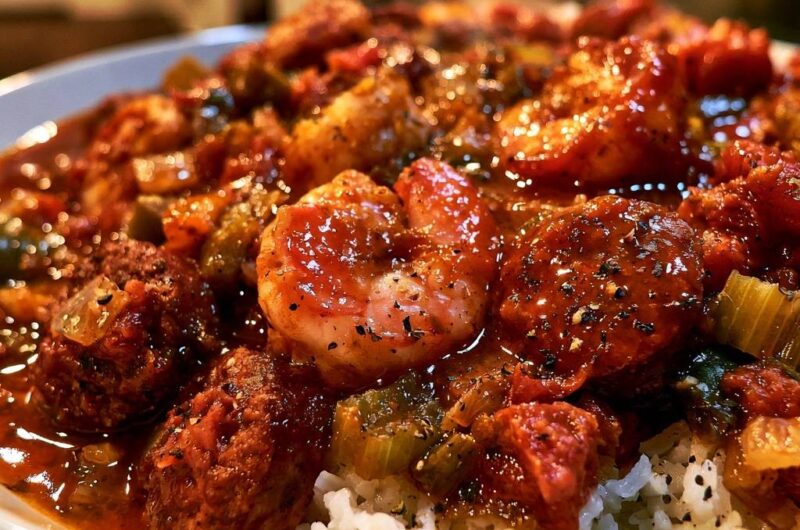
Spicy Shrimp and Sausage Creole
Course: Main CourseCuisine: AmericanDifficulty: easy4
servings15
minutes30
minutes45
Minutes410
kcalAmerican
Ingredients
1 pound large shrimp, peeled and deveined
12 ounces smoked Andouille or beef sausage, sliced into rounds
1 large onion, diced
1 green bell pepper, diced
2 stalks celery, chopped
3 cloves garlic, minced
1 can (14.5 oz) crushed tomatoes
1 cup beef broth
3 tablespoons tomato paste (increased for visual thickness)
1 tablespoon Creole seasoning
1 teaspoon dried thyme
1/2 teaspoon cracked black pepper
2 tablespoons olive oil
Cooked white rice for serving
Fresh parsley for garnish
Directions
- Sear the Protein: Heat olive oil in a large skillet over medium-high heat. Brown the sausage slices for 3 to 4 minutes until the edges are crisp and caramelized. Remove sausage and set aside, leaving the rendered fat in the pan.
- Sauté the Trinity: Add the onion, bell pepper, and celery to the same pan. Sauté for 5 to 7 minutes until the vegetables are softened and the onions are translucent.
- Build the Base: To solve the watery sauce problem, stir in the tomato paste now and cook it for 3 minutes, stirring constantly, until it turns a deep brick red and begins to stick slightly to the pan. This caramelization creates a thick, concentrated base that prevents the vegetable juices from thinning out the final dish.
- Bloom the Spices: Add the garlic, Creole seasoning, thyme, and cracked black pepper. Cook for 1 minute until fragrant.
- The Reduction: Pour in the crushed tomatoes and beef broth. Bring to a simmer, then reduce heat to medium-low. Let the sauce simmer uncovered for 15 to 20 minutes. This reduction step is crucial for achieving the concentrated, glossy, and thick consistency shown in the image.
- Combine: Once the sauce has thickened significantly and reduced by about a third, stir the browned sausage back into the pan.
- Flash Cook the Shrimp: Add the raw shrimp. Cook for only 3 minutes, tossing frequently so the thick sauce coats them like a glaze. As soon as the shrimp are pink and opaque, remove from heat. Overcooking shrimp releases excess water, which ruins the sauce consistency.
- Serve: Serve immediately over hot white rice. The sauce should be thick enough to sit on top of the rice without soaking through to the bottom of the bowl. Garnish with fresh parsley and extra cracked pepper.
Notes
- To prevent a watery sauce, do not overcook the shrimp as they release excess water. Ensure the sauce is fully reduced before adding the proteins back in.