You spend hours carefully mixing, a small fortune on premium cream cheese, and then it happens. You pull your masterpiece out of the oven only to watch a giant, jagged canyon form right across the center. It is the ultimate holiday dessert heartbreak. Most bakers assume they need a fussy, leaking water bath to prevent this, but the real secret lies in how you handle the temperature drop after the timer goes off.
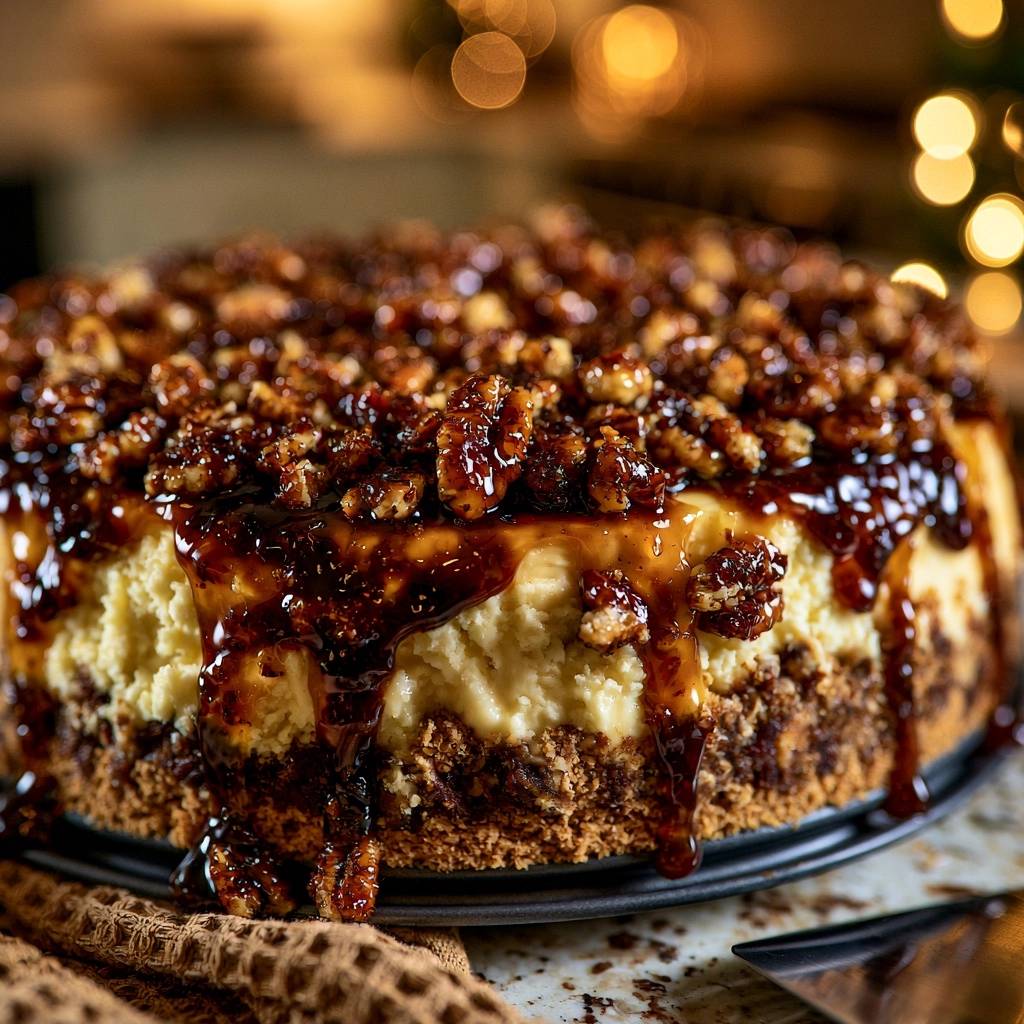
This Caramel Pecan Cheesecake is the solution for anyone who wants a showstopper without the stress. We are combining a crunchy, toasted pecan crust with a filling so silky it practically melts on your tongue. The whole thing gets draped in a buttery, salted caramel that clings to every curve of the cake. It is a study in texture contrasts, balancing the earthy saltiness of the nuts with a rich, tangy cream cheese base.
The secret to that flawless, professional surface is a gradual cooling technique I call the wooden spoon method. By propping the oven door open and letting the cake rest in the residual heat, you prevent the structural shock that causes the filling to contract too quickly. This slow descent in temperature allows the proteins to set firmly but gently, giving you that elusive, crack-free finish every single time.
Essential Components for the Perfect Pecan Crust
A great cheesecake needs a foundation that can stand up to the weight of the filling. While standard graham crackers provide the crunch, adding finely chopped pecans introduces a savory depth and essential oils that make the base taste like a high-end cookie. You want to pulse the pecans until they are the size of coarse sand so the crust stays cohesive when you slice into it.
I always reach for dark brown sugar instead of white sugar for this specific base. The higher molasses content in dark brown sugar adds a hint of toffee flavor and creates a slightly chewier, more robust texture once baked. It acts as a glue, binding the crumbs and nuts together so you don’t end up with a pile of debris on the plate.
Pre-baking the crust for exactly ten minutes is a non-negotiable step. This brief stint in the oven toasts the pecans and “sets” the butter and sugar. If you pour the wet batter onto a raw crust, the moisture will seep into the crumbs, resulting in a soggy, limp bottom. Pre-baking ensures that every bite has a distinct, satisfying snap.
Selecting the Right Cream Cheese and Dairy
Quality ingredients are the difference between a grainy cheesecake and a luxurious one. You must use full-fat brick cream cheese for this recipe. Avoid the “spreadable” versions sold in tubs, as they contain extra air and stabilizers that will prevent the cake from setting properly. The fat content is what carries the flavor and provides that dense, velvety mouthfeel.
Temperature is your best friend in the kitchen. Your cream cheese, sour cream, and eggs must be at true room temperature before you start mixing. If the cheese is even slightly cold, it will form tiny, stubborn lumps that no amount of whisking can remove. Set your ingredients out at least two hours before you plan to bake.
The Science of a Smooth Cheesecake Filling
Think of a cheesecake more as a baked custard than a traditional cake. The molecular structure relies on a delicate balance of fats and proteins. When mixing, always use the paddle attachment on your stand mixer. A whisk attachment is designed to incorporate air, which is exactly what we want to avoid here.
Sour cream is the secret weapon for flavor balance. Its natural acidity cuts through the heavy fat of the cream cheese, preventing the dessert from feeling cloying. Meanwhile, a splash of heavy cream thins the batter just enough to ensure it pours smoothly, contributing to a “melt-in-the-mouth” quality that stays consistent from the edges to the center.
Why Overbeating Eggs Leads to Structural Failure
Eggs are the structural “glue” that holds the cheesecake together, but they are also the most common cause of cracks. When you beat eggs at high speed, you trap air bubbles in the protein strands. In the heat of the oven, those bubbles expand, causing the cheesecake to rise like a souffle. Once it cools, the air escapes, the cake collapses, and the surface splits under the tension.
To prevent this, add your eggs one at a time at the very end of the mixing process. Keep the mixer on the lowest possible setting. You only want to mix until the yellow streak of the yolk just disappears into the white batter. This “just incorporated” technique keeps the density high and the surface perfectly flat.
Step-by-Step: Building the Caramel Pecan Cheesecake
Start with the Creaming Phase by beating your softened cream cheese and sugar for at least three minutes. You are looking for a texture that resembles thick silk. Scrape the bottom of the bowl often to ensure no hidden blocks of cheese remain. This is the only stage where you can safely beat the mixture vigorously.
Next comes the Dairy Integration. Fold in the sour cream, vanilla, and heavy cream. At this point, the batter should look glossy and pourable. If you see any tiny specks, keep mixing for another thirty seconds. The batter should be completely uniform before the eggs enter the picture.
Finally, perform the Egg Addition. As mentioned, use a slow speed and stop the moment the last egg is blended. Pour the batter gently over your cooled crust. If you see any large air bubbles on the surface, you can pop them with a toothpick or gently tap the pan on the counter to help them rise and dissipate.
The Gradual Cooling Technique: Eliminating the Water Bath
Many recipes insist on a water bath, but wrapping a pan in foil and praying it doesn’t leak is a headache. The “Wooden Spoon Method” achieves the same result by controlling the physics of thermal shock. When a cheesecake moves from a 325°F oven to a 70-degree kitchen, the outer edges cool and contract faster than the center, pulling the cake apart.
By turning off the oven and propping the door open just a few inches with a wooden spoon, you create a controlled environment. The temperature drops slowly over sixty minutes. This allows the protein structure to firm up gradually without the internal tension that leads to fissures. It is a hands-off way to guarantee a smooth top.
The Knife Release: Preventing Shrinkage Cracks
Even with a slow cool, a cheesecake will naturally shrink slightly as it loses moisture. If the edges of the cake are stuck to the sides of the springform pan, the center will be forced to pull away from itself as it shrinks. This is a very common cause of late-stage cracking that happens while the cake is on the counter.
As soon as you remove the cake from the oven after its hour of resting, run a thin, flexible knife or spatula around the entire perimeter. You aren’t trying to remove the cake from the pan yet; you are simply detaching the “grip” the cake has on the metal. This allows the entire cake to pull inward toward the center freely as it finishes cooling.
Crafting the Salted Caramel Pecan Topping
The topping relies on the Maillard reaction, where the sugars and milk solids in the butter brown to create a complex, nutty flavor. Start by melting your butter and dark brown sugar together. You want to wait for the mixture to reach a vigorous bubble, which signals that the sugar is beginning to caramelize and develop that deep amber hue.
When you add the heavy cream, the mixture will hiss and steam violently. This is normal, but make sure your cream isn’t ice-cold, or the sugar might seize into hard clumps. Whisk constantly until the sauce becomes smooth and thick. Adding a pinch of sea salt at the end is vital; it provides a sharp contrast that makes the caramel taste less sugary and more sophisticated.
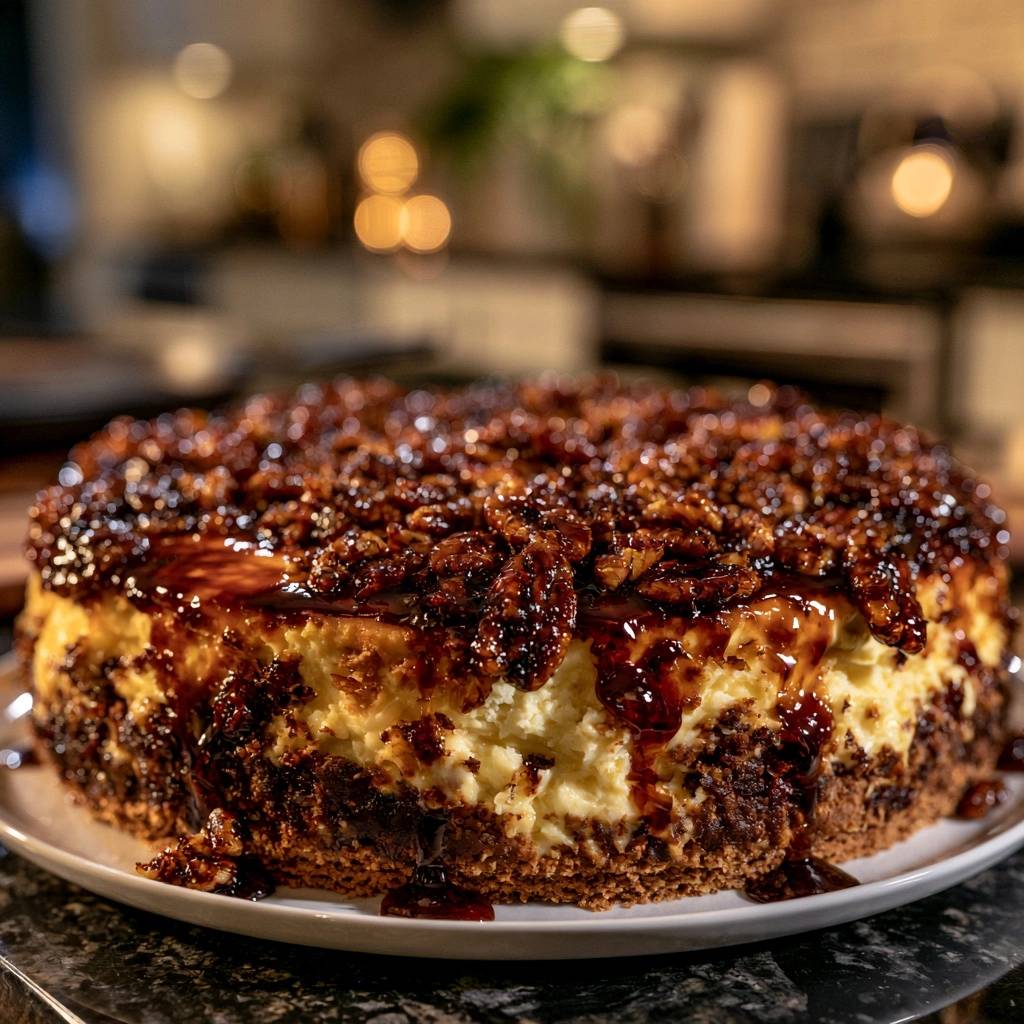
Patience is key when applying the topping. If you pour hot caramel onto a cold cheesecake, it will run straight off the sides and potentially melt the top layer of the filling. Let the sauce sit for about 20 minutes. It should be thick enough to coat the back of a spoon but still fluid enough to create those beautiful, slow-moving drips down the sides of the cake.
Troubleshooting Common Cheesecake Obstacles
If you end up with a lumpy batter despite your best efforts, don’t panic. You can push the batter through a fine-mesh sieve before pouring it into the crust. This will catch any bits of unmixed cream cheese and ensure a professional texture. It takes an extra five minutes but can save the entire dessert.
Determining doneness is the hardest part for beginners. You are looking for the “jiggle,” not a “slosh.” The edges should be slightly puffed and firm to the touch, but the center two inches should move like set gelatin when you gently shake the pan. If the center looks liquid or wavy, it needs another five to ten minutes.
A greasy crust usually happens if the butter wasn’t fully incorporated or if the pecans were chopped too coarsely, allowing the butter to pool. To fix a runny caramel, simply return it to the heat and simmer for another two minutes to evaporate more moisture. If it’s too hard, whisk in a tablespoon of warm heavy cream to thin it back out.
Make-Ahead Strategies and Storage Logistics
Cheesecake is the ultimate make-ahead dessert because it actually tastes better after a long rest. The fats in the cream cheese need at least eight to twelve hours in the fridge to fully stabilize and for the vanilla and sugar flavors to marry. I always recommend baking this a full day before you plan to serve it.
If you want to get a head start on holiday baking, this cake freezes beautifully. Bake the cake and cool it completely, but do not add the caramel topping. Wrap the chilled cake tightly in a double layer of plastic wrap and then a layer of foil. It will stay fresh in the freezer for up to three months.
When you are ready to serve, thaw the cake in the refrigerator overnight. Never thaw a cheesecake on the counter, as the rapid temperature change can cause the filling to become weeping or mushy. Once thawed, prepare the fresh caramel and pecan topping and apply it just before your guests arrive for the best visual impact.
Expert Tips for Professional Presentation
To get those clean, sharp slices you see in magazines, you need a hot knife. Dip a long, thin blade into a tall glass of hot water, wipe it dry, and make one clean cut. Wipe the blade clean and re-dip it in the hot water after every single slice. This prevents the filling from sticking to the knife and smearing the edges.
For a final touch of elegance, save a few whole toasted pecan halves to place on top of the caramel drips. A very light dusting of flaky sea salt right before serving can also enhance the visual appeal and provide a nice crunch. Serve the cake slightly below room temperature; taking it out of the fridge 20 minutes before eating allows the flavors to bloom.
Frequently Asked Questions
Can I use a different nut instead of pecans?
Yes, walnuts or hazelnuts make excellent substitutes. Walnuts offer a slightly more bitter, earthy profile that pairs well with the dark brown sugar, while hazelnuts provide a more toasted, buttery flavor. Just ensure you toast them slightly before adding them to the crust to maximize their aroma.
What if I don’t have a springform pan?
You can use a deep-dish pie plate or a square baking pan, but you won’t be able to remove the cake to show off the sides. If using a regular pan, line it with parchment paper leaving a “sling” or overhang on the sides so you can carefully lift the chilled cake out once it is completely firm.
Why did my caramel turn grainy?
Grainy caramel is caused by sugar crystallization. This happens if undissolved sugar crystals on the side of the pot fall back into the melting syrup. To prevent this, avoid stirring the sugar too much in the beginning, or use a wet pastry brush to wash down any crystals that form on the sides of the saucepan.
Can I substitute the sour cream with Greek yogurt?
You can use full-fat Greek yogurt as a 1:1 replacement for sour cream. It provides a similar acidity and thickness. However, avoid non-fat or low-fat yogurt, as the lower fat content can make the cheesecake texture slightly chalky or cause it to weep moisture as it sits.
How do I know for sure the cheesecake is done without a thermometer?
Use the “jiggle test.” Gently shake the pan; the edges should be set and stable, but the very center should have a slight wobble, similar to a firm pudding. If you must use a thermometer, the internal temperature should reach 150°F (66°C). Be aware that poking the cake with a thermometer will create a small hole that might turn into a crack.
Caramel Pecan Cheesecake
Course: DessertCuisine: AmericanDifficulty: easy12
servings25
minutes1
hour5
minutes600
Minutes610
kcalAmerican
Ingredients
Crust:
2 cups graham cracker crumbs
1/2 cup finely chopped pecans
1/2 cup melted butter
1/4 cup dark brown sugar
1/2 teaspoon cinnamon
Filling:
32 oz cream cheese, softened to room temperature
1 cup granulated sugar
1 cup full-fat sour cream, room temperature
1 tablespoon vanilla extract
1/4 cup heavy cream
4 large eggs, room temperature
Topping:
1 1/2 cups pecan halves and pieces
1/2 cup salted butter
1 cup dark brown sugar
1/2 cup heavy cream
1/2 teaspoon vanilla extract
1/4 teaspoon sea salt
Directions
- Preheat your oven to 325°F (163°C). In a medium bowl, combine graham cracker crumbs, chopped pecans, melted butter, brown sugar, and cinnamon. Press the mixture firmly into the bottom and 1.5 inches up the sides of a 9-inch springform pan. Bake for 10 minutes, then set aside to cool completely.
- In a large bowl or stand mixer fitted with the paddle attachment, beat the softened cream cheese and granulated sugar on medium speed until completely smooth and silky (about 3-4 minutes). Scrape the sides of the bowl frequently.
- Add the sour cream, vanilla extract, and 1/4 cup heavy cream. Mix until just combined.
- Reduce mixer speed to the lowest setting. Add eggs one at a time, mixing just until the yellow disappears. Do not overbeat, as incorporating extra air causes the cake to puff up and then crack as it falls.
- Pour the batter over the cooled crust. Bake for 55 to 65 minutes. The edges should be slightly puffed and set, but the center 2-3 inches should still have a slight, gelatinous jiggle.
- To solve the cracking issue, do not remove the cake from the oven. Turn the oven off and prop the door open about 4 inches with a wooden spoon. Let the cheesecake sit in the cooling oven for one full hour. This gradual temperature drop prevents the structural shock that causes splitting.
- After one hour, remove the cake and run a thin knife around the edge to loosen it from the pan (this prevents cracking as the cake shrinks slightly while cooling). Let it cool completely on the counter before refrigerating for at least 8 hours or overnight.
- For the topping: In a small saucepan over medium heat, melt the butter and brown sugar together. Once bubbling, whisk in the heavy cream and salt. Simmer for 2-3 minutes until thickened and deep amber in color. Remove from heat, stir in the vanilla and pecans.
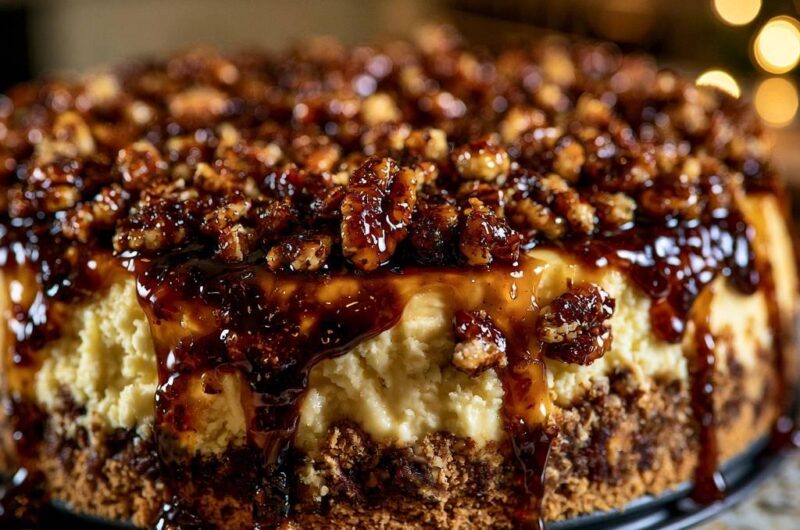
- Let the caramel sauce cool for 15-20 minutes until it is thick but still pourable. Pour the mixture over the chilled cheesecake, allowing the caramel to drip down the sides as shown in the image. Serve immediately or chill until ready to present.
Notes
- The secret to a crack-free cheesecake is the gradual cooling process. Leave the cake in the oven with the door propped open for one hour after turning off the heat to prevent structural shock.