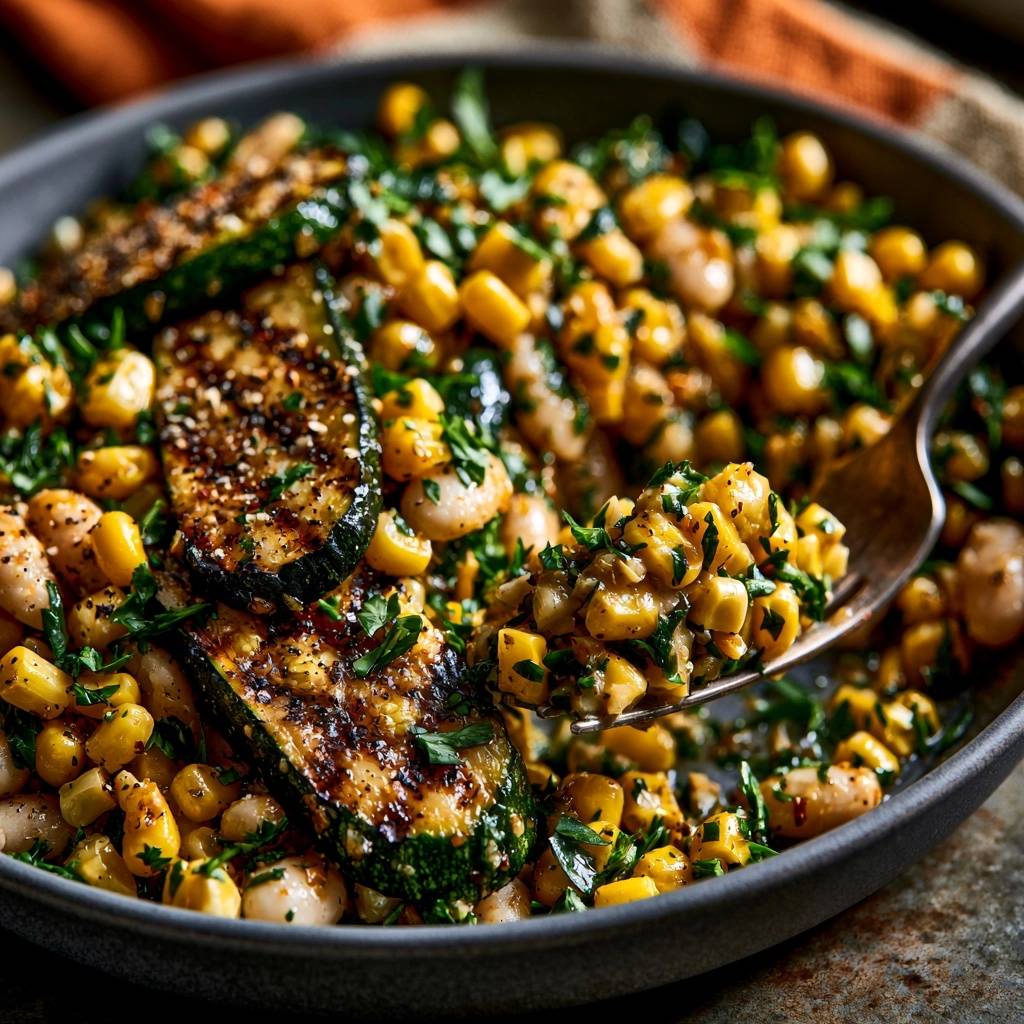
As the garden begins to overflow with the bounty of late summer, most home cooks find themselves staring at a pile of zucchini with a mix of excitement and dread. We’ve all been there: you start with beautiful, firm green squash and end up with a grey, watery pile of mush that lacks any real character. It’s the classic “soggy zucchini syndrome,” and it happens because this vegetable is nearly 95 percent water.
This Charred Zucchini and Corn Succotash is the definitive technical solution to that soggy frustration. By shifting our focus from steaming to searing, we create a dish that celebrates the vibrant transition from spring to summer. You get the snap of sweet corn, the creamy heart of white beans, and zucchini rounds that actually hold their shape. The contrast between the natural sugars of the corn and the sharp, peppery char of the squash creates a bite that feels sophisticated yet incredibly grounded.
The secret to this success lies in the “still-sear” method. Most people move their vegetables around the pan way too much, which drops the temperature and encourages the squash to release its juices. If you want that deep, mahogany crust that looks like it came off a professional grill, you have to let the pan do the work. Once those rounds hit the hot oil, leave them alone until the edges start to curl and the undersides develop a dark, caramelized finish.
The Science of the High-Heat Sear
To understand why this recipe works, we have to look at the Maillard reaction. This is the chemical process that occurs when heat transforms sugars and proteins into complex flavor compounds. However, in high-moisture vegetables like zucchini, the Maillard reaction can’t happen if there is a layer of steam between the vegetable and the pan. High heat is mandatory because it evaporates surface moisture instantly, allowing the browning to begin before the interior cell walls collapse and turn the squash into mush.
Your choice of cookware is just as important as the temperature. A heavy cast iron skillet is the superior vessel here because it has incredible heat retention. When you drop cold or room-temperature vegetables into a thin non-stick pan, the surface temperature plummets. A cast iron pan stays screaming hot, ensuring that the zucchini sears the moment it touches the surface, locking in the structural integrity of the vegetable.
Why Moisture is the Enemy of Texture
Zucchini has a porous cellular structure that acts like a sponge. If you wash your squash and immediately throw it into a pan, you’re essentially boiling it in its own juices. This is why the “pat-dry” method is non-negotiable. By removing every drop of surface water, you ensure the oil can actually fry the skin rather than just heating up the water droplets.
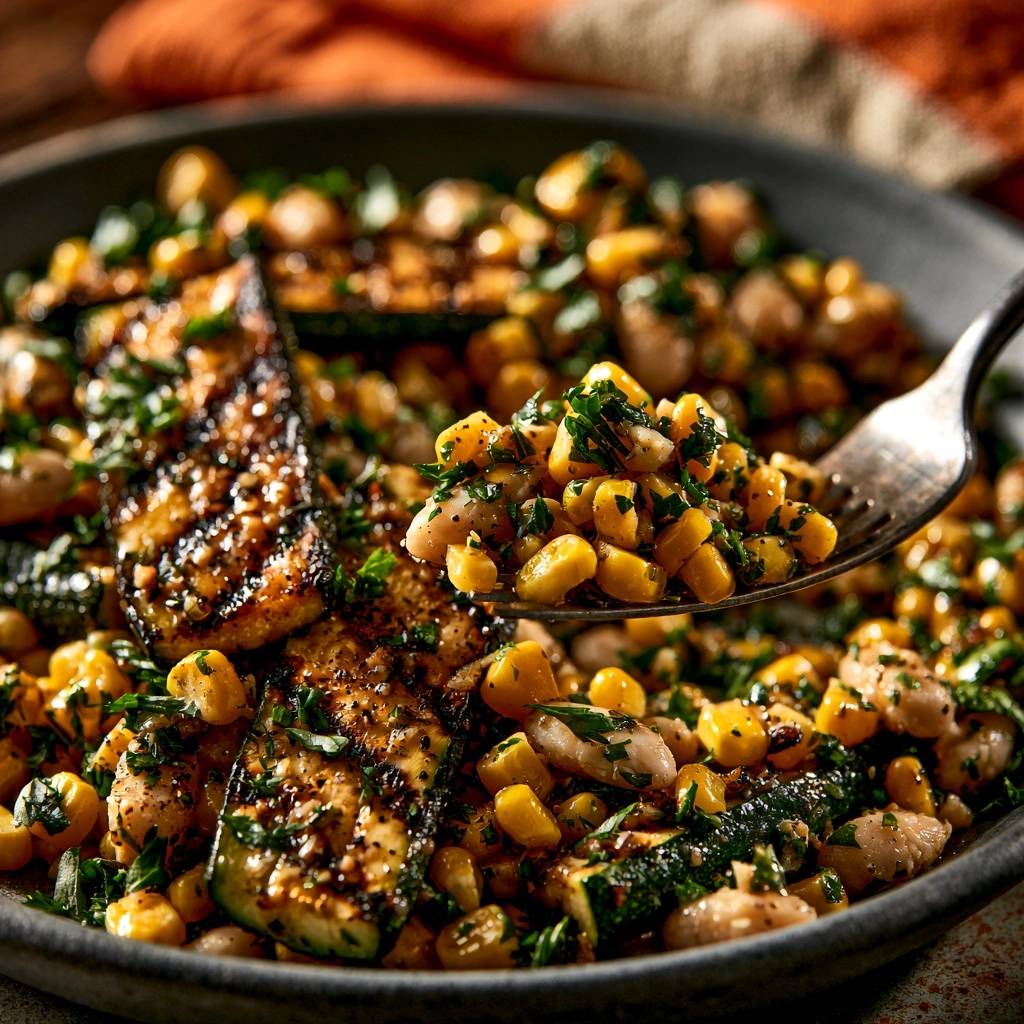
Crowding the pan is the second biggest mistake. If the zucchini rounds are overlapping, the moisture escaping from one piece gets trapped under the next, creating a steam chamber. You want a single-layer sear with plenty of “breathing room” between the rounds. This allows the steam to escape upward into the air, leaving the bottom of the squash to crisp up perfectly against the hot iron.
Achieving the Perfect Blistered Corn Kernel
Sweet corn is packed with natural sugars that caramelize beautifully when exposed to direct heat. We use a “dry-pan” technique where the kernels are allowed to toast until they literally begin to pop like popcorn. This doesn’t just cook the corn; it creates a nutty, toasted flavor profile that acts as a bridge between the earthy beans and the bright zucchini.
When the corn blisters, it develops tiny dark brown spots that provide a smoky depth to the dish. This toasted exterior protects the juicy interior of the kernel, so you get a “pop” of sweetness in every bite. It’s a textural contrast that makes the succotash feel substantial rather than just a simple side of mixed vegetables.
Essential Components for Charred Zucchini and Corn Succotash
Success starts with the quality of your produce. While this recipe is simple, each ingredient plays a specific role in the final architecture of the dish. You aren’t just tossing things in a pan; you’re building layers of flavor and texture that need to stand up to high heat.
I always recommend using extra virgin olive oil with a slightly higher smoke point for the initial sear, but don’t be afraid to use a generous amount. The oil carries the flavor of the garlic and the red pepper flakes, coating every bean and kernel in a savory, spicy sheen. The fat also helps conduct the heat evenly across the surface of the zucchini rounds.
Selecting the Right Zucchini and Summer Squash
Size matters when you’re shopping for zucchini. Look for small to medium-sized squash, about 6 to 8 inches long. Larger zucchini tend to be “seedy” and have a much higher water content, which makes them prone to falling apart. Smaller squash are denser and have a tighter cell structure, which helps them maintain that “al dente” bite after searing.
We slice them into 1/2-inch rounds rather than half-moons for a very specific reason: structural integrity. A full circle is much easier to flip with tongs without breaking the flesh. The extra thickness also ensures that by the time the outside is perfectly charred, the inside is just barely tender, not overcooked.
Fresh Cob vs. Frozen Sweet Corn
If you can get fresh corn on the cob, use it. The moisture content is superior, and the flavor is unmatched. When you shear the corn from the cob, use the back of your knife to scrape the “milk” into your bowl as well. This starchy liquid adds a natural creaminess to the succotash without needing any heavy sauces.
If you must use frozen corn, make sure it is completely thawed and patted dry before it hits the pan. Frozen corn carries a lot of excess ice crystals that will instantly turn your high-heat sear into a soggy braise. Canned corn is a last resort, but if you use it, rinse it thoroughly and dry it between paper towels to remove the canning liquid flavor.
The Role of Cannellini Beans and Aromatics
Cannellini beans, or white kidney beans, provide the necessary creamy contrast to the crisp vegetables. They are mild enough to let the corn shine but hearty enough to make this dish feel like a full meal. Make sure to drain and rinse them well; the liquid in the can is full of sodium and starch that will gum up your beautiful sear.
For the aromatics, we use a heavy hand with coarse cracked black pepper. This isn’t just for heat; the large grains of pepper actually toast in the oil and create a visible “crust” on the vegetables. The red pepper flakes add a back-end warmth that cuts through the sweetness of the corn, while the fresh garlic provides that essential savory punch.
Step-by-Step: Executing the Perfect Summer Succotash
This process moves quickly once the heat is on, so have all your ingredients prepped and within arm’s reach. You’re acting as a conductor, managing the heat levels to ensure every element finishes with the right texture.
Phase 1: Preparing the Vegetable Surface
Start by slicing your zucchini into those thick rounds. Once sliced, lay them out on a clean kitchen towel or a layer of paper towels. Sprinkle a tiny pinch of salt over them and let them sit for about 10 minutes. You’ll see beads of water rising to the surface.
Before they go into the pan, pat them firmly with another paper towel until they are bone dry. This 10-minute rest is the difference between a golden-brown crust and a soggy mess. While they rest, mince your garlic and chop your parsley so you aren’t rushing later.
Phase 2: The “Still-Sear” Zucchini Technique
Get your cast iron skillet hot over high heat. Add one tablespoon of oil and wait for it to shimmer. Place the zucchini rounds in the pan one by one. Now, here is the hard part: do not touch them. Resist the urge to shake the pan or peek under the rounds for at least 3 minutes.
You are looking for a deep mahogany color. If you flip them too early, they will stick to the pan and tear. Once they have developed a dark, crisp crust, flip them once and cook for another 2 minutes. Remove them from the pan immediately so they don’t continue to soften from the residual heat.
Phase 3: Blistering Corn and Infusing Aromatics
Wipe any burnt bits out of the pan and add another tablespoon of oil. Toss in the corn and spread it out. Again, let it sit for a minute or two until you hear a few kernels pop. Stir it once and let it sit again. You want those toasted brown spots to appear across the batch.
Turn the heat down to medium before adding the garlic and beans. Garlic burns in seconds at high heat, turning bitter and ruining the dish. Stir the beans and garlic gently for about 2 minutes. You just want to warm the beans through and let the garlic become fragrant and soft.
Phase 4: The Brightening Finish
Slide the charred zucchini back into the pan and add your salt, heavy pepper, and red pepper flakes. Toss everything together very gently so you don’t break the beans or the squash rounds. This is just to marry the flavors together for about 30 seconds.
Turn off the heat entirely before adding the lemon juice. The acidity of the lemon brightens the heavy char, but if you cook it too long, it can turn metallic. Finally, fold in the fresh parsley. The residual heat is enough to release the herb’s aroma without turning the leaves brown or limp.
Troubleshooting Common Succotash Texture Issues
If you notice your zucchini is releasing a lot of water in the pan, your heat is likely too low. Immediately crank the heat to high and stop stirring. Let the liquid evaporate as quickly as possible. You might lose some of the “perfect” rounds, but you’ll save the flavor.
If your garlic browns too quickly and looks dark brown or black, it will taste bitter. The best fix is to quickly add a splash of water or a little extra lemon juice to drop the pan temperature and stop the cooking process. If it’s truly burnt, it’s better to wipe the pan and start the bean phase over than to eat bitter succotash.
Flavor Variations and Seasonal Swaps
You can easily pivot this flavor profile to suit your mood. For a southwestern vibe, swap the parsley for cilantro and add a teaspoon of smoked paprika and a squeeze of lime instead of lemon. The smokiness of the paprika complements the charred corn perfectly.
If you want a Mediterranean twist, use fresh basil and mint instead of parsley. You can also toss in some halved cherry tomatoes during the last minute of cooking. Adding a handful of toasted pine nuts or sunflower seeds at the very end provides an extra layer of crunch that makes the dish feel even more gourmet.
Optimal Pairings for a Vibrant Vegetable Side
This succotash is incredibly versatile. It pairs beautifully with grilled proteins like lemon-herb chicken or a seared sea bass. The acidity in the vegetables cuts through the richness of the fish, creating a balanced plate. It’s also hearty enough to serve as a main course over a bed of warm quinoa or farro.
If you’re hosting a summer barbecue, this is the perfect partner for grilled steaks. The peppery char on the zucchini mimics the crust on a good steak, making the whole meal feel cohesive. Because it’s best served warm or at room temperature, it’s a stress-free side for outdoor entertaining.
Storage and Reheating for Maximum Crispness
Charred vegetables are always best the moment they leave the pan. However, you can store leftovers in an airtight container in the fridge for up to two days. Be aware that the zucchini will soften as it sits, as the salt continues to draw out moisture over time.
Avoid the microwave at all costs when reheating, as it will turn the vegetables into a rubbery mess. Instead, do a quick “flash-fry.” Heat a teaspoon of oil in a hot skillet and toss the leftovers in for 2 to 3 minutes. This helps re-crisp the edges of the zucchini and keeps the corn from getting chewy.
Expert Tips for Scaling the Recipe
If you are cooking for a crowd, do not try to double the recipe in one pan. Crowding the skillet is the fastest way to end up with soggy vegetables. Instead, work in batches. Sear all the zucchini first and set it aside, then do all the corn, and finally combine everything at the end.
Alternatively, if you have two large skillets, use them both simultaneously. This maintains the high surface temperature needed for that perfect char. Remember, the goal is to keep the vegetables in a single layer as much as possible to allow steam to escape and flavors to concentrate.
How do I keep the zucchini from getting mushy?
The key is a combination of drying and high heat. You must pat the sliced zucchini rounds completely dry with paper towels to remove surface moisture. Then, use a heavy cast iron skillet on high heat and do not stir the zucchini for at least 3 minutes. This creates a protective charred crust that keeps the inside firm while preventing the vegetable from steaming in its own juices.
Can I use frozen corn instead of fresh?
Yes, you can use frozen corn, but you must thaw it completely and pat it dry before cooking. Frozen corn contains extra moisture that can lower the pan temperature and prevent the kernels from blistering. Once dried, follow the same dry-pan toasting method to achieve those nutty, browned spots that define a good succotash.
How should I store and reheat leftovers?
Store leftovers in an airtight container in the refrigerator for up to 2 days. To reheat, avoid the microwave as it makes the zucchini soggy. Instead, heat a skillet with a tiny bit of olive oil over medium-high heat and toss the succotash for 2-3 minutes until warmed through. This “flash-fry” method helps maintain the texture of the beans and the char on the vegetables.
What can I substitute for cannellini beans?
If you don’t have cannellini beans, Great Northern beans or navy beans are excellent substitutes because they have a similar creamy texture and mild flavor. Chickpeas can also work if you want a bit more bite, though they won’t be as creamy. Always ensure you rinse and dry your canned beans thoroughly before adding them to the pan to avoid excess starch.
Why does my garlic always burn in this recipe?
Garlic burns quickly at the high temperatures needed to char zucchini and corn. To prevent this, always turn the heat down to medium before adding the minced garlic to the pan. You only need about 60 to 90 seconds of cooking time for the garlic to become fragrant. Adding it along with the beans also helps buffer the heat and prevents the small garlic pieces from scorching.
Can I make this recipe ahead of time?
While you can prep the ingredients (slicing, drying, and mincing) a few hours in advance, this dish is best served immediately after cooking. The zucchini loses its crispness as it cools and sits in the lemon juice. If you must make it ahead, undercook the zucchini slightly and do a quick reheat in a hot pan just before serving to revive the textures.
Charred Zucchini and Corn Succotash
Course: Side DishCuisine: AmericanDifficulty: easy4
servings10
minutes15
minutes25
Minutes210
kcalAmerican
Ingredients
2 medium zucchini, sliced into thick 1/2-inch rounds (keep them whole, not half-moons, for better char)
2 cups sweet corn kernels (fresh off the cob preferred for the best char)
1 can (15 oz) cannellini beans, drained and rinsed
4 tablespoons extra virgin olive oil, divided
2 cloves garlic, minced
1/2 cup fresh flat-leaf parsley, finely chopped
1 tablespoon fresh lemon juice
1 teaspoon sea salt
1 teaspoon coarse cracked black pepper (heavy on the pepper for visual crust)
1/2 teaspoon red pepper flakes
Directions
- To prevent sogginess, pat your sliced zucchini completely dry with paper towels. Moisture on the surface is the enemy of a good sear.
- Heat a large heavy cast iron skillet or grill pan over high heat with 1 tablespoon of olive oil. Once the oil is shimmering and just starting to smoke, add the zucchini rounds in a single layer.
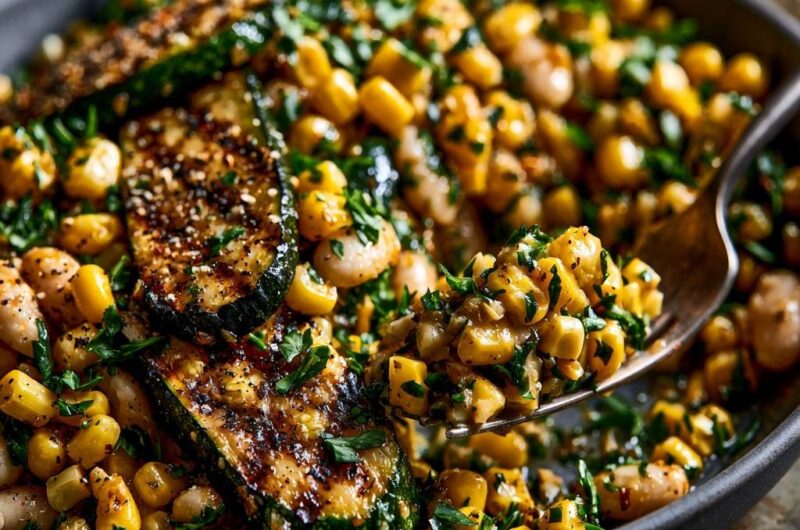
- Do not stir or move the zucchini for 3 minutes. This “still-sear” method allows a deep, dark charred crust to form (as seen in the image). Flip once, char the other side for 2 minutes, then remove from the pan and set aside.
- In the same hot pan, add another tablespoon of oil and the corn. Spread it out and let it sit undisturbed until the kernels begin to pop and develop dark brown toasted spots.
- Lower the heat to medium. Add the remaining 2 tablespoons of oil, minced garlic, and cannellini beans. Stir gently for 2 minutes to infuse the oil with garlic and warm the beans through.
- Return the charred zucchini to the pan. Season generously with the sea salt, heavy cracked black pepper, and red pepper flakes.
- Drizzle with lemon juice to brighten the flavors, then remove from heat immediately.
- Fold in the fresh parsley last to maintain its bright green color. Serve immediately while the zucchini is firm and the char is crisp.
Notes
- To prevent sogginess, pat zucchini completely dry before cooking. Use a heavy cast iron skillet and avoid stirring the vegetables during the initial sear to achieve a deep crust.