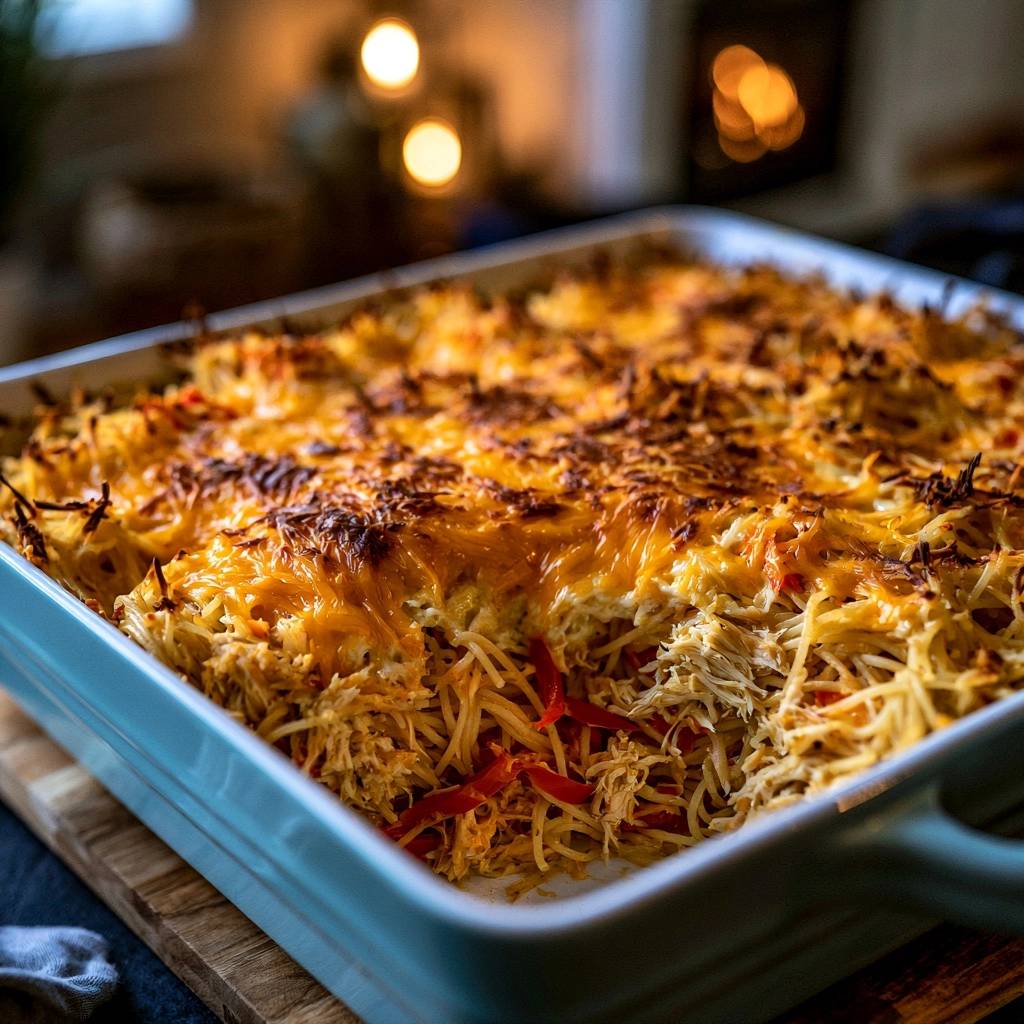
We have all been there. You pull a beautiful, bubbling pasta bake out of the oven only to find the noodles have turned into a soft, gummy mess. It is a heartbreaking kitchen moment when a dish that looks so good on the surface lacks that essential structural integrity underneath.
The perfect casserole requires a delicate balance of creamy sauce, sharp cheese, and pasta that still has a bite. You want a dish where the sauce clings to the strands rather than drowning them. Achieving this harmony is not about luck; it is about understanding how ingredients interact under high heat.
The secret to this perfect bake is all in the par-boil technique. By undercooking your spaghetti by exactly four minutes before it ever hits the oven, you allow the pasta to act as a sponge. It absorbs the savory chicken juices while reaching a perfect al dente texture during the bake, rather than breaking down into mush. This one simple shift in timing changes everything.
The Structural Secret to Non-Mushy Pasta Bakes
When you bake pasta, you are essentially cooking it twice. If you boil the spaghetti until it is fully tender on the stove, the additional thirty minutes in the oven will obliterate the starch structure. This results in that dreaded “cafeteria-style” texture where the noodles lose all definition.
Thermodynamics plays a huge role here. As the cream sauce heats up, it releases moisture that the pasta eagerly drinks in. By pulling the noodles out of the water while they still have a firm “snap” in the center, you create space for that flavorful sauce to move in. The starch release is controlled, keeping the dish cohesive rather than watery.
Essential Components for the Chicken Spaghetti Base
Quality ingredients are the foundation of any great comfort meal. For this recipe, thin spaghetti is the clear winner over thicker noodles like fettuccine. The thinner strands provide more surface area for the sauce to coat, ensuring you don’t end up with dry patches in the middle of your casserole.
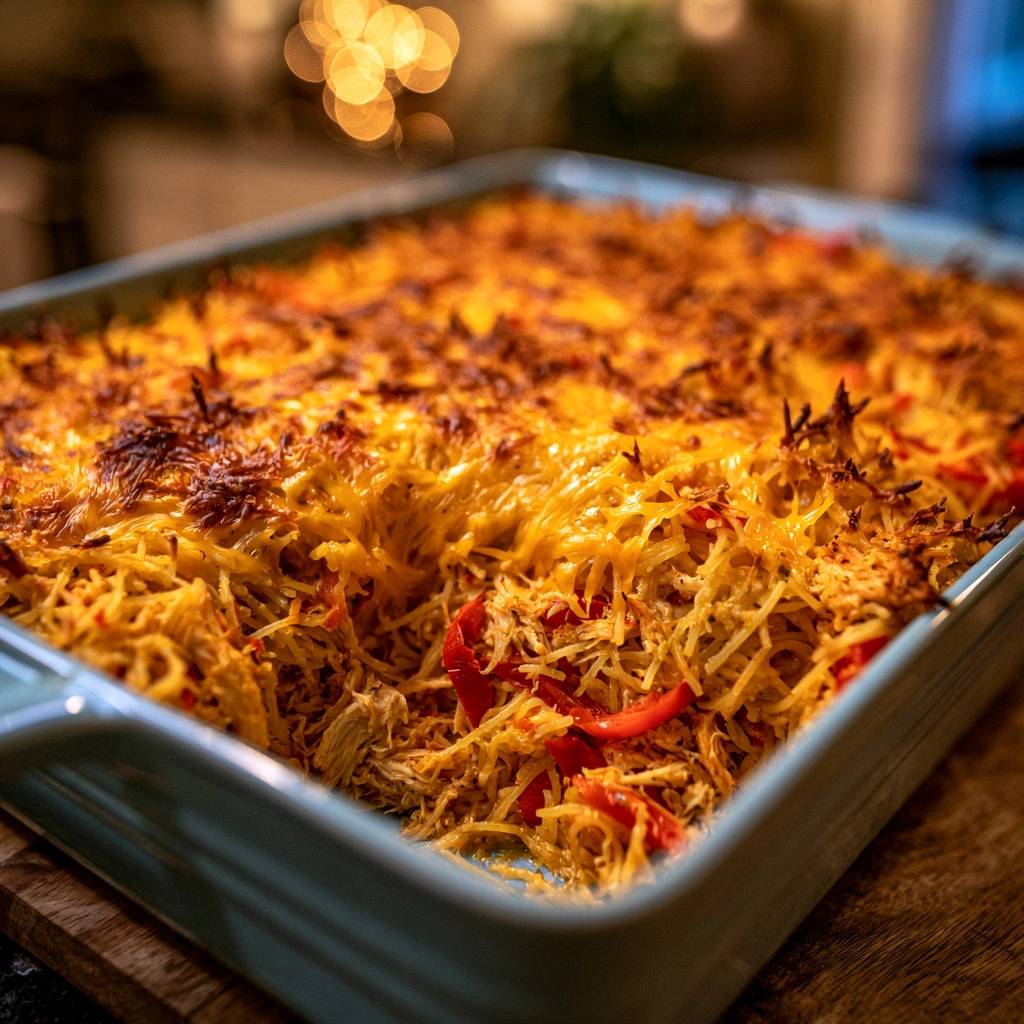
The red bell pepper is another non-negotiable for me. When julienned into thin strips, it softens just enough to provide a gentle sweetness that cuts through the heavy dairy. It adds a necessary crunch and a pop of color that makes the dish look as vibrant as it tastes.
Selecting and Preparing the Shredded Chicken
You might be tempted to use large chunks of chicken, but finely shredded meat is superior for sauce adhesion. When the chicken is shredded thin, it intertwines with the spaghetti strands. This ensures that every single forkful contains a perfect ratio of protein, pasta, and cheese.
A store-bought rotisserie chicken is a fantastic time-saver here and often brings more flavor than poached breasts. However, if you are cooking your own, make sure to shred it while it is still slightly warm. The fibers pull apart much more easily, giving you that delicate texture that melts into the sauce.
The Creamy Binder: Beyond the Can
While condensed cream of chicken soup provides a nostalgic, savory base, the real hero is the sour cream. It adds a sophisticated tang that balances the richness of the cheddar. Without that acidity, the dish can feel one-note and overly heavy on the palate.
The chicken broth serves a very specific purpose: hydration. It thins the mixture just enough so it can flow into the nooks and crannies of the pasta. As the dish bakes, the par-boiled noodles soak up this extra liquid, seasoning the pasta from the inside out with deep chicken flavor.
Step-by-Step: Constructing the Casserole
Preparation is key to a smooth cooking process. Start by preheating your oven to 375°F and lightly greasing your 9×13 inch baking dish. Don’t skip the greasing step; you want those cheesy edges to crisp up and pull away from the sides easily rather than sticking and burning.
The Four-Minute Par-Boil Technique
Bring a large pot of water to a rolling boil and salt it heavily. It should taste like the sea. This is your only chance to season the pasta itself. Drop the broken spaghetti and set a timer for exactly four minutes less than the package’s al dente instructions.
When you drain the pasta, it should feel almost too firm to eat. If you break a strand, you will see a tiny white core of dry starch in the center. This is exactly what you want. It is the “insurance policy” that prevents your final dish from becoming a soggy mess.
Emulsifying the Savory Sauce and Spices
In a large bowl, whisk together the soup, sour cream, broth, and spices until the mixture is completely smooth. Using a whisk ensures there are no clumps of garlic powder or paprika hiding in the sauce. You want a uniform flavor profile in every bite.
Smoked paprika is the secret weapon here. It adds a subtle depth and a hint of woodsy flavor that makes people ask, “What is that extra something?” It provides a complexity that fresh aromatics sometimes lack in a quick-bake format.
Folding and Layering for Maximum Texture
Add your shredded chicken and peppers to the sauce first, then fold in the spaghetti. Use a large pair of tongs or a sturdy spoon to toss everything thoroughly. Every single strand of pasta needs to be glistening with that creamy sauce before it goes into the pan.
When you transfer the mixture to the baking dish, don’t smooth the top flat. Use a fork to lightly fluff the surface. Creating these little “nooks and crannies” allows the heat to circulate, giving you those coveted crispy pasta edges that everyone fights over at the dinner table.
The Science of the Golden Cheese Crust
The combination of sharp cheddar and mozzarella is a classic for a reason. Mozzarella provides that iconic, gooey stretch that we all love. However, mozzarella on its own can be a bit bland and doesn’t brown as beautifully as other cheeses.
Sharp cheddar brings the flavor and the fat. As it melts, it releases a small amount of oil that helps the mozzarella brown through the Maillard reaction. This chemical process creates those deep golden, savory crusts that define a world-class casserole.
Oven Positioning and Heat Distribution
Always bake this dish on the middle rack. If it is too low, the bottom might scorch before the cheese melts; too high, and the cheese will burn before the center is hot. The middle rack provides the most even air circulation for a consistent bake.
If you want that professional, mahogany-colored finish, keep a close eye on the oven during the last two minutes. You can switch to the broiler for a quick blast of heat. Just stay right there—cheese can go from perfect to burnt in a matter of seconds.
Why the 10-Minute Rest is Mandatory
I know it is tempting to dive right in, but you must let the dish rest for at least ten minutes. During this time, carry-over cooking finishes the center of the pasta. More importantly, the starches in the spaghetti need time to re-absorb the hot liquids as they cool slightly.
If you cut into it immediately, the sauce will likely be runny and pool at the bottom of the dish. After ten minutes, the casserole sets up beautifully. You will be able to lift out clean, square portions that hold their shape on the plate.
Troubleshooting Your Chicken Spaghetti Bake
If your sauce looks too thick before you add the pasta, don’t be afraid to splash in an extra tablespoon or two of chicken broth. The mixture should be creamy and easily pourable. A sauce that is too thick won’t be able to hydrate the undercooked noodles properly.
If you notice the cheese is browning too quickly but the center still feels cold, use the “foil tent” method. Loosely cover the dish with aluminum foil to reflect the direct heat while allowing the middle to continue cooking. This protects your crust while ensuring a hot center.
Flavor Variations and Ingredient Swaps
This recipe is a fantastic canvas for your own creativity. If you like a bit of heat, try adding a small can of diced green chiles or a pinch of red pepper flakes to the sauce. For a more Mediterranean vibe, swap the red peppers for sun-dried tomatoes and use provolone instead of cheddar.
For those who need a gluten-free option, use a sturdy corn or brown rice-based spaghetti. Just be careful with the par-boil time, as gluten-free noodles can be even more temperamental. Check them every minute to ensure they don’t fall apart before they reach the oven.
Strategic Meal Prep and Freezing Instructions
You can easily prep this dish 24 hours in advance. The trick is to keep the sauce and the par-boiled pasta in separate containers in the fridge. If you mix them too early, the pasta will drink up all the moisture before it even hits the oven, resulting in a dry bake.
To freeze, assemble the casserole but do not bake it. Wrap it tightly with a double layer of plastic wrap and then foil. It will stay fresh for up to three months. Thaw it completely in the refrigerator overnight before baking, adding about five to ten minutes to the total cook time.
Expert Tips for Professional Results
Always grate your cheese from a block. Pre-shredded cheese is coated in potato starch or cellulose to prevent clumping in the bag. This coating prevents the cheese from melting into that smooth, silky blanket we are looking for. Freshly grated cheese melts much more evenly.
Use full-fat sour cream for the best results. The lower-fat versions often contain stabilizers and more water, which can cause the sauce to break or become grainy under high heat. The fat in the sour cream is what gives this dish its luxurious, velvety mouthfeel.
Optimal Side Dish Pairings
Since this bake is quite rich and cheesy, you want side dishes that offer a bright contrast. A simple arugula salad with a sharp lemon vinaigrette is my favorite pairing. The peppery greens and acid from the lemon cleanse the palate between bites of creamy pasta.
Roasted broccoli with a sprinkle of sea salt or some garlic-rubbed toasted sourdough are also excellent choices. You want something with a bit of crunch to balance the soft, comforting texture of the spaghetti bake. It makes the whole meal feel more complete and balanced.
Frequently Asked Questions
Can I use whole wheat spaghetti for this recipe?
Yes, you can use whole wheat spaghetti, but keep in mind it has a heartier texture and a nuttier flavor. Whole wheat pasta often takes longer to cook, so still aim for that “four minutes less than al dente” rule. It may require an extra splash of chicken broth as whole wheat tends to absorb more liquid than white pasta.
How do I reheat leftovers without drying out the chicken?
The best way to reheat a pasta bake is in the oven at 350°F, covered with foil. Add a tiny splash of water or broth to the dish before heating to create steam. This keeps the chicken moist and prevents the noodles from getting crunchy. If using a microwave, cover the plate with a damp paper towel and use 50% power.
Can I substitute Greek yogurt for the sour cream?
You can substitute plain Greek yogurt, but be aware that it is more prone to curdling at high temperatures because it has less fat than sour cream. To prevent this, make sure the yogurt is at room temperature before mixing it in, and try to use a full-fat variety. The flavor will be slightly more tart than the original recipe.
What other proteins work besides chicken?
This base is incredibly versatile. You can use leftover roasted turkey, which is perfect for after the holidays. Ground turkey or even canned tuna (drained well) can work in a pinch. If you want a vegetarian version, double the bell peppers and add some sautéed mushrooms or baby spinach for extra bulk and umami.
Why did my cheese separate and become oily?
Cheese usually separates if it is overheated or if you used a very high-fat cheddar that wasn’t balanced by the emulsifiers in the cream soup. It can also happen if you use pre-shredded cheese with too much anti-caking agent. To fix this, ensure your oven isn’t running too hot and try to use a mix of mozzarella and cheddar, as mozzarella helps stabilize the oils.
Can I make this in a slow cooker instead?
While you can make chicken spaghetti in a slow cooker, you will lose the crispy cheese crust and the distinct texture of the pasta. If you choose this route, do not boil the noodles first. Add them dry with extra liquid during the last hour of cooking. However, for the best results and that golden top, the oven method is highly recommended.
Cheesy Shredded Chicken Spaghetti Bake
Course: Main CourseCuisine: AmericanDifficulty: easy8
servings15
minutes35
minutes50
Minutes425
kcalAmerican
Ingredients
1 pound thin spaghetti, broken in half
3 cups cooked chicken, finely shredded
2 cups sharp cheddar cheese, shredded
1 cup mozzarella cheese, shredded
1 large red bell pepper, julienned (thin strips)
1 can (10.5 oz) condensed cream of chicken soup
1/2 cup sour cream
1/4 cup chicken broth
1 teaspoon garlic powder
1/2 teaspoon onion powder
1/2 teaspoon smoked paprika
1/2 teaspoon salt
1/2 teaspoon black pepper
Directions
- Preheat your oven to 375°F (190°C) and lightly grease a 9×13 inch baking dish.
- Bring a large pot of heavily salted water to a boil. Add the spaghetti and cook for exactly 4 minutes less than the package directions for al dente. The pasta should still have a firm “snap” in the center. Drain and set aside.
- In a large mixing bowl, whisk together the cream of chicken soup, sour cream, chicken broth, garlic powder, onion powder, smoked paprika, salt, and pepper until smooth and creamy.
- Add the finely shredded chicken and julienned red bell peppers to the bowl. Fold in the undercooked spaghetti, tossing thoroughly to ensure every strand is coated in the sauce.
- Transfer the mixture to the prepared baking dish. Use a fork to level the top, ensuring some strands of pasta and chicken are exposed to create texture.
- Evenly distribute the shredded cheddar and mozzarella over the top.
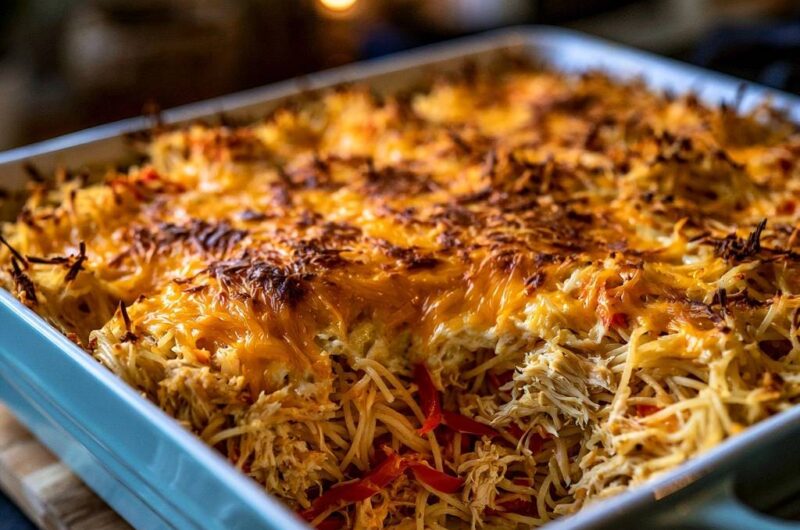
- Bake for 30 to 35 minutes. For the visual result shown in the image, ensure the top reaches a deep golden brown with slightly charred, crispy cheese edges. If needed, broil on high for the last 2 minutes. The chicken is done when it reaches 165°F (74°C) in the thickest part.
- Let the dish rest for 10 minutes before slicing. This allows the starches to set, ensuring the pasta holds its shape and the sauce remains creamy rather than watery.
Notes
- Undercook the spaghetti by exactly four minutes to ensure it reaches the perfect texture in the oven. Let the dish rest for 10 minutes after baking to allow the sauce to set.