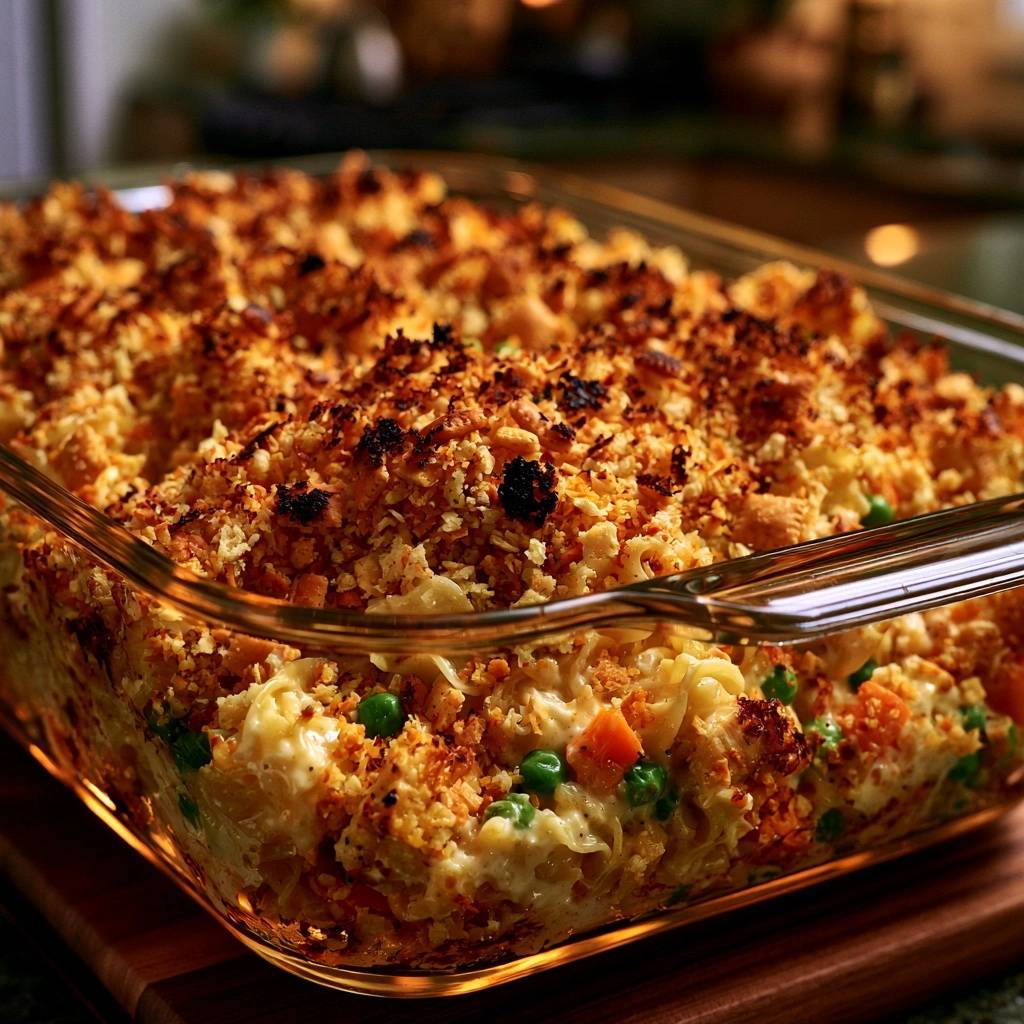
Why do most people struggle with tuna noodle casserole? It usually comes down to one word: mush. We have all pulled a bubbling dish out of the oven only to find the pasta has turned into a gummy, overcooked mess that lacks any structural integrity.
The secret to the perfect tuna noodle casserole is all in the par-boil. By undercooking your noodles by exactly three minutes less than the package directions, you allow them to finish cooking inside the sauce. This ensures they absorb the savory flavors of the mushroom cream without losing their bite.
I’ve found that this specific timing creates a perfect al dente texture every single time. This guide will help you transform these simple pantry staples into a 440-calorie comfort meal that takes only 40 minutes from start to finish. Let’s get into the science of why this method works so well.
The Science of Texture: Preventing Mushy Pasta
When you boil pasta, the starch granules inside the noodles absorb water and expand. If you cook the noodles fully in boiling water and then bake them in a liquid-heavy sauce, those granules continue to expand until they burst. This is exactly how you end up with a tray of mushy noodles that fall apart at the touch of a fork.
The “3-minute rule” is your best friend here. By draining the noodles while they still have a firm, almost chalky center, you create a vacuum for the sauce. As the casserole bakes for 25 minutes, the noodles act like sponges, pulling in the moisture from the cream of mushroom soup and sour cream.
This exchange is critical for flavor. Instead of the noodles being filled with plain water, they become saturated with the seasoned cream sauce. You aren’t just heating the dish; you are finishing the cooking process inside a flavor bath, resulting in a cohesive, sturdy bite.
Why Wide Egg Noodles are Essential
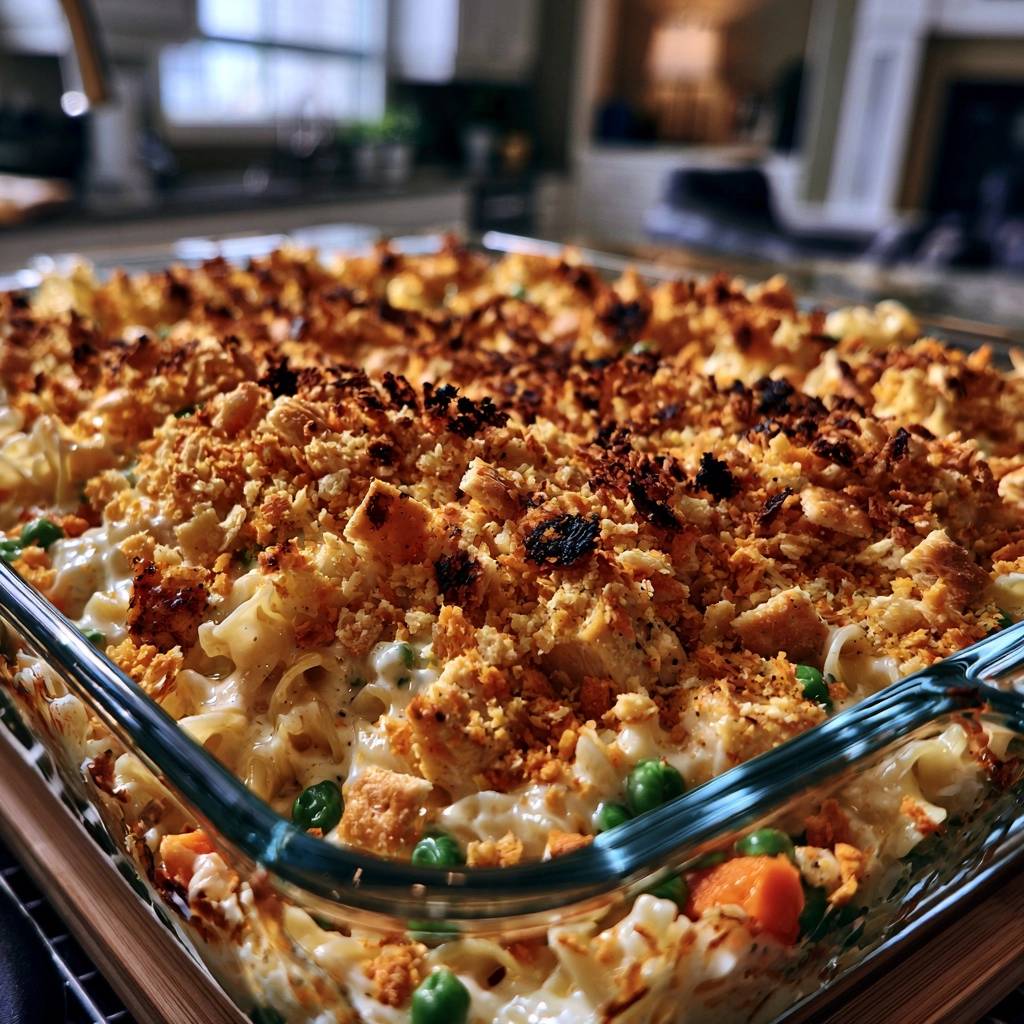
You might be tempted to swap in penne or rotini, but wide egg noodles are the traditional choice for a reason. Egg noodles have a higher protein content than standard semolina pasta because of the added eggs. This extra protein provides the structural integrity needed to withstand heavy sauces and high oven temperatures.
Furthermore, the wide, flat shape of the egg noodle offers more surface area for the cheese and sauce to cling to. While a tubular pasta might trap sauce inside, the egg noodle gets coated on all sides, ensuring you don’t have any dry spots in your bake. They provide a silky mouthfeel that mimics the richness of the tuna and cream.
Essential Components for a Richer Casserole Base
The base of this casserole relies on a balance of fats and acids to keep it from feeling too heavy. While many old-school recipes just use condensed soup, adding whole milk and sour cream creates a much more sophisticated texture. The sour cream, in particular, adds a subtle tang that cuts through the saltiness of the canned soup.
Always reach for the full-fat versions of these dairy products. Whole milk provides a creamy consistency that skim or 1% simply cannot match. Low-fat dairy often contains more water and stabilizers, which can break down under high heat and cause your sauce to become thin or watery during the bake.
Selecting the Right Canned Tuna
When you’re standing in the canned food aisle, choose tuna packed in water rather than oil. Oil-packed tuna is delicious in salads, but in a casserole already featuring butter, cheese, and cream, it can make the final dish feel greasy. Water-packed tuna allows the natural flavor of the fish to shine without adding unnecessary heavy fats.
Regarding the “chunk light” versus “solid white albacore” debate, it really comes down to personal preference for texture. Chunk light tuna is softer and tends to flake into smaller bits, distributing the fish evenly throughout every bite. Solid white albacore stays in larger, firmer chunks, which provides a nice meaty contrast to the soft peas and noodles.
The Role of Aromatics and Spices
We use onion powder and garlic powder here instead of fresh aromatics for a very specific reason: moisture control. Fresh onions and garlic release water as they cook. In a tightly packed casserole, that extra moisture can thin out your sauce and contribute to the very sogginess we are trying to avoid.
These dry spices hydrate beautifully within the sauce as it bakes. They provide a consistent, savory backbone that permeates the entire dish. The black pepper is also vital; it adds a tiny bit of heat that wakes up the palate and prevents the creaminess from becoming one-dimensional.
Step-by-Step: Constructing the Perfect Bake
Start by preheating your oven to 375 degrees F. This relatively high temperature is necessary to get that cracker topping crispy before the noodles overcook. While the oven warms up, grease your 9×13 inch glass dish thoroughly. Glass is preferred here because it distributes heat evenly and allows you to see if the sauce is bubbling at the bottom.
Boil your noodles in heavily salted water. Don’t skip the salt! This is your only chance to season the pasta itself. Remember to set your timer for three minutes less than the package’s al dente suggestion. When you drain them, they should feel quite firm, almost like they need another few minutes of cooking.
Preparing the Vegetable and Protein Fold-In
The vegetables provide the necessary pops of color and sweetness. While frozen peas can go straight into the mix, carrots need a little head start. Steam your diced carrots until they are “tender-crisp.” They should be soft enough to bite through but still have a slight snap.
If you put raw carrots into the casserole, they will remain hard “orange bullets” because the 25-minute bake time isn’t long enough to soften them. Conversely, if you over-boil them, they will disappear into the sauce. Aim for that middle ground where they hold their shape but yield to the tooth.
Whisking the Emulsified Cream Sauce
In your large mixing bowl, combine the soup, milk, sour cream, and spices. Use a whisk to ensure the mixture is completely smooth before adding the solids. You want an emulsified slurry that looks like a thick gravy. If you see lumps of condensed soup, keep whisking; those lumps won’t always break down on their own in the oven.
Once the sauce is smooth, gently fold in your noodles, tuna, vegetables, and one cup of the shredded cheddar. Use a large spatula and a folding motion rather than stirring vigorously. You want to coat every noodle without breaking them or smashing the delicate peas. The mixture should look very “saucy” at this stage.
Achieving the Golden Cracker Crust
The topping is the crowning glory of this dish. Crush your butter crackers into a mix of fine crumbs and pea-sized chunks. This variation in size creates a more interesting texture. Toss them with the melted butter until they look like wet sand. This ensures every crumb browns evenly rather than burning.
Sprinkle the crackers over the top of the cheese layer. As the casserole bakes, the butter in the crackers will sizzle, frying the crumbs into a deep golden crust. Look for those toasted, dark peaks on the edges. That is the sign that the sugars in the crackers have caramelized, providing a buttery crunch that offsets the creamy interior.
Make-Ahead Strategies and Freezing Instructions
This is a fantastic meal prep dish. You can assemble the entire casserole, minus the cracker topping, up to 24 hours in advance. Cover it tightly with plastic wrap and keep it in the fridge. When you are ready to eat, add the cracker and butter mixture just before sliding it into the oven.
Be aware that if you prep it ahead of time, the noodles will absorb some of the liquid while sitting in the fridge. You might need to add an extra splash of milk (about 2 tablespoons) before baking to ensure it stays creamy. Cold casseroles also take longer to heat through, so add about 10 minutes to your bake time.
How to Freeze and Reheat Safely
To freeze, assemble the casserole in a freezer-safe foil pan. Do not bake it first. Wrap the pan twice in heavy-duty aluminum foil to prevent freezer burn. It will stay fresh for up to three months. For the best results, thaw it overnight in the refrigerator before baking as directed.
If you must bake from frozen, cover the top with foil so the crackers don’t burn while the center thaws. Bake at 350 degrees F for about an hour, then remove the foil and increase the heat to 375 degrees F for the final 15 minutes. Always use a meat thermometer to ensure the center has reached a safe 165°F.
Flavor Variations and Ingredient Swaps
While the classic recipe is a winner, you can easily pivot based on what is in your pantry. If you don’t have butter crackers, crushed potato chips or panko breadcrumbs mixed with a little smoked paprika make excellent toppings. Panko provides a lighter, airier crunch compared to the dense richness of crackers.
For a more “grown-up” flavor profile, try adding a teaspoon of Dijon mustard or a few dashes of Worcestershire sauce to the cream mixture. These ingredients add a savory depth (umami) that complements the tuna beautifully. You can also swap the cheddar for Gruyère or Monterey Jack if you want a smoother, more sophisticated cheese pull.
What to Serve with Creamy Tuna Noodle Casserole
Since this dish is very rich and creamy, you want to pair it with something bright and acidic. A simple arugula salad with a lemon-vinaigrette is the perfect companion. The peppery greens and citrus dressing cut right through the heavy mushroom sauce and cheese.
Roasted balsamic Brussels sprouts or pickled cucumbers also work wonders. The goal is to provide a sharp contrast to the soft, savory notes of the casserole. Avoid serving it with other heavy sides like mashed potatoes or mac and cheese, as the meal will become too starch-heavy and leave you feeling sluggish.
Troubleshooting Common Casserole Issues
Why is my casserole sauce too thin?
If the sauce looks runny when you first pull it out of the oven, don’t panic. The 10-minute resting period is mandatory, not optional. During this time, the starches in the noodles settle and the sauce thickens as it cools slightly. If you scoop into it immediately, the sauce will run to the bottom of the dish.
How do I fix a dry casserole?
If you notice the mixture looks parched before you even put it in the oven, stir in a small splash of warm milk or an extra dollop of sour cream. This can happen if your noodles were slightly over-boiled and absorbed too much liquid too fast. The mixture should look like it has a bit of extra sauce to spare before it hits the heat.
Can I use fresh mushrooms instead of canned soup?
Yes, you can make a “from scratch” version by creating a basic roux. Melt 4 tablespoons of butter, whisk in 1/4 cup of flour, and slowly add 2 cups of heavy cream or whole milk. Sauté 8 ounces of fresh sliced mushrooms in the butter first. This replaces the condensed soup and gives you total control over the sodium levels.
What is the best cheese for melting?
Sharp cheddar is the gold standard because its bold flavor doesn’t get lost in the cream sauce. However, for the best melt, grate your cheese fresh from a block. Pre-shredded cheeses are coated in potato starch or cellulose to prevent clumping in the bag, which can lead to a grainy texture in your finished sauce.
Once the timer dings and the top is golden, resist the urge to dive in immediately. Letting the dish rest for 5 to 10 minutes allows the internal temperature to stabilize. This ensures that every scoop holds its shape and the sauce clings perfectly to the noodles for that iconic, comforting texture.
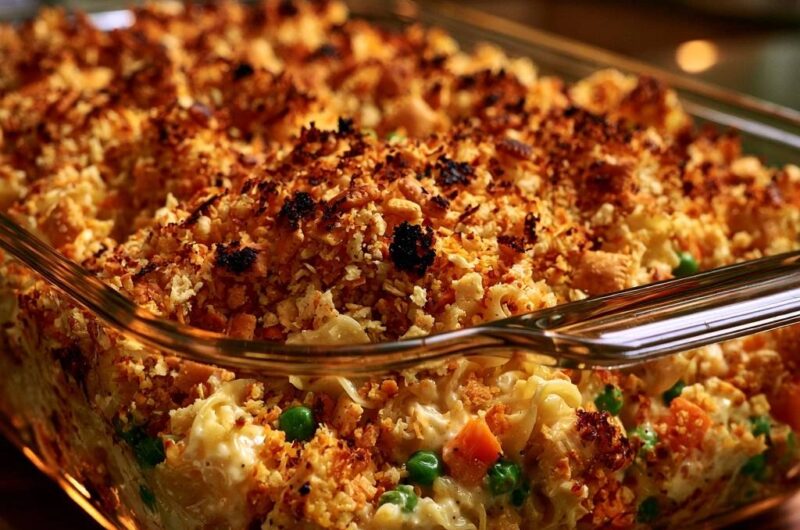
Creamy Tuna Noodle Casserole
Course: Main CourseCuisine: AmericanDifficulty: easy6
servings15
minutes25
minutes40
Minutes440
kcalAmerican
Ingredients
12 ounces wide egg noodles
2 cans (5 ounces each) tuna in water, drained
1 can (10.5 ounces) condensed cream of mushroom soup
1/2 cup whole milk
1/2 cup sour cream
1 cup frozen peas
1 cup diced carrots (steamed until tender-crisp)
1 1/2 cups shredded sharp cheddar cheese (divided)
1 teaspoon onion powder
1/2 teaspoon garlic powder
1/2 teaspoon black pepper
2 cups crushed butter crackers (Ritz style)
4 tablespoons melted butter
Directions
- Preheat your oven to 375 degrees F and lightly grease a 9×13 inch glass baking dish.
- Bring a large pot of salted water to a boil. Add the egg noodles and cook for exactly 3 minutes less than the “al dente” time listed on the package. They should still be quite firm in the center. Drain well.
- In a large mixing bowl, whisk together the cream of mushroom soup, milk, sour cream, onion powder, garlic powder, and black pepper until smooth.
- Gently fold the undercooked noodles, drained tuna, frozen peas, steamed carrots, and 1 cup of the shredded cheese into the sauce mixture until everything is evenly coated.
- Transfer the mixture to your prepared baking dish, spreading it out into an even layer. Top with the remaining 1/2 cup of shredded cheese.
- In a small bowl, toss the crushed butter crackers with the melted butter. Sprinkle this mixture generously over the top of the casserole, ensuring full coverage for that signature golden crust.
- Bake for 20 to 25 minutes until the sauce is bubbling at the edges and the cracker topping is deeply golden brown with toasted, dark peaks.
- Let the casserole rest for 5 to 10 minutes before serving. This allows the sauce to thicken and set perfectly around the noodles, preventing a watery consistency.
Notes
- The secret to avoiding mushy noodles is undercooking them by exactly three minutes during the initial boil; they will finish cooking to perfection in the oven.