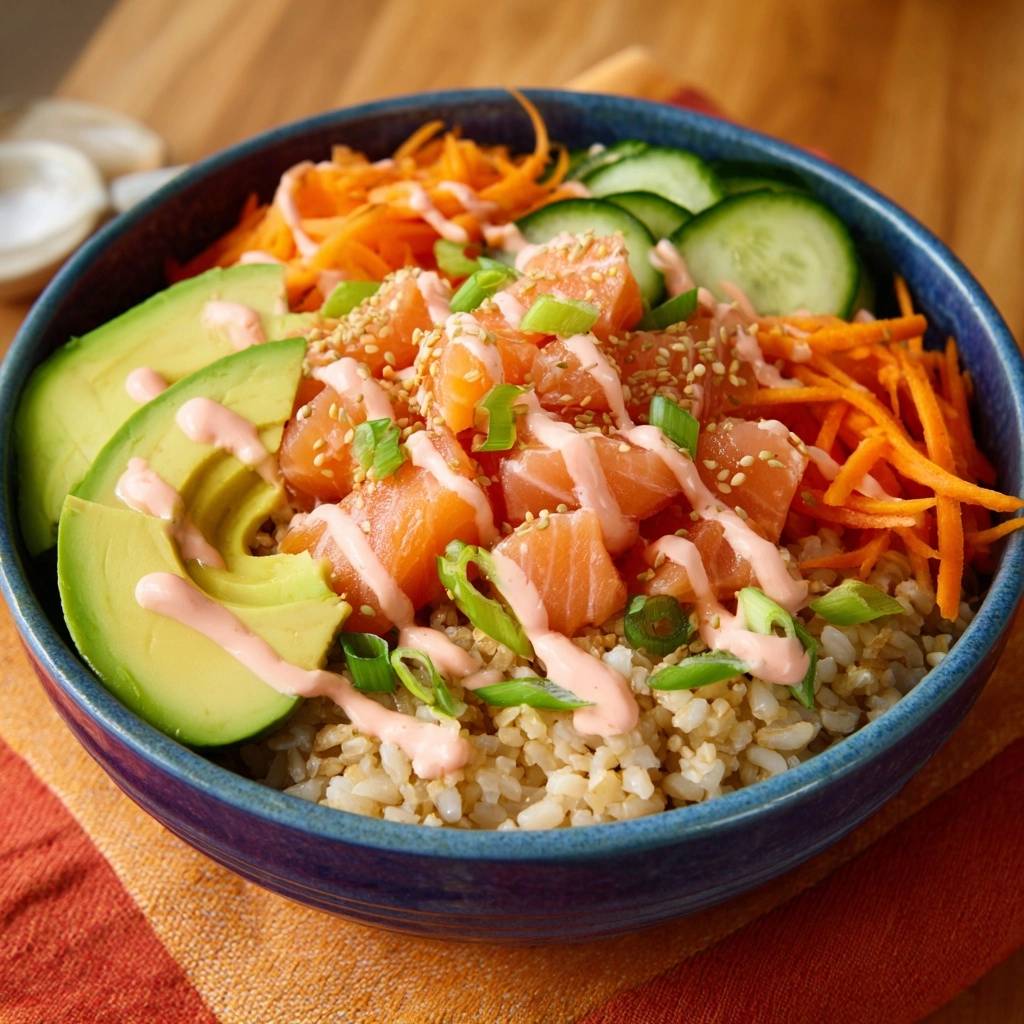
Poke has traveled a long way from its humble beginnings as a simple snack for Hawaiian fishermen. Originally, it was just a handful of raw reef fish seasoned with sea salt and crushed kukui nuts. Today, it’s a global phenomenon, but that popularity comes with a downside. Most home versions end up as a soggy, uninspired mess where the rice is gummy and the fish feels limp.
The real frustration lies in the texture. You want that clean, refreshing bite you get at a high-end sushi counter, but you often end up with a bowl of lukewarm mush. This recipe solves that by focusing on the structural integrity of the base and the temperature contrast between the chilled fish and the room-temperature rice.
The secret to a professional-grade bowl is the “Rinse and Spread” method for your grains. By removing every trace of surface starch and cooling the rice on a flat surface, you ensure each grain stays distinct and firm. This creates a sturdy foundation that won’t collapse under the weight of your toppings or soak up too much sauce.
For a different take on this popular dish, explore glazed salmon poke bowls with fluffy rice.
The Anatomy of a Fresh Salmon Poke Bowl
A successful poke bowl relies on three distinct pillars: the base, the protein, and the texture accents. You need to balance the rich fat of the salmon and avocado with the sharp acidity of the dressing and the crunch of fresh vegetables. If one element is too soft, the whole experience feels one-dimensional.
Short-grain brown rice is the undisputed champion for a “skyscraper” build. Unlike white rice, which can turn into a sticky paste, brown rice has a resilient outer bran layer. This provides a nutty “snap” that holds its shape even after you drizzle on the spicy mayo and soy sauce.
Sourcing Sushi-Grade Salmon Safely
When you’re eating raw fish, “sushi-grade” is the most important label you’ll look for, but it isn’t actually a formal USDA grade. It’s a term used by fishmongers to indicate that the fish was flash-frozen at extremely low temperatures. This process is vital because it kills any potential parasites, making the fish safe for raw consumption.
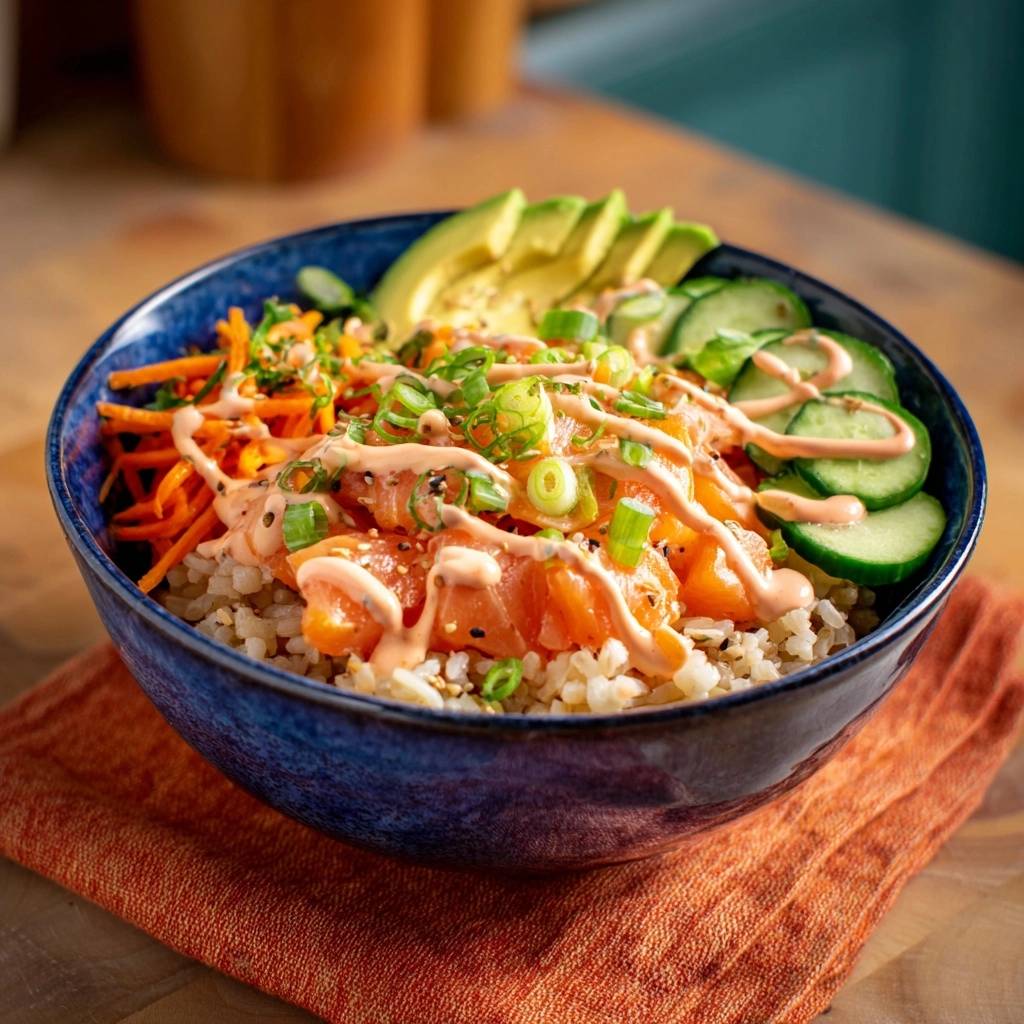
Always talk to your fishmonger before buying. Ask them specifically if the salmon is intended for raw preparations. Look for flesh that is vibrant and firm to the touch; if you press it with your finger, it should spring back immediately. Avoid any fillets that have a dull color or a strong, “fishy” odor, as fresh salmon should smell like a clean ocean breeze.
Why Short-Grain Brown Rice Prevents Gummy Textures
The science of a perfect bowl comes down to starch. White rice is high in amylopectin, which makes it sticky and soft. Brown rice, however, retains its fibrous hull, which acts as a barrier. This prevents the grains from bursting and releasing the starches that lead to that dreaded gummy texture.
Beyond the texture, brown rice offers a much lower glycemic index than its white counterpart. This means you get a steady release of energy rather than a quick spike and crash. It turns your lunch into a fuel source that keeps you full without feeling weighed down by a heavy, starchy meal.
Essential Components for the Marinade and Toppings
Quality ingredients are the only way to achieve that deep umami flavor. While standard soy sauce works, a high-quality brewed soy sauce offers a more complex, fermented profile. Toasted sesame oil is another heavy hitter; its smoky, nutty aroma is much more intense than the raw version, so a little goes a long way.
For the creamy element, Kewpie mayonnaise is non-negotiable. Unlike American mayo, which uses whole eggs and vinegar, Kewpie uses only egg yolks and a blend of vinegars. This results in a richer, custard-like texture and a slightly sweeter finish that pairs perfectly with the heat of sriracha.
The Secret to Firm, Distinct Rice Grains
If you want to avoid a bowl of mush, you have to change how you handle your rice. Most people just dump rice in a pot and hope for the best. To get that restaurant-quality “bite,” you need to be proactive about managing the starch and the steam.
The Two-Minute Rinse Technique
Start by placing your dry brown rice in a fine-mesh strainer. Don’t just give it a quick splash; you need to rinse it under cold running water for at least two full minutes. Use your fingers to agitate the grains, rubbing them against each other to scrub off the surface starch.
You’ll notice the water starts out cloudy and milky. Keep rinsing until that water runs crystal clear. This step is the difference between grains that stick together in a clump and grains that tumble beautifully into the bowl. A fine-mesh strainer is essential here to prevent the grains from breaking during the process.
Controlled Cooling: The Baking Sheet Method
The biggest mistake home cooks make is leaving the rice in the hot pot after it’s done. This causes “carry-over cooking,” where the residual heat continues to soften the rice until it becomes a gelatinized mass. To stop this, you need to maximize the surface area for cooling.
As soon as the rice finishes its five-minute rest, spread it out in a thin, even layer on a large baking sheet. This allows the steam to evaporate instantly rather than being trapped between the grains. Let it sit until it reaches room temperature. This technique locks in the firm texture and ensures your salmon doesn’t start to “cook” from the heat of the rice.
Step-by-Step: Constructing Your Fresh Salmon Poke Bowl
While your rice is simmering for those 40 to 45 minutes, you have plenty of time to prep your toppings. Focus on your knife skills here. Slicing the green onions on a sharp bias (diagonal) creates long, elegant shards that look much more professional than simple rounds.
For the avocado, cut it in half and remove the pit, then slice it thinly while it’s still in the skin. Use a spoon to scoop the whole half out, then gently press down with your palm to “fan” the slices out. This creates a beautiful visual element that covers a large portion of the bowl’s surface.
Preparing the Spicy Sriracha Drizzle
Whisking the Kewpie mayo and sriracha together creates a smooth, stable emulsion. If you like a serious kick, go for a 1:1 ratio, but a 2:1 ratio of mayo to sriracha usually provides the best balance of creaminess and heat. Always wait until the very last second to apply the drizzle so the lines stay sharp and don’t bleed into the other ingredients.
Marinating the Salmon for Maximum Umami
Gently toss your cubed salmon with the soy sauce and sesame oil just before you are ready to eat. You only need about 5 to 10 minutes of marination. If you let the fish sit in the salt for too long, it will begin to cure, changing the texture from buttery and soft to firm and slightly chewy.
For a different take on seasoned salmon, explore Mediterranean salmon power bowls featuring a delightful crust.
Troubleshooting Common Poke Pitfalls
If your bowl feels bland even with the marinade, the culprit is usually the rice. Professional chefs often season their rice with a tiny splash of rice vinegar and a pinch of salt while it’s cooling. This adds a bright top note that makes the flavors of the fish pop.
Another common issue is soggy vegetables. If your cucumbers feel limp, try giving them an ice bath. Slice them and drop them into a bowl of ice water for 10 minutes, then pat them dry. This shocks the cell walls and makes them incredibly crisp, providing a necessary contrast to the soft avocado and salmon.
To keep your avocado from browning while you assemble, a quick squeeze of lime juice does wonders. The acid prevents oxidation and adds a subtle citrus zing that cuts through the richness of the fish. Always assemble the bowl in layers, starting with a flat bed of rice to provide a stable stage for the toppings.
Flavor Variations and Ingredient Swaps
Once you master the base, you can play with the flavors. If you want more crunch, thinly sliced radishes or purple cabbage add a peppery bite and vibrant color. For a tropical twist, small cubes of fresh mango or pineapple provide a sweetness that balances the salty soy sauce beautifully.
Complementary Bites
Round out your poke bowl meal with these dishes.
- For a bright and zesty addition, try this refreshing cucumber salad, perfect for cutting through the richness of the salmon.
- If you’re craving something with a bit more crunch, these crispy glazed sesame chicken wings offer a different texture and a savory counterpoint.
If you need a soy-free option, coconut aminos are a fantastic substitute that maintains that savory profile. For extra protein, a handful of steamed edamame fits perfectly into the “no-mush” philosophy. Just ensure any added vegetables are patted dry so they don’t introduce excess moisture to the rice.
Expert Tips for Professional Presentation
To get that “skyscraper” look, don’t just toss everything in a pile. Start with a generous, flat base of rice. Place the salmon in the center to act as the anchor. Then, arrange your vegetables in distinct sections around the perimeter, using color theory to your advantage.
Place the bright orange carrots directly opposite the green cucumbers or avocado. This contrast makes the colors vibrate and look more appetizing. Finally, when you drizzle the sriracha mayo, move your hand in a fast, confident zig-zag motion across the entire bowl to get those clean, restaurant-style lines.
Frequently Asked Questions
Can I use frozen salmon for this recipe?
Yes, but you must thaw it correctly to maintain the texture. Place the vacuum-sealed salmon in the refrigerator for 12 to 24 hours until completely thawed. Never thaw fish in warm water or at room temperature, as this encourages bacterial growth and ruins the delicate protein structure of the fish.
How long does a Fresh Salmon Poke Bowl stay fresh?
This is a “make and eat” dish. Raw salmon and avocado oxidize very quickly once exposed to air and seasoning. While you can prep the rice and the spicy mayo a day in advance, the fish should be marinated and the bowl assembled right before serving for the best flavor and safety.
What is the best substitute for Kewpie mayonnaise?
If you can’t find Kewpie, you can make a quick DIY version. Mix a half-cup of standard high-quality mayonnaise with a half-teaspoon of sugar and a few drops of rice vinegar. It won’t be an exact match, but it mimics the sweet and tangy profile that makes Japanese mayo so special.
Is brown rice always better than white rice for poke?
For home cooks, brown rice is much more forgiving. The outer hull prevents the grains from becoming a sticky, overcooked mass. If you prefer white rice, you must be extremely diligent with rinsing and use slightly less water to ensure the grains stay firm enough to support the heavy toppings.
How do I get the perfect avocado fan?
The trick is using a very sharp knife and a ripe, but firm, avocado. Slice the avocado half into thin vertical strips while it’s still in the shell. After scooping it out with a spoon, lay it flat on the cutting board and use the side of your knife to gently “shingle” the slices out into a fan shape.
Salmon Poke Bowl
Course: Main CourseCuisine: Japanese-AmericanDifficulty: medium2
servings15
minutes45
minutes560
kcal60
MinutesA healthy and vibrant poke bowl featuring sushi-grade salmon, creamy avocado, and crunchy vegetables served over perfectly prepared short-grain brown rice with a spicy sriracha mayo drizzle.
Ingredients
1 cup short-grain brown rice
1.5 cups water
1/2 pound sushi-grade salmon, cubed
1 ripe avocado, sliced into a fan
1/2 cup matchstick (julienned) carrots
1/2 cucumber, sliced into thin rounds
2 green onions, sliced on a bias
1 tablespoon toasted sesame seeds
2 tablespoons Japanese mayonnaise (Kewpie)
1 teaspoon sriracha
1 tablespoon soy sauce
1 teaspoon sesame oil
Directions
- To solve the mushy rice problem, place your dry brown rice in a fine-mesh strainer. Rinse under cold water for at least 2 minutes, agitating the grains with your fingers, until the water running through is completely clear. This removes excess surface starch.
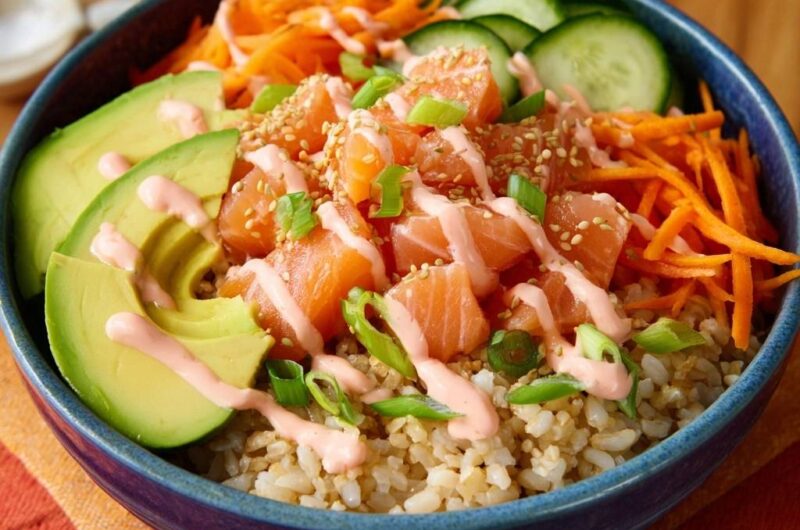
- Combine the rinsed rice and 1.5 cups of water in a pot. Bring to a boil, then reduce heat to the lowest setting, cover tightly, and simmer for 40 to 45 minutes (brown rice requires more time and water than white rice to reach the firm, distinct texture shown in the image).
- Once cooked, remove from heat and let stand, covered, for 5 minutes. Then, spread the rice out onto a large flat plate or baking sheet. This allows steam to escape quickly, stopping the cooking process immediately so the grains stay distinct and firm rather than clumping.
- While the rice cools to room temperature, whisk the mayonnaise and sriracha in a small bowl to create the spicy drizzle.
- In a separate bowl, gently toss the cubed salmon with the soy sauce and sesame oil.
- Assemble the bowls by placing a generous base of the cooled, firm brown rice at the bottom. Arrange the marinated salmon in the center. Place the fanned avocado on one side, the julienned carrots on the other, and the cucumber rounds at the back.
- Garnish with the bias-cut green onions and toasted sesame seeds. Drizzle the sriracha mayo in a zig-zag pattern across the entire bowl and serve immediately.
Notes
- The secret to non-mushy rice is rinsing for 2 minutes until the water is clear and spreading the cooked rice on a flat plate to cool quickly.