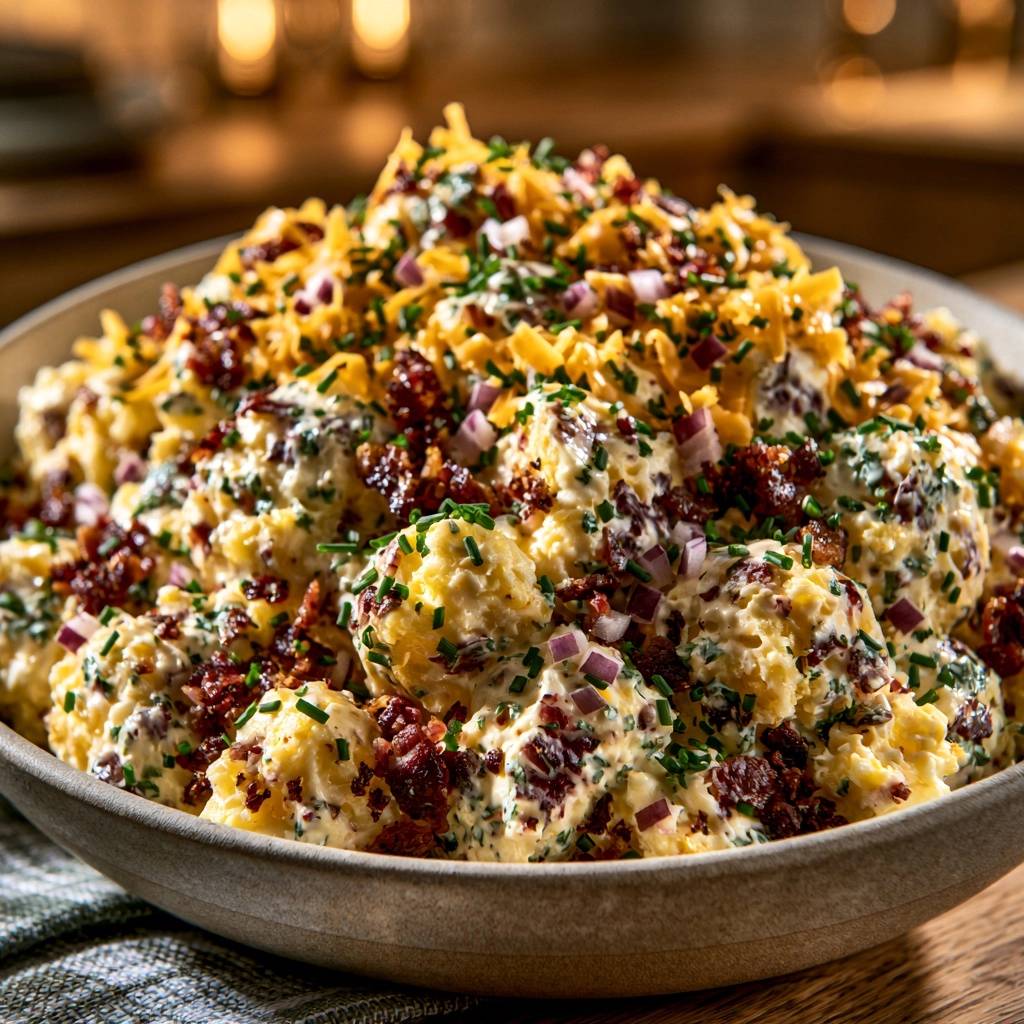
Nothing ruins a summer cookout faster than a watery, bland potato salad that pools at the bottom of the bowl. We’ve all seen it—that sad, soupy mess where the dressing has completely slid off the potatoes. This recipe treats the humble side dish like a deconstructed baked potato, ensuring every bite is thick, creamy, and packed with flavor.
The secret to this ultra-creamy version is all in the temperature control. By seasoning the potatoes while they’re warm but waiting to dress them until they’re fully cooled, you ensure the sauce stays thick. It’s the difference between a professional-grade side dish and a soggy disappointment that people avoid at the buffet line.
I’ve found that the real trick to success is the “flash-seasoning” method. Sprinkling a little vinegar on the steaming potatoes right after draining them changes everything. It creates a flavor anchor within the starch itself, so the potato tastes seasoned from the inside out, not just on the surface.
The Science of Starch and Temperature
Understanding the cellular structure of your potato is the first step toward greatness. Yukon Gold potatoes have a medium-starch content that creates a naturally creamy mouthfeel without falling apart. When you boil them, the starch granules swell and become porous, making them act like little sponges for flavor.
Adding a splash of vinegar to the potatoes while they are still steaming is a culinary game-changer. The heat allows the acid to penetrate deep into the starch molecules before they “lock” as they cool. This provides a bright counterpoint to the heavy fats we’ll add later, ensuring the salad doesn’t feel leaden or one-note on the palate.
However, you must be patient before adding the mayonnaise. This is where the “Dressing Break” phenomenon occurs. Mayonnaise is a delicate emulsion of oil and egg; if it hits a potato surface warmer than 90°F, the emulsion collapses. The oil separates, the eggs thin out, and you’re left with a greasy, oily puddle instead of a velvety coating.
Essential Components for a Loaded Profile
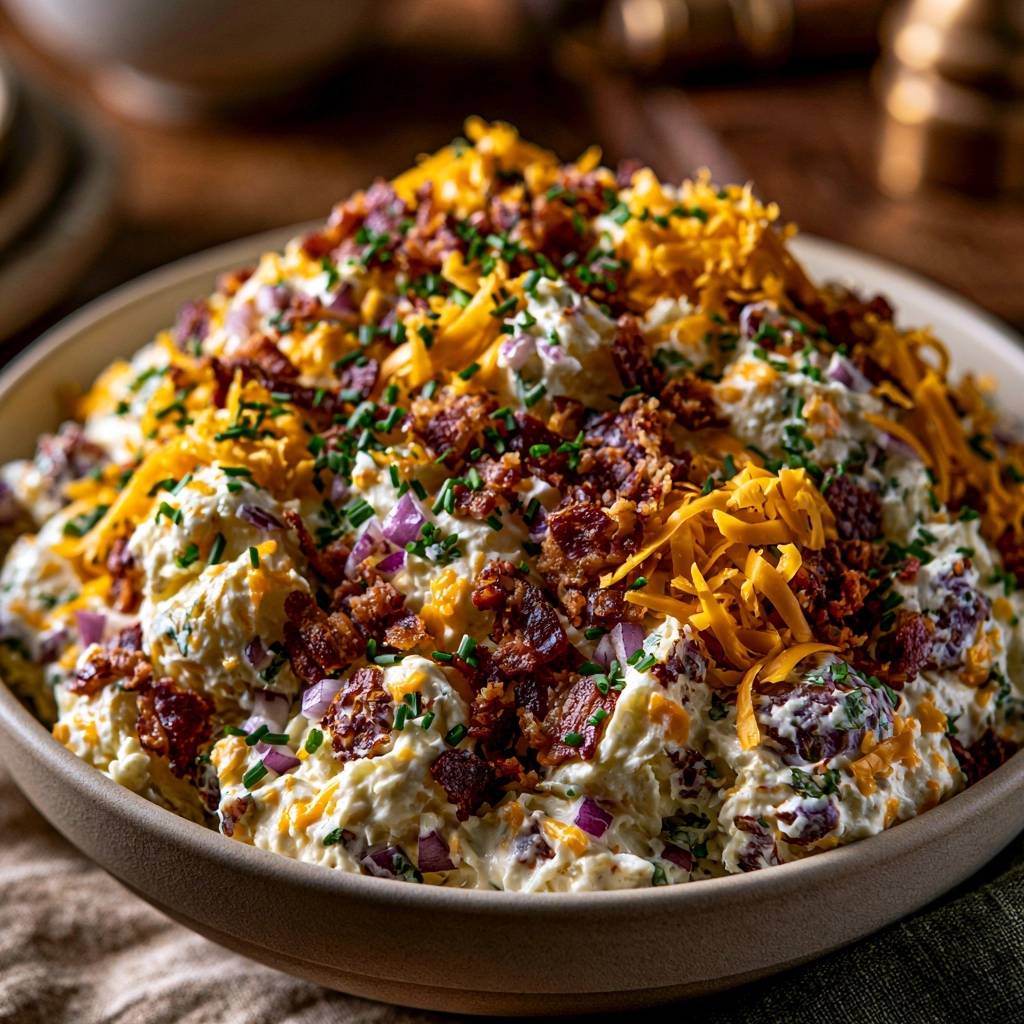
Quality ingredients are the backbone of a “loaded” profile. You want textures that contrast and flavors that pop. Using Yukon Golds over Russets is non-negotiable here. Russets are too floury and tend to disintegrate into mush, whereas Yukon Golds hold their beautiful cubed shape while offering a buttery flavor.
The cheese choice also matters immensely. I always recommend a thick-cut, sharp cheddar. Pre-shredded cheese is often coated in cellulose to prevent clumping, which can feel waxy. Grating your own sharp cheddar provides a much bolder flavor punch that stands up against the smoky bacon and tangy sour cream.
Finally, don’t underestimate the power of fresh chives. While dried herbs are fine for a pantry pinch, fresh chives provide a necessary oniony bite and a vibrant green color. They cut through the richness of the dressing, acting as a palate cleanser between those heavy, savory bites of bacon and cheese.
Choosing the Right Potato Variety
If you use a Red Bliss potato, you’ll get a very firm, waxy bite that sometimes feels a bit “snappy.” On the other end, a Russet will turn your salad into cold mashed potatoes. Yukon Golds sit right in the sweet spot, providing a creamy interior with enough structural integrity to survive the folding process.
The Creamy Base: Mayo vs. Sour Cream Ratios
We use a specific 1.25:0.5 ratio of mayonnaise to sour cream for a reason. Mayonnaise provides the structural “cling” that keeps the dressing attached to the potato. The sour cream, however, adds the essential tang and lightness that mimics a real loaded baked potato, preventing the salad from feeling too heavy.
Step-by-Step: Preparing the Loaded Baked Potato Salad
Making this salad is a three-phase process: The Boil, The Flash-Cool, and The Fold. Each stage requires a little bit of finesse to ensure the final product looks as good as it tastes. You aren’t just tossing things in a bowl; you’re building layers of texture and flavor.
The most important tool in your kitchen for this recipe isn’t the mixing bowl—it’s the baking sheet. Spreading the potatoes out in a single layer is the only way to ensure they cool evenly and quickly. This prevents the “carry-over cooking” that often leads to overdone, mushy potatoes in the center of a pile.
When you finally mix everything together, use a gentle hand. You’ve worked hard to get those perfect cubes, so don’t ruin them now by stirring aggressively. A rubber spatula is your best friend here, allowing you to scrape the bottom of the bowl and lift the dressing over the potatoes without crushing them.
Phase 1: Achieving the Perfect Fork-Tender Texture
Always start your potatoes in cold, heavily salted water. If you drop them into boiling water, the outsides will cook and turn to mush before the centers are even soft. You’re looking for “fork-tender,” which means a fork slides in with almost no resistance, but the cube doesn’t shatter when you pull the fork out.
Phase 2: The Anti-Soggy Cooling Technique
Once drained, spread those steaming cubes onto a large baking sheet. This maximizes the surface area, allowing steam to escape rapidly. This evaporation is crucial because any moisture left on the surface of the potato will eventually thin out your dressing, leading to that dreaded watery bottom.
Phase 3: Emulsifying the Dressing and Folding
Whisk your mayo, sour cream, and dry spices together in a separate bowl before they ever touch the potatoes. This ensures the garlic and onion powders are perfectly distributed. When you fold the dressing into the cold potatoes, use a “cut and lift” motion to keep the cubes distinct and beautiful.
Avoiding Common Potato Salad Mistakes
If your salad tastes bland, you likely didn’t salt the boiling water enough. Potatoes are incredibly dense and need that salt in the water to season the interior. You can try to add salt at the end, but it will only sit on the surface, never reaching the core of the potato cube.
An oily salad is almost always the result of rushing the cooling process. If those potatoes are even slightly warm, they will break the mayo emulsion. If you’re in a hurry, put the baking sheet in the fridge for 15 minutes, but never, ever dress a warm potato with a mayonnaise-based sauce.
Lastly, if your potatoes are falling apart, you either over-boiled them or used a starchy Russet. Keep a close eye on the pot after the 10-minute mark. As soon as they are tender, get them out of the water. They will continue to cook for a minute or two as they sit in the colander.
Flavor Variations and Texture Swaps
This recipe is a fantastic canvas for your own twists. If you want a bit of a “barbecue” vibe, try adding a teaspoon of smoked paprika or a dash of chipotle powder to the dressing. It adds a deep, smoky red hue and a hint of heat that pairs perfectly with the cheddar and bacon.
For those who want a bit more protein or a slightly lighter feel, you can swap the sour cream for plain Greek yogurt. It maintains that signature tang while adding a bit of nutritional density. Just make sure it’s full-fat yogurt so the dressing stays thick and luscious.
If you’re a person who demands a “crunch” in every bite, feel free to toss in some finely diced celery. While not traditional for a “loaded” potato profile, it adds a refreshing snap. You could also swap the red onion for pickled red onions if you want an extra hit of acidity to brighten the dish.
Optimal Pairings for Your Loaded Salad
Because this salad is so rich and creamy, it pairs best with proteins that have a bit of char or smoke. Think of a thick, smoked brisket or a rack of ribs. The acidity from the mustard and sour cream in the salad cuts right through the heavy fats of the meat, balancing the whole plate.
It’s also a stellar companion for herb-roasted chicken or even a cedar-plank salmon. The earthy notes of the Yukon Golds and the sharpness of the cheddar complement the savory herbs beautifully. It’s a versatile side that feels just as at home at a casual backyard BBQ as it does at a more formal Sunday dinner.
If you’re serving this at a party, try to keep the main course relatively simple. Since the potato salad has so many “loaded” toppings, you don’t want a main dish that’s overly complicated. A well-seasoned grilled burger or a simple marinated steak is often the perfect match.
Make-Ahead Strategy and Storage Safety
This is one of those rare dishes that actually tastes better after a little nap in the fridge. I recommend letting it sit for at least one to four hours before serving. This “flavor marriage” period allows the spices to hydrate and the dressing to set firmly against the potatoes.
When serving outdoors, remember the two-hour rule. Because this contains mayonnaise and sour cream, it shouldn’t sit out in the sun for more than two hours (or one hour if it’s over 90°F outside). Keep the serving bowl nestled in a larger bowl of ice to keep it chilled and safe for your guests.
As for leftovers, this salad stays fresh and delicious in an airtight container for about three to four days. However, do not try to freeze it. The freezing and thawing process will cause the potato cells to collapse and the dressing to break, leaving you with a grainy, separated mess that loses all its charm.
Expert Troubleshooting
Can I leave the skins on the potatoes?
You certainly can! Leaving the skins on Yukon Golds adds a bit of rustic texture and extra nutrients. However, for the classic “loaded” experience that mimics a peeled baked potato, most people prefer them peeled. If you do keep the skins, just make sure to scrub them very well before boiling.
How do I fix a salad that is already too salty?
If you went a little overboard with the salt, don’t panic. The best fix is to boil one or two more potatoes (unseasoned), cool them completely, and fold them into the existing salad. The extra starch will absorb the excess salt. You can also add a dollop more of sour cream to dilute the saltiness without thinning the dressing too much.
Can I use bottled bacon bits instead of fresh?
While you can use them in a pinch, I strongly advocate for fresh-fried bacon. Bottled bits are often very hard or have a “liquid smoke” flavor that can taste artificial. Freshly fried bacon provides a much better crunch and a rich, authentic smoky flavor that really defines the “loaded” profile.
How long does this stay fresh in the refrigerator?
This salad is best within the first 48 hours, but it will stay safe and tasty for up to 4 days in an airtight container. You might notice the potatoes absorb a bit more dressing as it sits; if it looks a little dry on day three, just stir in a tiny spoonful of sour cream to loosen it back up.
Loaded Baked Potato Salad
Course: Side DishCuisine: AmericanDifficulty: easy8
servings15
minutes20
minutes35
Minutes380
kcalAmerican
Ingredients
3 pounds Yukon Gold potatoes, peeled and cut into 1-inch cubes
1 1/4 cups mayonnaise
1/2 cup sour cream
1 tablespoon yellow mustard
1 teaspoon garlic powder
1 teaspoon onion powder
1/2 teaspoon salt (plus more for boiling)
1/2 teaspoon black pepper
1 1/2 cups sharp cheddar cheese, shredded (thick cut)
1 cup crispy bacon bits (finely chopped)
1/3 cup red onion, finely diced
1/2 cup fresh chives, finely chopped
Directions
- Place potato cubes in a large pot and cover with cold salted water. Bring to a boil, then reduce heat and simmer for 10 to 12 minutes until fork-tender but still holding their shape.
- Drain the potatoes thoroughly in a colander. While they are still steaming, sprinkle them with a pinch of salt and a teaspoon of apple cider vinegar. This allows the flavor to penetrate the potato starch.
- Spread the potatoes out in a single layer on a large baking sheet to cool completely. This is the critical step: if you add the dressing to warm potatoes, the oils in the mayonnaise will break, resulting in a soggy, oily texture.
- In a medium bowl, whisk together the mayonnaise, sour cream, mustard, garlic powder, onion powder, salt, and pepper until smooth and thick.
- Once the potatoes are cold to the touch, place them in a large mixing bowl. Add 1/4 cup of the chopped chives directly into the dressing mixture.
- Fold the dressing into the potatoes gently using a rubber spatula to avoid mashing the cubes.
- Stir in 1 cup of the shredded cheddar cheese, half of the bacon bits, and half of the red onion.
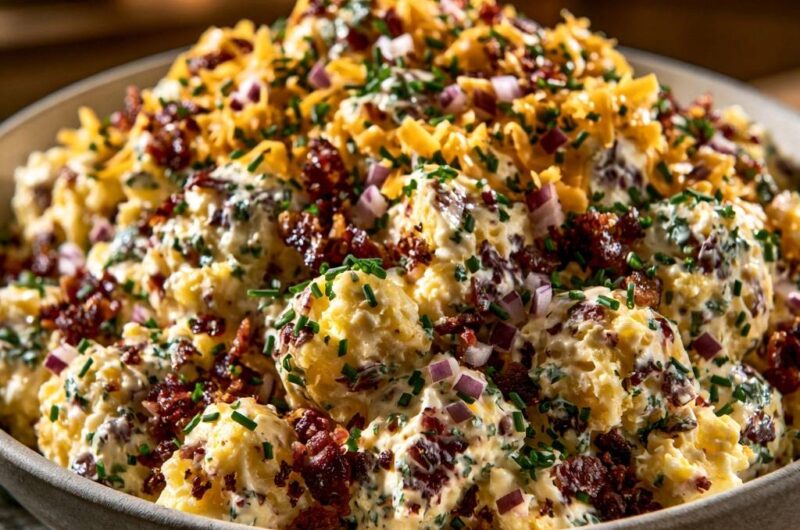
- Transfer the salad to a wide serving bowl. To achieve the visual depth shown in the image, pile the remaining 1/2 cup of cheddar cheese, the rest of the bacon, the remaining red onion, and the remaining chives generously over the top.
- Refrigerate for at least one hour before serving to allow the dressing to set and the flavors to marry.
Notes
- The critical step is cooling the potatoes completely on a baking sheet before dressing. Adding dressing to warm potatoes causes the mayonnaise oils to break, resulting in an oily texture. Seasoning with salt and vinegar while warm ensures flavor penetration.