We have all been there. You pull a beautiful-looking tray of macaroni out of the oven, only to find the cheese has turned into an oily, gritty mess at the bottom of the dish. It is a heartbreaking moment when comfort food goes wrong, but this skillet version is here to change that forever.
This recipe delivers a velvety, “liquid gold” interior that stays creamy even after it hits the heat of the oven. By using a cast-iron skillet, you get superior heat distribution that a glass baking dish simply cannot match. You are looking at just 15 minutes of prep and 25 minutes in the oven for the ultimate weeknight win.
The secret to this success is all about the emulsion. Most people keep the heat cranked up when they add their cheese, which is the fastest way to ruin the texture. I’ll show you how to time your temperature perfectly so every bite is as smooth as silk.
The Science of a Smooth Cheese Sauce
Creating a cheese sauce that doesn’t “break” is more about chemistry than luck. When cheese gets too hot too fast, the proteins tighten up and squeeze out the fat, leaving you with a puddle of oil and clumps of rubbery protein. This is what we call a broken sauce.
To prevent this, we use dry mustard powder as our secret weapon. While it adds a subtle tang, its primary job is acting as a natural emulsifier. It helps the fats and liquids stay bonded together, ensuring the sauce remains stable even under the broiler.
Temperature control is the other half of the equation. Using room temperature milk and heavy cream prevents the roux from seizing up. If you pour ice-cold liquid into a hot butter-and-flour mixture, it creates lumps that are nearly impossible to whisk out later.
Essential Components for Skillet Baked Macaroni and Cheese
Quality ingredients are the foundation of a great skillet bake. Since the sauce is the star, you want to avoid anything that interferes with its texture. This starts with the cheese you choose and how you prepare it.
Elbow macaroni is the classic choice for a reason. Those little hollow tubes act like tiny straws, sucking up the cheese sauce so you get flavor inside and out. If you use a flat pasta, the sauce just slides off, leaving the dish feeling dry.
The fat ratio is also vital for that signature mouthfeel. We use a combination of butter, whole milk, and heavy cream. The cream adds a level of richness that milk alone can’t provide, while the butter creates the base for our thickening roux.
Why Freshly Grated Cheese is Mandatory
If you buy the bags of pre-shredded cheese, you are setting yourself up for a grainy dinner. Manufacturers coat those shreds in potato starch or cellulose to keep them from sticking together in the bag. Those anti-caking agents do not melt; they just sit in your sauce and create a sandy texture.
Freshly grated cheese has a much lower melting point and zero additives. Sharp cheddar provides that classic “bite,” while mozzarella gives us the iconic cheese pull. A handful of Parmesan adds a salty, nutty finish that helps form the perfect crust.
Preparing the Pasta for a Second Cook
The biggest mistake you can make is boiling your pasta until it is soft. Remember, the macaroni is going to spend another 15 to 20 minutes swimming in hot sauce inside a 400°F oven. If it is fully cooked on the stove, it will turn into mush in the skillet.
You must boil the noodles for exactly 3 minutes less than the package directions. When you drain them, they should still have a very firm bite. If you were to bite a noodle in half, you might even see a tiny white ring of uncooked flour in the very center.
This “under-cooking” is intentional. As the skillet bakes, the pasta absorbs the extra moisture from the cheese sauce. This finishes the cooking process and infuses the actual noodles with cheesy flavor from the inside out.
Building the Roux and Béchamel Base
Everything starts with the roux, which is just equal parts butter and flour. Melt your butter in the skillet until it is foaming, then whisk in the flour. You want to cook this for about two minutes until it smells slightly nutty and looks like a pale gold paste.
This is called a “blonde roux.” It provides thickening power without the strong toasted flavor of a darker roux. Once that is ready, start the slow pour. Add your milk and cream just a splash at a time, whisking constantly.
At first, it might look like a thick paste, but keep going. As you gradually add the liquid, it will transform into a smooth, silky Béchamel. You’ll know it is ready when it is thick enough to coat the back of a wooden spoon without immediately running off.
The Off-Heat Emulsion Technique
This is the most critical moment of the entire recipe. Once your white sauce is thick and bubbly, take the skillet off the burner entirely. If you add cheese to a boiling liquid, the high heat will cause the sauce to break and become oily.
Let the residual heat do the work. Stir in your first two cups of cheddar, the mozzarella, and the Parmesan. Whisk gently but steadily. You will see the sauce enter the “Glossy Phase,” where it becomes shiny, thick, and completely smooth.
If you see oil droplets forming on the surface, stop stirring and let it sit for a moment to cool down. A perfect emulsion should look like liquid velvet. Once it reaches that stage, you are ready to bring in the pasta.
Assembling the Skillet for the Oven
Fold your undercooked macaroni into the sauce gently. At this stage, it might look like there is too much sauce for the amount of pasta. Do not worry! This is exactly what you want because the oven will evaporate some moisture and the pasta will soak up the rest.
If it looks “perfect” now, it will be dry by the time it comes out of the oven. Make sure every single noodle is submerged. Use a spatula to level the top so there are no stray noodles sticking up that might burn.
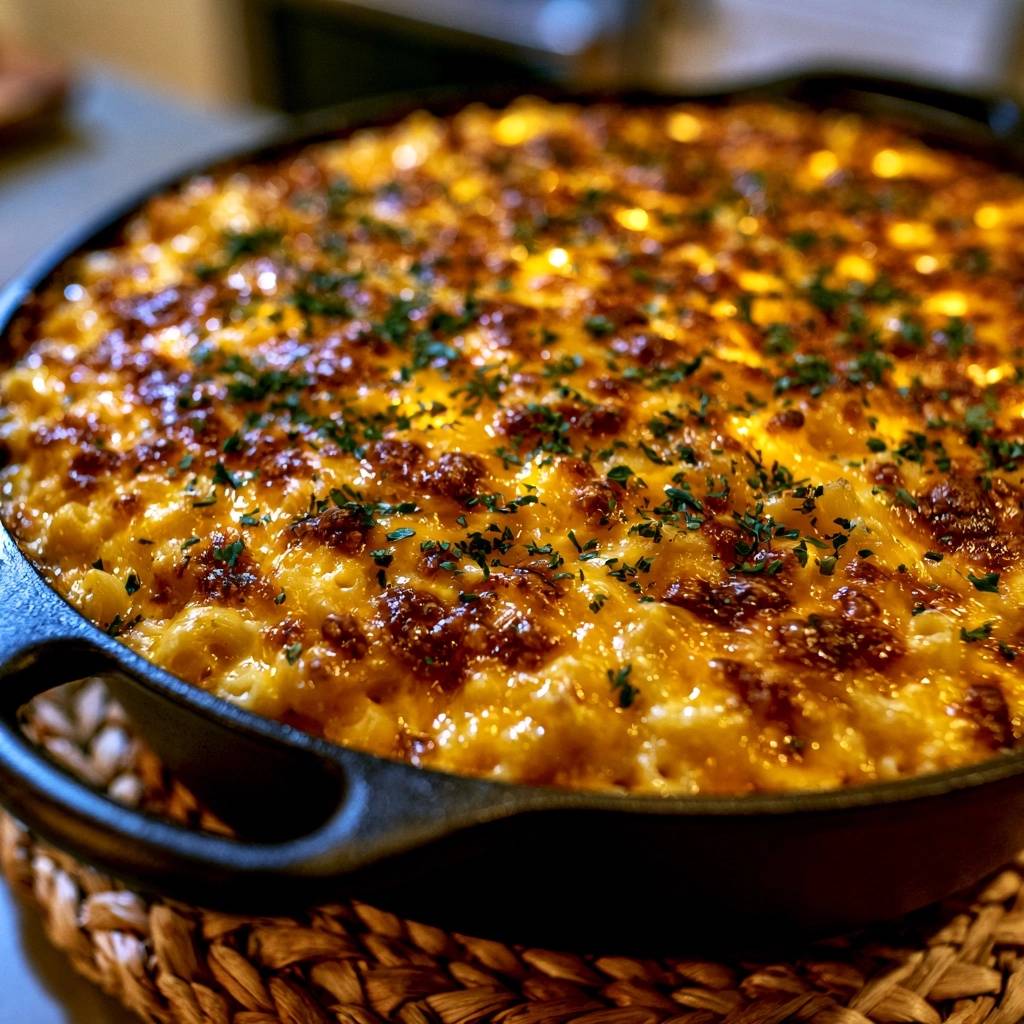
Finally, cover the entire surface with the remaining two cups of sharp cheddar. This creates a protective blanket that keeps the interior moist while forming a structural crust on top. It is the contrast between the gooey center and the crispy top that makes this dish legendary.
Achieving the Perfect Golden Crust
Slide that skillet into the center of your 400°F oven. For the first 15 minutes, the heat is working to finish cooking the pasta and bubbling the sauce. You will hear the edges sizzling and see the cheese starting to melt into the crevices.
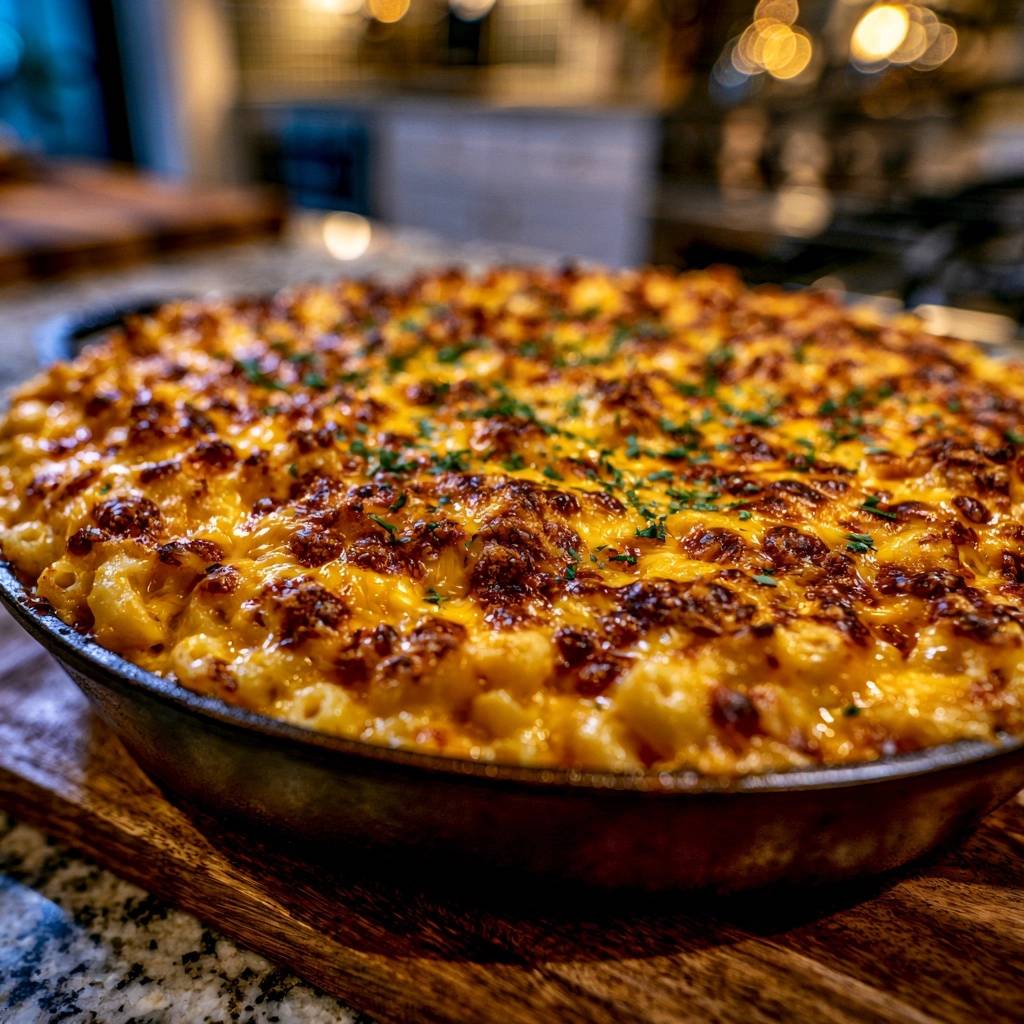
To get that professional, “better than a restaurant” look, switch your oven to the broiler for the last 2 or 3 minutes. Stay right there and watch it through the oven window. You are looking for deep brown, crispy spots to form on the cheese.
This is the Maillard reaction in action, which creates a complex, toasted flavor. When the top is bubbly and bronzed, pull it out. Let it sit for just two minutes before serving to let the sauce set slightly, then garnish with fresh parsley for a pop of color.
Troubleshooting Common Macaroni Obstacles
If your sauce turned out grainy, the heat was likely too high when you added the cheese. Next time, move the skillet to a cool burner or a trivet before stirring in the shreds. This protects the delicate dairy proteins from seizing.
Dry macaroni usually happens for two reasons: overcooking the pasta in the water or baking it for too long. If the noodles are too soft before they hit the skillet, they will drink up all the sauce and leave the dish parched. Stick to that “3 minutes less” rule.
An oily finish is almost always the result of pre-shredded cheese. Those starches and preservatives interfere with the fat bonding to the liquid. Always grate your own cheese from a block for the smoothest results possible.
Optimal Pairings for a Rich Skillet Meal
Because this dish is incredibly rich and decadent, you want to pair it with something that offers a bright, acidic contrast. A simple arugula salad with a sharp lemon vinaigrette is the perfect palate cleanser between cheesy bites.
Roasted broccoli with a squeeze of lemon and plenty of garlic also works beautifully. The charred edges of the vegetable mimic the crispy top of the mac and cheese. Avoid serving this with other heavy starches like bread or potatoes.
If you want something crunchy, a sharp apple slaw with a vinegar-based dressing provides a refreshing sweetness. The acidity in these sides cuts through the heavy fats of the cream and cheddar, making the whole meal feel more balanced.
Storage and Reheating for Creamy Results
Leftover mac and cheese often turns into a solid brick in the fridge because the pasta continues to absorb moisture as it sits. To store it, place it in an airtight container for up to 3 days. I do not recommend freezing this, as the dairy can separate and become grainy when thawed.
When you are ready to eat it again, do not just throw it in the microwave. Put a portion in a small skillet or bowl and add a tablespoon or two of whole milk. Cover it loosely to trap the steam, which helps “re-hydrate” the sauce.
Heat it on low power, stirring halfway through. The extra milk will loosen the fats and bring that creamy texture back to life. If you are using the oven, cover the dish with foil to prevent the top from burning while the center warms through.
Expert Tips for Skillet Success
Can I use different pasta shapes?
Absolutely! While elbows are traditional, cavatappi (corkscrews) or medium shells are fantastic alternatives. Shells are especially good because they act like little bowls that hold onto the extra cheese sauce. Just remember to keep the “under-cooking” rule in mind regardless of the shape.
Can I make this ahead of time?
You can prepare the sauce and boil the pasta ahead of time, but do not mix them until you are ready to bake. If the pasta sits in the sauce in the fridge, it will get mushy. Store the sauce and pasta separately, then gently reheat the sauce on the stove before combining and baking as directed.
Is a cast-iron skillet necessary?
While you can use a standard baking dish, cast iron is superior for this recipe. It holds heat much longer, which keeps the cheese sauce in its liquid state while you are serving. It also helps create those coveted crispy, browned edges around the perimeter of the macaroni that a ceramic dish can’t quite replicate.
How do I make it spicy?
If you want a little kick, add a half-teaspoon of cayenne pepper or a tablespoon of hot sauce to the milk mixture before it thickens. You can also swap one cup of the sharp cheddar for Pepper Jack cheese. This adds heat without breaking the emulsion or changing the creamy foundation of the sauce.
Why is my sauce still thin after adding cheese?
The sauce will look a bit loose when you first fold in the pasta. This is intentional! The starch from the macaroni and the heat of the oven will thicken the sauce significantly during the 15-minute bake. If it is too thick before it goes in, it will be dry and sticky by the time it comes out.
Skillet Baked Macaroni and Cheese
Course: Main CourseCuisine: AmericanDifficulty: easy6
servings15
minutes25
minutes40
Minutes620
kcalAmerican
Ingredients
1 pound elbow macaroni
4 tablespoons unsalted butter
1/4 cup all-purpose flour
3 cups whole milk, room temperature
1 cup heavy cream
4 cups sharp cheddar cheese, freshly shredded (divided)
1 cup mozzarella cheese, freshly shredded
1/2 cup freshly grated Parmesan cheese
1 teaspoon garlic powder
1/2 teaspoon smoked paprika
1/2 teaspoon dry mustard powder (prevents sauce separation)
Salt and black pepper to taste
Fresh parsley, finely chopped for garnish
Directions
- Preheat your oven to 400°F (200°C). Boil the macaroni in a large pot of heavily salted water for 3 minutes less than the package directions for al dente. The pasta should still have a firm bite to ensure it absorbs the sauce without becoming mushy during the bake. Drain and set aside.
- In a large (12-inch) oven-safe cast-iron skillet, melt the butter over medium heat. Whisk in the flour and cook for 1-2 minutes, whisking constantly, until the roux is fragrant and slightly golden.
- Gradually pour in the room temperature milk and heavy cream while whisking vigorously. Continue to cook over medium heat, whisking frequently, until the sauce thickens enough to coat the back of a spoon (about 5-7 minutes). Stir in the garlic powder, smoked paprika, dry mustard, salt, and pepper.
- Remove the skillet from the heat entirely. This is the critical step: adding cheese to a boiling sauce breaks the emulsion and creates a grainy, oily mess. Stir in 2 cups of the cheddar, the mozzarella, and the Parmesan cheese. Whisk until the sauce is completely smooth and glossy.
- Fold the undercooked pasta into the cheese sauce until every noodle is thoroughly submerged and coated.
- Top the skillet evenly with the remaining 2 cups of sharp cheddar cheese.
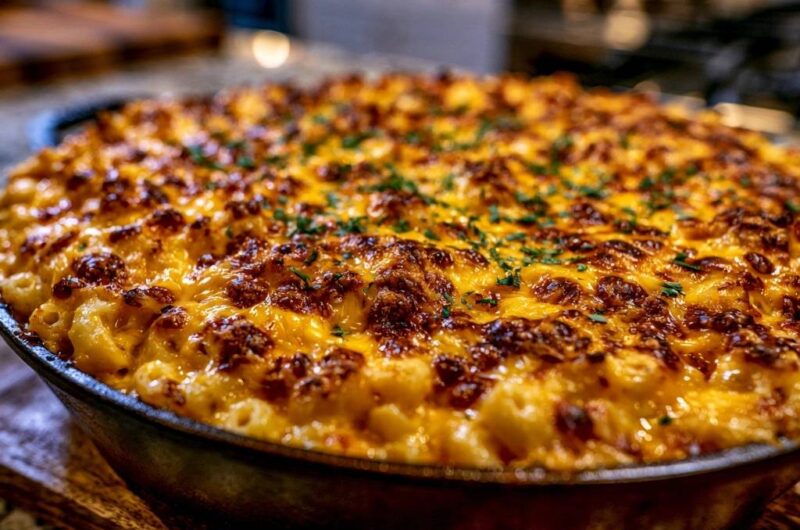
- Place the skillet in the oven and bake for 15 minutes. For the final touch to match the visual result, turn the broiler to high for the last 2-3 minutes, watching closely until the cheese forms deep brown, crispy bubbles and a crusty edge.
- Garnish with fresh chopped parsley and serve immediately while the interior remains creamy and the top is at its peak crunch.
Notes
- Removing the skillet from the heat before adding cheese is critical to prevent the sauce from breaking and becoming grainy. Using room temperature milk also helps create a smoother emulsion.