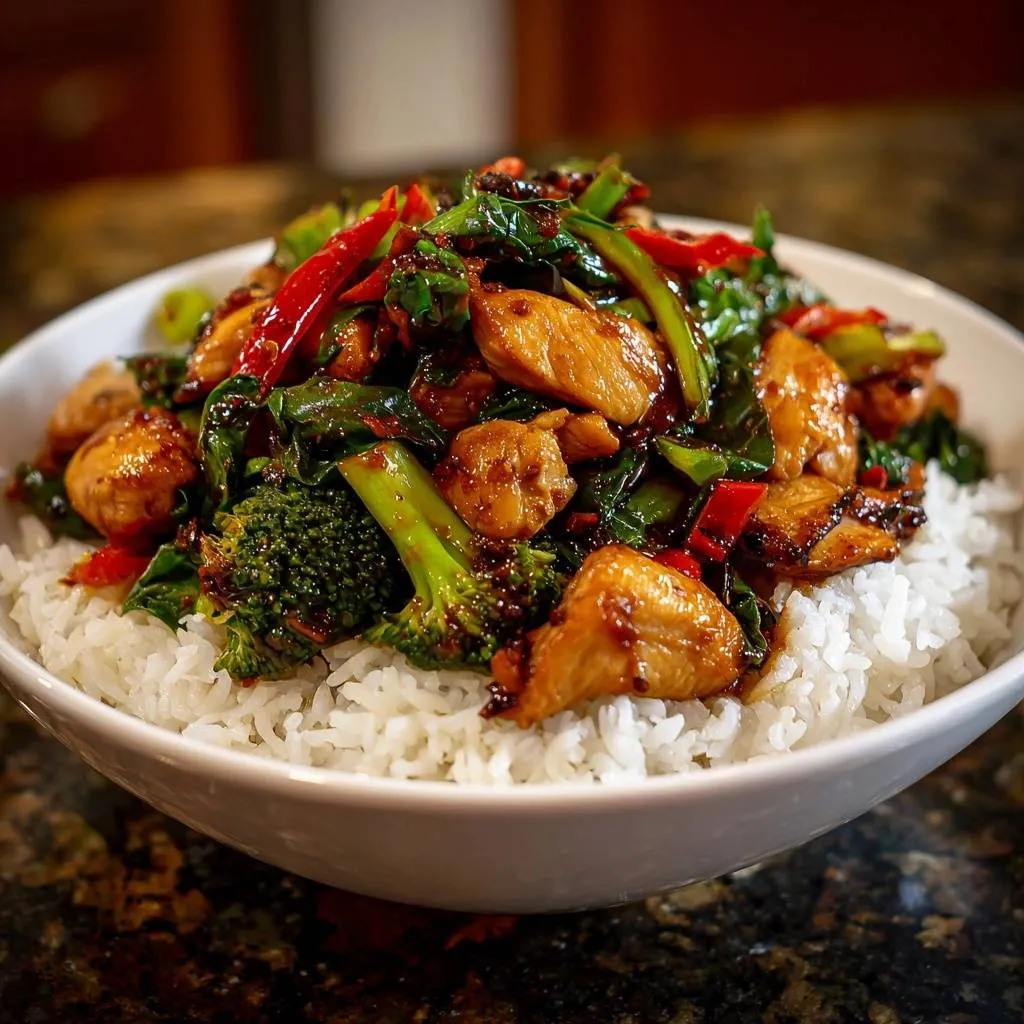
Stop settling for tough, chewy stir-fry meat that tastes like cardboard. Most home cooks struggle with chicken that turns dry the second it hits a hot pan, but there is a simple fix used in professional kitchens. You can achieve that silky, tender texture by using a technique called velveting, which transforms lean protein into something truly succulent.
This Spicy Garlic Chicken and Broccoli Stir-Fry delivers a punchy aromatic experience with every bite. You get the sharp heat of red chili flakes balanced by the deep, earthy notes of toasted sesame and fresh ginger. The vegetables stay vibrant and crisp, providing a necessary snap against the glossy, savory glaze that coats every inch of the dish.
The secret to this recipe’s success lies in the cornstarch barrier created during the marination phase. By coating the chicken in a mix of starch and oil, you insulate the meat from the aggressive heat of the wok. This prevents the muscle fibers from tightening up, ensuring your chicken stays juicy while the exterior develops a beautiful golden crust.
The Science of Velveting for Tender Chicken
Velveting is a fundamental Chinese cooking technique that solves the problem of “rubbery” meat. When you mix cornstarch with soy sauce and oil, you create a protective coating that acts as a physical shield. As the chicken hits the high heat of your skillet, the starch gelatinizes instantly, locking the natural juices inside the meat rather than letting them evaporate into the pan.
Furthermore, the soy sauce in the marinade provides a mild alkaline environment. This helps break down the tough proteins on the surface of the chicken breast, making it feel much softer on the tongue. Without this step, the high heat required for a good stir-fry would quickly squeeze the moisture out of the chicken, leaving it stringy and dry.
In standard frying, the exterior of the meat often becomes leathery before the interior is cooked through. However, the velveted chicken slides across the pan with ease. The result is a texture that feels almost buttery, mimicking the high-end experience of your favorite takeout spot without the excess grease or mystery ingredients.
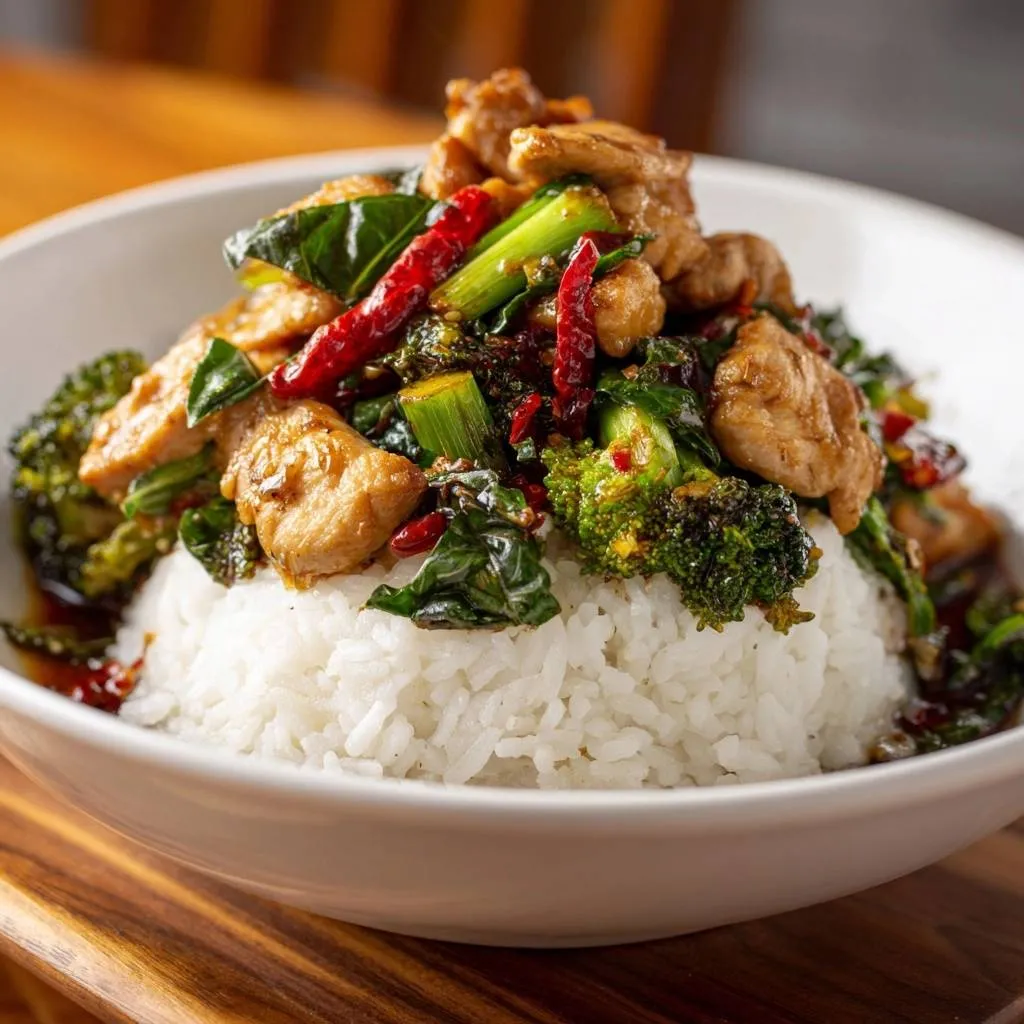
Essential Components for the Spicy Garlic Sauce
The sauce is the soul of this dish, and it relies on a balance of salty, sweet, and spicy elements. Oyster sauce provides a thick, syrupy consistency and a massive hit of umami that soy sauce alone cannot achieve. When combined with honey, it creates a complex base that caramelizes beautifully as it hits the hot metal of the pan.
Freshness is the most important factor when it comes to your aromatics. While jarred garlic or powdered ginger are convenient, they lack the volatile oils that create that signature stir-fry scent. Freshly minced ginger adds a bright, peppery zing that cuts through the richness of the sesame oil, while fresh garlic mellows into a sweet, savory paste during the final toss.
The heat in this dish comes from red chili flakes, which allow you to control the spice level precisely. Because these flakes are toasted in the sauce as it thickens, their heat infuses the entire glaze. If you prefer a milder experience, you can easily scale back, but the garlic and ginger will still provide plenty of depth and character.
Selecting the Best Produce for High-Heat Cooking
For a successful stir-fry, your vegetables need to be bone-dry before they enter the pan. If you wash your broccoli florets right before cooking, the clinging water will turn into steam, boiling your vegetables instead of searing them. Look for tight, dark green broccoli heads and firm red bell peppers that have a noticeable weight to them.
Bok choy or Chinese broccoli adds a wonderful leafy texture that absorbs the sauce like a sponge. When prepping these, separate the thicker stems from the leaves. The stems need a bit more time in the heat to soften, while the leaves should only be added at the very end so they wilt without turning into mush.
Pantry Staples and Quality Substitutions
Soy sauce varieties can change the entire look of your meal. Light soy sauce provides the saltiness, while dark soy sauce adds that deep, mahogany color to the glaze. If you only have standard all-purpose soy sauce, it works perfectly well here. For those avoiding honey, brown sugar or maple syrup are excellent swaps that still offer the necessary sugar for caramelization.
If you find the heat of red chili flakes too sharp, a teaspoon of chili garlic paste can offer a more rounded, vinegary spice. The goal is to create a sauce that clings to the ingredients. If your sauce feels too thin, the cornstarch from the chicken marinade usually fixes it, but you can always add a tiny extra starch slurry if you prefer a very heavy coating.
Step-by-Step: Preparing the Velvet Marinade
Start by whisking your cornstarch, one tablespoon of soy sauce, and the toasted sesame oil in a bowl until no lumps remain. Add your chicken pieces and use your hands or a spoon to ensure every single surface is coated. This isn’t just a flavor soak; it is a structural preparation for the meat.
Let the chicken sit for at least 10 minutes at room temperature. During this time, the starch binds to the proteins and the sesame oil begins to perfume the meat. You will notice the marinade looks a bit thick and cloudy, which is exactly what you want for that silky finish later on.
High-Heat Execution: Searing and Stir-Frying
Success in stir-frying requires a very hot pan. You want to heat your vegetable oil until it is shimmering and just starting to show a tiny wisp of smoke. When you add the chicken, spread it out into a single layer and then leave it alone. This “undisturbed sear” is vital for the Maillard reaction, creating a savory crust that adds immense flavor.
After two minutes, toss the chicken. It should release easily from the pan if the sear is set. Once the chicken is mostly opaque but still slightly springy, remove it from the pan. This prevents it from overcooking while you handle the vegetables. The pan should still be very hot for the next phase.
Add the broccoli and peppers next. These are the densest ingredients and require the most “fire.” If the pan looks dry or the broccoli isn’t softening, add a tablespoon of water. The resulting burst of steam will cook the interior of the broccoli florets in seconds while the high heat of the pan keeps the exteriors crisp and bright.
Achieving the Perfect Glossy Glaze
Once the vegetables are tender-crisp, return the chicken and any juices to the pan. Pour your prepared sauce over everything. Because the chicken is coated in cornstarch, the sauce will begin to thicken almost the moment it touches the heat. You must keep everything moving constantly during this stage.
In about 60 seconds, the liquid will transform from a thin juice into a dark, bubbling glaze. It should look shiny and cling tightly to the broccoli and chicken. If it gets too thick too fast, a tiny splash of water will loosen it back up to the perfect consistency.
Troubleshooting Common Stir-Fry Obstacles
Soggy vegetables usually happen because the pan was overcrowded. If you put too much in at once, the temperature drops and the vegetables release their juices, causing them to stew. If you are doubling the recipe, cook in two separate batches to maintain that high-heat sear.
Burnt garlic is another common pitfall. Garlic and ginger can turn bitter if they sit on a hot pan for too long. By mixing them into the liquid sauce before adding them to the pan, you protect them from the direct heat of the metal, allowing them to perfume the dish without scorching.
If your sauce is too thin, it likely means the pan wasn’t hot enough or you added too much water during the vegetable stage. Let the sauce bubble for an extra 30 seconds on high heat to reduce the liquid. The starch from the chicken will eventually do its job and tighten the glaze into a beautiful coating.
Optimal Pairings and Serving Suggestions
Jasmine rice is the ideal partner for this stir-fry because its floral aroma complements the ginger and garlic. The long, fluffy grains are perfect for soaking up the extra spicy sauce that pools at the bottom of the bowl. If you want a heartier option, brown rice adds a nutty chew that stands up well to the bold flavors.
For a final touch of texture, sprinkle some toasted sesame seeds or thinly sliced green onions over the top right before serving. The fresh crunch of the onions provides a cool contrast to the warm, spicy glaze. Serve it immediately while the steam is still rising for the best experience.
Storage and Reheating for Meal Prep
This dish stores exceptionally well in an airtight container for up to three days in the refrigerator. To keep the broccoli from getting mushy, let the stir-fry cool slightly before sealing the lid. This prevents excess steam from trapped inside the container, which would further soften the vegetables.
When reheating, avoid using full power on your microwave, as this can make the chicken rubbery. Instead, use 70% power and stir halfway through. For the best results, toss the leftovers into a hot skillet for two minutes with a teaspoon of water. This “flash-fry” method revives the sauce and brings back some of the original texture.
Expert Stir-Fry Techniques FAQ
Can I use chicken thighs instead of breast?
Yes, chicken thighs are a fantastic alternative. They have a higher fat content, which makes them even more flavorful and harder to overcook. If you use thighs, you might need to sear them for an extra minute to render out the fat and get a crispy exterior, but the velveting process remains exactly the same.
How do I prevent the broccoli from being too hard?
The trick is using a “steam-fry” method. After searing the broccoli for a minute, add two tablespoons of water to the hot pan and immediately cover it with a lid for about 60 seconds. This creates a concentrated burst of steam that softens the stalks while keeping the florets a vibrant, beautiful green.
What is the best substitute for oyster sauce?
If you don’t have oyster sauce, you can use a vegetarian mushroom sauce, which has a very similar salty and earthy profile. Alternatively, mix one tablespoon of soy sauce with a teaspoon of brown sugar and a drop of Worcestershire sauce to mimic the thick consistency and deep umami flavor.
Why is my stir-fry watery instead of saucy?
This usually happens if your vegetables were wet when they hit the pan or if you didn’t let the sauce boil long enough. The cornstarch needs to reach a simmering temperature to activate its thickening properties. Make sure your pan is screaming hot and give the sauce a full minute to bubble and reduce.
Can I make this dish ahead of time?
You can prep the components 24 hours in advance. Keep the velveted chicken in one container and the chopped vegetables in another. Mix the sauce and store it in a jar. When you are ready to eat, the actual cooking only takes 10 minutes, ensuring the textures are fresh and the vegetables stay crisp.
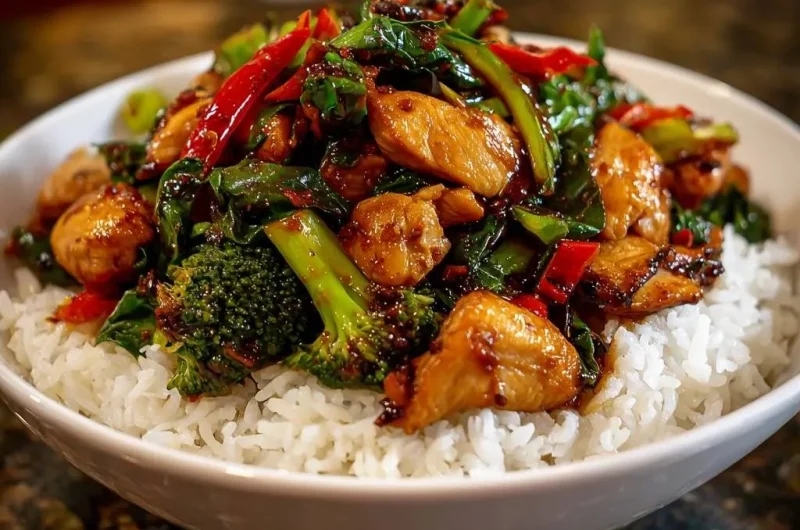
Spicy Garlic Chicken and Broccoli Stir-Fry
Course: Main CourseCuisine: Asian FusionDifficulty: easy4
servings15
minutes10
minutes25
Minutes395
kcalAsian Fusion
Ingredients
1.5 lbs chicken breast, cut into 1-inch bite-sized pieces
2 cups broccoli florets (stems trimmed)
1 large red bell pepper, sliced into thin strips
3 cups fresh bok choy or Chinese broccoli (Gai Lan), roughly chopped
3 tablespoons soy sauce
1 tablespoon oyster sauce
1 tablespoon honey or brown sugar
1 tablespoon cornstarch
1 tablespoon toasted sesame oil
4 cloves garlic, minced
1 tablespoon fresh ginger, minced
1-2 teaspoons red chili flakes (adjust for heat)
2 tablespoons vegetable oil (for frying)
Cooked white jasmine rice for serving
Directions
- Velvet the Chicken: In a medium bowl, whisk together the cornstarch, 1 tablespoon of soy sauce, and the toasted sesame oil. Add the chicken pieces and toss until thoroughly coated. Let sit for at least 10 minutes. This creates the silky texture seen in the image and prevents the meat from becoming rubbery.
- Prepare the Sauce: In a small bowl, whisk together the remaining 2 tablespoons of soy sauce, oyster sauce, honey, minced garlic, ginger, and red chili flakes.
- Sear the Chicken: Heat one tablespoon of vegetable oil in a large wok or heavy skillet over high heat until shimmering. Add the chicken in a single layer. Let it sear undisturbed for 2 minutes to develop a deep golden-brown crust. Toss and cook for another 1-2 minutes until nearly cooked through. Remove chicken from the pan and set aside.
- Stir-Fry Vegetables: Add the remaining tablespoon of oil to the same pan. Add the broccoli and red peppers. Stir-fry for 2-3 minutes, adding a splash of water if the pan looks too dry to steam the broccoli slightly.
- Combine: Add the bok choy (or greens) to the pan and return the chicken and any accumulated juices.
- Glaze: Pour the sauce mixture over the ingredients. Toss constantly for 1 to 2 minutes over high heat. The cornstarch from the chicken marinade will combine with the sauce to create a thick, dark, glossy glaze that clings to the meat and vegetables.
- Serve: Immediately pile the stir-fry over a generous bed of fluffy white jasmine rice, ensuring the dark sauce coats the rice.
Notes
- The secret to this recipe is velveting the chicken with cornstarch and oil to prevent it from becoming rubbery during high-heat cooking.