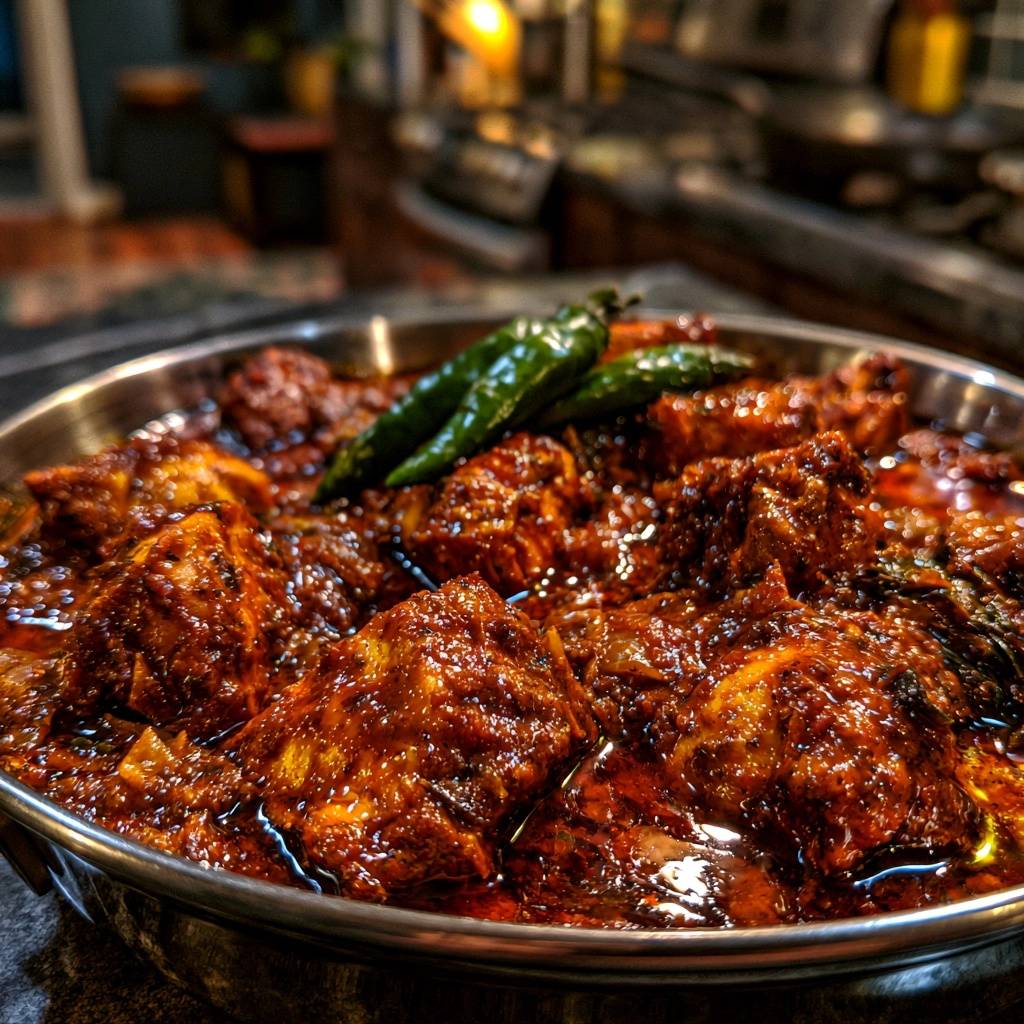
Most home cooks struggle with curries that turn out watery, pale, or frustratingly bland. You follow the steps, yet the chicken tastes like it was simply boiled in a thin tomato soup rather than infused with spice. The Spicy Slow-Simmered Chicken Karahi is the ultimate cure for this “bland chicken” epidemic, offering a deep, restaurant-style richness that coats every fiber of the meat.
The secret lies in the “Roghan,” that beautiful moment when the moisture evaporates and the vibrant, spiced oil separates from the thick masala. This isn’t just a stew; it’s a high-heat transformation that relies on the specific shape of the Karahi vessel to concentrate flavors. When you see that deep red oil pooling at the edges of the pan, you know you’ve achieved a level of savory intensity that most home recipes never reach.
I’ve found that the biggest mistake people make is rushing the onion caramelization or adding water too early. To get that authentic, punchy flavor, you must embrace the “Bhuna” process—frying the spices in fat until they bloom and darken. This technique creates a concentrated flavor profile that penetrates deep into the bone-in chicken chunks, ensuring every bite is an explosion of heat and salt.
The Anatomy of a Perfect Karahi Base
A true Karahi requires a heavy-bottomed vessel, traditionally a wok-like pan with high sides and a thick base. This design is crucial because it allows for even heat distribution and rapid evaporation. If you use a thin pot, your onions will likely scorch before they caramelize, leaving a bitter aftertaste in your gravy.
The base of this dish is built on the slow transformation of raw aromatics into a jammy, concentrated paste. As you sauté the onions and ginger-garlic paste, you’re creating a foundation of natural sweetness. This sweetness is what balances the aggressive heat of the green chilies and the acidity of the fresh tomatoes later in the process.
Selecting the Right Poultry Cuts
Forget the chicken breasts for this recipe; they will dry out and turn stringy during the high-heat searing phase. You want bone-in chicken thighs cut into large, uniform chunks. The bone marrow seeps into the sauce as it simmers, providing a silky, lip-smacking thickness that boneless meat simply can’t replicate.
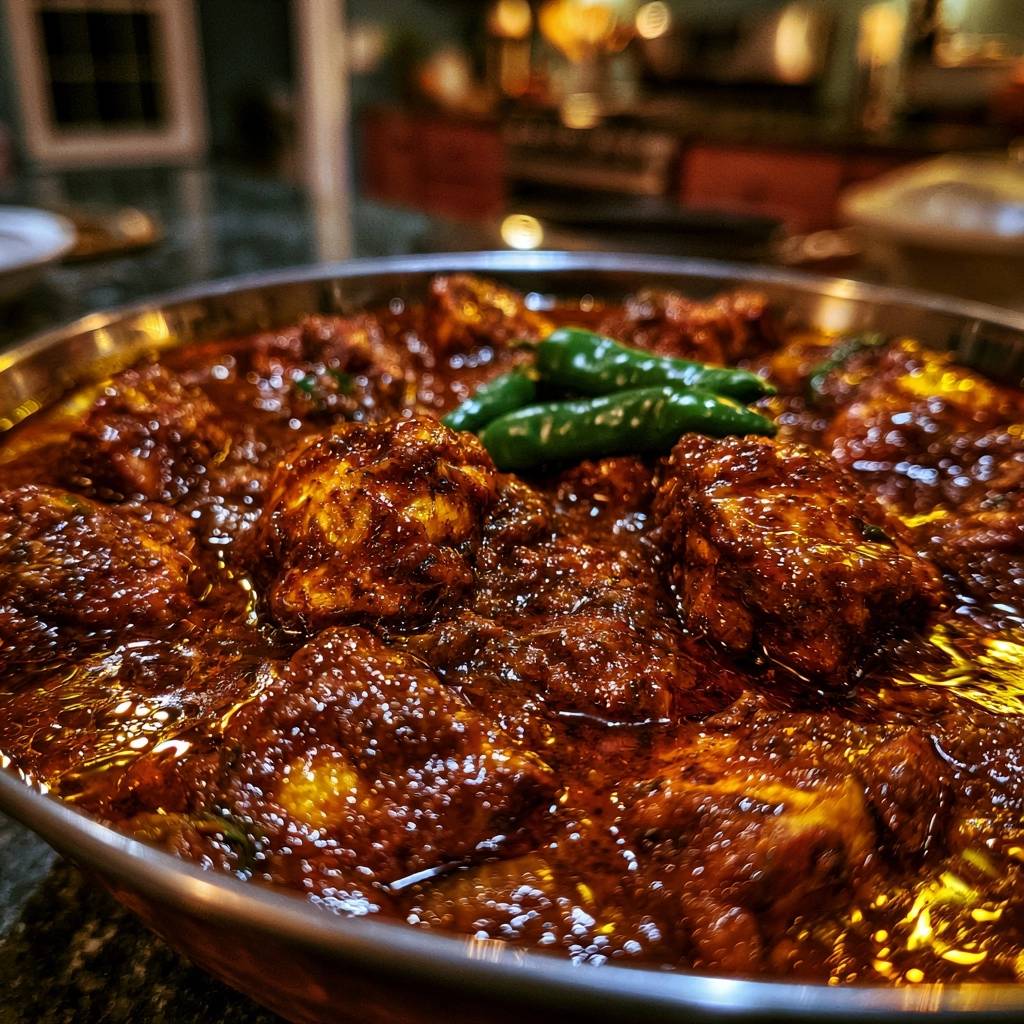
Large chunks are also essential because they withstand the “Bhuna” frying process without falling apart. By the time the sauce has reduced to a thick coating, the dark meat remains juicy and tender. The connective tissue in the thighs breaks down over the 45-minute cook time, adding a rich gelatinous quality to the final masala.
Essential Spices for Deep Red Color
To get that iconic crimson hue without making the dish inedibly spicy, you must use Kashmiri red chili powder. It’s milder than standard cayenne but provides a much more intense pigment. When this powder hits the hot oil, it “blooms,” releasing its color and earthy aroma into the fat.
In addition to the chili, roasted cumin and ground coriander provide the necessary bass notes. Always use fresh ginger-garlic paste rather than the powdered versions. The moisture in the fresh paste helps create a slurry that prevents the dry spices from burning while they fry against the meat.
The Bhuna Technique: Concentrating Intense Flavor
The “Bhuna” technique is the scientific heart of South Asian cooking. It involves frying meat and spices in oil at high temperatures to drive off water. Once the water is gone, the temperature in the pan can rise above 212°F, which triggers the Maillard reaction. This creates complex, savory flavor compounds that you simply cannot get through boiling or poaching.
As you stir the chicken with the spices, you’ll notice the oil starts to look glossy and the masala begins to stick slightly to the pan. This is exactly what you want. By constantly stirring and scraping, you are layering flavor upon flavor. If the mixture looks too dry or starts to smoke, a tiny splash of water will deglaze the pan and keep the spices from turning bitter.
Achieving the Dark Golden Onion Foundation
Patience is your best friend when it comes to onions. Most recipes tell you to cook them until they are translucent, but for a Karahi, that’s a recipe for a pale, sweet sauce. You need to push them past the translucent stage until they are a deep, dark golden brown.
This caramelization provides the “umami” backbone of the dish. You’ll hear the sizzle change from a watery hiss to a crisp crackle as the sugars in the onions break down. This stage takes about 10 to 12 minutes, but it’s the difference between a mediocre meal and a masterpiece.
Searing Meat to Lock in Juices
Once the onions are ready, you’ll crank the heat to high and add the chicken. You aren’t just warming the meat; you are searing it. You want to see a light crust form on the outside of the chicken chunks. This sear acts as a barrier, keeping the juices inside while the exterior absorbs the aromatics.
Stir frequently during this 8-10 minute window. The chicken will release its own moisture at first, making the pan look a bit wet. Keep cooking until that moisture evaporates and you see the oil shimmering again. This ensures the meat is properly “locked” before the tomatoes are added.
Step-by-Step: Executing the Spicy Slow-Simmered Chicken Karahi
Executing this dish is all about watching for sensory cues rather than just watching the clock. You’ll start by heating your oil or ghee until it shimmers. When you drop in the onions, they should sizzle immediately. This initial high heat is what starts the flavor development process.
As the tomatoes break down, the kitchen will fill with a sharp, acidic scent that gradually mellows into a rich, savory aroma. You’ll know the dish is nearing completion when the sound of the simmer changes from a bubbling “glug” to a sharper, frying sizzle. This indicates the water is gone and the oil is taking over the cooking process.
Phase One: The Aromatic Oil Infusion
Start by heating the oil in your heavy-bottomed pan. Add the finely diced onions and stay by the stove. You want to stir them often so the edges don’t burn while the centers stay raw. Once they reach that dark gold color, stir in the ginger-garlic paste and slit green chilies.
The smell will be incredibly pungent and spicy. Sauté this for just two minutes. You’re looking for the raw “bite” of the garlic to disappear, replaced by a mellow, toasted fragrance that signals the base is ready for the meat.
Phase Two: The Spice Bloom and Sear
Add the chicken chunks and turn the heat up. Sear the meat until it loses its pink color and starts to brown. Now, sprinkle in the red chili powder, turmeric, coriander, and cumin. This is the “bloom” phase where the spices tint the oil a deep, fiery orange.
If the spices look like they are clumping or burning, add one tablespoon of water. This creates a small amount of steam that helps the spices coat the chicken evenly without scorching. Keep stirring for three minutes until the spices smell toasted and fragrant.
Phase Three: The Tomato Breakdown and Simmer
Lower the heat to medium and stir in the chopped tomatoes. Don’t use a puree here; the small chunks of tomato provide the essential texture of a traditional Karahi. Cover the pan and let it simmer for 15 minutes.
During this time, the acid in the tomatoes works to tenderize the chicken fibers. When you lift the lid, the tomatoes should have completely collapsed into a thick, chunky sauce. The chicken should be nearly cooked through, bathed in its own juices and tomato liquid.
Phase Four: The Roghan Separation Finish
This is the most critical step. Remove the lid and turn the heat back up to medium-high. You must stir continuously for about 10 minutes to evaporate the remaining water. Watch the edges of the pan closely.
You are waiting for the “Roghan”—the moment the deep red oil separates from the masala and pools at the sides. The sauce will transform from a liquid gravy into a thick, concentrated coating that clings to the chicken. If you stop before this happens, your Karahi will be thin and lack that signature punch.
The Finishing Touch: Aromatics and Resting
Once the oil has separated, it’s time for the aromatics. Crush the dried fenugreek leaves (Kasuri Methi) between your palms before sprinkling them in. This releases their oils and provides a haunting, smoky aroma that defines authentic Karahi. Stir in the garam masala last to preserve its delicate, volatile oils.
Turn off the heat, place the whole green chilies on top, and cover the pan for 5 minutes. This resting period is non-negotiable. It allows the meat to relax and the oil to fully settle on the surface, creating that beautiful visual presentation. The residual heat will soften the whole chilies just enough to release their flavor without adding extra heat.
Troubleshooting Common Karahi Texture Issues
If your Karahi ends up watery, it’s almost always because you didn’t spend enough time on the final reduction step. Don’t be afraid of the high heat at the end; as long as you are stirring, the chicken won’t burn. Keep going until the sauce is thick enough to leave a trail when you pull a spoon through it.
Tough chicken is usually the result of rushing the 15-minute simmer. If the heat is too high while the lid is on, the meat will seize up. Keep it at a gentle bubble. Conversely, a bitter aftertaste usually means the garlic or the dry spices were scorched during the “Bhuna” phase. Always have that tablespoon of water ready to cool the pan down if things get too intense.
Optimal Pairings for Spicy Chicken Masala
This is a heavy, intense dish, so you need the right sides to balance it out. Garlic naan or tandoori roti are the traditional choices because their charred, chewy texture is perfect for scooping up the thick masala. The bread acts as a neutral vessel for the spicy, oily sauce.
To cut through the richness, serve a cooling yogurt Raita with cucumber and mint. A crisp Kachumber salad—made of diced onions, tomatoes, and cucumbers with a squeeze of lime—provides a fresh, crunchy contrast. These cold, acidic sides reset your palate between every spicy, savory bite of the chicken.
Expert Tips for Advanced Flavor Profiles
How should I store and reheat leftovers?
Store leftovers in an airtight container in the refrigerator for up to 3 days. This dish actually tastes better the next day because the spices have more time to penetrate the meat. When reheating, do it on the stovetop over low heat with a tiny splash of water to loosen the sauce. Avoid the microwave if possible, as it can make the chicken rubbery.
Why is my chicken dry even though it’s in sauce?
This usually happens if you use chicken breast or if you boiled the meat on high heat for too long. Stick to bone-in thighs and ensure the 15-minute simmer is done on low-medium heat. The “Bhuna” frying at the end should be relatively quick—just long enough to reduce the sauce, not to overcook the meat fibers.
Can I use canned tomatoes instead of fresh?
You can, but fresh tomatoes are highly recommended for the correct texture. Canned tomatoes are often too acidic and processed into a smooth puree, which results in a different mouthfeel. If you must use canned, choose diced tomatoes and drain some of the juice first to avoid making the curry too watery.
How do I make it less spicy without losing the flavor?
The best way to control heat is to remove the seeds and ribs from the green chilies before adding them. You can also reduce the Kashmiri chili powder by half, but don’t skip it entirely, or you’ll lose that beautiful red color. Adding a dollop of Greek yogurt at the very end of the simmering stage can also mellow out the heat while adding creaminess.
Can I make this in a slow cooker?
It is difficult to get an authentic Karahi result in a slow cooker because the “Bhuna” technique requires high heat and evaporation. A slow cooker traps moisture, which leads to the “boiled meat” taste we are trying to avoid. If you must use one, sear the meat and onions in a pan first, then use very little liquid in the slow cooker, and finish it in a pan on high heat to reduce the sauce.
Spicy Slow-Simmered Chicken Karahi
Course: Main CourseCuisine: South AsianDifficulty: easy4
servings15
minutes45
minutes60
Minutes410
kcalSouth Asian
Ingredients
2 lbs chicken thighs, cut into large, bone-in chunks (for maximum flavor)
1/2 cup vegetable oil or ghee (essential for the “oil separation” visual)
2 large onions, finely diced
4 large tomatoes, finely chopped (not pureed, to maintain texture)
2 tablespoons ginger-garlic paste
4-6 green chilies (3 slit lengthwise, 2 left whole for garnish)
1.5 tablespoons Kashmiri red chili powder (for that deep red color without excessive heat)
1 teaspoon turmeric
1 tablespoon ground coriander
1 teaspoon roasted cumin powder
1 teaspoon garam masala
1 tablespoon dried fenugreek leaves (Kasuri Methi), crushed
Salt to taste
Fresh ginger julienne and cilantro for garnish
Directions
- Heat the oil in a heavy-bottomed karahi or wok over medium-high heat. Add the onions and sauté until they are a deep, dark golden brown. Do not rush this; the caramelized onions provide the base color.
- Add the ginger-garlic paste and the slit green chilies. Sauté for 2 minutes until fragrant.
- Add the chicken pieces. Increase the heat to high and sear the meat for 8-10 minutes, stirring frequently, until the chicken is browned on all sides and the moisture released by the meat has evaporated.
- Lower the heat to medium and add the chili powder, turmeric, coriander, cumin, and salt. Stir-fry (Bhuna) the spices with the meat for 3 minutes. If the spices begin to smoke, add a tablespoon of water.
- Add the chopped tomatoes. Cover and simmer on low-medium heat for 15 minutes. The tomatoes will break down and release their juices.
- The “Flavor Lock” Step: Remove the lid and turn the heat to medium-high. Stir continuously for 10 minutes. You are looking for the “Roghan”-the moment the moisture is gone and the deep red oil separates from the thick, masala-coated chicken.
- Sprinkle in the garam masala and the crushed Kasuri Methi. Stir well to incorporate the smoky aroma of the fenugreek.
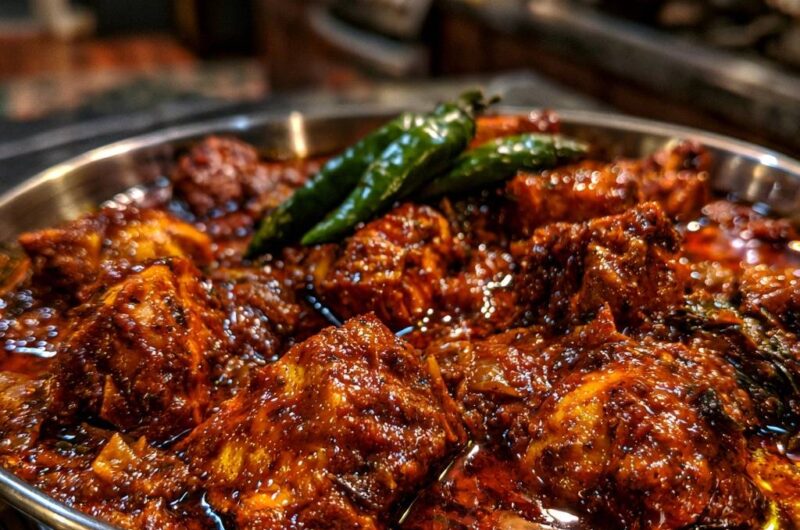
- Place the whole green chilies on top and let the dish rest, covered, for 5 minutes off the heat. This allows the oil to pool at the edges as seen in the image.
- Garnish with fresh cilantro and ginger julienne. Serve hot with garlic naan or tandoori roti.
Notes
- The secret to this dish is the Bhuna technique; ensure the oil separates from the gravy to achieve the authentic restaurant-style richness and color.