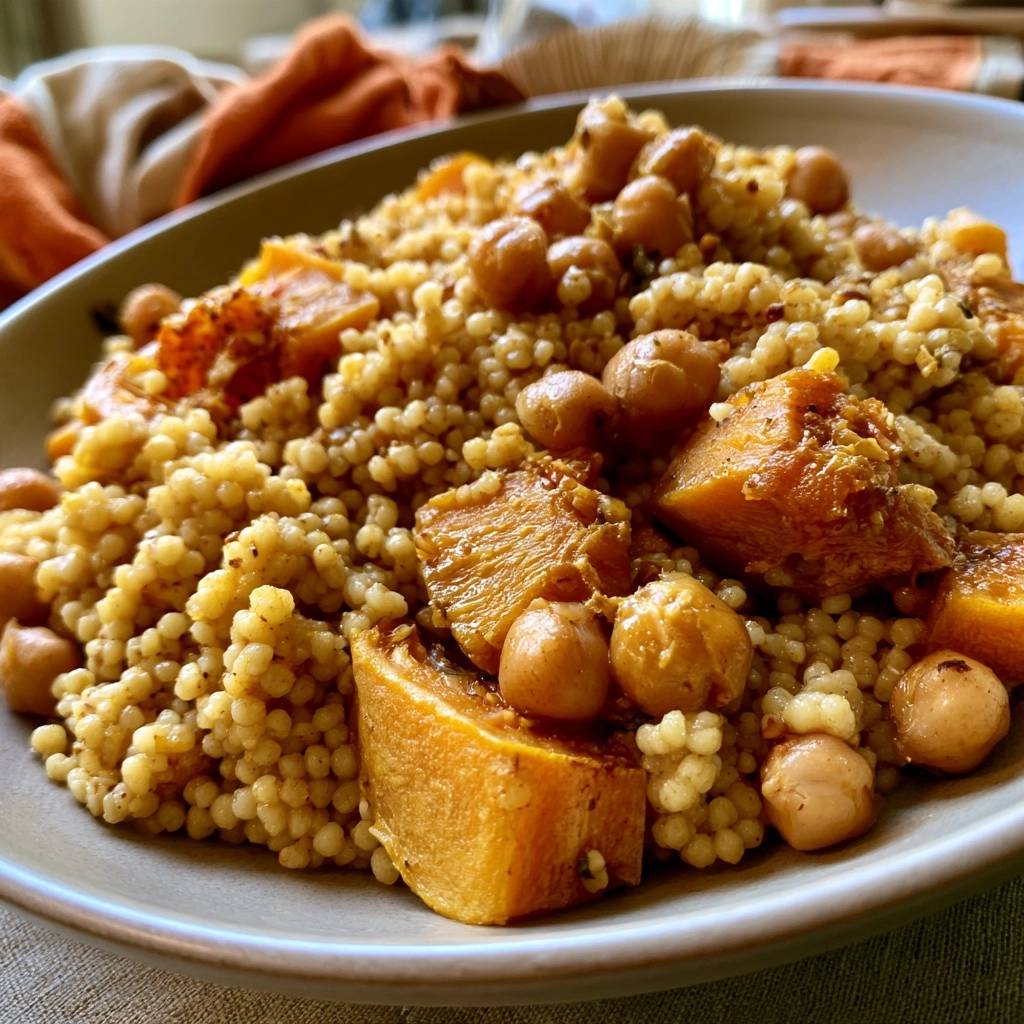
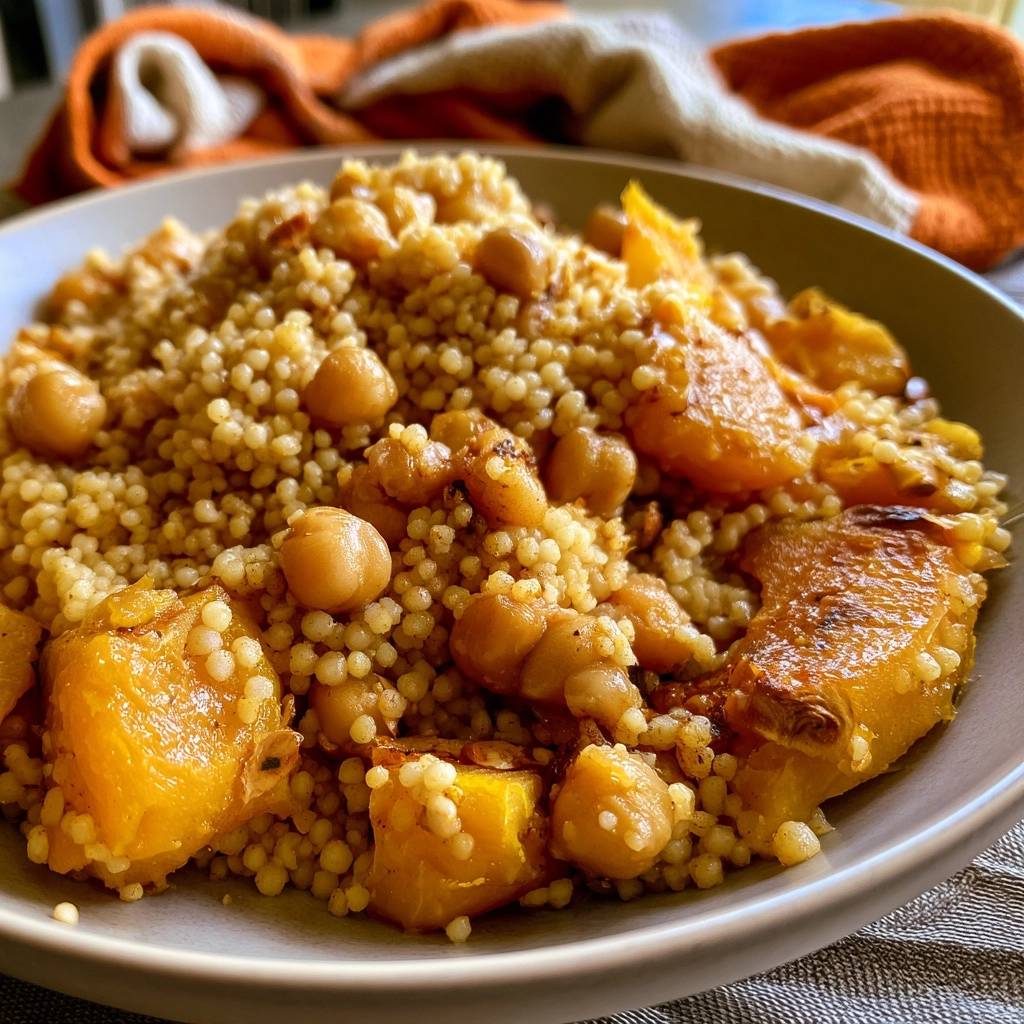
This Moroccan Chickpea and Pumpkin Couscous brings together tender pearl couscous, chickpeas, and warmly spiced roasted pumpkin. Lemon juice and fresh parsley brighten the finished dish, making it a hearty meatless main course with a mix of soft, chewy, and lightly browned textures.
The recipe has two parts that come together at the end: pumpkin roasts while the couscous simmers with chickpeas and spices. That gives each ingredient a chance to develop its own texture before you fold everything together.
Why pearl couscous matters
Pearl couscous is larger and chewier than traditional Moroccan couscous. That substantial texture suits the chickpeas and pumpkin, while the couscous absorbs some of the seasoned vegetable broth as it simmers. Use pearl couscous for the texture this recipe is designed around.
Package directions can vary, so check them if the suggested simmer time differs from the recipe card. Keep an eye on the pan as the couscous cooks: it should become tender while most of the broth is absorbed. If you use a different type of couscous, the texture and cooking method may not match the intended result.
Roast the pumpkin until tender and browned
Cut the peeled, seeded pumpkin into even cubes so the pieces roast at a similar rate. Tossing them with olive oil and salt helps season the pumpkin and encourages browned edges. Spread the cubes across a parchment-lined baking sheet rather than crowding them, and turn them once during roasting.
Check for tenderness as well as color. The pumpkin should be soft enough to fold into the couscous without crumbling away, with some browning around the edges. Letting it roast undisturbed between turns helps it brown; frequent stirring can interrupt that contact with the pan.
Build flavor in the saucepan
Cook the diced onion in the remaining olive oil until softened before adding the garlic and spices. Cumin, coriander, paprika, turmeric, and cinnamon give the dish its warm, savory character. Stir the spices with the garlic until fragrant, then toast the pearl couscous briefly in that mixture so it picks up the seasoning.
Add the chickpeas, vegetable broth, and remaining salt, then bring the mixture to a boil before covering and lowering the heat. A gentle simmer helps the couscous cook evenly as it absorbs the broth. Keep the lid on while it simmers, and rely on the couscous’s tenderness and the amount of broth remaining as your cues rather than forcing a different texture.
Finish with lemon and parsley
Fold the roasted pumpkin into the cooked couscous and chickpeas gently. This keeps the tender cubes more intact and distributes them through the dish. Stir in the lemon juice and chopped fresh parsley at the end: their fresh, bright flavors balance the earthy spices and make each bite feel lively.
Taste the mixture once everything is combined. The recipe’s salt is divided between the pumpkin and the couscous, so both parts contribute seasoning. A final gentle fold is enough to bring the components together without mashing the pumpkin.
Frequently Asked Questions
Can I use regular Moroccan couscous instead of pearl couscous?
Pearl couscous is the intended choice because its larger, chewier texture complements the chickpeas and pumpkin. Traditional Moroccan couscous cooks differently, so the simmering method and finished texture may not match. Follow the package directions if you are using a couscous with a different cooking method.
How can I tell when the pumpkin is ready?
Look for cubes that are tender when pierced and browned at the edges. They should hold their shape well enough to fold into the couscous. Turning the pumpkin once during roasting helps it brown more evenly without breaking it up through frequent handling.
Why does the recipe add lemon juice and parsley at the end?
They bring fresh, bright flavor to balance the warm spices and savory broth. Folding them in after the couscous has simmered also keeps the parsley fresh tasting and lets you combine the finished components gently, without overworking the roasted pumpkin.
Moroccan Chickpea and Pumpkin Couscous
Course: Main CourseCuisine: MoroccanDifficulty: Easy4
servings15
minutes45
minutes400
kcal1
hourPearl couscous and chickpeas simmer with warm Moroccan spices, then get folded together with roasted pumpkin, lemon, and parsley. It makes a hearty meatless main course.
Ingredients
1 1/2 lb fresh pumpkin, peeled, seeded, and cut into 1-inch cubes
2 tbsp olive oil, divided
3/4 tsp kosher salt, divided
1 small yellow onion, diced
2 garlic cloves, minced
1 tsp ground cumin
1 tsp ground coriander
1/2 tsp paprika
1/4 tsp ground turmeric
1/8 tsp ground cinnamon
1 1/2 cups pearl couscous
1 15-oz can chickpeas, rinsed and drained
2 cups low-sodium vegetable broth
1 tbsp lemon juice
2 tbsp chopped fresh parsley
Directions
- Heat the oven to 425°F. Toss the pumpkin with 1 tablespoon olive oil and 1/2 teaspoon salt. Spread it on a parchment-lined baking sheet and roast for 25 minutes, turning once halfway through, until tender and browned at the edges.
- Heat the remaining 1 tablespoon olive oil in a saucepan or Dutch oven over medium heat. Add the onion and cook for 4 minutes, stirring, until softened.
- Add the garlic, cumin, coriander, paprika, turmeric, and cinnamon. Cook for 1 minute, stirring, until fragrant.
- Stir in the pearl couscous and toast for 2 minutes. Add the chickpeas, broth, and remaining 1/4 teaspoon salt. Bring to a boil over medium-high heat, about 3 minutes.
- Cover, reduce the heat to low, and simmer for 10 minutes, until the couscous is tender and most of the broth is absorbed. Fold in the roasted pumpkin, lemon juice, and parsley, then serve.
Notes
- Pearl couscous is larger than traditional Moroccan couscous, so use the pearl variety for the texture shown and follow its package directions if its simmer time differs.