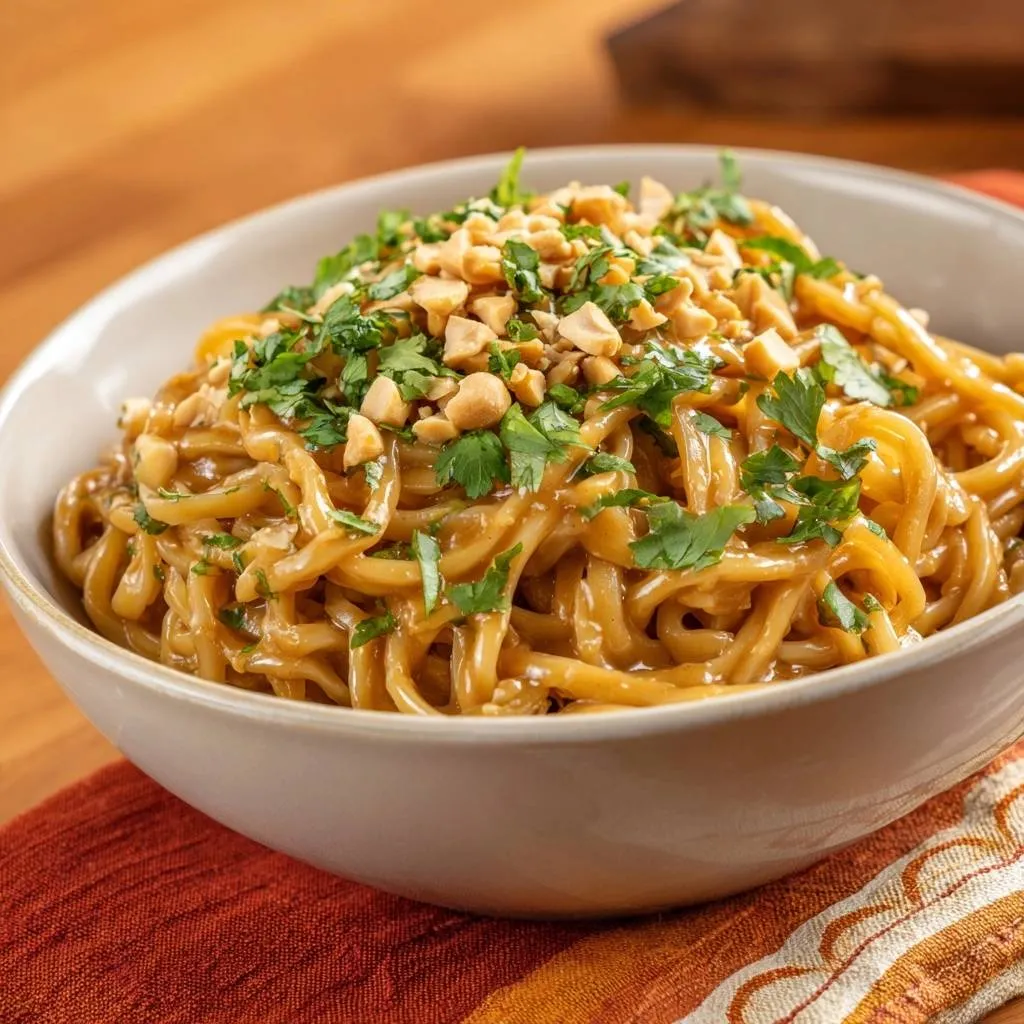
Nothing ruins peanut noodles faster than that gummy, falling-apart mess. You’ve been there, right? Takeout that starts firm but turns to mush after one stir. This peanut noodles recipe fixes it all in 15 minutes flat.
Here’s why it works. You cook to al dente and skip the rinse, keeping starches that make the sauce cling like magic. Then, reserved hot noodle water emulsifies the peanut butter into pure silkiness. No more clumps or separation.
The real secret? That starchy water hits the sauce hot and vigorous whisking creates an instant emulsion. You’ll see the peanut butter transform from thick paste to glossy coating that hugs every noodle strand perfectly. Firm texture, every bite.
Why Peanut Noodles Fail
Gummy Texture Traps
Overcooking releases too much starch from the noodles. It turns them mushy and sticky. However, al dente cooking stops that early, around 10-11 minutes.
Rinsing strips away the natural starches too. Those starches help sauce stick. Therefore, drain but never rinse for peanut noodles that hold firm.
This recipe contrasts perfectly. You’ll get chewy strands that stay separate under creamy sauce. No gumminess in sight.
Sauce Separation Issues
Cold peanut butter clumps when you mix in liquids directly. It separates like oil and vinegar. In addition, without an emulsifier, lumps form fast.
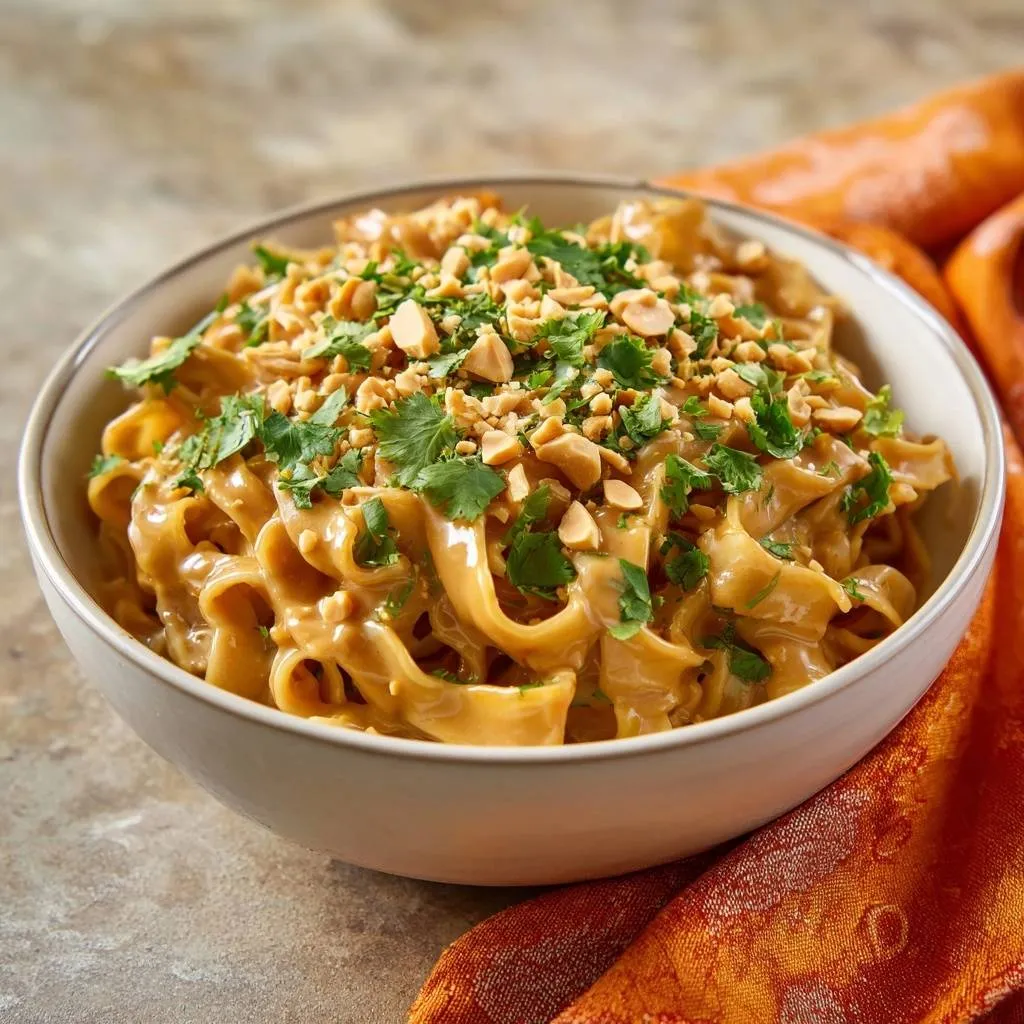
Hot starchy noodle water changes everything. It breaks down the fats instantly for silkiness. Whisk vigorously, and you lock in that glossy coat.
Most recipes skip this step. That’s why your peanut noodles sauce pools at the bottom. Not here, though.
Core Ingredients for Peanut Noodles
Choosing Noodles: Spaghetti vs Linguine
Spaghetti or linguine works best for peanut noodles. Their long strands trap sauce perfectly. Spaghetti’s round shape gives even cling, while linguine adds a flat chew.
Always check package for al dente time. Cook exactly that to avoid mush. For gluten-free, swap rice noodles, but boil one minute less since they soften quicker.
Peanut Butter and Emulsifiers
Grab creamy peanut butter for smooth sauce. Crunchy adds texture but can make lumps. Use 1/2 cup, then balance with 3 tablespoons soy sauce for saltiness.
Rice vinegar, 2 tablespoons, cuts richness with tang. Honey, 1 tablespoon, rounds it sweet. These ratios prevent overly salty or sour peanut noodles.
Skip natural peanut butter if you can. It lacks stabilizers and separates easier. Regular brands emulsify like a dream.
Aromatics: Garlic and Ginger Power
Mince 2 cloves garlic fresh. It releases punchy flavor without raw bite. Grate 1 teaspoon ginger too, for zing that elevates basic peanut noodles.
Fresh beats jarred every time. You’ll smell the sharp aroma hit as you whisk. It turns good sauce into restaurant-level stuff.
Garnish Impact: Peanuts and Cilantro
Chop 1/4 cup peanuts for crunch. They contrast the creamy peanut noodles beautifully. Fresh cilantro, same amount, adds bright, herby lift.
Buy peanuts raw or roasted, but chop fine. Cilantro stays vibrant if you add right before serving. Perfect finish.
Science of Starchy Water Emulsification
Starch Role in Sauce Cling
Noodle water carries amylose starch. When hot, it binds fats from peanut butter to watery soy and vinegar. This creates a stable emulsion.
Picture glossy sauce coating strands evenly. Without it, fats separate and lumps form. Heat plus starch equals that perfect cling on peanut noodles.
It’s simple chemistry. Starch gelatinizes lightly, trapping everything. You’ll see the transformation as you whisk, no more oily pools.
Al Dente Timing Precision
Aim for 10-11 minutes in boiling water. That’s the sweet spot before full gelatinization mushes them. Test by biting one, firm center with soft outside.
Shock in cold water? Never, it rinses starch. Instead, taste every minute after 9. Perfect for firm peanut noodles.
Step-by-Step Peanut Noodles Assembly
Boil for Al Dente Perfection
Bring a large pot of salted water to boil. Use 1 tablespoon salt per quart. It seasons noodles inside out for better flavor.
Cook 8 ounces spaghetti 10-11 minutes for al dente. Watch for that slight resistance when bitten. Drain right at perfect.
Reserve and Drain Strategically
Before draining, scoop 1/2 cup starchy water. Save it warm. Drain noodles fast, no rinse to keep starches intact.
Those starches make sauce adhere. Rinsing kills cling power. Simple step, huge payoff.
Whisk Silky Peanut Sauce Base
In a large bowl, start with 1/2 cup peanut butter. Add 3 tablespoons soy sauce, 2 tablespoons rice vinegar, 1 tablespoon honey, minced garlic, grated ginger.
Whisk smooth first. Then pour in 1/4 cup hot reserved water gradually. Vigorous whisking emulsifies instantly, silky and lump-free.
Too thick? Add water 1 tablespoon at a time. It should coat a spoon thickly but pour easily.
Toss Hot for Ultimate Cling
Add hot drained noodles to sauce. Use tongs to toss 1-2 minutes. Residual heat seals the cling perfectly.
Fork pokes holes, tongs grip strands. Toss right away or sauce sits uneven. Firm, saucy perfection.
Portion and Garnish Warm
Divide into bowls immediately. Scatter chopped peanuts and cilantro on top. Serve warm for best texture contrast.
Heat wilts cilantro if waited. Crunch hits creamy peanut noodles just right.
Avoiding Peanut Noodles Pitfalls
Overcook Prevention Tactics
Set a timer for 10 minutes, check early. At high altitude, boil longer by 1 minute. Fresh pasta cooks faster, watch closely.
Overboiled by accident? Chill in ice water briefly, but sauce immediately to revive. Prevention beats fixes every time.
Sauce Too Thick Fixes
Room-temp peanut butter thickens sauce. Always add starchy water hot and slow. If still thick, whisk in more 1 tablespoon at a time.
Separated? Reheat gently with splash of water. Whisk hard, it comes back glossy.
No-Clump Whisking Techniques
Use a wire whisk, not spoon. It aerates better. Warm bowl helps too, cold ones seize peanut butter.
For big batches, blender pulses smooth. But whisk works fine for this amount.
Flavor Variations for Peanut Noodles
Spicy Sriracha Kick
Stir 1-2 teaspoons sriracha into sauce base. It adds heat around 2,000 Scovilles. Balance with extra 1/2 tablespoon honey.
Timing matters, add before water. Fiery but not overwhelming.
Sesame or Lime Twists
Swap 1 teaspoon toasted sesame oil for some soy. It deepens nuttiness. Use lime juice instead of rice vinegar for brighter tang.
Shred carrots or cukes on top. They crunch against creamy peanut noodles without sogginess.
Protein Boost Options
Cube firm tofu, pan-fry crisp first. Toss in at end to warm. Shrimp or chicken, marinate in soy-ginger 10 minutes, then stir-fry separate.
Don’t boil proteins with noodles. They’ll stay firm, sauce clings perfect.
Pairing Sides with Peanut Noodles
Cool Cucumber Salad
Slice cukes thin, toss with rice vinegar, pinch salt, chili flakes. Chill 10 minutes. Crisp coolness cuts peanut noodles richness.
Texture contrast shines. Ready in minutes.
Fresh Spring Rolls
Fill rice papers with lettuce, carrots, mint. Roll tight. Dip in extra peanut sauce from this recipe.
Quick assembly, perfect synergy with peanut noodles.
Make-Ahead Peanut Noodles Guide
Sauce Prep Storage
Whisk sauce without water, store airtight in fridge up to 3 days. Reheat with starchy water splash. Freezes 1 month, thaw overnight.
Stir well before tossing. Fresh taste every time.
Noodle Prep Without Gumming
Cook al dente, drain, toss lightly with sesame oil. Airtight container in fridge 1 day. Reheat by tossing in hot sauce.
Oil prevents sticking. Revives firm texture fast.
Peanut Noodles FAQ
Can I Use Any Noodle Type?
Spaghetti ranks best for cling, linguine close. Soba needs less cook time, rice noodles boil 6-7 minutes with extra sauce water. All work, but long strands shine.
How to Fix Gummy Peanut Noodles?
Chill overcooked noodles 30 minutes to firm, then toss in reinforced sauce with extra water. Prevention’s key: al dente and no rinse. If bad, start fresh next time.
Gluten-Free Peanut Noodles Work?
Yes, rice or brown rice noodles hold up. Swap soy for tamari. Texture stays firm with starchy water tweak, slightly more reserved.
Batch Double Peanut Noodles?
Double everything, reserve 1 cup water. Use bigger bowl for whisking. Yields 4 servings, sauce scales perfect.
Storage Time for Peanut Noodles?
Fridge airtight 3 days. Reheat stovetop with water splash, stir hot. Freeze sauced 1 month, thaw fridge, re-emulsify. Noodles best fresh, sauce freezes solo better.
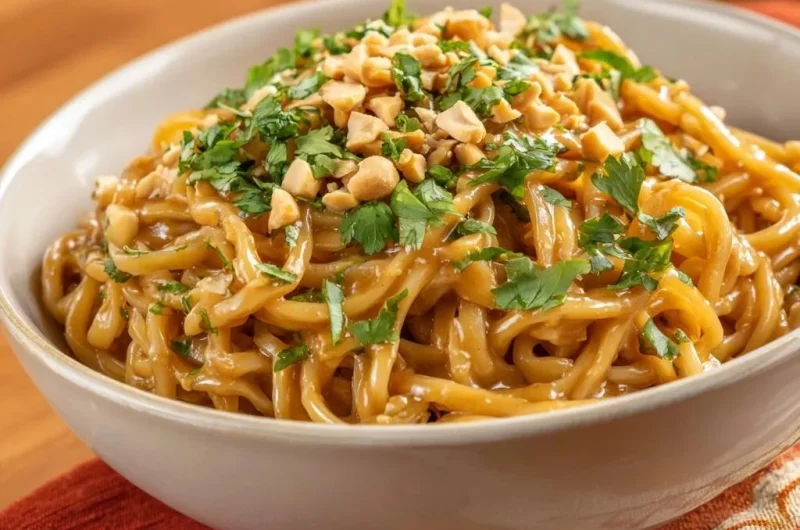
Peanut Noodles
Course: Main CourseCuisine: Asian FusionDifficulty: easy2
servings10
minutes11
minutes21
Minutes550
kcalAsian Fusion
Ingredients
8 ounces spaghetti or linguine
1/2 cup creamy peanut butter
3 tablespoons soy sauce
2 tablespoons rice vinegar
1 tablespoon honey
2 cloves garlic, minced
1 teaspoon grated fresh ginger
1/4 cup reserved noodle cooking water (plus more if needed)
1/4 cup chopped peanuts, for garnish
1/4 cup fresh cilantro leaves, chopped, for garnish
Directions
- Bring a large pot of salted water to a boil. Cook spaghetti according to package directions for al dente, about 10-11 minutes. This shorter cook time prevents gumminess by stopping starch release early.
- Before draining, reserve 1/2 cup of the starchy cooking water. Drain noodles immediately, but do not rinse, to keep natural starches that help sauce cling.
- In a large bowl, whisk together peanut butter, soy sauce, rice vinegar, honey, garlic, and ginger until smooth. Gradually add 1/4 cup reserved noodle water, whisking vigorously. The hot starchy water emulsifies the peanut butter instantly, creating a silky sauce that coats without lumps or separation. Add more water 1 tablespoon at a time if too thick.
- Add hot drained noodles to the sauce bowl. Toss immediately with tongs for 1-2 minutes. The residual heat and starch make sauce cling perfectly to each strand, guaranteeing no gummy texture.
- Divide into bowls. Top with chopped peanuts and cilantro. Serve warm. The noodle water trick delivers firm, sauce-soaked perfection every time.
Notes
- Cook noodles al dente to prevent gumminess. Reserved starchy water is key for silky sauce that clings without lumps. Do not rinse noodles to retain starches.