
Why Pre-Roast Peppers First
Stuffed peppers turn soggy every time, right? Watery peppers drown out your rice and protein, leaving a mushy mess. But here’s the fix: a quick 15-minute pre-roast at 400 degrees F evaporates that excess moisture first. You get crispy edges, fluffy rice, and flavors that pop.
Therefore, this sesame glazed salmon stuffed peppers recipe changes everything. Pre-roasting breaks down the pepper’s cell walls, releasing steam without turning the whole dish into soup. In addition, yellow peppers bring sweetness that pairs perfectly with the nutty glaze.
The secret? Roast them cut-side down on parchment. That simple step sets up the Maillard reaction later for caramelized perfection. Oh man, the first bite delivers flaky salmon, crunchy sesame seeds, and charred glaze that melts in your mouth.
Science of Moisture Evaporation
Peppers hold 92% water, so stuffing them raw traps steam inside. However, roasting at 400 degrees F ruptures those cells, letting moisture escape as vapor. You avoid the soggy pitfall completely.
In addition, this pre-roast concentrates natural sugars. It preps the peppers for better glaze adhesion too. Contrast that with raw stuffing, and you see why most recipes fail.
Choosing Yellow Bell Peppers
Pick yellow bell peppers for their sweet, fruity taste without green’s bitterness. They offer vibrant color that shines against the sesame glaze. Look for firm, glossy skins and stems that snap off easily.
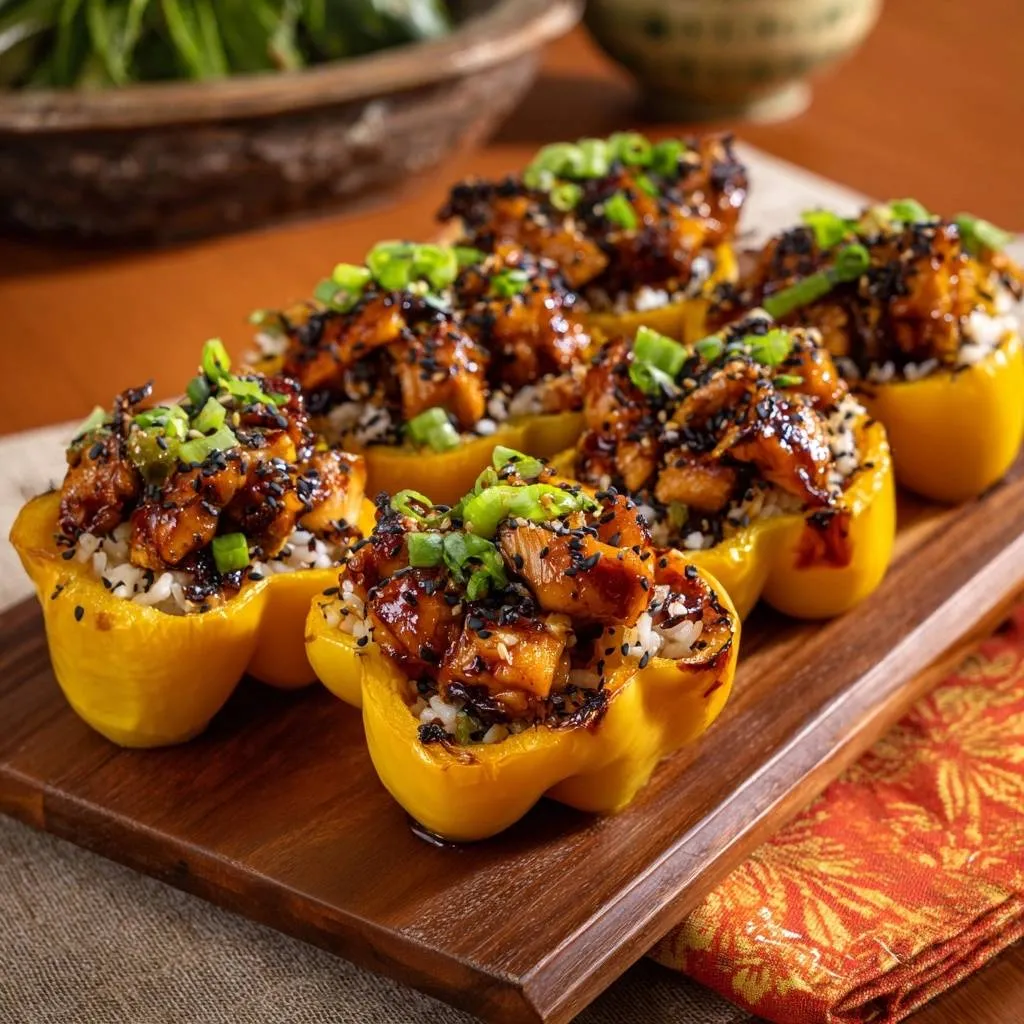
Store them in the fridge’s crisper drawer for up to a week. Therefore, they’re perfect for weeknight meals. Antioxidants and vitamin C make them a healthy choice alongside salmon’s omega-3s.
Key Ingredients for Sesame Glaze
You’ll need 4 large yellow bell peppers, 1 pound salmon fillet cut into 1-inch chunks, 1 1/2 cups cooked white rice, 1/4 cup low-sodium soy sauce, 2 tablespoons honey, 1 tablespoon sesame oil, 2 teaspoons minced garlic, 2 teaspoons grated fresh ginger, 3 tablespoons sesame seeds divided, and 1/4 cup chopped scallions plus extra for garnish.
Low-sodium soy sauce prevents overseasoning while delivering umami. Honey caramelizes without burning, thanks to its sugars. Sesame oil adds nutty depth that bottled versions can’t match.
Fresh garlic and ginger pack more punch than jarred; grate them fine for even distribution. Use day-old rice for fluffiness, and opt for wild salmon if possible for richer flavor and better fats.
Soy Sauce and Honey Balance
Soy’s glutamates boost salmon’s savoriness, while honey tempers saltiness with sweetness. The 1/4 cup soy to 2 tablespoons honey ratio keeps it balanced for home cooks. Therefore, it clings perfectly without overpowering.
Sesame Seeds Texture Boost
Toast 1 tablespoon sesame seeds lightly for extra crunch, then use raw ones on top for visual pop. Divide the 3 tablespoons: some in rice, rest as topping. They add irresistible texture to caramelized edges.
Prepping Peppers and Salmon Chunks
Preheat oven to 400 degrees F. Slice tops off peppers and scrape out seeds and membranes with a spoon. Place cut-side down on parchment-lined sheet; roast 15 minutes until softened and moisture releases.
Flip upright and reduce oven to 375 degrees F. Meanwhile, cut salmon into 1-inch chunks, discarding skin if attached. Parchment prevents sticking and makes cleanup easy.
Pro tip: Pat salmon dry before glazing. That helps the sauce adhere and promotes even cooking.
Perfect Salmon Chunk Size
1-inch chunks cook quickly and evenly in 20 minutes. They flake perfectly and soak up glaze without drying out. Go skinless for easier eating, but skin-on adds crispiness if you like.
Glaze Mixing and Rice Stuffing Method
Whisk soy sauce, honey, sesame oil, garlic, and ginger in a bowl until emulsified. Toss salmon in half the glaze. Mix rice with 2 tablespoons sesame seeds, scallions, and remaining glaze.
Stuff peppers loosely with rice mixture so steam circulates. Nestle salmon chunks into the rice. Drizzle extra glaze over tops and sprinkle remaining seeds.
Pack loosely to avoid mush; you’ll see juices bubble up nicely during baking.
Rice Fluffiness Without Mush
Day-old cooked white rice stays fluffy and absorbs glaze without clumping. Chop scallions fine and fold them in evenly for fresh bursts in every bite. Cooling prevents gumminess.
Baking for Caramelized Edges
Bake stuffed peppers at 375 degrees F for 20 minutes on the middle rack. Salmon flakes easily with a fork, and glaze bubbles with char marks. Position for good airflow to crisp edges.
Garnish with extra scallions right after baking. Let rest 5 minutes so juices settle. The aroma alone will have everyone at the table.
Pro tip: Broil 1-2 minutes at the end for extra char, but watch closely to avoid burning.
Glaze Caramelization Process
At 375 degrees F, honey sugars trigger Maillard reaction with soy proteins for crispy, golden tops. Middle rack ensures even heat without drying salmon. You get char, not burnt bits.
Avoiding Soggy Peppers Pitfalls
Skipping pre-roast leads to waterlogged peppers; always do that first step. Don’t overstuff, or steam gets trapped. Use low-moisture rice to keep filling intact.
If salmon seems watery, pat it dry beforehand. For bland glaze, taste and adjust ginger. Check doneness by flaking salmon gently.
Common Oven Temperature Errors
400 degrees F pre-roast evaporates moisture fast, but drop to 375 for baking to keep salmon moist. Too hot toughens fish; too low steams everything soggy. Use an oven thermometer for accuracy.
Sesame Glazed Salmon Stuffed Peppers Pairings
Pair with crisp cucumber salad for cool crunch against rich glaze. Steamed bok choy adds earthiness, or try quinoa pilaf for extra protein. Green tea cuts through the savoriness nicely.
These work great for meal prep; portion into containers for lunches. The flavors hold up over days.
Quick Asian-Inspired Sides
Toss broccoli with miso paste, roast at 400 degrees F for 15 minutes. Or boil edamame, sprinkle sea salt and sesame seeds. Both echo the soy-sesame harmony without overpowering.
Flavor Variations for Stuffed Peppers
Swap white rice for brown to add fiber, or quinoa for gluten-free chew. Add sriracha to glaze for heat, or mix in shredded carrots and mushrooms for veggies. Scale up by using 6 peppers for crowds.
For two servings, halve everything and use smaller peppers. Halve for smaller batches too.
Gluten-Free Adaptations
Use tamari instead of soy sauce; it swaps 1:1. Sub cauliflower rice for white rice to cut carbs while keeping texture. Nutrition stays high in omega-3s and vitamins.
Make-Ahead Stuffed Peppers Guide
Assemble fully, cover, and refrigerate up to 2 days. Or freeze unbaked for 1 month. Bake from chilled, adding 5-10 minutes.
Pro tip: Label freezer bags with dates. Thaw overnight for best results.
Freezing Without Texture Loss
Par-bake peppers 10 minutes before freezing to set structure. Thaw in fridge overnight, then bake fully. Portion one per bag to avoid refreezing.
Sesame Glazed Salmon Nutrition Breakdown
Per serving: about 400 calories, 25g protein from salmon, high omega-3s for heart health. Yellow peppers pack vitamin C and antioxidants. Ginger fights inflammation.
Tweak macros by using less rice or adding more veggies. It’s balanced, satisfying, and nutrient-dense.
Troubleshooting Sesame Glazed Salmon Stuffed Peppers
How do I store leftovers?
Store in an airtight container in the fridge for up to 3 days. Reheat in a 350 degrees F oven for 10-15 minutes to crisp edges; microwave makes them soggy. They don’t freeze well due to rice texture changes, but salmon holds up if eaten soon.
Why is my salmon tough?
Overbaking dries it out; stick to 20 minutes and check with a fork for flakiness. Cut chunks precisely 1-inch for even cooking. If your oven runs hot, reduce to 18 minutes.
Can I substitute the soy sauce?
Yes, use tamari for gluten-free or coconut aminos for lower sodium. Keep the 1/4 cup amount; taste glaze before stuffing and adjust honey if needed for balance.
Why aren’t my peppers crispy?
You skipped the pre-roast; always do 15 minutes cut-side down first. Also, avoid overcrowding the sheet for airflow. Pat excess moisture from peppers after roasting.
Glaze not sticking to salmon?
Pat salmon dry before tossing; moisture repels glaze. Whisk vigorously for emulsion, and use room-temp ingredients. Extra drizzle after stuffing helps too.
How do I scale for more servings?
Double ingredients for 8 peppers; use two sheets if needed for airflow. Bake time stays the same, but rotate pans halfway. Taste glaze and add 1 teaspoon ginger for larger batches.

Sesame Glazed Salmon Stuffed Peppers
Course: Main CourseCuisine: Asian FusionDifficulty: easy4
servings20
minutes35
minutes55
Minutes450
kcalAsian Fusion
Ingredients
4 large yellow bell peppers
1 pound salmon fillet, cut into 1-inch chunks
1 1/2 cups cooked white rice
1/4 cup low-sodium soy sauce
2 tablespoons honey
1 tablespoon sesame oil
2 teaspoons minced garlic
2 teaspoons grated fresh ginger
3 tablespoons sesame seeds, divided
1/4 cup chopped scallions, plus extra for garnish
Directions
- Preheat oven to 400 degrees F. Slice tops off peppers and remove seeds and membranes. Place peppers cut-side down on a parchment-lined baking sheet. Roast for 15 minutes to release natural moisture and prevent sogginess. Remove from oven and flip upright. Reduce oven to 375 degrees F.
- In a bowl, whisk soy sauce, honey, sesame oil, garlic, and ginger to make glaze. Toss salmon chunks in half the glaze. Mix cooked rice with 2 tablespoons sesame seeds, chopped scallions, and remaining glaze.
- Stuff each pre-roasted pepper with rice mixture, then nestle salmon chunks into the rice. Drizzle any extra glaze over tops. Sprinkle with remaining sesame seeds.
- Place stuffed peppers on the baking sheet. Bake 20 minutes until salmon flakes easily and glaze caramelizes with char marks. Garnish with extra scallions. Serve hot.
Notes
- Use yellow bell peppers for vibrant color and mild flavor. Pre-roasting is key to avoiding soggy peppers.