Swedish Saffron Buns with Golden Raisins
These Swedish saffron buns have soft, buttery dough, golden raisins, and glossy tops. Learn how saffron, shaping, and careful rising help them turn out well.
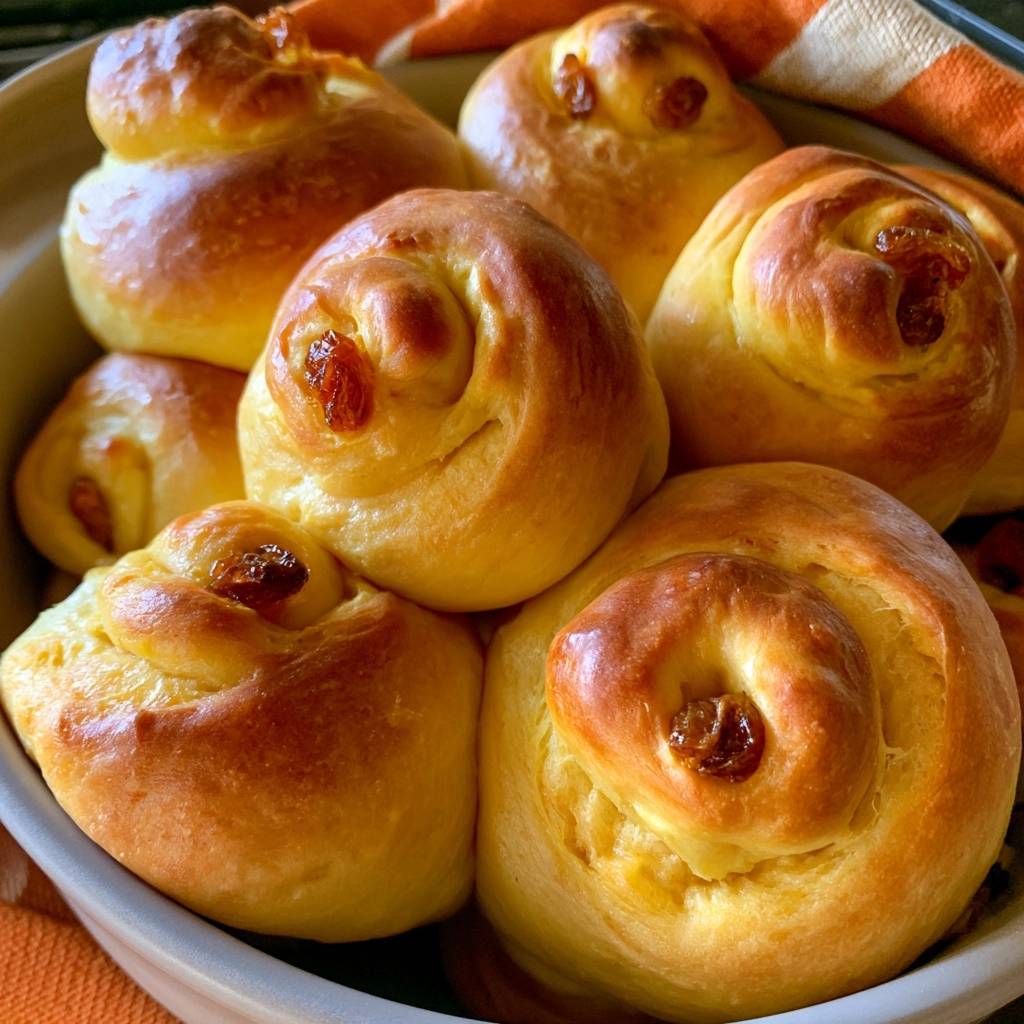
Swedish saffron buns bring a warm golden color and delicate aroma to a soft yeast dough. Golden raisins add little bursts of sweetness, while a glossy egg wash gives the coiled buns an inviting finish.
The dough should feel soft and slightly tacky as you work with it. Paying attention to the saffron steep, the raisins, and the dough’s rise helps you get the texture and shape these buns are meant to have.
Let saffron flavor the milk
Lightly crushing the saffron threads helps release their color and flavor into the warm milk. Cover the milk as the saffron steeps so the infusion has time to develop before you bring in the yeast. The milk should be warmed to the temperature specified on the recipe card; overheating it can interfere with the yeast later.
After steeping, stir the yeast and sugar into the saffron milk and give the mixture time to become foamy. That visible foam is a useful sign that the yeast has started working. Stir in the egg and softened butter before gradually adding the flour mixture, so the dough comes together without needing all the remaining flour automatically.
Keep the dough soft and the raisins dry
Knead until the dough is cohesive, soft, and slightly tacky. Add the remaining flour as needed rather than forcing it all in; too much flour can make the finished buns less tender. Once the dough has reached the right feel, fold in most of the raisins and save the rest for the centers.
Soaking the golden raisins in orange juice gives them a flavorful start, but drain and blot them well before adding them. Extra juice can make the dough sticky and harder to handle. Dry raisins also sit more neatly in the buns when you press them in for the topping.

Shape loose coils and watch the rise
After the first rise, divide the dough and roll each piece into an even rope. Coil it into a loose spiral and tuck the end underneath. A loose shape gives the dough room to puff, while tucking the end helps the coil hold together. Press the reserved raisins into the centers so they stay in place as the buns rise.
Let the shaped buns become puffy before baking. If the dough has not doubled during its first rise by the time on the recipe card, let it continue rising. Room temperature affects how quickly yeast dough moves, so use the dough’s appearance as well as the stated timing.
Brush for a glossy golden finish
Beat the egg wash egg with the milk and brush it over the buns shortly before baking. A careful, even coating helps create the glossy surface associated with these saffron buns. Rotate the baking sheets between oven racks halfway through baking so the buns can brown evenly.
Look for a glossy, golden-brown finish as the visual cue that the buns are baked. Let them cool on the baking sheets for the time specified on the recipe card before serving; this gives them a chance to settle after coming out of the oven.
Frequently Asked Questions
Why is my dough still tacky after kneading?
The dough is meant to remain soft and slightly tacky. Add the remaining flour only as needed while kneading, since using more flour than necessary can make the buns less tender. If the raisins were not drained and blotted well, their extra juice can also make the dough harder to handle.
What should I do if the dough has not doubled?
Let it rise longer and check again. Yeast dough rises at different rates depending on room temperature, so the time on the recipe card is a guide alongside the visual cue. For the first rise, wait for the dough to double before shaping.
How do I keep the coiled buns from coming apart?
Roll each piece into an even rope, form a loose spiral, and tuck the end underneath. Arrange the coils on the prepared baking sheets and press the reserved raisins into their centers. Handle the dough gently so the shapes stay intact as they rise.
Recipe
Swedish Saffron Buns with Golden Raisins
These Swedish yeast buns are shaped into coils, dotted with golden raisins, and baked until glossy and golden. Saffron and butter flavor the soft dough.
- Course
- Breakfast
- Cuisine
- Swedish
- Difficulty
- Easy
- Servings
- 12 buns
- Prep time
- 30 mins
- Cook time
- 17 mins
- Total time
- 2 hr 57 mins
- Calories
- 290 kcal
Ingredients
Dough
Raisins
Egg wash
Instructions
Heat the milk in a small saucepan over low heat until it reaches 115°F, about 3 minutes. Stir in the crushed saffron, cover, and steep for 10 minutes. While it steeps, soak the raisins in the orange juice for 10 minutes, then drain and blot them dry.
Stir the yeast and sugar into the saffron milk and let stand for 5 minutes, until foamy. Whisk the salt with 3 3/4 cups of the flour. Stir the egg and softened butter into the yeast mixture, then add the flour mixture gradually. Knead for 8 minutes, adding some or all of the remaining flour as needed to make a soft, slightly tacky dough. Reserve 2 tablespoons of the raisins for topping and knead the rest into the dough.
Place the dough in a lightly greased bowl, cover, and let rise for 75 minutes, until doubled. Line two baking sheets with parchment paper.
Divide the dough into 12 pieces. Roll each piece into a rope about 10 inches long, coil it into a loose spiral, and tuck the end underneath. Arrange the buns on the baking sheets and press the reserved raisins into their centers. Cover and let rise for 30 minutes, until puffy.
Heat the oven to 375°F. Beat the egg wash egg with 1 tablespoon milk and brush it over the buns. Bake for 14 minutes, rotating the sheets between oven racks halfway through, until the buns are glossy and golden brown.
Cool the buns on the baking sheets for 10 minutes before serving.
Notes
- Drain and blot the raisins well before adding them so excess juice does not make the dough sticky.
- If the dough has not doubled after 75 minutes, let it rise longer; room temperature affects how quickly yeast dough rises.
Recipe: https://dishwhisperer.com/swedish-saffron-buns-with-golden-raisins/