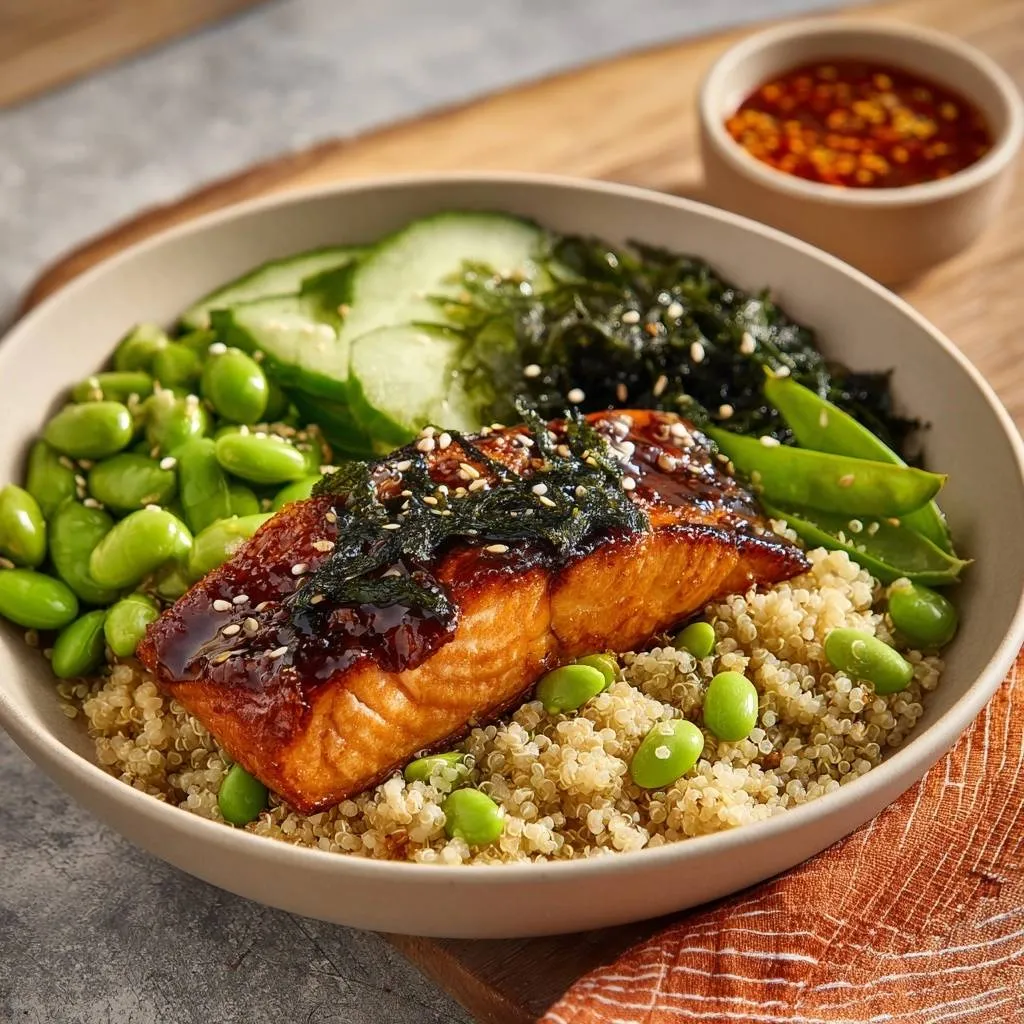
Why Teriyaki Glazed Salmon Quinoa Bowl Wins Dinners
Nothing ruins a salmon bowl faster than dry, chalky flakes that turn every bite into regret. You’ve been there, right? High-heat cooking squeezes out all the juices, leaving you with tough fish that no glaze can save. But this teriyaki glazed salmon quinoa bowl changes everything with a low-slow bake at 275F.
Therefore, you get perfectly moist salmon every time, flaking tenderly over fluffy quinoa and crisp veggies. In addition, it preps in 30 minutes and finishes in 40 total for 2 servings at about 450 calories per bowl. Plus, it packs omega-3s from the salmon, complete protein from quinoa, and fiber from wakame.
The secret lies in pulling the salmon at 120F internal. Carryover heat finishes it to a juicy 145F while you broil the glaze for caramelized shine. That’s why this beats takeout, hands down, with fresh control and better texture.
Key Ingredients for Teriyaki Glazed Salmon Quinoa Bowl
You’ll need 2 salmon fillets, 6 oz each, skin-on if possible for extra moisture retention. Grab wild-caught; it has better fat marbling that stays juicy during the low bake. In addition, 1 cup quinoa rinsed well removes bitter saponins for a nutty, fluffy base.
Frozen edamame, thawed, adds protein snap, while cucumber and snow peas bring cool crunch. Don’t skip 1/4 cup dried wakame; it rehydrates to chewy sea flavor. For the glaze, low-sodium soy sauce cuts salt, honey caramelizes under broil, and fresh ginger with garlic punch umami.
Sesame oil adds nuttiness, and sriracha on the side lets you dial heat. Fresh ginger beats jarred for brighter zing, and skin-on salmon crisps nicely in the final broil.
Salmon Fillet Selection Tips
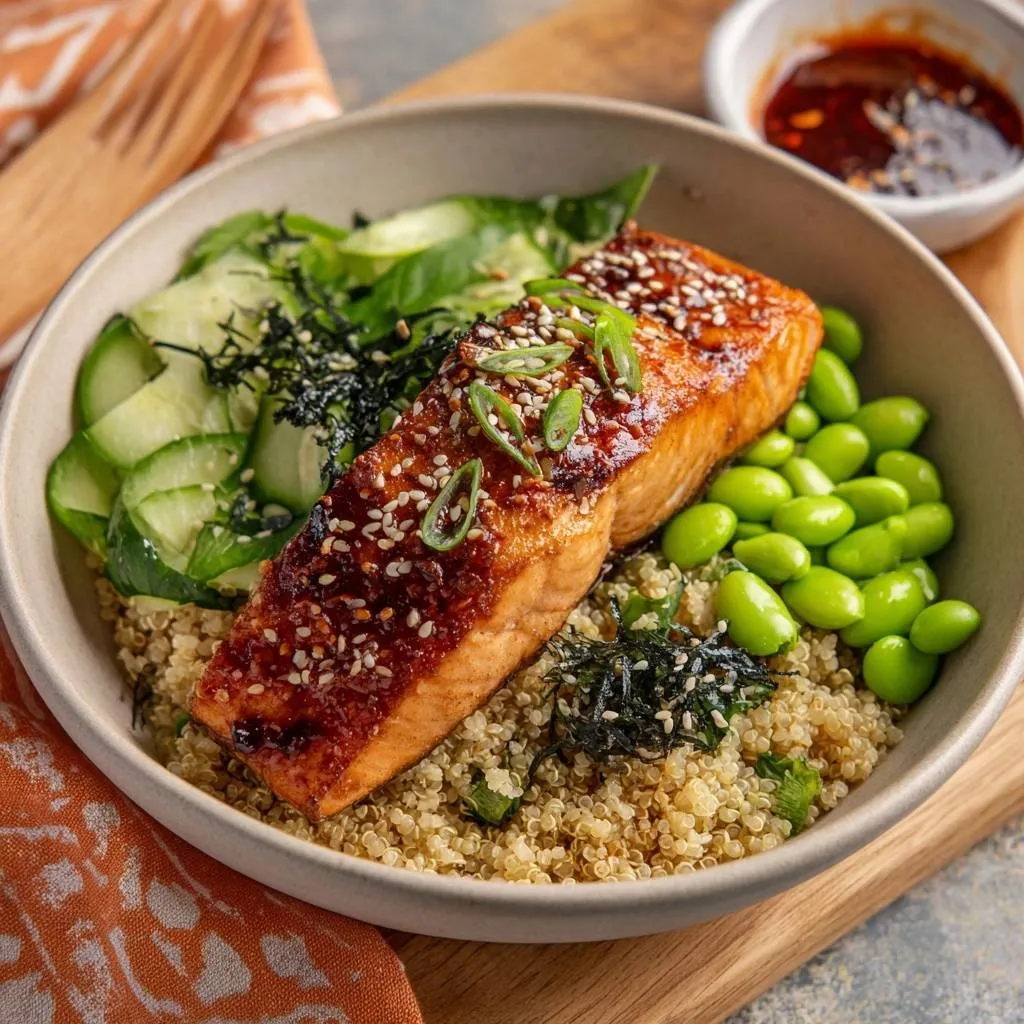
Stick to 6 oz portions so they cook evenly at 275F. Skin-on holds moisture better, protecting the flesh from drying out. Therefore, it crisps under the broil for bonus texture without toughness.
Quinoa and Edamame Base Breakdown
Rinse quinoa 2 minutes under cold water to strip saponins, preventing bitterness. It cooks to 8g protein per cup, and stirring in edamame boosts that with green snap. Together, they form a hearty, complete protein base.
Glaze Components Explained
Whisk soy, honey, rice vinegar, ginger, garlic, and sesame oil for balance. Honey’s sugars trigger Maillard browning under broil, creating glossy caramel without burning. Reserve half to drizzle fresh, avoiding over-sweetness.
Science of Moist Teriyaki Glazed Salmon
Low-temp baking at 275F stops albumin proteins from contracting and squeezing out moisture. High heat at 400F does just that, leaving dry salmon. Here, you bake to 120F, then rest as carryover hits 145F for juicy results.
In addition, the glaze’s sugars caramelize in a quick broil, locking in shine. This method retains 20% more moisture than standard high-heat. However, always use a thermometer; guessing leads to overcooking.
Pro tip: pat salmon super dry before glazing. Wet surfaces steam instead of caramelizing.
Low-Slow Baking vs. High-Heat Myths
Pull at 120F for a juicy center; carryover adds 25F during rest. High-heat myths promise sear but contract proteins fast. Graphs show low-slow keeps temps steady for even doneness.
Glaze Caramelization Chemistry
Honey-soy sugars brown at broil heat around 350F, bubbling without drying fillets. Sesame oil stabilizes the mix. Watch closely; it shifts from glossy to burnt quick.
Prep Phases for Teriyaki Glazed Salmon Quinoa Bowl
This 6-phase flow takes 40 minutes total, so mise en place everything first. Rinse quinoa, chop veggies, whisk glaze, then bake salmon low and broil. Finally, assemble bowls for fresh contrast. You’ll smell the ginger blooming early.
Phase 1: Rinse and Cook Quinoa Base
Rinse quinoa under cold water 2 minutes; rub grains to remove bitter coating. Boil 2 cups water, add quinoa, simmer covered 15 minutes till fluffy with tiny tails. Stir in thawed edamame; it warms through, adding pop without sogginess.
Phase 2: Rehydrate Wakame and Slice Veggies
Soak wakame in warm water 5 minutes till tender, then drain and chop. Slice cucumber thin for crisp bites, snow peas on diagonal for tenderness. These stay raw-fresh, contrasting warm salmon.
Phase 3: Whip Up Teriyaki Glaze
Whisk soy, honey, vinegar, ginger, garlic, sesame oil till emulsified and glossy. Start with liquids for smooth blend. Reserve half; it drizzles brighter later.
Phase 4: Prep and Low-Bake Salmon
Pat salmon dry thoroughly; moisture blocks glaze. Brush both sides with half glaze on parchment-lined sheet. Bake at 275F 12-15 minutes to 120F internal; center stays translucent pink and juicy.
Phase 5: Broil for Teriyaki Glaze Finish
Brush remaining glaze, top with sesame seeds and wakame. Broil high 2-3 minutes till bubbly and caramelized. Watch like a hawk; edges crisp while center steams moist. Rest 2 minutes.
Phase 6: Assemble and Serve Bowls
Divide quinoa-edamame, layer cucumber and snow peas, crown with salmon. Drizzle reserved glaze, serve sriracha aside for heat tweaks. Layers pop visually and texturally.
Avoiding Dry Salmon in Quinoa Bowls
Overbaking past 120F dries salmon; use a thermometer in the thickest part. Skipping quinoa rinse adds bitterness that clashes with sweet glaze. Watery wakame or veggies make bowls soggy, so drain well.
Pat-dry salmon always; wet fish steams blandly. Therefore, check carryover after rest. Symptom: tough flakes mean heat too high, fix with low-slow next time.
Overcooking Fixes
Insert thermometer sideways into center. Rest 2 minutes post-broil; carryover finishes safely. Never push past 145F final.
Bitterness and Texture Traps
Rinse quinoa till water runs clear. Salt veggies lightly optional to draw moisture. Drain wakame twice for chew, not slime.
Flavor Variations for Teriyaki Salmon Quinoa Bowls
Swap soy for tamari to go gluten-free. Use maple syrup instead of honey for vegan twist. Add avocado slices for creaminess or mango for sweet pop.
However, keep quinoa base for nutrition. Spice with gochujang in glaze or lime squeeze for citrus lift.
Protein and Veggie Swaps
Tofu presses and bakes same way for vegan. Sub broccoli florets for snow peas; blanch quick for tenderness.
Sauce Intensity Adjustments
Stir in miso for umami depth. Cut honey by half if less sweet appeals.
Pairing Sides with Teriyaki Glazed Salmon Quinoa Bowl
Miso soup warms alongside, echoing soy notes. Seaweed salad doubles umami without overwhelming. Simple greens add bitter balance.
Green tea cuts richness, or try sparkling water with cucumber slices. These enhance sweet-savory without clashing.
Teriyaki Glazed Salmon Quinoa Bowl FAQ
Can I Use Skinless Salmon?
Yes, skinless works fine; it bakes evenly at 275F and glazes smoothly. However, reduce broil to 1-2 minutes since no skin crisps. Pat extra dry for best caramelization and moisture lock.
How to Store Leftovers?
Store in airtight containers in fridge up to 3 days; separate salmon from quinoa to avoid sogginess. Reheat salmon gently at 250F oven 5-7 minutes or microwave covered on low. It doesn’t freeze well; texture gets mushy from quinoa and glaze.
Is This Recipe Gluten-Free?
Mostly; swap soy sauce for tamari to remove gluten. Check quinoa package for cross-contamination. All other ingredients like salmon, veggies, and honey stay naturally gluten-free.
Can I Make It Spicy?
Absolutely; mince fresh chili into the glaze or mix extra sriracha directly in. Start with 1 tsp chili flakes for heat build without overpowering sweet. Adjust sriracha drizzle per bowl for customization.
Substitutes for Edamame?
Chickpeas or green beans give similar snap and protein; thaw frozen or blanch fresh 1 minute. Shelled fava beans work too for nutty chew. Stir in at quinoa stage to warm through.
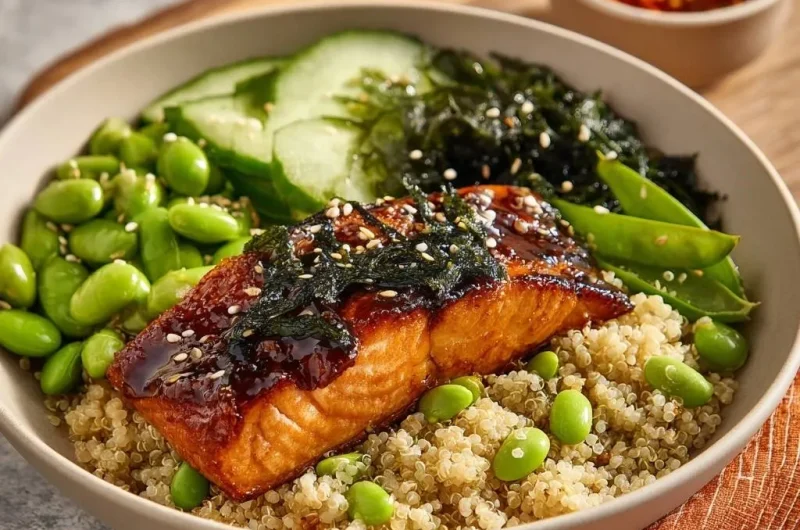
Teriyaki Glazed Salmon Quinoa Bowl
Course: Main CourseCuisine: Asian FusionDifficulty: easy2
servings15
minutes25
minutes40
Minutes550
kcalAsian Fusion
Ingredients
2 salmon fillets (6 oz each, skin-on or skinless)
1 cup quinoa
1 cup shelled edamame (frozen, thawed)
1 large cucumber, thinly sliced
1/4 cup dried wakame seaweed
1 cup snow peas, trimmed and sliced
2 tbsp sesame seeds
For the teriyaki glaze:
1/4 cup low-sodium soy sauce
2 tbsp honey
1 tbsp rice vinegar
1 tsp grated fresh ginger
1 tsp minced garlic
1 tsp sesame oil
For serving:
2 tbsp sriracha or chili sauce
Directions
- Rinse quinoa under cold water for 2 minutes to remove bitterness. In a saucepan, bring 2 cups water to a boil, add quinoa, reduce to simmer, cover, and cook 15 minutes until fluffy. Fluff with fork and stir in thawed edamame. Set aside.
- Rehydrate wakame: soak in warm water 5 minutes, drain, and chop roughly. Slice cucumber and snow peas. Set veggies aside.
- Make glaze: whisk soy sauce, honey, rice vinegar, ginger, garlic, and sesame oil in a small bowl. Reserve half for serving.
- Pat salmon dry with paper towels. Brush both sides with half the glaze.
- For no-more-dry salmon: preheat oven to 275F. Place salmon on parchment-lined baking sheet. Bake 12-15 minutes until internal temp hits 120F (juicy center guaranteed, low heat prevents drying). Remove, brush with remaining glaze, sprinkle sesame seeds and wakame strips on top. Switch to broil on high 2-3 minutes until glaze bubbles and caramelizes (watch closely to avoid burning). Rest 2 minutes; salmon stays moist as carryover heat finishes to 145F.
- Assemble bowls: divide quinoa-edamame base, top with sliced cucumber, snow peas, salmon. Drizzle reserved glaze, add sriracha on side. Serve immediately.
Notes
- Low oven temp (275F) ensures juicy salmon; broil at end for caramelized glaze. Internal temp 120F before broiling for perfect doneness.