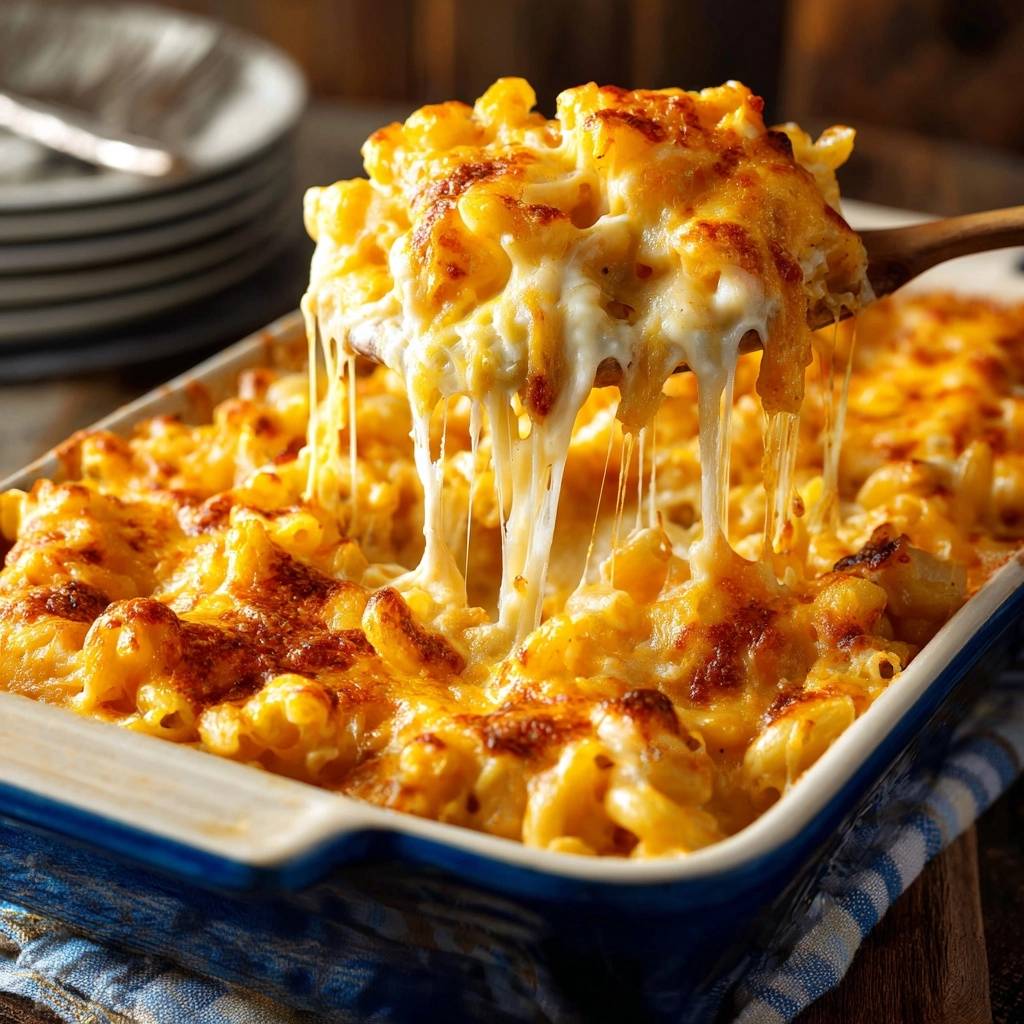
Imagine a fork sinking into a golden, bubbly crust to reveal a river of molten, silky cheese clinging to every single noodle. This isn’t just a side dish; it’s the crown jewel of the Southern table. However, achieving that perfect custard-like consistency is a feat that escapes many home cooks.
Most recipes fail because they result in a grainy, broken mess or a dry block of pasta that lacks soul. We are moving past the basic stovetop varieties to create a cohesive, structured casserole that holds its shape while remaining incredibly creamy. Therefore, we must focus on the science of the sauce to ensure it never turns oily in the oven.
The secret to this professional-grade texture lies in the temperature control of your dairy and the specific timing of your pasta boil. If you’ve ever wondered why your mac and cheese feels “gritty” on the tongue, it’s likely due to the proteins in the cheese tightening up from excess heat. I’ll show you exactly how to avoid that common pitfall today.
The Science of a Silky Cheese Sauce
Creating a cheese sauce that stays smooth after baking requires a bit of kitchen chemistry. When you create a roux by whisking flour into melted butter, you’re building a stable structure that keeps the fat and liquid from separating. This starch network acts as a safety net for the cheese proteins as they melt.
In addition, using room-temperature milk and heavy cream is a non-negotiable step for a flawless emulsion. If you pour ice-cold milk into a hot flour-and-butter roux, the thermal shock can cause the mixture to clump instantly. By keeping your dairy at a neutral temperature, you ensure the sauce stays velvety as it thickens into a rich bechamel.
Furthermore, the ratio of fats to starches in this recipe is specifically calibrated for the oven. Because the pasta continues to cook and absorb moisture while baking, the sauce must start out slightly thinner than you might expect. This “extra” moisture prevents the dreaded dry mac and cheese that often plagues holiday dinners.
Why Hand-Grating Cheese is Non-Negotiable
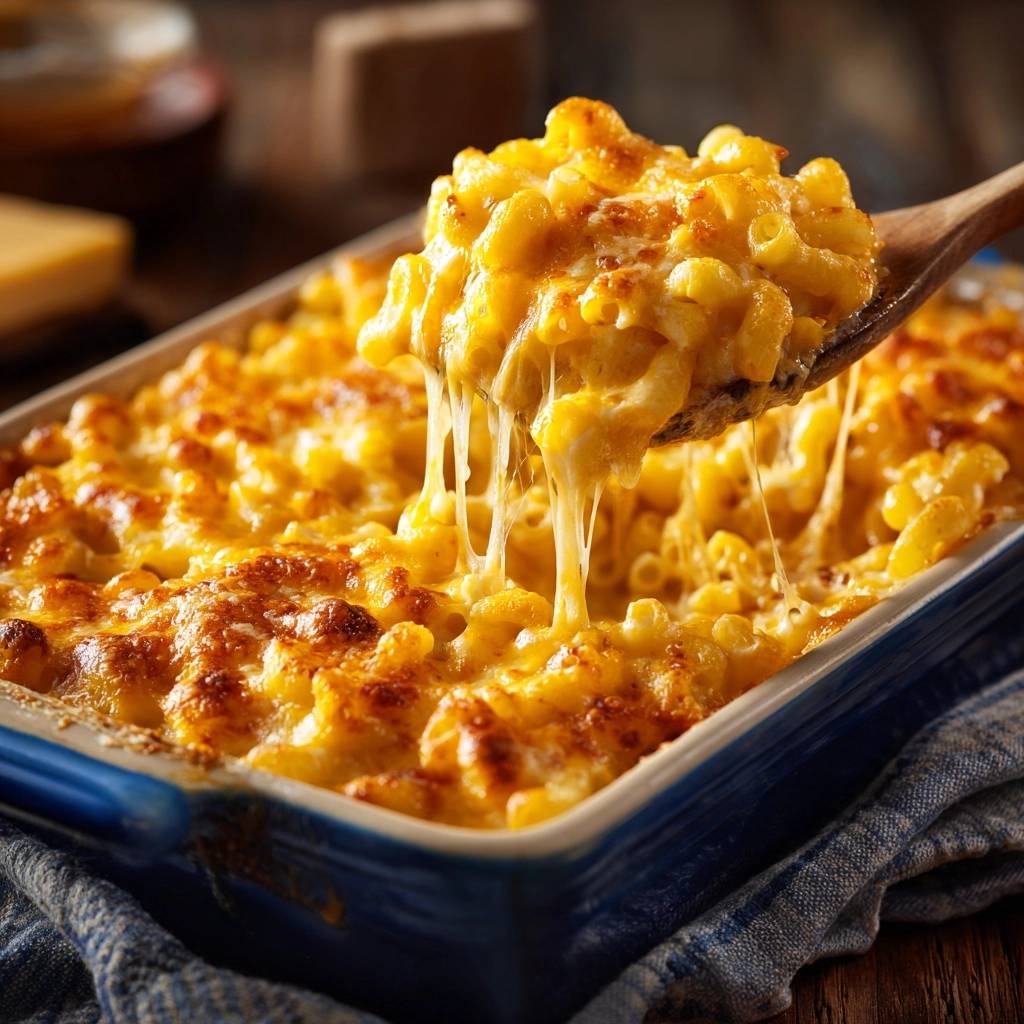
If you want a smooth melt, you must step away from the bags of pre-shredded cheese. Manufacturers coat bagged shreds in cellulose or potato starch to prevent them from clumping in the package. Unfortunately, these anti-caking agents also prevent the cheese from melting together into a cohesive sauce, often leading to a grainy or “plastic” mouthfeel.
Freshly grated cheese from a block has a much lower melting point and contains no additives. Consequently, it integrates seamlessly into the warm sauce, creating those long, elastic cheese pulls we all crave. It takes an extra five minutes of effort, but the difference in quality is night and day.
The Role of Cream Cheese in Emulsification
While traditionalists might stick to just cheddar, adding a block of softened cream cheese is a total game-changer. Cream cheese contains natural stabilizers that act as a bridge between the heavy fats in the cheddar and the liquids in the milk. This ensures the sauce never “breaks” or turns into a pool of oil during the high-heat bake.
Beyond the science, cream cheese adds a subtle tang and a luxurious, thick body to the sauce. It provides that “visual creaminess” that makes the dish look like it came straight from a high-end soul food kitchen. It’s the ultimate insurance policy against a broken emulsion.
Essential Components for Southern Baked Mac and Cheese
Quality ingredients are the foundation of this dish, so don’t skimp on the fat content. Whole milk and heavy cream provide the structural integrity needed to withstand 30 minutes in a hot oven. Using skim or low-fat milk will result in a watery sauce that lacks the necessary richness to coat the noodles properly.
Unsalted butter is also preferred here so you can control the seasoning yourself. Since cheese is naturally salty, using salted butter can often push the dish over the edge. Always taste your sauce before adding the pasta to ensure the salt, pepper, and spices are perfectly balanced.
Selecting the Right Pasta Shape for Maximum Grip
While elbow macaroni is the classic choice, cavatappi is a fantastic alternative because its corkscrew shape and external ridges act as “sauce traps.” These nooks and crannies hold onto the cheese sauce much better than smooth pasta. Whichever you choose, the most important rule is the “Par-boiling” method.
You must boil your pasta for exactly 3 minutes less than the package’s al dente instructions. The noodles should still have a firm, almost crunchy bite in the center. This is vital because the pasta will finish cooking in the cheese sauce while in the oven, absorbing the flavors without becoming mushy or bloated.
The Three-Cheese Blend: Sharpness, Stretch, and Creaminess
A single cheese variety often results in a flat, one-dimensional flavor profile. For the ultimate experience, we use a trio of cheeses. Sharp cheddar provides that essential “bite” and classic orange hue. However, cheddar doesn’t have the best “stretch,” which is why we bring in the mozzarella.
Mozzarella is the king of the cheese pull, providing that elastic, stringy texture that makes the dish so satisfying. Finally, Monterey Jack is included for its superior melting capabilities and mild, buttery finish. Together, these three create a complex flavor and a texture that is both creamy and stretchy.
Step-by-Step: Building the Perfect Casserole
Building this casserole is a three-phase process that starts with a careful prep of your ingredients. Have all your cheeses grated and your dairy measured out before you even turn on the stove. Because the sauce moves quickly once it starts thickening, you don’t want to be fumbling with a cheese grater mid-whisk.
Once your pasta is par-boiled and drained, set it aside and move immediately to the sauce construction. Using a heavy-bottomed pot like a Dutch oven is helpful here. It distributes heat evenly, which prevents the flour from scorching at the bottom of the pan while you’re building the roux.
Mastering the Pale Roux and Bechamel
Start by melting your butter over medium heat until it’s foamy, then whisk in the flour. You need to cook this mixture for about 2 minutes. You aren’t looking for a dark color like you would for a gumbo; you want a “pale roux” that has lost its raw, floury smell but hasn’t started to brown yet.
Slowly stream in your milk and cream while whisking vigorously. At first, it might look like a thick paste, but keep going. As the liquid heats up, the starch will swell and create a thick, glossy bechamel. You’ll know it’s ready when it’s thick enough to coat the back of a spoon—if you run your finger through the sauce on the spoon, the line should stay clean.
For an even richer texture in your baked macaroni, consider exploring creamy cast iron mac and cheese.
The Off-Heat Cheese Integration Technique
This is the most critical step for a smooth sauce: remove the pot from the heat entirely before adding your shredded cheese. If the sauce is boiling when the cheese goes in, the proteins will seize up and separate from the fat. This is exactly how you end up with a grainy, oily texture.
By stirring the cheese into the residual heat of the bechamel, it will melt gently and stay perfectly smooth. Stir in your spices—the smoked paprika and ground mustard—at this stage as well. The ground mustard doesn’t make it taste like mustard; instead, it acts as an emulsifier and heightens the savory notes of the cheddar.
Layering for the Iconic Cheese Pull
Don’t just dump all the cheese on top! To get that professional “stringy” look throughout the entire dish, use the lasagna method. Pour half of your saucy pasta into the greased baking dish, then add a thick layer of shredded cheese right in the middle. Top with the remaining pasta and the rest of the cheese.
This middle layer of cheese creates “pockets” of melted goodness that don’t get dried out by the oven’s direct heat. When you scoop into the finished dish, you’ll get a beautiful cheese pull from the center, not just a crusty layer on the surface. It makes every single bite as good as the first.
Achieving the Deeply Browned Bubbly Crust
The visual appeal of Southern mac and cheese comes from the Maillard reaction—the browning of the cheese proteins on top. A light dusting of smoked paprika over the final cheese layer provides those beautiful “burnt orange” highlights. It also adds a subtle woodsy aroma that cuts through the richness of the dairy.
If your oven doesn’t brown the top evenly by the 30-minute mark, don’t be afraid to use the broiler. Switch it on for the last 2 minutes of cooking, but stay right there and watch it. It can go from perfectly golden to burnt in a matter of seconds. You want those dark, bubbly spots that indicate a crispy, flavorful crust.
Avoiding Common Mac and Cheese Mistakes
If your sauce ends up grainy, the heat was likely too high when you added the cheese. Always remember to pull the pot off the burner first. If the dish comes out dry, you might have over-boiled the pasta or didn’t use enough sauce. Remember, the mixture should look a bit “soupy” before it goes into the oven.
An oily finish usually points to using pre-shredded cheese or a “broken” sauce where the fat has separated from the solids. Using the cream cheese trick mentioned earlier almost entirely eliminates this risk. If you follow the roux-to-liquid ratios exactly, your emulsion should remain stable and creamy even after reheating.
Make-Ahead Instructions and Storage Logistics
For holiday planning, you can assemble this dish up to 24 hours in advance. However, there is a trick to it. Let your cheese sauce and your par-boiled pasta cool slightly before mixing them together. If you mix them while piping hot and refrigerate them, the pasta will drink up all the sauce, leaving you with a dry bake the next day.
Once assembled and cooled, cover the dish tightly with foil and store it in the fridge. When you’re ready to eat, let the dish sit on the counter for 30 minutes to take the chill off before putting it in the oven. You may need to add an extra 5-10 minutes to the baking time since it’s starting from a lower temperature.
Reheating Without Losing the Texture
Microwaves are the enemy of leftover mac and cheese because they heat unevenly and often cause the cheese fats to separate. For the best results, reheat portions in the oven at 350°F. Cover the dish with foil to trap the moisture and prevent the top from burning.
If the leftovers look a little stiff, stir in a tablespoon of milk or heavy cream before reheating. This helps re-hydrate the sauce and restores that creamy mouthfeel. It will taste almost as fresh as the day you made it, provided you don’t overcook it during the second round.
What to Serve with Southern Baked Mac and Cheese
Because this dish is incredibly rich and heavy, it pairs best with sides that offer a bit of acidity or brightness. Braised collard greens with a splash of apple cider vinegar provide a perfect bitter contrast to the creamy cheese. A bright, vinegar-based coleslaw also works wonders to cleanse the palate between bites.
For the main course, think of smoky or savory flavors. Smoked beef brisket or roasted chicken are classic companions that don’t compete with the mac and cheese for attention. Avoid serving it with other heavy, cream-based dishes so the meal feels balanced rather than overwhelming.
Expert Troubleshooting and Technical FAQ
Can I use Gluten-Free pasta with this roux?
Yes, you can certainly use gluten-free pasta, but you must be extra careful with the boiling time. Gluten-free noodles tend to go from firm to mushy very quickly. Boil them for only 2 minutes less than the package directions and rinse them with cold water to stop the cooking process immediately. For the roux, substitute the all-purpose flour with a high-quality 1-to-1 gluten-free flour blend. The texture will be very similar, though the sauce may thicken slightly faster than traditional wheat flour.
Why did my cheese sauce separate into oil?
Sauce separation, or “breaking,” usually happens for two reasons: high heat or low-quality cheese. If the sauce reaches a rolling boil after the cheese is added, the proteins will clump together and squeeze out the fat, resulting in a greasy mess. Additionally, using “oil-filled” cheese products rather than real dairy blocks can cause this. To fix a slightly oily sauce before baking, you can try whisking in a splash of warm milk very vigorously to re-emulsify the fats, but prevention is always easier than the cure.
How do I fix a sauce that is too thick before baking?
If your bechamel looks more like a paste than a sauce before you even add the cheese, it’s likely over-reduced. Simply whisk in more room-temperature milk, one quarter-cup at a time, until it reaches the consistency of heavy cream. Remember that the sauce should be loose enough to easily coat the pasta and still look a bit “runny” in the pot. The oven will do the work of thickening it up as the pasta starches release and the moisture evaporates during the bake.
What is the best substitute for Monterey Jack?
If you can’t find Monterey Jack, Muenster or Havarti are the best substitutes. Both of these cheeses have a very high moisture content and excellent melting properties, which will maintain that creamy texture we’re aiming for. Avoid using extra mozzarella to replace the Jack, as too much mozzarella can make the dish “rubbery” rather than creamy. You want a balance of a “melter” (Jack/Muenster) and a “stretcher” (Mozzarella) to get the perfect Southern consistency.
Why is the 15-minute rest period mandatory?
Resting the mac and cheese is the hardest part, but it’s essential for the structure of the dish. When the casserole first comes out of the oven, the sauce is extremely hot and fluid. If you scoop into it immediately, the sauce will simply run to the bottom of the dish, leaving the top noodles dry. During the 15-minute rest, the starches in the pasta settle and the sauce thickens into a custard-like consistency that clings to the noodles. This ensures every serving is cohesive and perfectly saucy.
Southern Baked Mac and Cheese
Course: Main CourseCuisine: AmericanDifficulty: medium8
servings15
minutes30
minutes620
kcal45
MinutesThis recipe focuses on temperature control and high-moisture ratios to create a creamy, stringy cheese pull with a perfectly browned, bubbly crust. By using hand-grated cheese and par-boiled pasta, it avoids the common pitfalls of oily or grainy textures.
Ingredients
1 pound elbow macaroni (or cavatappi for better sauce grip)
4 cups sharp cheddar cheese, hand-grated (divided)
2 cups mozzarella cheese, hand-grated (divided)
1 cup Monterey Jack cheese, hand-grated
1/2 cup unsalted butter
1/2 cup all-purpose flour
3 cups whole milk, room temperature
1 cup heavy cream, room temperature
8 oz block cream cheese, softened (the secret to the ultra-creamy visual)
1 teaspoon garlic powder
1 teaspoon smoked paprika
1/2 teaspoon ground mustard
Salt and black pepper to taste
Directions
- Preheat your oven to 375°F (190°C). Grease a deep 9×13 inch baking dish.
- Boil the macaroni in heavily salted water for 3 minutes less than the package directions for al dente. The pasta must be very firm (par-boiled) so it can absorb the sauce in the oven without becoming mushy. Drain and set aside.
- In a large heavy-bottomed pot, melt the butter over medium heat. Whisk in the flour and cook for 1-2 minutes until the raw flour smell is gone but the roux remains pale.
- Slowly pour in the milk and heavy cream while whisking constantly to prevent lumps. Whisk in the softened cream cheese until melted. Continue to cook on medium-low heat until the sauce is thick enough to coat the back of a spoon.
- Remove the pan from the heat entirely. Stir in the garlic powder, smoked paprika, ground mustard, salt, and pepper.
- Add 2 cups of the cheddar, 1 cup of the mozzarella, and all of the Monterey Jack. Stir until the sauce is completely smooth and glossy.
- Fold the undercooked pasta into the cheese sauce. The mixture should look slightly “soupy”-this is intentional, as the pasta will absorb the excess moisture during baking to prevent dryness.
- Pour half of the mixture into the baking dish. Sprinkle with 1 cup of cheddar and 1/2 cup of mozzarella. Top with the remaining pasta mixture.
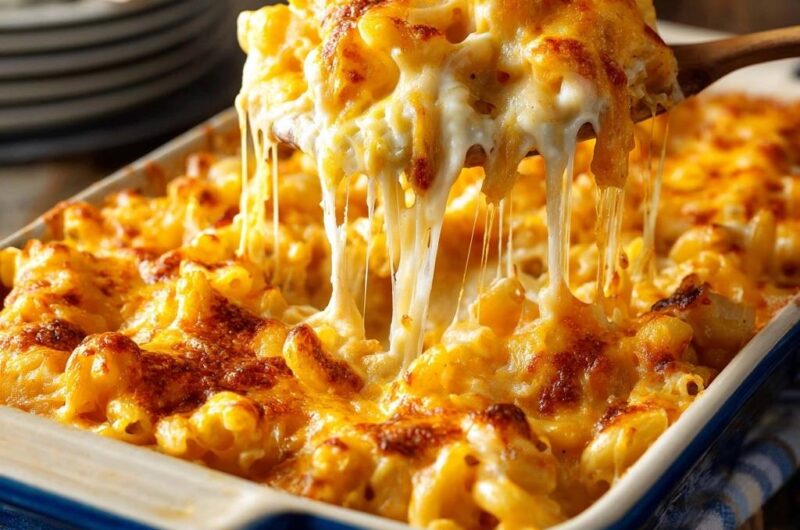
- Cover the top with the final 1 cup of cheddar and 1/2 cup of mozzarella. Sprinkle a pinch of extra smoked paprika over the top for the visual “burnt orange” highlights seen in the image.
- Bake for 25 to 30 minutes. If the top isn’t deeply browned, turn on the broiler for the last 2 minutes, watching closely to achieve the charred, bubbly crust shown.
- Let it rest for 10-15 minutes before serving. This allows the sauce to thicken and ensures the cheese-pull remains elastic rather than runny.
Notes
- Always hand-grate your cheese to avoid the anti-clumping agents in bagged shreds which cause graininess. Ensure the pasta is undercooked by 3 minutes before baking so it absorbs the sauce without becoming mushy.