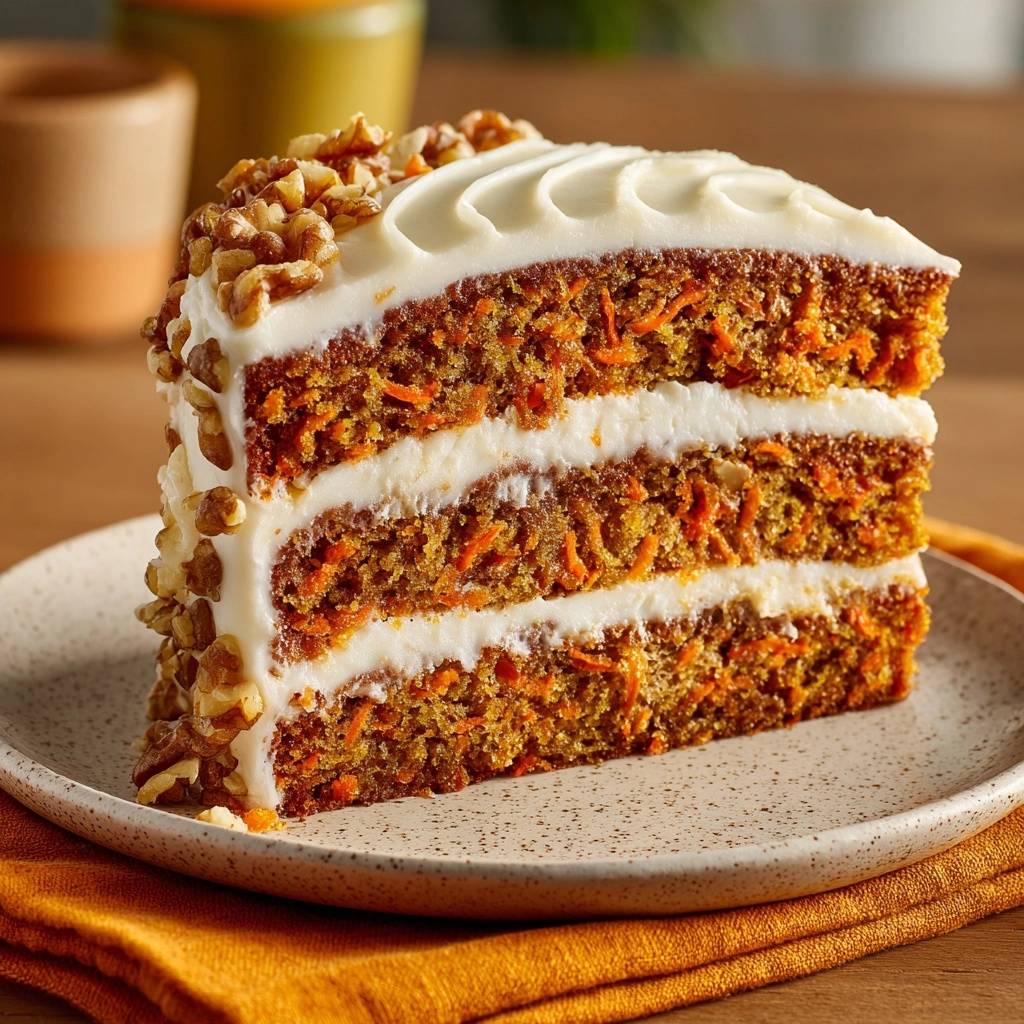
Most carrot cakes suffer from a hidden flaw that ruins the entire experience. You’ve likely seen it before: a beautiful, spiced top layer that gives way to a dense, gummy, and oily mess at the very bottom of the slice. This “soggy bottom” isn’t your fault; it’s a result of the massive amount of water hidden inside raw carrots that releases during the baking process.
The goal of this guide is to help you build a structural masterpiece that balances intense moisture with a light, airy crumb. By focusing on moisture control and proper aeration, we can create a towering three-layer cake that yields 12 generous servings. At 680 kcal per slice, this is a rich, indulgent dessert designed for those who appreciate the science of a perfect bake.
For a similarly tender crumb, check out these moist red velvet cake squares.
The secret to this recipe’s success lies in the “Blotting Technique.” By removing excess juice from the carrots before they ever touch the batter, you control the hydration of the cake. This ensures the crumb stays fluffy enough to support three layers of thick cream cheese frosting without collapsing under its own weight.
The Science of Moisture Control in Baking
Sugar is hygroscopic, which means it attracts and holds onto water molecules. In a carrot cake, the combination of granulated sugar and packed brown sugar works to keep the cake tender for days. However, because we use vegetable oil instead of butter, the cake stays incredibly moist even when refrigerated.
Oil is the superior fat for this specific cake because it remains liquid at room temperature. While butter provides flavor, oil provides that signature “melt-in-your-mouth” texture. The challenge is that oil doesn’t cream like butter, so you must emulsify it properly with the eggs to prevent a greasy finish.
Why Carrots Cause Structural Failure
Carrots are roughly 88% water. When you grate them and fold them into a batter, they look dry, but the heat of the oven breaks down their cellular walls. This releases a flood of moisture into the cake while the flour is trying to set its structure.
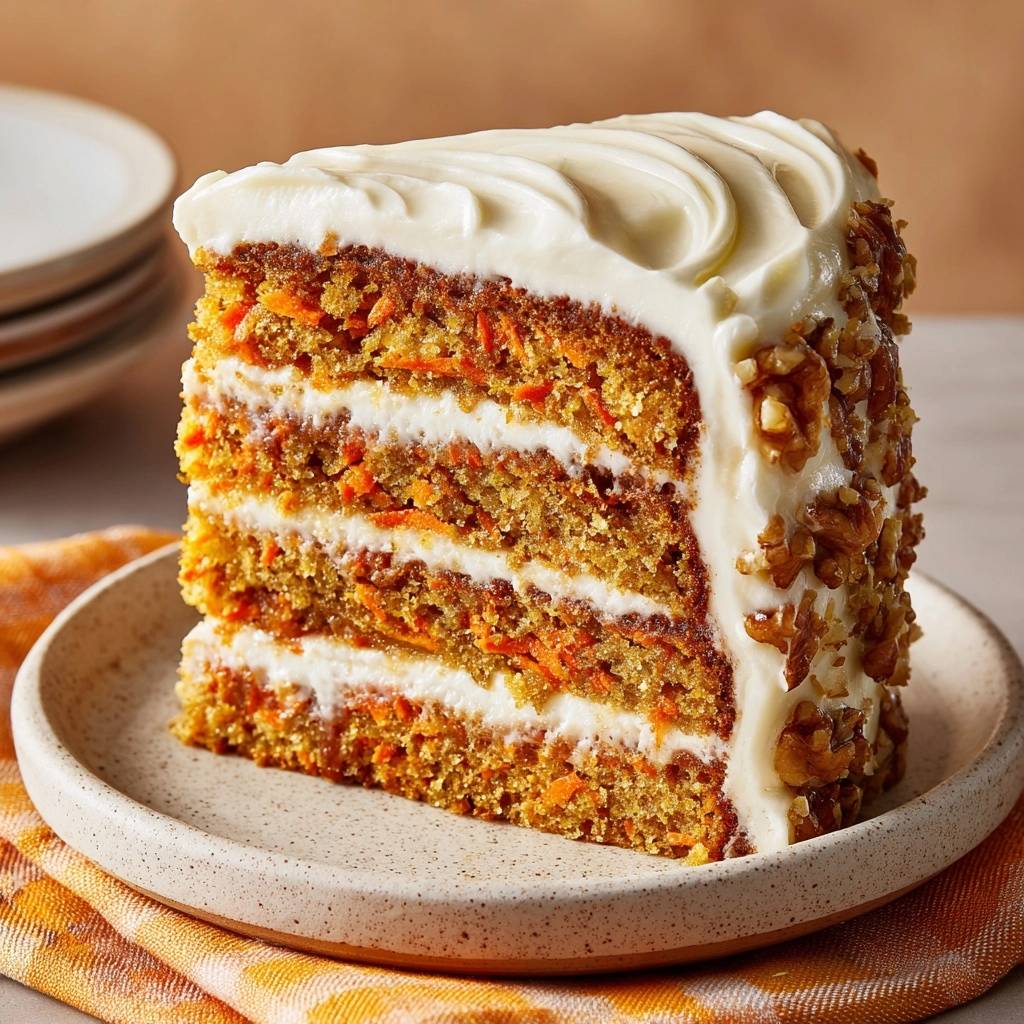
This mid-bake water release is what creates that dreaded gummy layer at the base of the pan. By the time the center of the cake is cooked, the bottom has essentially boiled in carrot juice. Our method stops this process before it starts, ensuring every bite has a uniform texture.
Essential Components for the Ultimate Three-Layer Carrot Cake
Your pantry staples do the heavy lifting here. We use a combination of baking soda and baking powder to ensure a powerful lift. The baking soda specifically reacts with the acidic molasses in the brown sugar, neutralizing it and creating tiny carbon dioxide bubbles that lighten the batter.
All-purpose flour is the best choice for this recipe because it has enough protein to create a sturdy “skeleton.” Cake flour would be too weak to hold up the weight of the carrots and walnuts, while bread flour would make the cake tough and chewy. Stick to the middle ground for the best results.
Selecting and Preparing Fresh Produce
Never buy the pre-shredded carrots in the plastic bags. Those are often coated in starch to keep them from sticking, and they are far too dry and woody. Buy whole, medium-sized carrots and grate them yourself using the fine side of a box grater.
Once grated, perform the “Blotting Technique.” Wrap your carrots in a clean kitchen towel and squeeze with all your might over the sink. You’ll be shocked at how much orange liquid comes out. Measure your 3 cups of carrots only after they have been squeezed so the flavor is concentrated and the water is gone.
The Role of Warm Spices and Aromatics
We use a trio of cinnamon, ginger, and nutmeg to create a complex flavor profile. These spices are fat-soluble, meaning they “bloom” and become more potent when they sit in the vegetable oil. This is why the cake often tastes even better the next day.
High-quality vanilla extract is non-negotiable. It acts as a bridge between the earthy sweetness of the carrots and the tanginess of the cream cheese frosting. Without it, the spices can feel a bit one-dimensional and sharp.
Critical Equipment for Multi-Layer Success
This recipe calls for three 8-inch round pans rather than two 9-inch pans. This increases the surface area, allowing the heat to penetrate the center of the cake faster. Faster baking means less time for the carrots to release moisture, resulting in a better crumb.
For a similar smooth texture, consider trying this caramel walnut cheesecake.
Always use parchment paper liners on the bottom of your pans. Carrot cake is naturally sticky due to the high sugar content, and even a well-greased pan can sometimes grab onto the cake. A stand mixer is your best friend for the frosting, but I recommend a hand-whisk for the batter to avoid overworking the gluten.
Phase One: Emulsifying the Base Batter
Start by whisking your oil and sugars until the mixture looks like wet sand. When you add the eggs, do it one at a time. This is a critical step in creating an emulsion. You want the fat from the oil and the water from the egg whites to bind together into a smooth, pale liquid.
If you dump all the eggs in at once, the batter might look “broken” or curdled. Keep whisking until the mixture is slightly thickened and glossy. This stable base is what allows the cake to rise evenly without developing large, unsightly air pockets.
Phase Two: Incorporating Dry Ingredients and Aeration
When it’s time to add the flour and spices, put the whisk away and grab a large rubber spatula. Use a folding motion—cutting through the center and lifting from the bottom. This preserves the air you’ve worked into the eggs and prevents the flour from becoming “rubbery.”
Stop mixing the moment you see the last streak of white flour disappear. Then, gently fold in your squeezed carrots and the first half-cup of walnuts. Because the carrots are blotted, they will stay suspended in the batter rather than sinking to the bottom of the pans.
Phase Three: Precision Baking and Temperature Management
Preheat your oven thoroughly. A cold oven will cause the oil to seep out of the batter before the cake sets. Bake for 30 to 35 minutes, but start checking at the 28-minute mark. Every oven is different, and overbaking is the fastest way to turn a great cake into a dry one.
Use the “spring back” test: lightly press the center of the cake with your finger. If it leaves an indentation, it needs more time. If it bounces back immediately, it’s done. Let the cakes cool in the pans for exactly 15 minutes. This allows the structure to firm up so they don’t crack when you flip them onto the wire racks.
The Architecture of Stable Cream Cheese Frosting
Runny cream cheese frosting is the bane of the home baker. To avoid this, use full-fat brick cream cheese, not the spreadable kind from a tub. The tub variety contains extra water and air that will turn your frosting into a soup that slides right off the cake.
The secret is to beat the softened butter and cream cheese together first for at least three minutes. You are looking for a very pale, almost white color. This creates a stable fat matrix that can hold the weight of the 4.5 cups of powdered sugar without losing its fluffiness.
Achieving the Whipped Texture
If your frosting feels too stiff to spread, add a single tablespoon of heavy cream. This adds a luxurious mouthfeel and makes the frosting glide over the crumbs. However, if your kitchen is warm, skip the cream to keep the frosting as stiff as possible for assembly.
Assembly: Building the Three-Layer Tower
If your cake layers have a slight dome on top, use a serrated knife to gently level them off. This ensures your tower stays straight. Place the first layer on your serving plate and apply a generous amount of frosting, spreading it all the way to the edges.
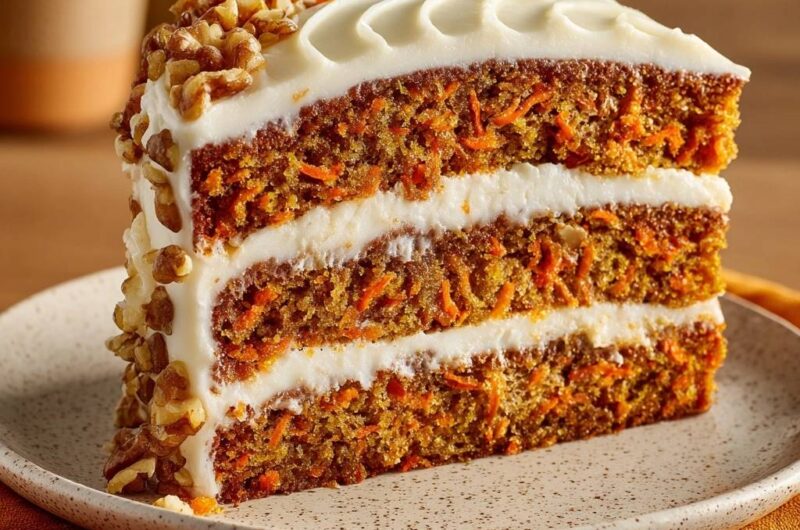
Once the three layers are stacked, apply a thin “crumb coat” of frosting over the entire cake and refrigerate it for 20 minutes. This traps any loose crumbs so your final layer of frosting looks pristine. Finish by pressing the remaining walnuts into the sides and creating decorative swoops on top with a spoon.
Troubleshooting Common Carrot Cake Obstacles
If your cake is too crumbly, you likely overbaked it or squeezed the carrots so hard they became bone-dry. Next time, leave just a hint of moisture in the towel. If the layers are sliding during assembly, your cake or your frosting is too warm. Pop everything in the fridge for 30 minutes to firm up.
If the spices feel overwhelming, double-check your measurements. Spices like nutmeg are very powerful and should be measured with leveled teaspoons. Finally, if the cake didn’t rise, your baking soda or powder might be expired. You can test them by dropping a pinch into vinegar; if it doesn’t fizz violently, it’s time for a new box.
Make-Ahead Strategies and Storage Logistics
Carrot cake is one of the few desserts that actually improves with age. Making it 24 hours in advance allows the moisture to redistribute and the spices to mellow. Because of the cream cheese frosting, this cake must be stored in the refrigerator.
Keep it in an airtight cake carrier or under a large bowl to prevent it from picking up fridge odors. It will stay fresh for up to 5 days. When you’re ready to serve, take it out 30 minutes early. This allows the frosting to soften slightly while the cake remains cool and sturdy.
Expert Tips for Customizing Your Layers
If you want to add a tropical twist, you can fold in a half-cup of crushed pineapple. However, you must drain the pineapple in a fine-mesh sieve and press out every drop of juice, just like you did with the carrots. Otherwise, the extra liquid will ruin the crumb.
Raisins or toasted coconut are also popular additions. If using raisins, soak them in hot water for 10 minutes and pat them dry before adding. This prevents them from sucking moisture out of the cake batter while it bakes.
For a different kind of nutty twist, explore these coconut walnut cheesecake brownies.
Pairing Suggestions for Non-Alcoholic Service
The deep, earthy spices of this cake pair beautifully with a dark roast coffee or a bold black tea. If you prefer something creamy, a cold glass of almond milk or a spicy hot chai tea complements the cinnamon and ginger notes perfectly. For a refreshing contrast, try a sparkling apple cider to cut through the richness of the cream cheese.
How should I store leftover carrot cake?
Because the frosting contains cream cheese and butter, you must store leftovers in the refrigerator. Place the cake in an airtight container or cover the sliced edges with plastic wrap to prevent them from drying out. It will stay delicious for 4 to 5 days. You can also freeze individual slices by wrapping them tightly in plastic wrap and then foil; they will last for up to 3 months. Thaw in the fridge overnight before eating.
More Sweet Baking Ideas
If you enjoyed this cake, you might like these other baked goods featuring similar ingredients.
- For more nut-infused baking, try this Homemade Walnut Quick Bread for a moist and tender bite.
- If you loved the carrot and walnut combination, consider making these Glazed Carrot Walnut Muffins for a light and airy treat.
Why did my carrot cake turn out dense and oily?
This usually happens for two reasons: improper emulsification or skipping the carrot-squeezing step. If the eggs and oil aren’t whisked until smooth and fully combined, the oil can separate during baking, leading to a heavy texture. Additionally, if the carrots release too much water into the batter, it prevents the cake from rising properly, resulting in a dense, wet layer at the bottom.
Can I use a different type of flour or a sugar substitute?
You can substitute the all-purpose flour with a 1:1 gluten-free flour blend that contains xanthan gum. However, avoid using almond flour or coconut flour as they do not have the structural integrity to support a three-layer cake. For sugar, you can use a 1:1 monk fruit sweetener, but keep in mind that the cake may brown faster and the texture might be slightly less moist since real sugar plays a huge role in the “crumb” of the cake.
What is the best way to grate carrots for this recipe?
Use the fine holes on a standard box grater. Large shreds of carrot won’t soften enough during the 35-minute bake time, which can leave you with crunchy bits in your cake. Fine shreds melt into the batter, providing flavor and moisture without disrupting the silky texture of the crumb. Always grate them fresh; pre-shredded carrots from the store are too dry and won’t give you the same results.
My frosting is too soft to stack the layers. How do I fix it?
If your frosting is runny, it’s likely because the butter or cream cheese was too warm, or you used a tub-style cream cheese. To fix it, sift in an extra half-cup of powdered sugar and chill the frosting in the fridge for 30 to 60 minutes. This allows the fats to firm up. If you are in a very hot kitchen, you may need to chill the cake layers for 15 minutes between stacking to ensure the tower doesn’t lean.
Carrot Cake
Course: DessertCuisine: AmericanDifficulty: medium12
servings30
minutes35
minutes680
kcal65
MinutesThis premium carrot cake solves the common issue of dense, gummy layers by using a specific grating and blotting technique. The result is a perfectly textured cake paired with a rich cream cheese frosting and crunchy walnuts.
Ingredients
2 cups all-purpose flour
2 teaspoons baking soda
1 teaspoon baking powder
1/2 teaspoon salt
2 teaspoons ground cinnamon
1/2 teaspoon ground ginger
1/4 teaspoon ground nutmeg
1 1/4 cups vegetable oil
1 cup granulated sugar
1 cup packed light brown sugar
1 teaspoon vanilla extract
4 large eggs, room temperature
3 cups finely grated carrots (approx. 5-6 medium carrots)
1 1/2 cups chopped walnuts (divided)
Frosting:
16 ounces cream cheese, softened (2 blocks)
1 cup unsalted butter, softened
4 1/2 cups powdered sugar, sifted
2 teaspoons vanilla extract
1 tablespoon heavy cream (optional, for texture)
Directions
- Preheat your oven to 350°F (175°C). Grease three 8-inch round cake pans and line the bottoms with parchment paper to ensure a clean release.
- The Secret Step: Finely grate the carrots. Place them in a clean kitchen towel or heavy-duty paper towels and squeeze firmly over the sink to remove excess moisture. This prevents the “soggy bottom” effect. Measure out 3 packed cups of the squeezed carrots.
- In a medium bowl, whisk together the flour, baking soda, baking powder, salt, cinnamon, ginger, and nutmeg.
- In a large bowl, whisk the vegetable oil, granulated sugar, brown sugar, and vanilla until smooth. Add eggs one at a time, whisking thoroughly after each addition until the batter is slightly emulsified.
- Gradually fold the dry ingredients into the wet ingredients using a spatula, mixing just until no streaks of flour remain. Do not overmix.
- Fold in the squeezed carrots and 1/2 cup of the chopped walnuts.
- Divide the batter evenly between the three prepared pans. Bake for 30 to 35 minutes, or until a toothpick inserted into the center comes out clean and the tops spring back when lightly touched.
- Cool cakes in the pans for 15 minutes, then run a knife around the edges and turn out onto wire racks to cool completely.
- To make the frosting: Beat the cream cheese and butter together on medium-high speed until very pale and creamy (about 3 minutes). Add powdered sugar one cup at a time on low speed, then add vanilla and heavy cream. Increase speed and beat for 2 more minutes until whipped and fluffy.
- Assembly: Place the first layer on a plate. Spread a thick, even layer of frosting to the edge. Repeat with the second and third layers. Frost the exterior of the cake.
- Visual Finish: Press the remaining 1 cup of chopped walnuts firmly into the sides of the cake and sprinkle a generous border around the top edge as shown in the image. Use a spoon or offset spatula to create the decorative “swoops” in the frosting on top.
Notes
- The secret to the light texture is removing the excess moisture from the carrots before adding them to the batter to prevent the bottom layer from becoming gummy.