Most vegetable soups end up tasting like hot water with floating greens, leaving you reaching for a snack an hour later. You’ve likely experienced that thin, uninspired broth that feels more like a tea than a meal. This Tuscan White Bean and Kale Soup completely changes that narrative by focusing on a rich, velvet-like texture that feels incredibly indulgent without a drop of heavy cream.
The secret to this transformation lies in the structural foundation of the broth itself. Instead of relying on fat or flour, we use the natural starches of the beans to create a silky body that clings to every piece of kale and squash. When you take that first spoonful, you’ll notice a savory depth and a mouthfeel that is thick, opaque, and deeply satisfying.
For a similar comforting experience, explore this creamy butternut squash soup.
I’ve found that the biggest mistake home cooks make is simply dumping all the ingredients into a pot and boiling them. To get that authentic Italian soul, you have to treat the beans as both a protein and a thickener. By mashing a small portion of the beans into a paste before they hit the pot, you ensure the liquid becomes a cohesive sauce rather than just a cooking medium.
For a similar cozy sensation, discover Hearty Tuscan White Bean & Kale Soup.
The Secret to Creamy Vegetable Broth
Achieving a creamy consistency in a plant-forward soup usually requires a roux or heavy cream, but those can often mask the delicate flavors of the vegetables. The bean-mash technique utilizes the science of starch release to create a natural emulsion. As the blended beans integrate with the vegetable broth, they suspend the liquid, creating a full-bodied base that mimics the richness of dairy.
This method is far superior to using cornstarch or flour because it adds nutritional density and a nutty flavor profile that complements the rosemary and garlic. While a flour-thickened soup can sometimes feel gummy or heavy, a bean-thickened broth remains light on the palate while providing a rustic, farmhouse texture. It is the ultimate “pantry hero” trick for elevating simple ingredients into something that feels like it simmered for hours.
Essential Components for Tuscan White Bean Soup
Quality ingredients are the backbone of this recipe, starting with the beans. I always reach for Cannellini beans because they have a thin skin and a creamy, almost buttery interior. While Great Northern or Navy beans work in a pinch, they don’t break down quite as beautifully as Cannellini, which are the gold standard for traditional Tuscan cooking.
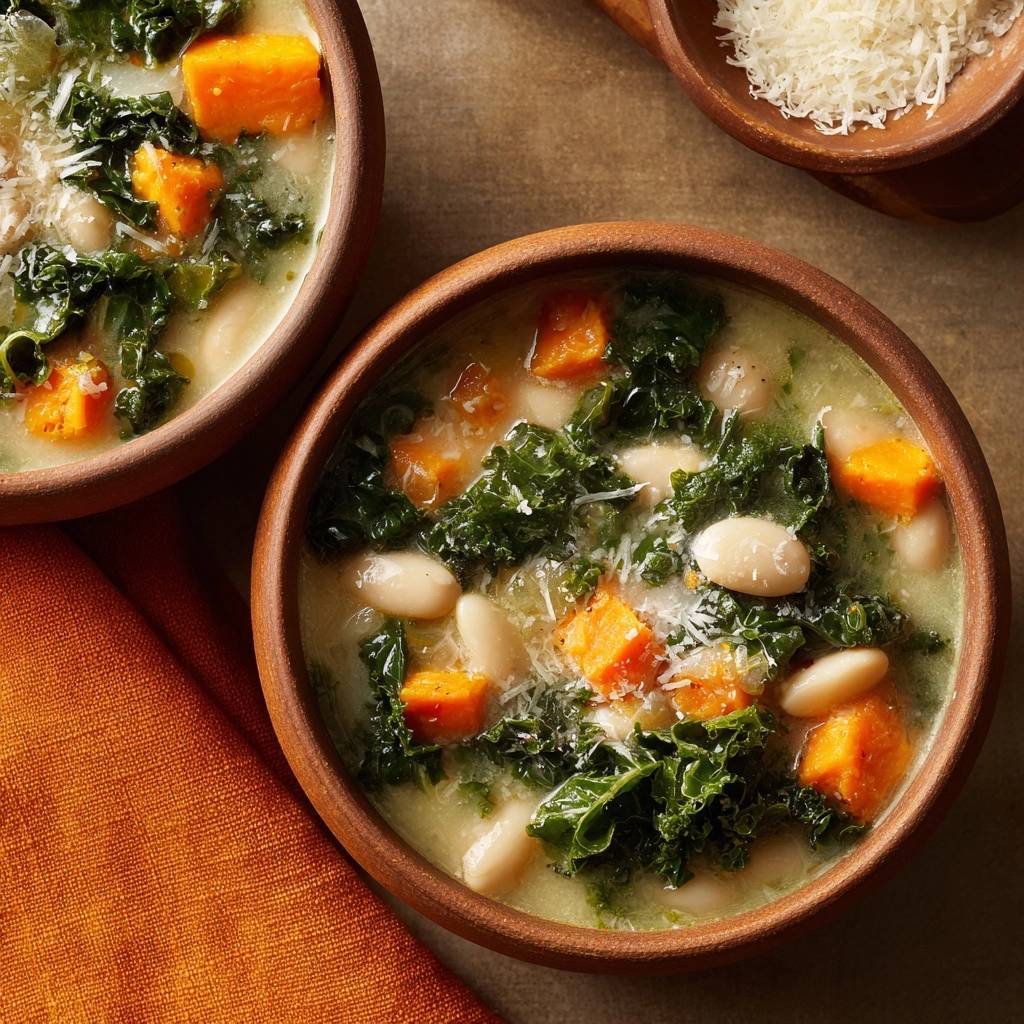
The broth you choose also dictates the final outcome. I strongly recommend using a low-sodium vegetable broth so you have total control over the salt levels. Since we are adding Parmesan cheese at the end, which is naturally salty, starting with a high-sodium broth can quickly lead to an oversalted dish. Freshly grated Parmesan is another non-negotiable; the pre-shredded stuff is coated in potato starch and won’t melt smoothly into your soup.
Selecting and Prepping Fresh Kale
Curly kale is my favorite for this soup because its many crevices catch the thickened broth beautifully. However, Lacinato kale, also known as Dino kale, offers a more tender bite and a deeper earthy flavor. Whichever you choose, make sure to strip the leaves away from the woody, fibrous stems, as those won’t soften enough during the short simmer time.
You don’t need to massage the kale for this recipe like you would for a salad. The heat of the broth does all the work for you. Just tear the leaves into bite-sized pieces so they are easy to manage on a spoon. If you find kale too bitter, a quick rinse in cold water after chopping can help mellow out those sharp notes before they hit the pot.
Butternut Squash: The Sweet Counterpoint
Butternut squash acts as the perfect flavor foil to the earthy kale and savory garlic. Its natural sugars caramelize slightly during the initial sauté, adding a layer of sweetness that balances the entire bowl. It also contributes to the gorgeous golden hue of the finished soup.
To ensure even cooking, aim for uniform 1-inch cubes. If the pieces are too large, they’ll stay hard while the beans overcook; if they’re too small, they’ll turn into mush. If you’re short on time, many grocery stores sell pre-peeled and cubed squash, which is a massive time-saver for a weeknight dinner.
Building the Aromatic Foundation
The “Soffritto” process is where the magic happens. By sautéing the onions and squash in high-quality extra virgin olive oil, you’re initiating the Maillard reaction. You aren’t just softening the vegetables; you’re developing complex sugars that provide a savory backbone to the liquid base.
Keep the heat at medium and stir occasionally. You want the onions to turn translucent and the edges of the squash to take on a slight golden tint. This step usually takes about 8 to 10 minutes, but don’t rush it. This is the only time you’ll be able to build that deep, caramelized flavor before the liquid is added.
Maximizing Garlic and Rosemary Fragrance
Garlic and rosemary are the aromatic heart of Tuscany. Dried rosemary can be quite needle-like and tough, so I always crush it between my palms or with a mortar and pestle before adding it to the pot. This releases the essential oils and ensures you don’t end up with a woody texture in your mouth.
When you add the garlic, watch the clock. It only needs about 60 seconds to become fragrant. Garlic burns incredibly fast, and once it turns dark brown, it becomes bitter and can ruin the entire batch of soup. As soon as you smell that incredible aroma, it’s time to move to the next step and add your liquids.
Step-by-Step: Achieving the Perfect Texture
Once your aromatics are ready, the transition from a clear broth to a rich, opaque masterpiece begins. You’ll start by adding your prepared bean paste and the remaining whole beans into the pot with the broth. At first, it might look a little separated, but as you stir and the mixture comes to a simmer, the paste will dissolve and thicken the liquid into a cohesive base.
Simmer the mixture gently for about 10 to 12 minutes. You are looking for the squash to be “fork-tender,” meaning a fork slides in easily but the cube doesn’t fall apart. This balance is crucial for a professional-looking soup. If you boil it too vigorously, the beans might burst and the squash will disintegrate, so keep the bubbles small and steady.
The final transformation happens when the kale is stirred in. It will look like a lot of greens at first, but they wilt down significantly within minutes. The goal is to cook the kale just until it’s tender but still boasts a vibrant, dark green color. This contrast against the orange squash and white beans makes the dish look as good as it tastes.
The Bean Mash Technique Explained
To make the bean paste, take one cup of your rinsed beans and about half a cup of broth. You can use a small personal blender for a perfectly smooth result, or simply use a fork in a small bowl. If you use a fork, really put some muscle into it until no large chunks remain. This paste acts as the “glue” for your soup’s texture.
If you have an immersion blender, you can skip the separate bowl and just pulse the soup a few times once the beans are added. However, be careful not to over-blend, or you’ll lose the beautiful contrast of the whole beans and squash cubes. The manual mash method gives you the most control over the final look.
Timing the Kale for Vibrant Color
Kale is much heartier than spinach, but it can still overcook. If you leave it simmering for too long, it will turn a dull, brownish-gray color that looks unappetizing. I always recommend pulling the pot off the heat the second the kale looks wilted and soft.
Remember that the soup holds a lot of “carry-over” heat. Even after you turn off the stove, the kale will continue to soften in the hot liquid. By timing it this way, the kale stays bright and fresh by the time the bowls hit the table.
Flavor Variations and Ingredient Swaps
This soup is incredibly versatile. If you can’t find butternut squash, sweet potatoes or even carrots make an excellent substitute. They provide a similar sweetness and texture. For those who want a bit more heat, you can double the red pepper flakes or add a dash of hot sauce right before serving.
To make this recipe vegan, simply omit the Parmesan cheese. You can replace the salty, umami kick of the cheese by stirring in two tablespoons of nutritional yeast or a teaspoon of white miso paste. Both options provide that savory depth without using animal products. You can also swap the kale for Swiss chard or collard greens if that’s what you have in the garden.
Avoiding Common Soup Mistakes
One of the most common errors is adding salt too early. If you salt the beans before they are fully tender, the skins can sometimes toughen up. It’s always best to season with salt and pepper at the very end, especially since the broth and Parmesan already contribute a fair amount of sodium.
If you find your soup has become too thick—which can happen if the squash releases a lot of starch—simply stir in an extra half-cup of broth or water to loosen it up. Conversely, if it feels too thin, you can mash a few more of the whole beans directly against the side of the pot with a wooden spoon to add instant body.
Make Ahead and Storage Strategies
This is one of those rare dishes that actually tastes better the next day. As the soup sits in the fridge, the rosemary and garlic have more time to infuse the beans, and the starch continues to settle into a thick, stew-like consistency. It’s a fantastic option for Sunday meal prep.
When storing, let the soup cool to room temperature before transferring it to an airtight container. It will stay fresh in the refrigerator for up to four days. Just be aware that the kale will lose its bright green color over time, though the flavor will remain excellent.
Freezing and Reheating Guidelines
Unlike soups made with heavy cream, which can break or curdle when frozen, this bean-based soup freezes beautifully. You can store it in the freezer for up to three months. I like to freeze it in individual portions for quick lunches throughout the week.
When you’re ready to eat, thaw it in the fridge overnight. When reheating on the stove, you’ll notice it has thickened significantly. Add a splash of water or vegetable broth as you heat it up to restore that perfect silky texture. Avoid using a microwave if possible, as stovetop heating ensures the squash warms through evenly without exploding.
What to Serve with White Bean Soup
To lean into the rustic Tuscan vibe, serve this soup with a thick slice of toasted sourdough or crusty ciabatta. Rubbing a raw clove of garlic over the warm toast before dipping it into the broth is a game-changer. The bread acts as a vessel for soaking up every last drop of that creamy liquid.
Round Out Your Meal
Complement your Tuscan White Bean and Kale Soup with these other hearty greens and satisfying dishes.
- For a fulfilling vegetarian option, consider the crispy pan-seared halloumi kale bowl, featuring similar vibrant greens.
- If you appreciate the combination of produce, the harvest kale and apple salad offers a refreshing yet substantial choice.
If you want a fuller meal, a sharp arugula salad with a simple lemon vinaigrette provides a bright, peppery contrast to the rich soup. Roasted root vegetables or a side of polenta also pair wonderfully. Since the soup is quite hearty on its own, you don’t need much to make it feel like a complete feast.
Expert Troubleshooting
Can I use dried beans instead of canned?
Yes, you certainly can, and it often results in an even better texture. You’ll need about 1.5 cups of dried Cannellini beans. Soak them overnight in water, then simmer them in a separate pot until tender before adding them to this recipe. Never add dried beans directly to the soup without pre-cooking, as they won’t soften properly with the other ingredients.
Why is my kale still tough?
If your kale feels “rubbery,” it likely didn’t simmer long enough or the pieces were too large. Make sure the stems are completely removed, as they stay tough regardless of cook time. If the leaves are still firm, give them another 2 to 3 minutes of simmering; different varieties of kale have different thicknesses and may need a little extra love.
How do I fix a bland broth?
Blandness usually comes down to a lack of acid or salt. Before you reach for more salt, try adding the optional tablespoon of lemon juice. The acid acts as a flavor highlighter, making the savory notes of the garlic and rosemary pop. If it still feels flat, add salt in small increments until the flavors wake up.
Can I make this in a slow cooker?
You can, but I recommend still sautéing the onions, squash, and garlic in a pan first to develop those caramelized flavors. Add everything except the kale and Parmesan to the slow cooker and cook on low for 6 to 7 hours. Stir in the kale and cheese during the last 20 minutes of cooking so the greens don’t turn to mush.
How do I keep the squash from disintegrating?
The key is heat management. Keep the soup at a gentle simmer rather than a rolling boil. If the liquid is moving too violently, the physical agitation will break the softened squash cubes apart. Also, ensure you don’t overcook the soup; once the squash is tender when pierced with a fork, move immediately to adding the kale.

White Bean and Kale Soup
Course: SoupCuisine: Italian InspiredDifficulty: easy4
servings15
minutes25
minutes310
kcal40
MinutesThis hearty vegetable soup features Cannellini beans, butternut squash, and kale. By blending a portion of the beans into the broth, the soup achieves a silky texture that avoids the common pitfall of being watery or bland.
Ingredients
2 cans (15 oz each) Cannellini beans, rinsed and drained
1 bunch curly kale, stems removed and torn into bite-sized pieces
2 cups butternut squash, peeled and cut into 1-inch cubes
1 medium yellow onion, finely diced
4 cloves garlic, minced
5 cups low-sodium vegetable broth
1 teaspoon dried rosemary, crushed
1/2 teaspoon red pepper flakes
2 tablespoons extra virgin olive oil
1/2 cup freshly grated Parmesan cheese, plus extra for serving
1 tablespoon lemon juice (optional, for brightness)
Salt and black pepper to taste
Directions
- Heat olive oil in a large heavy-bottomed pot or Dutch oven over medium heat. Add the diced onion and cubed butternut squash. Sauté for 8 to 10 minutes, stirring occasionally, until the onion is translucent and the squash edges are slightly softened and golden.
- Stir in the minced garlic, rosemary, and red pepper flakes. Cook for 1 minute until the aromatics are fragrant but not browned.
- To solve the watery broth problem, take 1 cup of the drained beans and 1/2 cup of the broth and blend them together in a small blender or mash them thoroughly with a fork until a smooth, thick paste forms.
- Pour the remaining broth and the bean paste into the pot. Stir well to fully incorporate the paste into the liquid. This creates the opaque, creamy foundation seen in the image.
- Add the remaining whole beans to the pot. Bring the mixture to a gentle simmer. Reduce heat to medium-low and cook for 10-12 minutes, or until the butternut squash is fork-tender but still holds its shape.
- Stir in the kale. Simmer for 3 to 5 minutes until the kale is wilted and tender but retains its vibrant dark green color.
- Remove from heat. Stir in the 1/2 cup of grated Parmesan cheese until melted into the broth. Add lemon juice if using, and season with salt and pepper to taste.
- Ladle into bowls and top with an additional generous dusting of grated Parmesan cheese to match the visual finish of the dish.
Notes
- The secret to the rich texture is blending a small portion of the beans directly into the base to create a full-bodied broth.