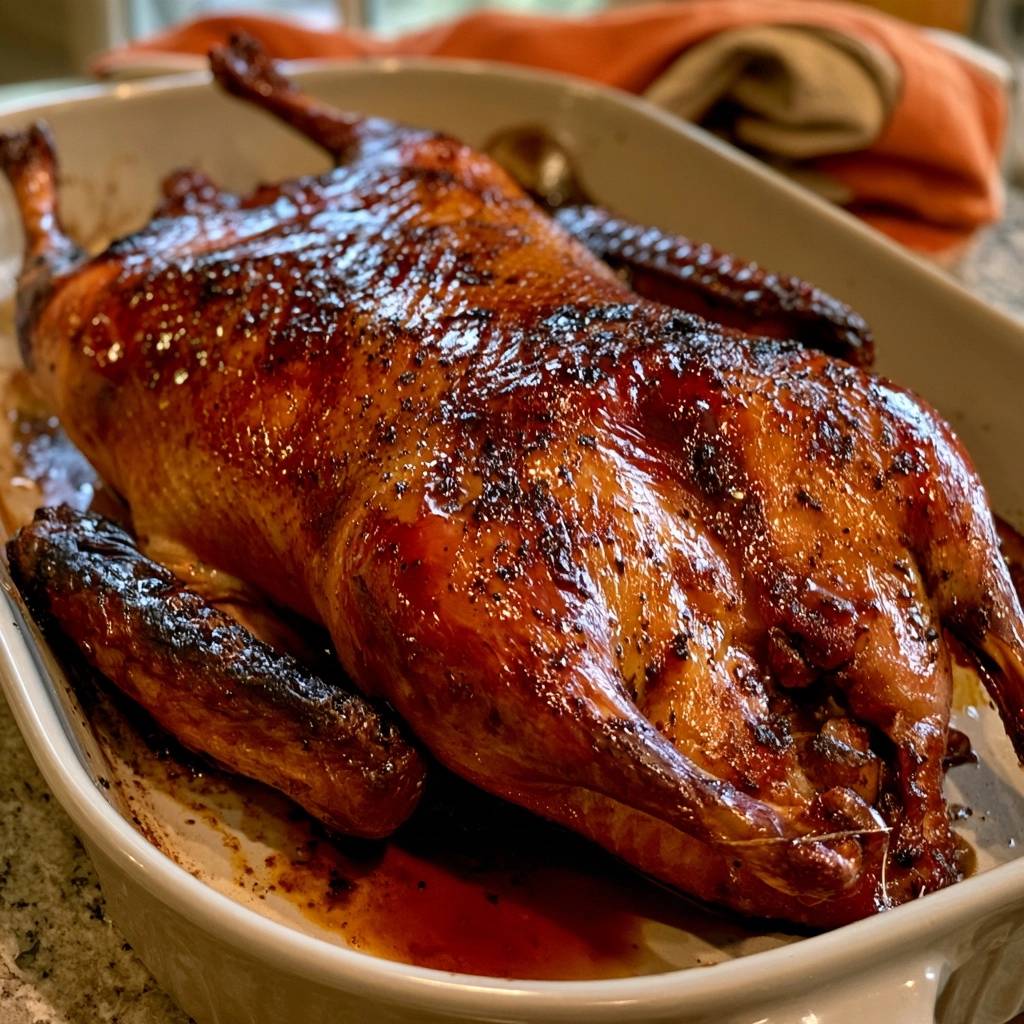
This whole roasted duck pairs simply seasoned meat with a glossy plum glaze flavored with ginger, garlic, and Chinese five-spice powder. The fruit brings gentle sweetness, while soy sauce and cider vinegar add savory depth and tang.
A rack lets the duck roast above the pan as fat renders from the skin. Brushing on the glaze toward the end of roasting helps it coat the duck without spending the entire cooking time in the oven.
What the plum glaze brings to the duck
Plum preserves give the glaze its fruity base and help it cling to the skin. Honey rounds out the preserves, while low-sodium soy sauce adds a savory note. Apple cider vinegar and apple juice balance those flavors, and fresh ginger, garlic, and five-spice powder make the glaze aromatic and warmly spiced.
The glaze should be gently simmered until slightly thickened, with frequent stirring. Keep the heat moderate so the preserves blend smoothly with the other ingredients. Setting the glaze aside before roasting makes it easy to brush on when the duck is ready for it.
Prepare the skin for roasting
Drying the duck inside and out helps prepare the skin for roasting. Prick the skin all over with a skewer, taking care to pierce the skin without reaching the meat. This gives rendered fat a way to escape as the duck cooks. Season the cavity and exterior with kosher salt and black pepper for a straightforward savory base.
Place the duck breast side up on a rack in a roasting pan. As it roasts, rendered fat collects below the rack. Carefully pour off excess fat at the points specified on the recipe card, taking care around the hot pan. You can strain the duck fat into a heat-safe container and refrigerate it for roasting potatoes.
Glaze near the end and check doneness
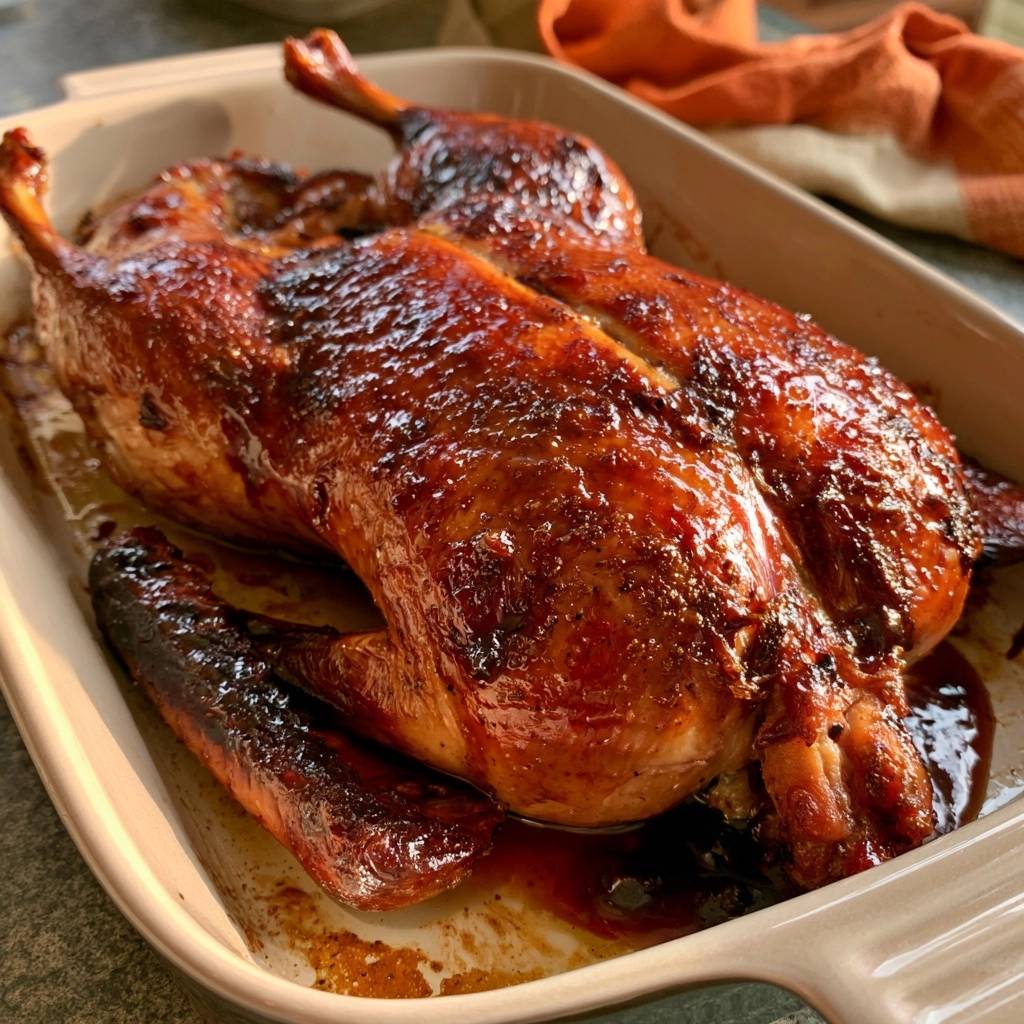
The duck roasts before the glaze is applied, then gets brushed with the glaze in stages. This timing lets the skin render before the sweet coating goes on. Brush evenly so the plum mixture covers the surface; follow the recipe card for when to use each portion and how long to continue roasting.
Check the thickest part of both the breast and inner thigh with an instant-read thermometer, avoiding bone. The recipe card gives the required temperature and the interval for checking again if either spot is below it. Use those directions to guide any additional roasting rather than judging doneness by the glaze color alone.
Rest before carving
After roasting, transfer the duck to a carving board and let it rest for the period listed on the recipe card. Resting gives you time to prepare for carving and helps keep the sliced meat from losing its juices onto the board. Serve the duck sliced with the pan juices, as described in the recipe card.
Frequently Asked Questions
Why prick the duck skin before roasting?
Pricking the skin gives rendered fat a route out as the duck cooks. Take care to pierce only the skin, not the meat. Patting the duck dry first and setting it on a rack also follows the recipe’s approach to preparing it for roasting.
When should I brush on the plum glaze?
Brush on the glaze after the initial roasting, following the timing on the recipe card. It is applied in stages, with the remaining glaze added later. This gives the skin time to roast before it is coated with the sweet, spiced mixture.
Where should I check the duck’s temperature?
Check the thickest part of the breast and the inner thigh with an instant-read thermometer, avoiding bone in both spots. The recipe card specifies the target temperature and how often to recheck if either area has not reached it.
Whole Roasted Duck with Five-Spice Plum Glaze
Course: Main CourseCuisine: AmericanDifficulty: Easy4
servings20
minutes2
hours50
minutes850
kcal3
hours25
minutesThis whole roasted duck is seasoned simply, then brushed with a ginger and five-spice plum glaze. Serve it sliced with the pan juices.
Ingredients
- Duck
1 whole duck (5 to 6 lb), giblets removed
1 tsp kosher salt
1/2 tsp black pepper
- Five-Spice Plum Glaze
1 cup plum preserves
2 tbsp low-sodium soy sauce
1 tbsp honey
1 tbsp apple cider vinegar
2 tbsp apple juice
1 tsp grated fresh ginger
1 garlic clove, finely grated
1 tsp Chinese five-spice powder
Directions
- Heat the oven to 350°F. Pat the duck dry inside and out. Prick the skin all over with a skewer, taking care not to pierce the meat. Season the cavity and skin with the salt and pepper. Set the duck breast side up on a rack in a roasting pan.
- In a small saucepan, stir together the plum preserves, soy sauce, honey, cider vinegar, apple juice, ginger, garlic, and five-spice powder. Bring to a gentle simmer over medium-low heat and cook for 10 minutes, stirring often, until slightly thickened. Set aside.
- Roast the duck for 2 hours and 20 minutes, carefully pouring off excess rendered fat after 1 hour and 10 minutes. Increase the oven to 400°F and brush the duck with half the glaze. Roast for 10 minutes, brush with the remaining glaze, then roast for 10 minutes more.
- Check the thickest part of the breast and inner thigh with an instant-read thermometer, avoiding bone; both should reach 165°F. If either is below that temperature, continue roasting and check every 5 minutes. Transfer the duck to a carving board and let it rest for 15 minutes before carving.
Notes
- Strain the rendered duck fat into a heat-safe container and refrigerate it for roasting potatoes.