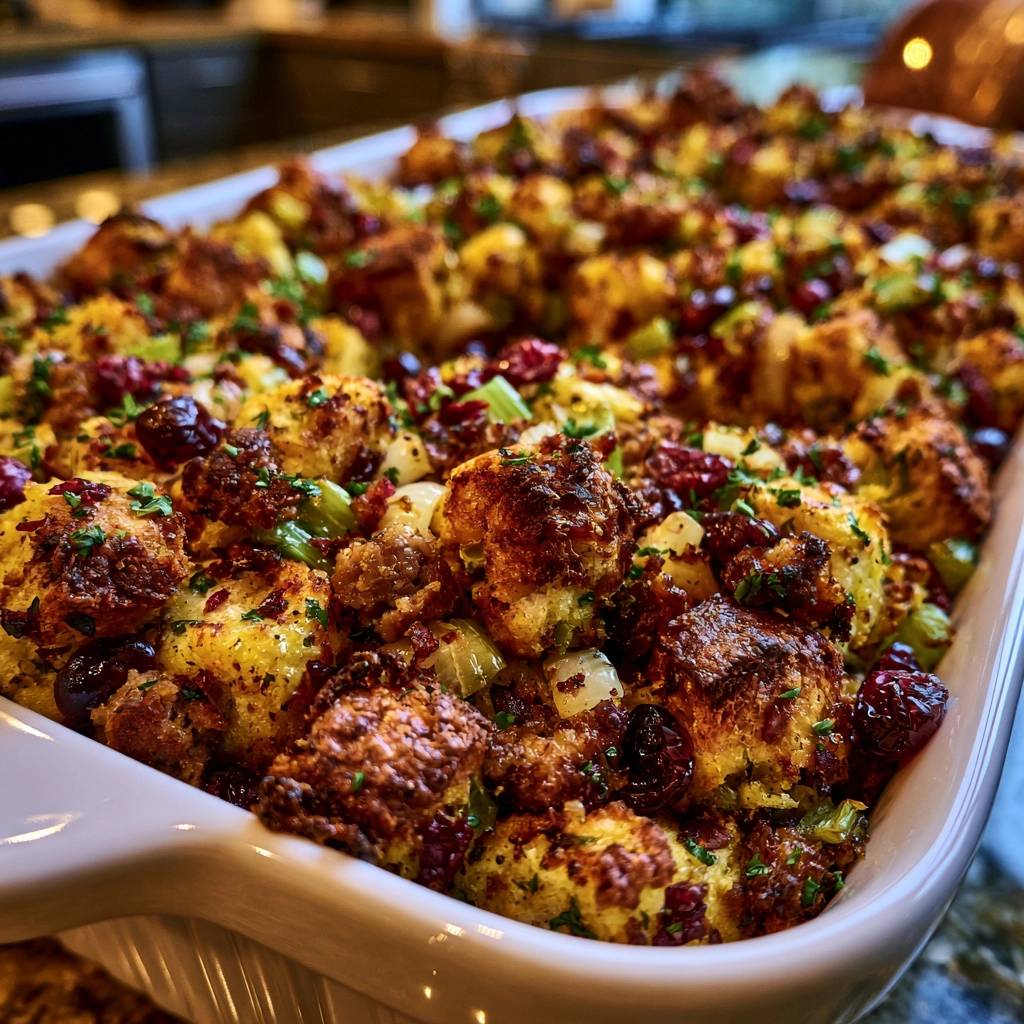
Most holiday tables suffer from a silent epidemic: soggy, gummy stuffing that resembles wet cardboard more than a gourmet side dish. We’ve all been there, staring at a heavy mass of bread that lost its identity the moment the broth hit the pan. This Cranberry and Herb Cornbread Stuffing rejects that fate by focusing on a specific structural balance between a custardy, savory interior and a shattered-glass, crispy exterior.
The flavor profile here isn’t just “salty.” Instead, you get a sophisticated tug-of-war between the earthy warmth of rubbed sage, the sharp tartness of dried cranberries, and the smoky depth of high-quality poultry sausage. It’s a dish designed to stand up to heavy gravies without dissolving into mush, providing a textural playground that keeps you coming back for a second scoop.
The secret to this architectural success lies in the moisture ratio. While most recipes drown the bread in liquid, I’ve dialed back the broth and introduced a double-toast method. By dehydrating the cornbread cubes before they ever meet the aromatics, you create a rigid starch structure that can absorb flavor without collapsing. It’s the difference between a soggy sponge and a perfectly toasted crouton.
The Science of the Anti-Soggy Cornbread Base
Cornbread has a much coarser, more open crumb than traditional wheat bread. Because it lacks a strong gluten network, it tends to crumble into fine sand when it gets wet. To prevent this, we use the “Double-Toast Method.” By pre-baking the cubes at 300°F, you aren’t just drying them out; you’re creating a retrograded starch barrier. This protective crust acts like a shield, allowing the liquid to seep in slowly rather than instantly liquefying the bread.
Size matters when you’re cutting your cubes. Aim for consistent 1-inch pieces. This specific surface-area-to-volume ratio ensures there is enough “crust” to provide a crunch, but enough “middle” to stay tender. If the cubes are too small, they vanish into the mix. If they’re too large, the center stays dry and chalky. You want every bite to have that distinct transition from a crispy edge to a soft, herb-soaked center.
Why Day-Old Bread Outperforms Fresh Loaves
Fresh cornbread is full of moisture, which is great for a snack but disastrous for stuffing. As bread stales, moisture migrates from the starch granules to the interstitial spaces and eventually evaporates. This leaves behind a dry, porous structure. Think of stale bread as a thirsty, dry sponge. It’s ready to soak up melted butter and savory sausage fat, whereas fresh bread is already “full” and can only turn into a paste when more liquid is added.

Essential Components for Cranberry and Herb Cornbread Stuffing
Quality control starts with your liquid base. I always recommend low-sodium chicken broth because it gives you total authority over the salt curve. If you use standard broth, the salt concentrates as the liquid evaporates in the oven, often leaving the dish inedibly salty. Similarly, unsalted butter is mandatory. It allows the creamy, fatty flavor to shine through without competing with the seasoning in the sausage.
The choice of dried cranberries over fresh ones is a calculated move for texture. Fresh berries burst during baking, releasing juices that add unwanted moisture to the bread cubes. Dried cranberries, however, offer a concentrated, chewy tartness. They act as little “flavor bombs” that cut through the richness of the butter and meat, providing a necessary acidic counterpoint to the savory herbs.
Selecting the Right Sausage and Aromatics
For a deep, savory base, ground turkey sausage or a high-quality beef sausage works beautifully. If you’re looking for that classic holiday flavor, look for a “breakfast style” seasoning profile featuring sage and black pepper. When it comes to the aromatics, stick with yellow onions. They have a higher sugar content than white onions, which means they caramelize more effectively, providing a sweet, jammy foundation for the celery and herbs.
The Role of Smoked Paprika in Visual Appeal
Smoked paprika is my favorite “cheat code” for professional-looking stuffing. Beyond the subtle wood-smoke flavor, the pigments in the paprika react with the heat to create a deep mahogany hue. This gives the stuffing a “sun-kissed” look long before the bread actually browns, ensuring the dish looks rustic and well-cooked without needing to stay in the oven so long that the interior dries out.
Step-by-Step: Achieving the Perfect Texture
Achieving the perfect stuffing is a three-phase operation. You can’t just throw everything in a bowl and hope for the best. You have to manage the dehydration, the infusion of fats, and the final high-heat sear to get that magazine-quality finish.
Phase 1: The Protective Crust Pre-Bake
Start by spreading your cubes on a sheet pan at 300°F. You aren’t looking for a deep brown color yet; you just want them to feel like croutons. When you squeeze a cube, it should feel firm and dry to the touch. This step is the insurance policy for your texture. If you skip this, no amount of careful mixing will save the dish from becoming gummy.
Phase 2: Sautéing for Maximum Flavor Extraction
Brown your meat in a large skillet until it’s crispy around the edges. That “fond”—the brown bits stuck to the bottom—is pure gold. When you add the butter and vegetables, use a wooden spoon to scrape those bits up. You want the celery to reach a “tender-crisp” state. It should be soft enough to eat but still offer a slight snap, providing a textural contrast to the soft bread and chewy cranberries.
Phase 3: The Gentle Fold and Aerated Assembly
When you combine the liquid and the bread, treat it like you’re folding a delicate cake batter. Use a large spatula and lift from the bottom. Stop the moment the liquid is absorbed. When transferring to the baking dish, do not pack it down! You want to pile the cubes loosely. This creates “peaks and valleys” where the hot air can circulate, resulting in those coveted crunchy top edges while the bottom stays moist.
Avoiding Common Stuffing Mistakes
The most common mistake is over-mixing. If you stir too vigorously, the cornbread will break down into a thick mash. If the mixture looks a little dry before it goes into the oven, don’t panic. The steam created during the baking process will soften the cubes. However, if it looks like a soup, you’ve added too much liquid. You can fix this by adding a few more toasted bread cubes or extending the bake time by 10 minutes.
Never cover this stuffing with foil. Covering it traps steam, which effectively boils the bread and destroys the crust you worked so hard to build. By baking it uncovered at 375°F, you allow the excess moisture to escape, leaving behind a concentrated flavor and a top layer that crackles when you bite into it.
Make-Ahead Strategies and Storage Logistics
You can absolutely prep this ahead of time to save your sanity on the big day. Toast the bread cubes and store them in a sealed bag at room temperature up to two days in advance. You can also sauté the sausage, onions, and celery, and keep that mixture in the fridge. Do not combine the wet and dry components until you are ready to put the dish in the oven, or the bread will lose its structural integrity.
Leftovers stay delicious in the fridge for about three days. I don’t recommend freezing this dish, as the cellular structure of the cornbread breaks down when frozen, resulting in a grainy texture upon thawing. To reheat, skip the microwave. Instead, toss the stuffing in a hot skillet with a tiny pat of butter. This crisps the edges back up and restores that “just-baked” feel.
Optimal Pairings for Herb-Forward Stuffing
This stuffing is a natural partner for roasted poultry, but it also shines alongside braised lamb shanks or a hearty roasted root vegetable platter. The sage and thyme notes pair beautifully with earthy flavors like mushrooms or roasted squash. Because the dish is quite rich with butter and sausage, I like to serve it with something acidic on the side, like a bright citrus salad or pickled green beans, to cleanse the palate between bites.
Expert Troubleshooting
How do I fix stuffing that is too salty?
If you realize the mixture is too salty before baking, the best fix is to add more unseasoned, toasted bread cubes to dilute the sodium. If it’s already baked, you can balance the saltiness by serving it with a slightly acidic element, like a splash of apple cider vinegar in your gravy or an extra handful of tart dried cranberries stirred into the top.
Can I substitute the eggs in this recipe?
Eggs act as the binder that creates a “custardy” interior. If you need to replace them, a flax-meal slurry (1 tablespoon ground flax mixed with 3 tablespoons water per egg) provides a similar structural hold. Keep in mind the texture will be slightly denser and less fluffy than the original version, but it will still hold the cubes together effectively.
Why is my stuffing still gummy in the center?
Gummy stuffing usually happens for two reasons: you didn’t toast the bread long enough in the first step, or you over-mixed the liquid into the bread. If you find the center is too wet while the top is already browning, lower the oven temp to 325°F and tent the dish very loosely with foil for another 10-15 minutes to let the center set without burning the top.
What is the best cornbread recipe for stuffing?
Avoid “Jiffy” style or overly sweet Northern cornbread. You want a Southern-style cornbread with a high cornmeal-to-flour ratio and very little sugar. A sweet cornbread will make the stuffing taste like a dessert when combined with the cranberries. Look for a recipe that uses buttermilk and is baked in a cast-iron skillet for the best flavor and texture.

Cranberry and Herb Cornbread Stuffing
Course: Side DishCuisine: AmericanDifficulty: easy10
servings20
minutes45
minutes65
Minutes310
kcalAmerican
Ingredients
8 cups cornbread cubes (1-inch pieces, preferably day-old)
1 pound ground turkey sausage
1 cup yellow onion, diced
1 cup celery, sliced
1 cup dried cranberries
1 1/2 cups low-sodium chicken broth (reduced from 2 cups to ensure crispness)
1/2 cup unsalted butter, melted
2 large eggs, beaten
2 tablespoons fresh parsley, finely chopped
1 teaspoon dried sage
1 teaspoon dried thyme
1/2 teaspoon salt
1/2 teaspoon black pepper
1/2 teaspoon smoked paprika (for the deep golden color)
Directions
- To solve the soggy bottom issue, start by preheating your oven to 300°F. Spread your cornbread cubes on a large baking sheet in a single layer. Bake for 20-25 minutes until they are dry to the touch and starting to turn golden. This creates a protective crust that prevents the bread from disintegrating.
- Increase oven temperature to 375°F (higher heat is necessary for the toasted peaks seen in the image). Grease a 9×13 inch ceramic baking dish.
- In a large skillet over medium-high heat, brown the sausage until fully cooked and slightly crispy. Remove the meat with a slotted spoon and set aside, leaving the rendered fat in the pan.
- In the same skillet, add 2 tablespoons of the butter to the sausage fat. Add the onion and celery, sautéing for 6 to 8 minutes until the onions are translucent and the celery is tender-crisp.
- In a very large mixing bowl, combine the toasted cornbread cubes, cooked sausage, sautéed vegetables, and dried cranberries. Sprinkle with smoked paprika.
- In a separate bowl, whisk together the chicken broth, remaining melted butter, beaten eggs, parsley, sage, thyme, salt, and pepper.
- Drizzle the liquid mixture over the bread cubes. Fold very gently with a large spatula. Stop mixing as soon as the liquid is absorbed to keep the cubes intact.
- Transfer the mixture to the prepared baking dish. Do not pack it down; pile the cubes loosely so the top edges are exposed to the heat, which creates the “crunchy peaks” look.
- Bake uncovered for 35-40 minutes. (Skipping the foil cover ensures the moisture evaporates properly and the tops achieve the deep, dark brown crust shown in the photo).
- Garnish with a final sprinkle of fresh parsley and serve immediately while the crust is at its peak crispness.
Notes
- The secret to the crunchy peaks is piling the cubes loosely and skipping the foil cover to allow moisture to evaporate properly.