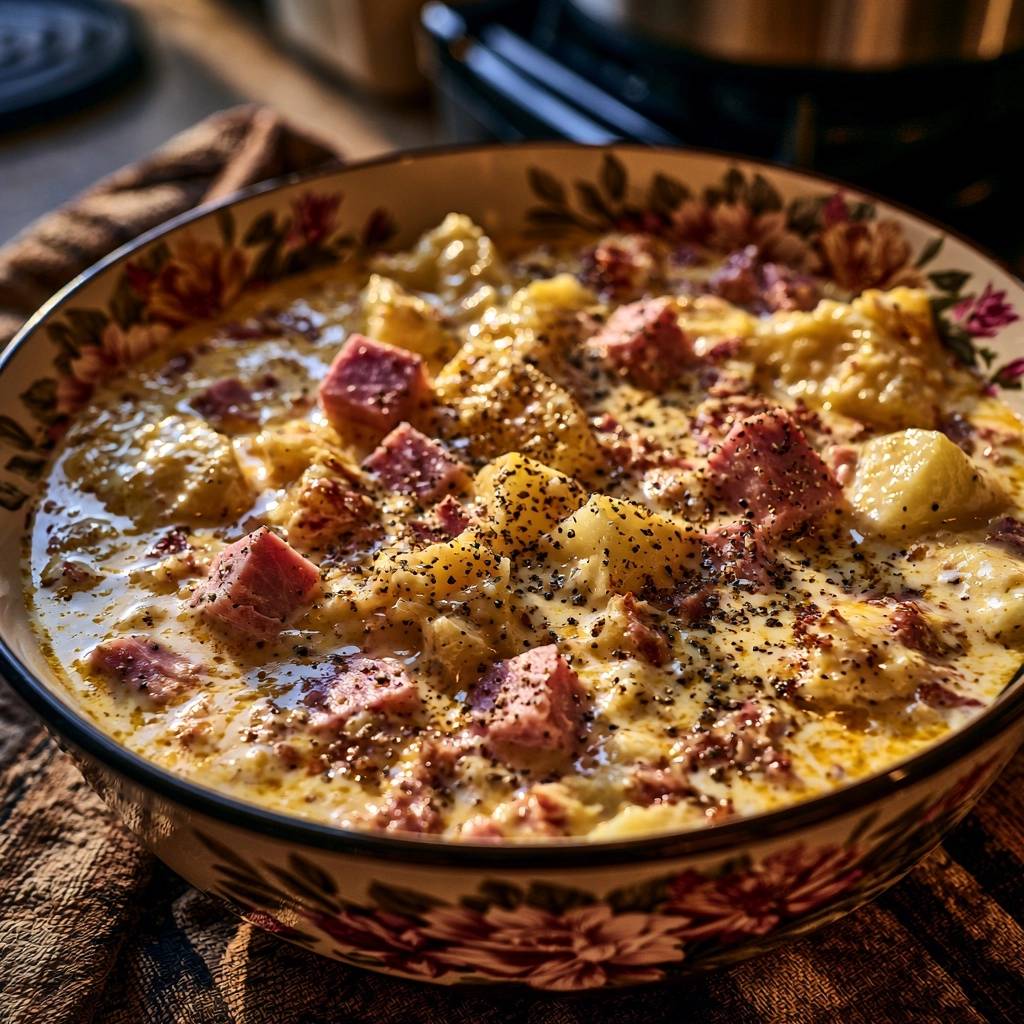
Imagine a bowl of soup so thick and velvety that it feels like a warm hug on a cold afternoon. We’ve all experienced the disappointment of a slow cooker potato soup that ends up looking like a thin, translucent broth with sad, floating vegetable chunks. That watery consistency usually happens because the liquid overwhelms the vegetables, leaving you with something that feels more like a tea than a meal.
This recipe changes the game by focusing on a rich, golden binder that clings to every piece of ham and potato. Instead of relying on a heavy flour roux that can sometimes taste pasty, we use the natural starches within the potatoes themselves to create a luxurious texture. It’s the difference between a soup that just sits in the bowl and one that feels truly substantial and hearty.
The secret to this success lies in the “starch-release” method I’ve perfected over the years. By intentionally mashing a portion of the cooked potatoes directly into the cooking liquid, you create an instant thickener that emulsifies with the dairy. This ensures your soup stays creamy and cohesive, even if you’re reheating a bowl for lunch the next day.
The Secret to Thick Potato Soup Texture
Most people assume that more cream equals a thicker soup, but that’s a common misconception that leads to a greasy finish. To get that professional, spoon-coating thickness, you need to tap into the science of the potato itself. Potatoes contain two types of starch: amylose and amylopectin. When you mash about 30% of the potatoes into the broth, these starches break free and swell, acting as a natural thickening agent.
This technique creates a rustic, roux-like consistency without the extra step of cooking flour and butter on the stove. As the mashed potato particles mingle with the heavy cream, they form a stable emulsion. This prevents the fats from separating and ensures that every bite has a consistent, silky mouthfeel rather than a watery base with oily droplets on top.
Essential Components for a Hearty Base
Choosing the right potato is the most important decision you’ll make for this dish. I always reach for Yukon Golds because they strike the perfect balance between waxy and starchy. While Russets tend to fall apart completely and turn grainy, Yukon Golds hold their shape in those 1-inch cubes while still releasing enough starch to thicken the liquid. They also have a naturally buttery flavor and a beautiful yellow hue that makes the final soup look incredibly appetizing.
The liquid base is equally vital for controlling the flavor profile. I recommend using a low-sodium chicken broth so you can manage the salt levels yourself. Remember, ham is naturally salty, and as it simmers for six hours, it will release that salt into the broth. By starting with a low-sodium base, you prevent the soup from becoming an salt bomb by the time it’s finished cooking.
Selecting the Right Ham and Aromatics
For the best texture, don’t dice your ham too small. You want thick, half-inch chunks that provide a meaty “chew” to contrast with the soft potatoes. If the pieces are too tiny, they get lost in the creaminess. Using a pre-cooked bone-in ham or a thick ham steak works beautifully here, as they stand up well to the long, slow heat of the cooker.
When it comes to aromatics, yellow onions are the superior choice over white or red varieties. They have a higher sugar content, which allows them to melt into the background and provide a deep, savory sweetness after six hours. A touch of dried thyme adds an earthy backbone that cuts through the richness of the dairy without overpowering the delicate potato flavor.
Dairy and Fats: Achieving the Golden Binder
To achieve that signature golden binder, we use a combination of unsalted butter and heavy cream. Adding cubed butter at the very beginning is a pro move; it coats the potatoes as they soften, which helps them retain a rich flavor. When it’s time for the dairy, stick with heavy cream. Milk or half-and-half are more prone to curdling under high heat and won’t provide the same decadent body.
The sharp cheddar cheese should be the final addition. Sharp cheddar provides a necessary acidic tang that balances the heavy fats. However, you must add it at the very end. If cheese cooks for too long, the proteins tighten and the fats leak out, resulting in a grainy, broken texture. Adding it in the last 20 minutes ensures it melts into a smooth, cohesive sauce.
Step-by-Step: Building the Slow Cooker Base
Layering your ingredients correctly ensures even cooking and better flavor development. Start by tossing your potatoes, ham, aromatics, and spices into the pot. When you pour in the chicken broth, pay close attention to the level. A common mistake is submerging the ingredients entirely. You actually want the potatoes to be “peeking out” of the liquid slightly.
This “peeking out” rule is essential because the onions and potatoes will release their own moisture as they cook. If you start with too much liquid, you’ll end up with a thin soup regardless of how much you mash. Set your slow cooker to low for 6 to 7 hours. This gentle heat prevents the edges of the potatoes from becoming mushy while the centers stay hard.
The Mashing Technique for Maximum Creaminess
Once your timer goes off and the potatoes are fork-tender, it’s time for the most important step. Take a standard potato masher or even a large sturdy fork and press down into the pot. You aren’t looking to make mashed potatoes; you just want to crush about a third of the chunks. You’ll see the broth transform instantly from a clear, thin liquid to an opaque, thickened base.
As you stir these crushed potatoes back into the broth, the liquid will take on a stew-like appearance. This is the visual cue that your starch has been successfully released. This thick base is what will support the heavy cream and cheese, preventing them from sinking to the bottom or feeling too heavy on the palate.
Finishing with Cream and Sharp Cheddar
After mashing, pour in your heavy cream and sprinkle the shredded cheddar over the top. Switch your slow cooker to the “High” setting for the final 20 minutes. This burst of heat is necessary to help the cheese emulsify properly with the potato starch. Keep the lid on during this time to trap the steam, which helps the cheese melt uniformly.
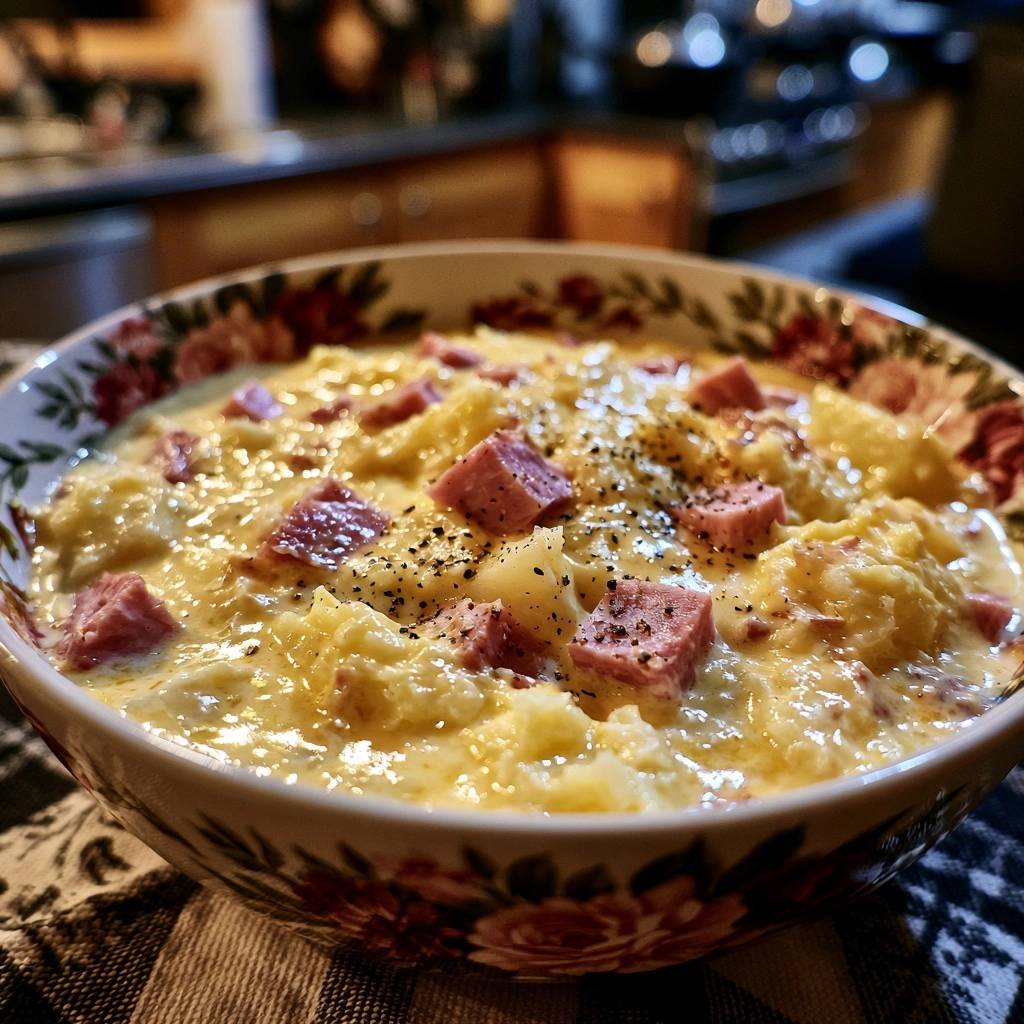
Before serving, give the soup one final, vigorous stir. This isn’t just a gentle fold; you want to marry the fats from the cheese and cream with the starchy broth. You’ll notice the soup take on a glossy, golden sheen. The texture should be thick enough to hold a spoon upright for a second before it slowly tips over.
Avoiding Common Slow Cooker Soup Mistakes
If you find your soup is still thinner than you’d like, don’t panic. You can whisk a tablespoon of cornstarch with two tablespoons of cold water and stir that slurry into the bubbling soup for 10 minutes. On the flip side, if it’s too thick (which can happen if your potatoes were extra starchy), simply splash in a little extra broth until you reach your desired consistency.
Another common pitfall is over-salting. Because ham varies wildly in salt content, I always suggest under-salting at the beginning. You can always add more at the end, but you can’t take it away. If the soup tastes flat, it usually needs a pinch more black pepper or a tiny splash of apple cider vinegar to brighten the flavors rather than more salt.
Flavor Variations and Ingredient Swaps
While this classic version is a crowd-pleaser, you can easily tweak the flavors. For a more sophisticated, French-style base, replace the yellow onion with two large cleaned and sliced leeks. Leeks offer a milder, more buttery onion flavor that pairs beautifully with Yukon Golds. You can also swap the dried thyme for fresh rosemary if you want a more piney, aromatic scent.
If you don’t have ham on hand, smoked turkey is a fantastic alternative. It provides that same smoky depth without changing the fat content of the soup significantly. For those who want a bit of a kick, adding a diced jalapeño (seeds removed) at the beginning of the cook time adds a subtle heat that cuts through the creamy cheddar finish.
Optimal Pairings for a Complete Meal
Since this soup is incredibly rich and creamy, you want side dishes that offer a sharp or crunchy contrast. A thick slice of toasted sourdough bread is the perfect vessel for mopping up the bottom of the bowl. The acidity of the sourdough cuts through the heavy cream, making each bite feel fresh.
A bitter green salad is another excellent companion. Think arugula or radicchio tossed in a sharp lemon vinaigrette. The bitterness of the greens and the acid in the dressing act as a palate cleanser between spoonfuls of the savory, salty soup. If you want to keep it simple, roasted broccoli with a squeeze of lemon provides a nice charred texture that complements the soft potatoes.
Storage, Reheating, and Freezing Guidelines
Potato soup actually tastes better the next day as the flavors have more time to meld. However, be aware that the potatoes will continue to absorb liquid as they sit in the fridge. When you go to reheat it, you’ll likely find it has turned into a thick paste. Simply add a splash of broth or water before heating to bring it back to its original glory.
When reheating, the stovetop is your best friend. Heat it over medium-low, stirring frequently. Avoid letting it come to a rolling boil, as the high heat can cause the cream and cheese to separate, leaving you with a grainy texture. While you can freeze this soup, be warned that potatoes can sometimes become slightly mealy after thawing. To fix this, give the thawed soup a quick pulse with an immersion blender after reheating to smooth it back out.
Expert Troubleshooting and Technical FAQ
Why are my potatoes still firm after 6 hours?
This usually happens for two reasons: either the slow cooker was opened too many times, letting the heat escape, or your potatoes are old. Older potatoes have tougher cell walls that resist softening. Additionally, if you added something acidic like lemon juice or vinegar too early, it can prevent the potato starch from breaking down. If they are still firm, turn the cooker to high for an extra hour.
Can I use frozen potatoes for this recipe?
You can use frozen diced potatoes, but you must reduce the chicken broth by about half a cup. Frozen potatoes release significantly more water as they thaw and cook compared to fresh ones. If you use the full amount of broth, you’ll likely end up with the watery soup we are trying to avoid. Also, skip the initial 6-hour cook time; frozen potatoes usually only need 3-4 hours on low.
How do I prevent the cheese from clumping?
The biggest culprit for clumping is pre-shredded cheese. Those bags are coated in potato starch or cellulose to prevent the shreds from sticking together in the package. Unfortunately, those same coatings prevent the cheese from melting smoothly into a sauce. Always buy a block of sharp cheddar and grate it yourself for the silkiest results.
Is it possible to over-mash the soup?
Yes, you want to avoid turning this into a puree. The goal is a “Skyscraper” texture—lots of height and chunks held together by a thick sauce. If you mash more than 50% of the potatoes, the soup loses its rustic charm and starts to feel like thin mashed potatoes. Aim for that 30% sweet spot to keep the hearty, chunky bite intact.
What is the best way to add extra heat?
If you want a spicy kick without changing the beautiful golden color of the soup, use white pepper or a pinch of cayenne. White pepper provides a sharp, floral heat that blends perfectly with dairy. If you prefer a smoky heat, a small amount of chipotle powder works wonders, though it will slightly darken the color of the broth. Always finish with a generous crack of coarse black pepper for that high-contrast look and a final punch of flavor.

Creamy Slow Cooker Potato and Ham Soup
Course: Main CourseCuisine: AmericanDifficulty: easy6
servings15
minutes6
hours360
Minutes440
kcalAmerican
Ingredients
3 pounds Yukon Gold potatoes, peeled and diced into 1-inch cubes
1 pound cooked ham, diced into thick 1/2-inch chunks
1 medium yellow onion, finely diced
3 cloves garlic, minced
3 cups low-sodium chicken broth (reduced from 4 to ensure a thicker, chunky consistency)
1 teaspoon salt
2 teaspoons coarse ground black pepper (divided)
1/2 teaspoon dried thyme
1/4 cup unsalted butter, cubed
1.5 cups heavy cream
1 cup shredded sharp cheddar cheese
Directions
- Place the diced potatoes, diced ham, onion, garlic, salt, 1 teaspoon of the black pepper, thyme, and the cubed butter into a 6-quart slow cooker.
- Pour the chicken broth over the ingredients. The liquid should not fully submerge the potatoes; they should be peeking out slightly to ensure the final result is a thick stew-like soup rather than a thin broth. Cover and cook on low for 6 to 7 hours or on high for 3 to 4 hours until the potatoes are fork-tender.
- To solve the watery soup problem, use a potato masher or a large fork to crush about one-third of the potatoes directly in the pot. Stir these mashed potatoes into the broth. This releases the natural starches which act as a thickener, ensuring the soup is never thin or runny.
- Stir in the heavy cream and shredded cheddar cheese. Cover and cook on high for an additional 20 minutes. This allows the cheese to fully emulsify and the cream to thicken with the potato starch.
- Give the soup a final vigorous stir. The texture should be chunky with a thick, creamy golden binder. Serve hot in bowls and top generously with the remaining 1 teaspoon of coarse cracked black pepper to achieve the high-contrast, bold finish shown in the image.
Notes
- To ensure the soup is never watery, use a potato masher to crush one-third of the potatoes before adding the cream and cheese. This releases natural starches for a thicker consistency.