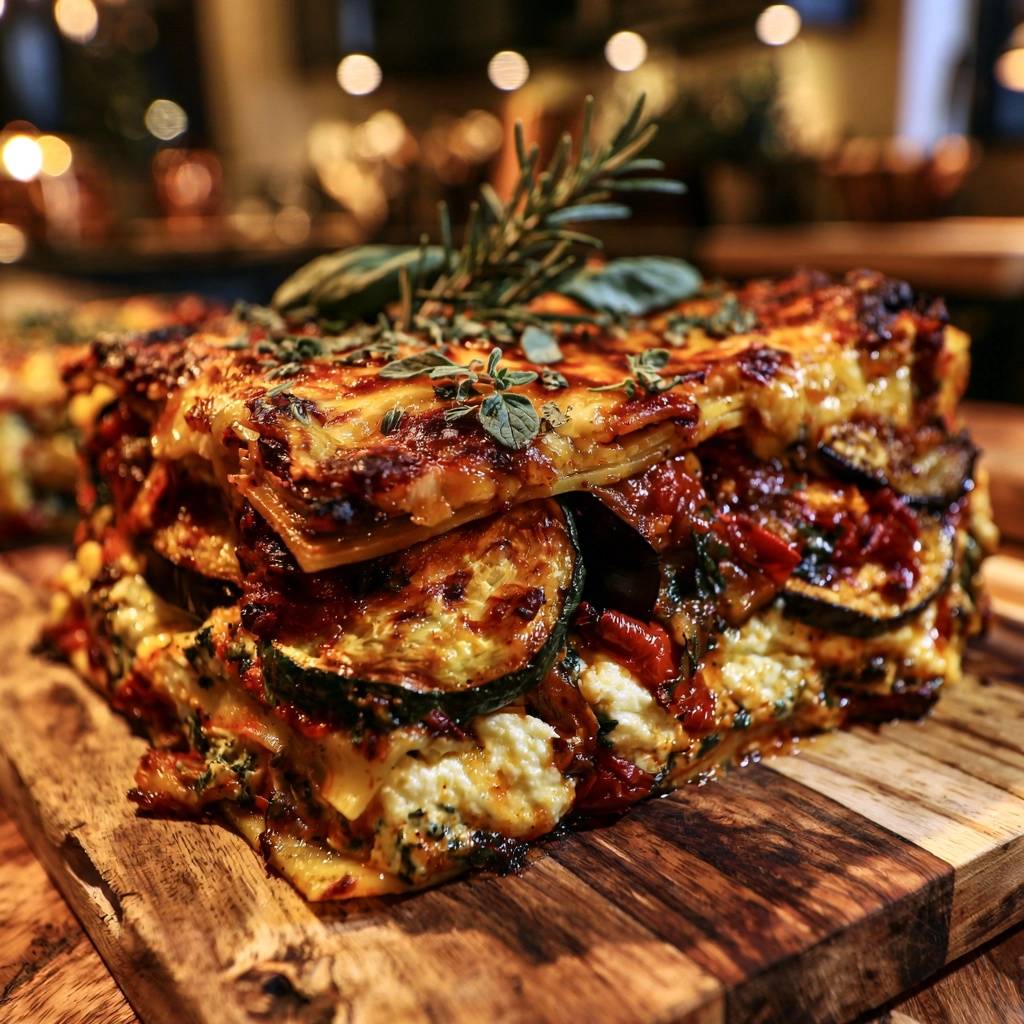
We’ve all been there: you pull a beautiful vegetable lasagna out of the oven, let it cool slightly, and then cut into it only to find a watery soup at the bottom of the pan. It’s heartbreaking to see all that effort turn into a soggy mess. This Roasted Zucchini and Herb Lasagna solves that problem forever by focusing on one thing: moisture management.
The goal here is to create a “skyscraper” style lasagna that stands tall on the plate with distinct, visible layers. By treating the vegetables with the respect they deserve, we concentrate their natural sugars and lock in a meaty texture that rivals any traditional version. You aren’t just making dinner; you’re engineering a masterpiece of structural integrity and deep, roasted flavor.
The secret to this success lies in the pre-roasting step. Most people throw raw zucchini into the layers, which then releases all its water during the bake. By roasting the slices at a high heat first, we evaporate that liquid and develop a caramelized crust that adds a smoky depth you simply can’t get from boiling or steaming. It’s the difference between a bland casserole and a restaurant-quality entree.
The Science of Moisture in Vegetable Pasta
Zucchini is roughly 95% water, which is why it’s the primary culprit behind a runny lasagna. When the cellular structure of the squash breaks down under heat, it releases all that internal liquid directly into your sauce. To prevent this, we use the power of osmosis. Salting the zucchini rounds before they ever hit the oven draws surface moisture out, allowing the heat to brown the vegetable rather than steam it.
Furthermore, the choice of oven-ready noodles is a strategic move for this specific dish. Unlike traditional boiled noodles that are already saturated with water, oven-ready sheets act like a sponge. They are designed to absorb the residual steam and juices released by the cheese and vegetables during the baking process. This creates a tight, cohesive bond between the layers that keeps the lasagna from sliding apart when you slide your spatula underneath.
Essential Components for Roasted Zucchini and Herb Lasagna
Quality ingredients are the foundation of a great lasagna, especially when you’re working with a vegetarian profile. I always recommend using whole milk ricotta cheese. Part-skim versions often contain stabilizers and extra moisture that can weep during baking, whereas whole milk ricotta provides a creamy, stable fat content that holds its shape. It creates a lush mouthfeel that balances the acidity of the tomatoes.
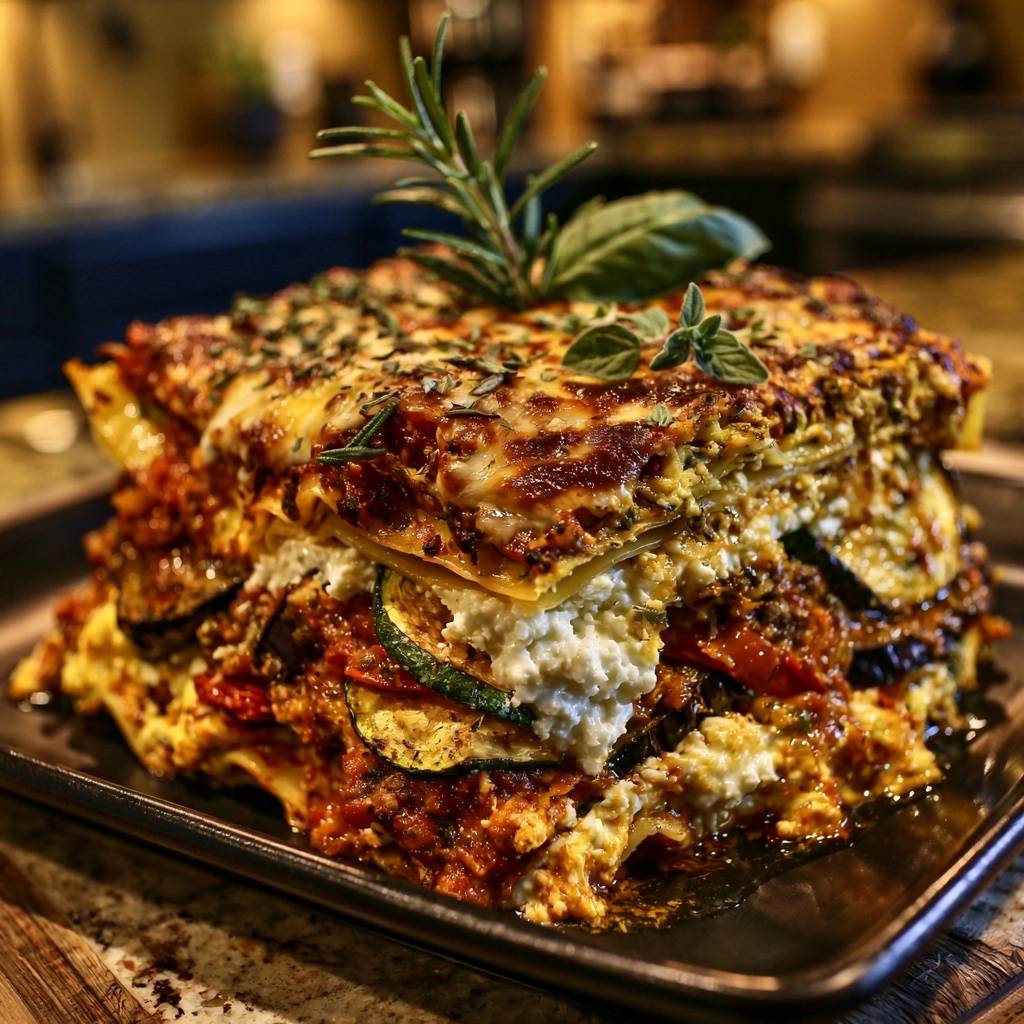
Another heavy hitter in this recipe is the sun-dried tomato. These little gems are flavor bombs that provide a chewy, concentrated sweetness. Because they are dehydrated, they add intense tomato flavor without adding a single drop of extra liquid to the pan. When paired with the fresh spinach, they create a beautiful color contrast and a sophisticated texture that makes every bite interesting.
Selecting the Right Zucchini and Herbs
When you’re at the grocery store, look for medium-sized zucchini that feel heavy for their size. Avoid the massive, “baseball bat” sized ones; they tend to be incredibly seedy and hold far more water than their smaller counterparts. Smaller zucchini have a tighter flesh that roasts up beautifully and holds its circular shape even after an hour in the oven.
Fresh herbs are non-negotiable here. While dried herbs have their place, the bright, piney aroma of fresh rosemary and the peppery bite of fresh oregano bring a garden-fresh quality to the ricotta. If you use dried herbs, the flavor can often get lost in the heavy cheese layers, but fresh herbs cut right through the richness.
The Role of High-Density Marinara
Your choice of sauce can make or break the “anti-soggy” promise. You want a thick, chunky marinara that doesn’t run across the plate when you pour it. If your favorite store-bought sauce looks a bit thin or watery, don’t worry. You can easily fix it by simmering it in a small saucepan for 10 to 15 minutes before assembling. This reduces the water content and intensifies the garlic and herb notes.
Phase One: Pre-Roasting for Maximum Flavor
Preheat your oven to 425°F to get started. This high temperature is essential for triggering the Maillard reaction, which is the chemical process that browns the natural sugars in the zucchini. After you’ve salted and patted your zucchini rounds dry, give them a light drizzle of olive oil and spread them out in a single layer. You want them to have plenty of “breathing room” on the pan so they roast instead of steaming.
Roast them for about 18 to 20 minutes, flipping them halfway through. You’re looking for edges that are deeply browned and centers that look translucent and golden. When you pull them out, they should look slightly shriveled and intensely fragrant. This caramelization is what gives the lasagna its “meaty” bite and ensures that the vegetable flavor isn’t drowned out by the cheese.
Phase Two: Engineering the Ricotta and Herb Binder
The ricotta layer isn’t just for flavor; it’s the “glue” of your lasagna. By mixing in a lightly beaten egg, you’re adding a structural protein. As the lasagna bakes, the egg sets, turning the ricotta into a firm, custard-like layer rather than a runny sauce. This is what allows you to cut those perfect, clean squares that look so impressive on a plate.
When adding your fresh spinach, make sure it’s chopped finely. Large, whole leaves of spinach can create slippery “fault lines” in your lasagna, causing the layers to slide off each other. Finely chopping the greens ensures they are evenly distributed throughout the cheese, providing a pop of color and nutrition in every single forkful without compromising the stability of the dish.
Phase Three: Constructing the Roasted Zucchini and Herb Lasagna
Building the lasagna is like constructing a house; you need a solid foundation. Start with a very thin layer of sauce on the bottom of your 9×13 dish. This prevents the bottom noodles from sticking and ensures they cook through. Place your first layer of noodles down, then spread a portion of the ricotta mixture. Follow this with a layer of those beautiful roasted zucchini rounds, a sprinkle of sun-dried tomatoes, and a handful of mozzarella.
As you build upward, try to place some of the zucchini rounds right up against the glass edges of the dish. This creates a rustic, “towering” look where the roasted vegetables are visible from the side. Repeat the layers until you reach the top, finishing with a final layer of noodles, a thin coating of sauce, and a generous blanket of mozzarella and parmesan cheese to create a golden crust.
The Two-Stage Baking and Browning Process
Once the lasagna is assembled, lower the oven heat to 375°F. The first stage of baking happens under a tent of foil for about 25 minutes. This traps the steam inside, which is exactly what those oven-ready noodles need to soften and cook through. Without the foil, the top would burn before the middle of the lasagna ever got hot.
For the second stage, remove the foil and bake for another 20 minutes. This is where the magic happens. You want to watch for the cheese to become bubbly and develop those gorgeous, deeply charred brown spots. These spots are concentrated bits of toasted cheese flavor. Don’t be afraid of a little color; that’s where the texture and taste live!
Why the 20-Minute Rest is Mandatory
I know it’s tempting to dive right in when the kitchen smells this good, but the 20-minute rest is the most important step in the entire recipe. Think of it as the “setting” phase. While the lasagna sits, the starches in the noodles finish absorbing any remaining liquid, and the cheese proteins firm up. If you cut it too early, the layers will collapse and the juices will run everywhere.
After 20 minutes, the internal temperature drops just enough for the lasagna to hold its shape perfectly. You’ll be able to lift out a tall, sturdy slice that shows off every single layer of roasted zucchini, green herb-flecked ricotta, and melted cheese. It’s the ultimate reward for your patience and the final insurance policy against a soggy bottom.
Troubleshooting Common Lasagna Obstacles
If you notice the top layer of cheese is browning too quickly before your timer goes off, simply slide the foil back over the top loosely. This stops the direct heat from scorching the cheese while allowing the center to continue cooking. Every oven is different, so it’s always a good idea to start checking the color about 10 minutes before the recipe says it’s done.
If your noodles feel a bit firm or “al dente” after the initial bake, it usually means there wasn’t quite enough moisture for them to absorb. You can fix this by adding a few tablespoons of water or extra sauce around the edges of the pan, covering it tightly with foil again, and popping it back in for 10 minutes. The extra steam will soften those stubborn edges right up.
Preventing a Dry Top Layer
The most common mistake is leaving the top layer of noodles exposed to the air. Any part of the noodle not covered by sauce or cheese will turn into a hard, crunchy cracker in the oven. When you’re finishing your assembly, make sure you spread the sauce all the way to the very corners and edges of the top noodles. A thick layer of mozzarella acts as a protective blanket, keeping the pasta underneath tender.
Make-Ahead Strategies and Storage Logistics
This lasagna is a fantastic candidate for meal prep. You can assemble the entire dish 24 hours in advance and keep it covered in the refrigerator. When you’re ready to eat, just take it out about 30 minutes before baking to take the chill off, then follow the standard baking instructions. It actually tastes even better the next day as the herbs have more time to infuse into the cheese.
For leftovers, store individual slices in airtight containers in the fridge for up to 4 days. To reheat, I recommend using the oven or a toaster oven at 350°F rather than the microwave. This helps maintain the roasted texture of the zucchini and keeps the cheese from getting rubbery. You can also freeze the baked lasagna for up to 3 months; just thaw it in the fridge overnight before reheating.
Complementary Sides for a Balanced Meal
Since this lasagna is quite rich and cheesy, you’ll want sides that offer a bit of acidity and crunch. A simple arugula salad with a sharp lemon vinaigrette is the perfect partner. The bitterness of the greens and the zing of the lemon cut right through the creamy ricotta and roasted zucchini. It cleanses the palate between bites and keeps the meal feeling light.
If you’re looking for something heartier, a crusty loaf of sourdough bread is excellent for mopping up any stray bits of herb-infused oil or marinara. You could also serve some roasted broccolini with red pepper flakes for a bit of heat. The goal is to provide a contrast in texture and flavor to the soft, comforting layers of the lasagna.
Frequently Asked Questions
How do I store leftovers and does this freeze well?
Store leftovers in an airtight container in the refrigerator for up to 4 days. This lasagna freezes exceptionally well because the zucchini has been pre-roasted to remove moisture. To freeze, let the baked lasagna cool completely, then wrap individual slices or the entire pan tightly in plastic wrap and then foil. It will stay fresh for up to 3 months. Thaw in the refrigerator for 24 hours before reheating in the oven at 350°F until bubbly.
Why is my lasagna still watery even after roasting the zucchini?
The most common reason for a watery lasagna is using a sauce that is too thin or not letting the dish rest long enough. If your marinara is “runny,” it will pool at the bottom. Always choose a thick, chunky sauce. Additionally, if you skip the 20-minute resting period, the natural juices don’t have time to be reabsorbed by the noodles, leading to a messy slice. Ensure you also pat the zucchini very dry after salting them!
Can I use gluten-free noodles for this recipe?
Yes, you can substitute gluten-free lasagna noodles. However, I recommend using the “boil-first” variety of gluten-free noodles rather than oven-ready ones, as gluten-free starches can be unpredictable in how they absorb moisture. If you use boil-first noodles, cook them for 2 minutes less than the package directions so they stay firm during the long bake in the oven.
What can I use if I don’t have fresh rosemary or oregano?
If you must use dried herbs, use about one-third of the amount called for in the recipe (roughly 2 teaspoons of dried instead of 2 tablespoons of fresh). Dried herbs are much more concentrated. To help release their oils, rub the dried herbs between your palms before stirring them into the ricotta mixture. You can also add a handful of fresh parsley or basil at the very end to bring back that “fresh” garden element.
Can I add other vegetables to this lasagna?
Absolutely, but follow the same moisture-control rules. If you want to add mushrooms or bell peppers, sauté or roast them first to cook off their water content. Never add raw, high-moisture vegetables directly to the layers, or you will end up with the “soup” problem we are trying to avoid. Roasted eggplant or sautéed kale are both excellent additions that pair well with the zucchini and sun-dried tomatoes.
Roasted Zucchini and Herb Lasagna
Course: Main CourseCuisine: Italian-AmericanDifficulty: easy8
servings30
minutes1
hour60
Minutes440
kcalItalian-American
Ingredients
3 large zucchini, sliced into 1/2 inch thick rounds
1 box oven-ready lasagna noodles
24 ounces whole milk ricotta cheese
3 cups shredded mozzarella cheese
1 cup grated parmesan cheese
1 egg, lightly beaten
3 cups thick, chunky marinara sauce (low moisture)
1/2 cup sun-dried tomatoes, chopped (for texture and color)
2 cups fresh spinach, chopped
2 tablespoons fresh rosemary, minced (plus whole sprigs for garnish)
2 tablespoons fresh oregano, chopped
2 tablespoons olive oil
Salt and black pepper to taste
Directions
- Preheat your oven to 425°F (220°C). This high heat is crucial for browning the vegetables without turning them to mush.
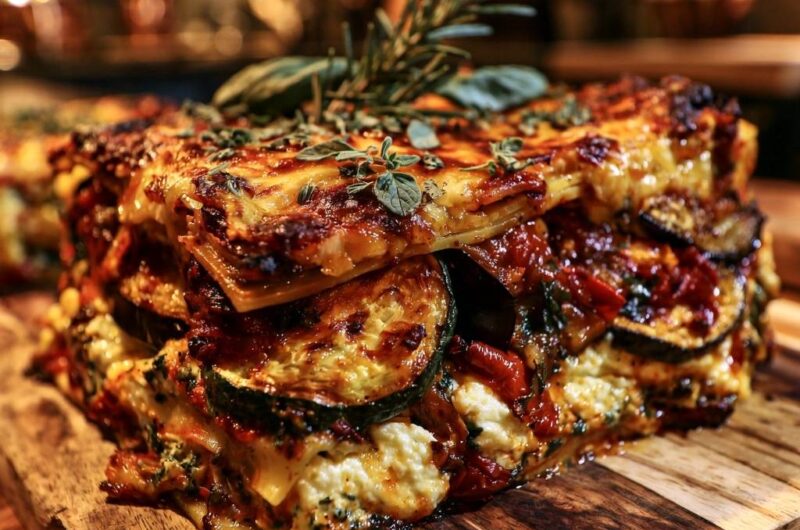
- To solve the soggy bottom problem, place zucchini rounds on a parchment-lined baking sheet. Lightly salt them and let sit for 10 minutes, then pat dry with a paper towel to remove surface moisture. Drizzle with olive oil and roast for 18-20 minutes, flipping halfway through, until the edges are deeply browned and caramelized as seen in the image.
- In a medium bowl, combine the ricotta, beaten egg, chopped spinach, and half of the rosemary and oregano. The egg acts as a binder to keep the cheese layers firm rather than runny.
- Lower oven heat to 375°F (190°C). Spread a very thin layer of marinara sauce on the bottom of a 9×13 inch baking dish.
- Place a layer of noodles over the sauce. Spread a thick layer of the ricotta mixture, followed by a layer of the roasted zucchini rounds, a sprinkle of sun-dried tomatoes, a splash of sauce, and a handful of mozzarella.
- Repeat the layers, ensuring the zucchini rounds are visible near the edges for that rustic, towering look. Finish with a final layer of noodles, a thin coating of sauce, and a generous layer of mozzarella and parmesan.
- Cover with foil and bake for 25 minutes. Remove the foil and bake for another 20 minutes until the cheese is deeply browned, bubbly, and slightly charred in spots.
- Crucial Step: Let the lasagna rest for at least 20 minutes before slicing. This allows the internal structure to set, ensuring a clean, stackable slice every time. Garnish with fresh oregano leaves and whole rosemary sprigs before serving.
Notes
- The secret to the structure is letting the lasagna rest for 20 minutes after baking. Pre-salting and roasting the zucchini is essential to remove excess water and ensure a firm texture.