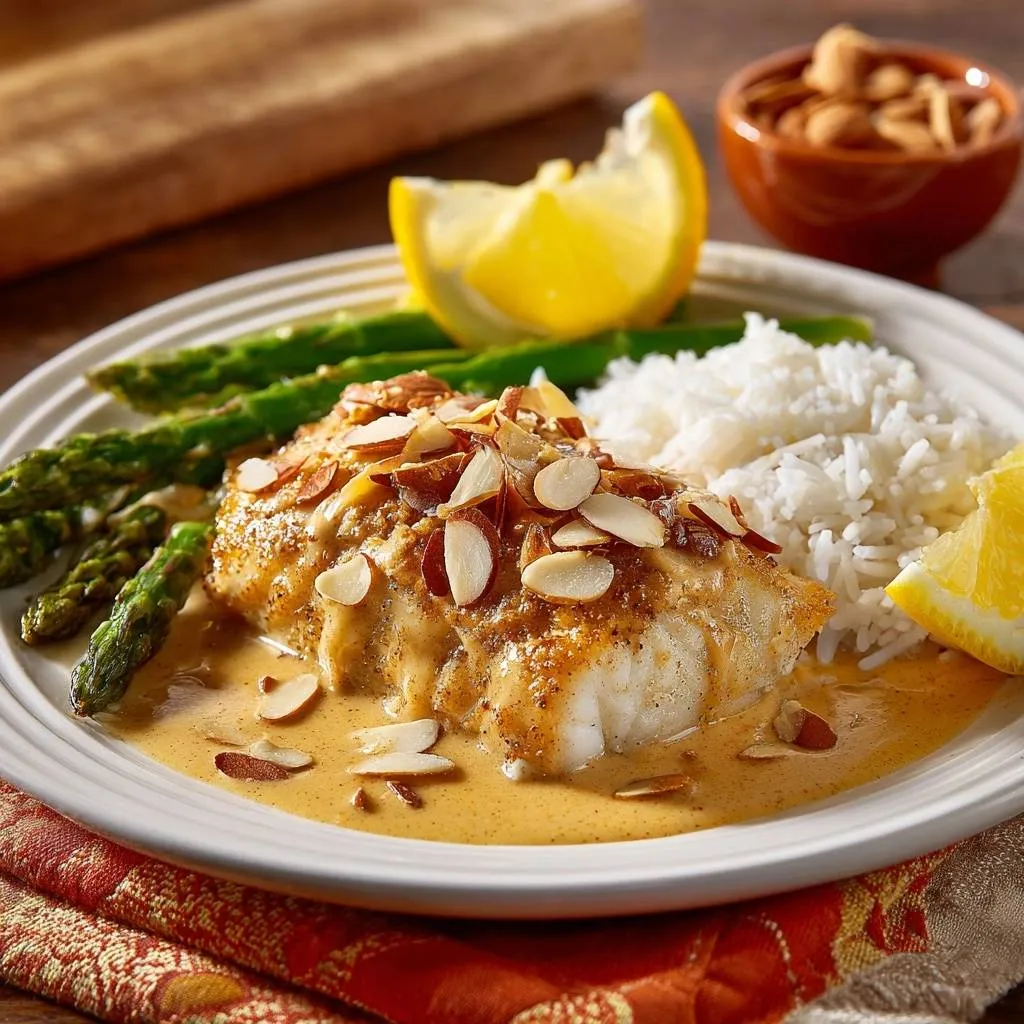
Most home cooks struggle with the dreaded “soggy crust” syndrome when preparing delicate white fish. You spend time breading the fillets only to have the coating turn into a mushy, unappealing mess the moment it touches the plate. This recipe solves that frustration by flipping the script on traditional breading techniques.
Instead of a heavy, wet batter, we use a strategic searing method that creates a shatteringly crisp exterior. By applying the toasted sliced almonds at the very end, you preserve that incredible nutty crunch. The contrast between the crispy almond topping and the velvety, rich lemon cream sauce creates a restaurant-quality experience right in your own kitchen.
The secret to this dish’s success lies in the moisture barrier. I’ve found that dredging only the top and sides of the fish in seasoned flour creates a dry surface that sears beautifully. This thin layer of flour also acts as a bridge, helping the luxurious sauce cling to every bite without compromising the integrity of the fish.
The Science of the Moisture Barrier
White fish like cod or halibut has a high water content and a very delicate cellular structure. When you apply salt to the raw flesh, it immediately begins to draw moisture to the surface through osmosis. If you don’t manage this liquid, your fish will essentially steam in its own juices rather than sear.
Patting the fish fillets extremely dry with paper towels is the most critical step in this entire process. You want the surface to feel tacky, not wet, before it ever touches the flour. This allows for the Maillard reaction to occur, which is the chemical reaction between amino acids and reducing sugars that gives browned food its distinctive flavor.
Without a dry surface, the temperature of the pan will drop as the water evaporates. This leads to a grey, rubbery texture instead of a golden-brown crust. Taking those extra thirty seconds to dry the fillets ensures your fish stays flaky and tender on the inside while developing a robust exterior.
Why Flour Dredging Prevents Sowing
A light dusting of flour serves a dual purpose in this recipe. Firstly, it acts as a sacrificial layer that absorbs any residual moisture the paper towels might have missed. This prevents the oil from splattering and helps the fish develop a uniform color during the sear.
Secondly, the flour that remains on the fish helps thicken the sauce later. As the fish rests, a tiny amount of that flour-based crust will mingle with the lemon cream on the plate. This creates a cohesive bond between the protein and the sauce, ensuring the flavors are perfectly integrated.
Essential Components for the Almond Crust
Success starts with the right spice blend. I prefer using smoked paprika over sweet paprika because it adds a subtle, earthy depth that mimics a wood-fired grill. When combined with the nutty almonds, it creates a complex flavor profile that elevates the mild white fish.
You might be tempted to use fresh garlic or onions, but I strongly recommend sticking to garlic and onion powders for the dry rub. Fresh aromatics contain a lot of moisture and can burn quickly in a high-heat skillet. The powders distribute evenly and create a savory crust that won’t turn bitter during the five-minute sear.
Quality olive oil is also paramount here. Since we are searing at a medium-high heat, you want an oil that can handle the temperature without smoking. The oil carries the flavors of the spices into the fish, so don’t be afraid to use a good-quality bottle.
Selecting the Right White Fish Fillets
For the best results, look for thick fillets that are at least one inch thick. Cod and halibut are the gold standards for this recipe because their large flakes hold up well to the searing process. Their mild flavor provides the perfect canvas for the bright lemon and rich cream.
If you choose a thinner fillet like tilapia or sole, you’ll need to adjust your timing. Thinner fish cooks much faster, so you should increase the heat slightly to get a quick sear without overcooking the center. However, a thicker cut allows more time for the crust to develop while the interior stays juicy.
Always check for pin bones before you start cooking. Even “boneless” fillets can have a few stragglers. Run your finger along the center of the fillet and use tweezers to remove any bones you find to ensure a seamless dining experience.
The Role of Toasted Sliced Almonds
We use sliced almonds rather than almond meal because the goal is texture. Sliced almonds provide a distinct “shatter” factor that you simply can’t get from a fine grind. They offer a visual elegance and a satisfying crunch that contrasts beautifully with the soft fish.
For a similar satisfying crunch, try these crispy cheesy crab rice cakes.
Toasting the almonds is a non-negotiable step. Raw almonds are dense and slightly chewy, but toasting them transforms them into crisp, fragrant morsels. Place them in a dry pan over medium heat for 3-5 minutes, tossing frequently until they reach a deep mahogany color.
Watch them closely, as they can go from perfectly toasted to scorched in a matter of seconds. Once they are fragrant and golden, immediately remove them from the hot pan to stop the cooking process. This deep toast provides the primary flavor bridge to the lemon cream sauce.
Step-by-Step: Achieving the Perfect Golden Sear
Start by heating your olive oil until it is shimmering but not smoking. You want the pan to be hot enough that the fish sizzles the moment it touches the surface. This initial contact is what sets the crust and prevents the fish from sticking to the pan.
Once you place the fillets in the skillet, the most important rule is: do not move them. It is incredibly tempting to peek underneath, but moving the fish too early will tear the delicate proteins. Let them sit undisturbed for a full 4 to 5 minutes.
You will see the edges of the fish turn opaque and white as the heat travels upward. When the bottom edge looks deeply golden and the fish releases easily from the pan with a spatula, it’s time to flip. The second side only needs about 3 minutes to finish cooking through.
Remove the fish to a warm plate while you finish the rest of the meal. Resting the fish for a couple of minutes allows the juices to redistribute. This ensures that when you finally cut into it, the moisture stays inside the fillet rather than running out onto the plate.
Sautéing Asparagus in Residual Fish Fond
After removing the fish, you’ll notice little browned bits stuck to the bottom of the pan. This is called “fond,” and it is concentrated flavor gold. Don’t wash the pan! Instead, add your remaining tablespoon of oil and toss in the trimmed asparagus.
The asparagus will pick up the seasoned oils and the essence of the fish as it cooks. Sauté for about 3-4 minutes until the spears are tender-crisp and have a few charred spots. This method creates a cohesive flavor profile across the entire plate, linking the vegetable to the main protein.
Season the asparagus with a tiny pinch of salt, but remember that the fond already contains salt and spices from the fish. Once the asparagus is bright green and slightly softened, set it aside with the fish so you can start the sauce.
Emulsifying the Velvet Lemon Cream Sauce
The sauce is where the chemistry of cooking really shines. We use a small amount of Dijon mustard not just for flavor, but as a natural emulsifier. The mustard contains mucilage that helps bind the lemon juice and heavy cream together, preventing the sauce from curdling.
Pour the cream and lemon juice into the pan and use a whisk to scrape up all those delicious browned bits. As the liquid simmers, it will reduce and thicken. You are looking for a “nappe” consistency, which means the sauce should be thick enough to coat the back of a spoon.
Keep the heat at a steady medium simmer. If the heat is too high, the cream might break; if it’s too low, it won’t reduce properly. After about two minutes, the sauce should look rich, golden, and slightly bubbly.
The Cold Butter Mounting Technique
To achieve a truly professional finish, we use the French technique known as “monter au beurre.” Remove the pan from the heat entirely before adding the butter. It is vital that the butter is cold and added in one piece or small cubes.
Whisk the cold butter into the warm sauce vigorously. Because the butter is cold, it melts slowly, allowing the fat to emulsify into the cream rather than just melting into a puddle of oil. This creates a glossy, thick finish that feels incredibly luxurious on the tongue.
This technique also rounds out the sharp acidity of the lemon juice. The result is a balanced, velvety sauce that has enough body to sit beautifully on the plate without running everywhere. It’s the hallmark of a well-made pan sauce.
Plating for Maximum Texture Retention
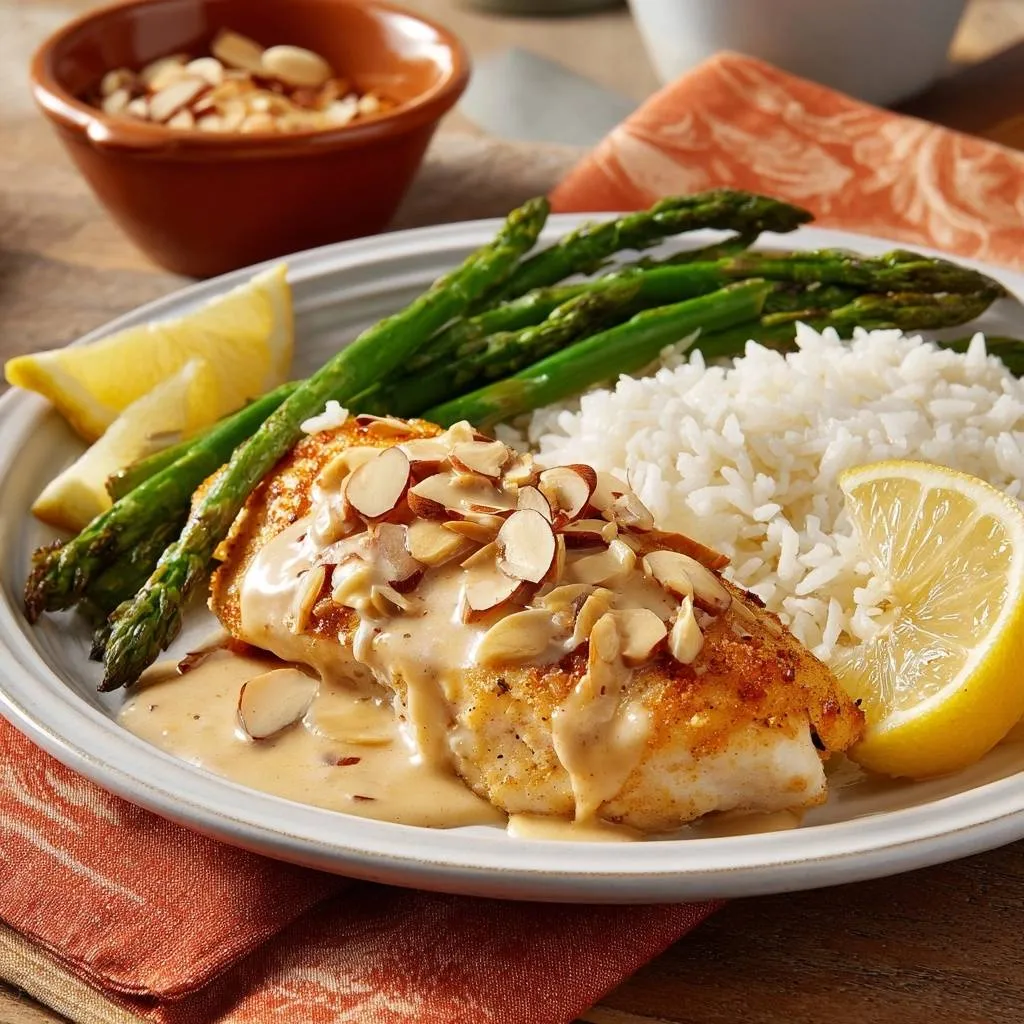
The order of operations during plating is the secret to maintaining that “shatteringly crisp” texture. Never pour the sauce over the top of the fish. If you do, the moisture from the sauce will immediately soften the crust you worked so hard to create.
Instead, pour a generous pool of the lemon cream sauce onto the plate first. Place your scoop of rice and the sautéed asparagus to the side, then nestle the seared fish fillet directly onto the sauce. This keeps the bottom of the fish seasoned while the top remains dry.
Immediately after placing the fish, press a handful of the toasted almonds onto the top of the fillet. The natural juices and the light flour crust will act as a glue. By serving it this way, the almonds stay perfectly crunchy until the very last bite.
Troubleshooting Common Texture Issues
If your flour coating feels gummy or soft, it usually means the pan wasn’t hot enough or you used too much oil. To fix this next time, ensure the oil is shimmering before adding the fish. If it happens mid-cook, you can slightly increase the heat, but be careful not to burn the spices.
If your sauce happens to split or look oily, don’t panic. You can usually save it by whisking in a teaspoon of warm water or an extra splash of cream off the heat. The goal is to re-emulsify the fats with the liquids through vigorous whisking.
Overcooked fish is a common pitfall. If you notice the fish is starting to flake apart in the pan, it’s done. Shorten the resting time and get it onto the plate immediately. Remember that residual heat will continue to cook the fish for a minute or two after it leaves the skillet.
Flavor Variations and Ingredient Swaps
If you have a nut allergy, you can easily swap the almonds for toasted pumpkin seeds or even panko breadcrumbs toasted in a little butter. Both will provide that necessary crunch without the allergen risk. The technique remains exactly the same.
For a different herbal profile, try whisking fresh dill or tarragon into the cream sauce at the very end. Dill pairs exceptionally well with lemon and white fish, adding a fresh, grassy note that cuts through the richness of the heavy cream.
You can also change the citrus profile. Using lime juice and garnishing with fresh cilantro can give the dish a brighter, more acidic edge. This variation works particularly well if you serve the fish alongside a black bean salad or roasted corn.
Optimal Side Dish Pairings
While white rice is a classic choice, you really just need a starch that can soak up that incredible lemon cream sauce. Herbed quinoa is a fantastic alternative that adds a bit of protein and an earthy flavor that complements the almonds.
Roasted fingerling potatoes are another great option. Their crispy skins and creamy interiors match the textures of the fish perfectly. If you want something lighter, a simple arugula salad with a light vinaigrette provides a peppery bite that balances the heavy cream.
Whatever side you choose, make sure it isn’t too salty. The sauce and the fish are already well-seasoned, so the side dish should act as a neutral base to highlight the main components of the meal.
Expert Tips for Professional Results
Use a heavy-bottomed stainless steel or high-quality non-stick pan. Even heat distribution is the key to a perfect sear; thin pans often have hot spots that will burn your spices before the fish is cooked through.
Zest your lemon before you juice it. Adding a pinch of fresh zest to the sauce at the very end provides an aromatic punch that juice alone cannot achieve. It brightens the entire dish and makes the lemon flavor pop.
If your kitchen is particularly cold, temper your heavy cream by letting it sit on the counter for ten minutes before cooking. Adding ice-cold cream to a hot pan can sometimes cause thermal shock, which leads to uneven reduction or slight curdling.
Always let the fish rest for at least two minutes before you apply the almonds. This brief pause allows the surface to stabilize so the almonds adhere better. It also ensures the fish is at the perfect temperature for eating the moment it hits the table.
Frequently Asked Questions
Can I use frozen fish fillets for this recipe?
Yes, you can use frozen fillets, but they must be completely thawed first. Thaw them in the refrigerator overnight for the best texture. Most importantly, frozen fish releases much more moisture than fresh, so you must be extra diligent about patting them dry with paper towels before seasoning and dredging.
How do I keep the almonds from falling off the fish?
The trick is the “press” technique. Apply the almonds while the fish is still very hot and slightly moist from the pan. Use the palm of your hand or a flat spatula to gently but firmly press the almonds into the top of the fillet. The residual heat and the light flour coating will help them stick.
Is there a dairy-free substitute for the heavy cream?
Full-fat coconut milk is the best dairy-free alternative for this specific sauce. It has the necessary fat content to emulsify and thicken. While it will add a slight coconut flavor, it pairs beautifully with the lime and cilantro variation mentioned earlier. Cashew cream also works well if you want a more neutral flavor.
Can I make the lemon cream sauce in advance?
You can make the sauce up to a day in advance, but you must reheat it carefully. Place it in a small saucepan over very low heat and whisk constantly. Do not let it come to a boil, or the emulsion will break and the sauce will become oily. If it’s too thick after chilling, whisk in a teaspoon of water to loosen it up.
Why did my fish stick to the pan?
Fish usually sticks for two reasons: the pan wasn’t hot enough when the fish was added, or you tried to flip it too soon. When the protein sears properly, it naturally releases from the surface of the pan. If you feel resistance when you try to slide a spatula underneath, give it another minute to finish forming that crust.
Almond Crusted White Fish
Course: Main CourseCuisine: AmericanDifficulty: easy4
servings15
minutes15
minutes440
kcal30
MinutesA sophisticated white fish dish featuring a golden-brown sear, a crunchy toasted almond topping, and a rich, emulsified lemon cream sauce. This method ensures the crust remains crisp while the fish stays tender and flaky.
Ingredients
4 thick white fish fillets (such as cod or halibut)
1 cup sliced almonds (toasted)
1/2 cup all-purpose flour
1 teaspoon garlic powder
1 teaspoon smoked paprika
1/2 teaspoon onion powder
Salt and black pepper to taste
3 tablespoons olive oil, divided
1/2 cup heavy cream
2 tablespoons fresh lemon juice
1 tablespoon cold butter
1/2 teaspoon Dijon mustard (for sauce stability and color)
1 bunch fresh asparagus, trimmed
2 cups cooked white rice, for serving
Lemon wedges, for garnish
Directions
- Pat the fish fillets extremely dry with paper towels. Season both sides generously with salt, pepper, garlic powder, smoked paprika, and onion powder.
- Lightly dredge only the top and sides of the fish in the flour, shaking off any excess. This creates a dry surface for searing and helps thicken the sauce later.
- Heat 2 tablespoons of olive oil in a large non-stick skillet over medium-high heat. Once the oil is shimmering, add the fish fillets.
- Sear the fish for 4 to 5 minutes on the first side without moving them to develop a golden-brown crust. Carefully flip and cook for another 3 minutes. Remove the fish and set aside on a warm plate.
- In the same pan, add the remaining 1 tablespoon of oil and the asparagus. Sauté for 3-4 minutes until tender-crisp and slightly charred. Remove and set aside.
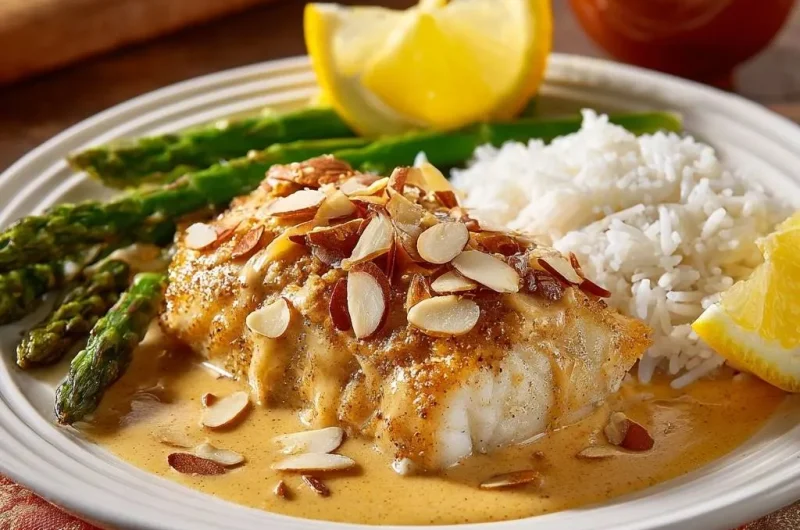
- Reduce heat to medium. Pour in the heavy cream, lemon juice, and Dijon mustard. Use a whisk to scrape up any browned bits (fond) from the bottom of the pan-this gives the sauce its rich, golden color seen in the image. Simmer for 2 minutes until thickened.
- Remove the pan from heat and whisk in the cold butter until the sauce is glossy and emulsified.
- To assemble: Place a portion of white rice and asparagus on each plate. Pour a generous pool of the lemon cream sauce onto the plate first. Place the seared fish fillet directly onto the sauce.
- Immediately press a handful of toasted sliced almonds onto the top of the warm fish so they adhere to the natural juices and the light flour crust. Garnish with extra almonds in the sauce and lemon wedges. Serve immediately to maintain the “shatteringly crisp” texture.
Notes
- To maintain the ‘shatteringly crisp’ texture, press the toasted almonds onto the fish just before serving. Patting the fish extremely dry before searing is the key to preventing a soggy coating.