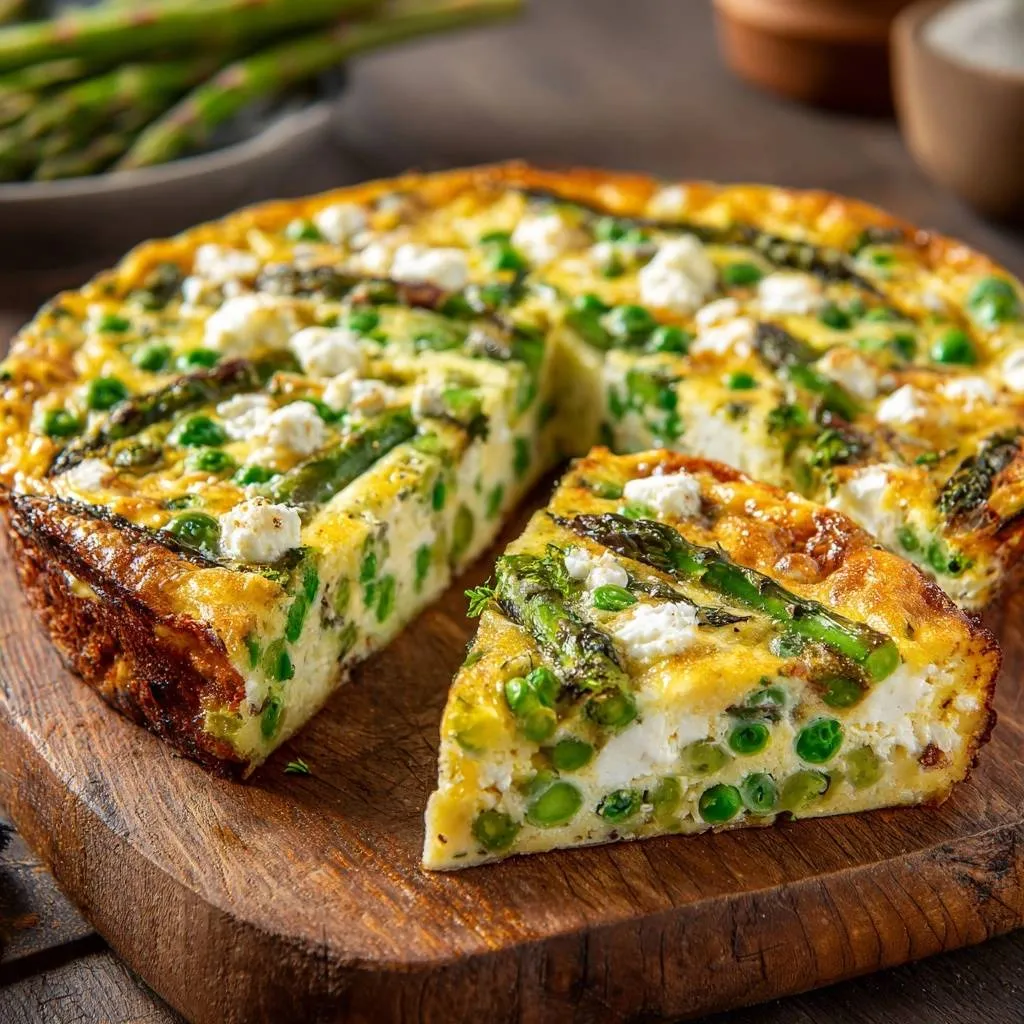
Ever bitten into a veggie frittata that releases a puddle of water instead of staying fluffy and sliceable? This Asparagus Pea Feta Frittata fixes that frustration with a simple pre-cook step for the veggies. You’ll have a perfect, spring-fresh dish ready in under 30 minutes, no sogginess in sight.
Here’s why it works so well. Asparagus and peas pack tons of moisture, but sauteing them first evaporates that water before the eggs hit the pan. In addition, you get brighter flavors and a crisp edge that holds up beautifully.
The real secret lies in that 4-5 minute saute for the asparagus. It turns bright green and tender without browning, releasing steam that you’d otherwise trap in your eggs. Trust me, this one tweak makes all the difference.
For another fluffy egg bake idea, check out this cheesy spinach red pepper frittata.
Why Pre-Cook Veggies in Asparagus Pea Feta Frittata
Asparagus Moisture Challenges Exposed
Asparagus holds about 93% water, mostly locked in its thick cell walls. When you add raw pieces straight to eggs, heat bursts those cells during baking. Therefore, the frittata weeps liquid and turns soggy right when you slice it.
Pre-sauteing changes everything. You cook the 1-inch pieces for 4-5 minutes over medium heat. They soften, release steam, and lose excess moisture, so your eggs stay fluffy. I’ve seen the difference firsthand: raw versions collapse, but pre-cooked ones slice clean.
Peas’ Hidden Water Trap
Frozen peas thaw with ice crystals that melt into your egg mixture. Even after thawing, they hold hidden water that steams out unevenly in the oven. This dilutes the custard and leaves a watery pool.
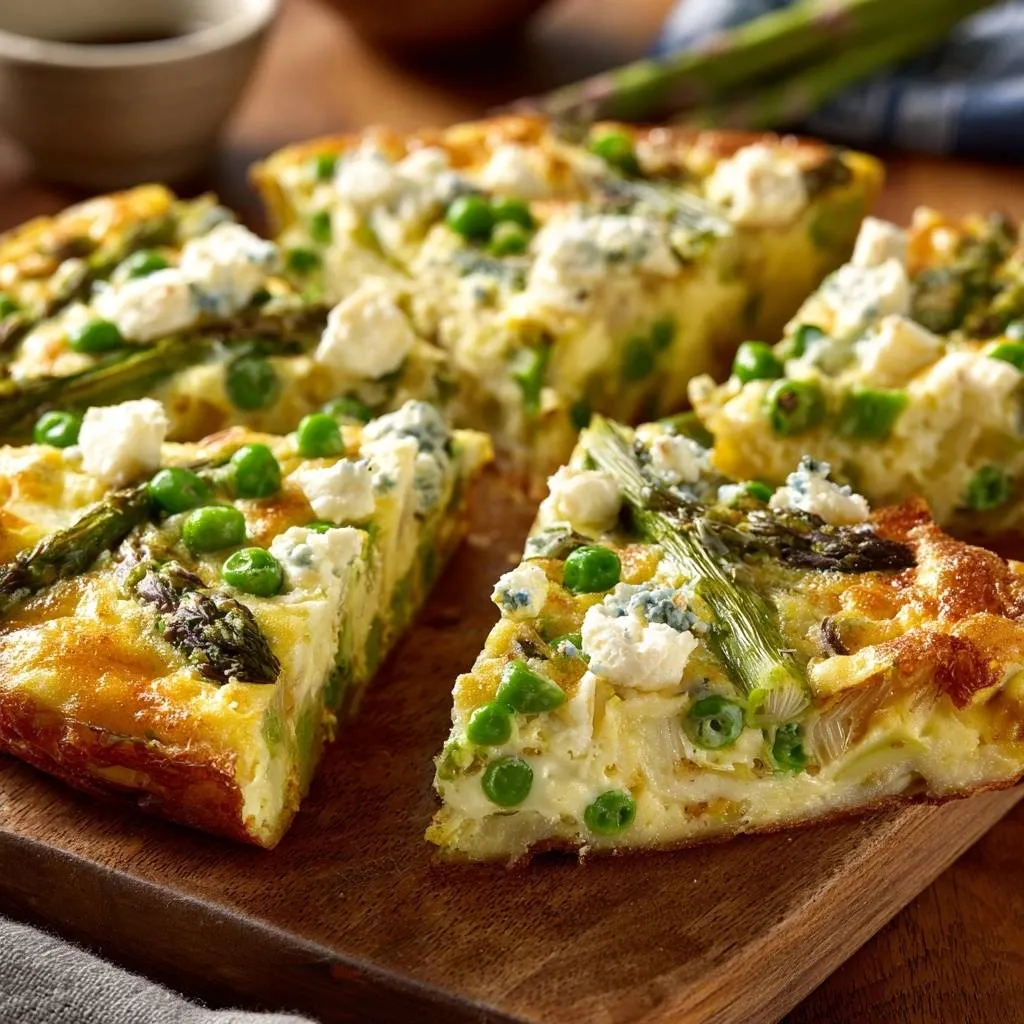
However, a quick 2-minute saute after the asparagus fixes it. The heat evaporates that moisture fast. Studies on blanching show peas lose up to 20% water this way, ensuring your frittata puffs up perfectly.
Flavor Boost from Searing Step
Searing triggers the Maillard reaction on asparagus and peas, creating nutty, caramelized edges. It adds depth without overpowering their fresh, sweet taste. Plus, you keep that vibrant green color with precise timing.
First, hit the asparagus until tender-crisp. Then stir in peas briefly. This step builds flavor layers that raw veggies can’t match, all while dodging sogginess.
Key Ingredients for Crisp Asparagus Pea Feta Frittata
Eggs and Milk Custard Base
Eight large eggs provide the sturdy structure you need. They coagulate evenly at 375F for a fluffy rise. Room-temperature eggs whisk smoother than cold ones, so they emulsify better with milk.
In addition, 1/2 cup milk adds tenderness through its fats. Season with salt and pepper generously; it enhances the veggies’ natural sweetness. Don’t skip whisking until frothy for maximum lift.
For a similar fluffy frittata experience, try our spinach feta frittata.
Asparagus and Peas Prep Details
Grab a 1-pound bunch and trim the woody ends. Cut into 1-inch pieces for even cooking. Thaw frozen peas, then pat them super dry with paper towels to ditch extra water.
Fresh peas work too, but use double the amount since they’re smaller. This prep ensures quick, uniform sauteing and no raw pockets in your frittata.
Feta Cheese Crumble Integration
Seven ounces of feta brings tangy, briny punch that cuts through the eggs’ richness. Crumble it finely for even melting. Greek feta tastes bolder than cow’s milk versions due to sheep’s milk fat.
Stir two-thirds into the eggs, and save the rest for topping. It creates melty pockets inside and a crisp, golden crust on top.
Olive Oil’s Skillet Role
Two tablespoons of extra-virgin olive oil prevent sticking and infuse fruity flavor. Heat it gently to avoid smoking, which turns it bitter. Avocado oil subs in if you need a higher smoke point.
One tablespoon sautes veggies; the rest waits for the oven phase. It crisps those edges beautifully.
Science of Non-Watery Asparagus Pea Feta Frittata
Evaporation Physics in Veggie Pre-Cook
Heat breaks veggie cell walls, turning bound water into steam. At medium heat, asparagus sheds moisture in 4-5 minutes; peas need just 2 more. This evaporation kinetics drops their weight by 15-20%.
Spread them evenly after cooking to cool. That way, no residual steam waters down your pour-in eggs. It’s simple physics for pro results.
Oven Baking Protein Coagulation
Egg proteins denature at 375F, forming a firm network. Steam from the milk creates puffs as it sets. Test the center with a knife; it should come out clean after 20-25 minutes.
Overbaking deflates it, so watch closely. The low-middle rack ensures even heat without drying the top.
Feta Melt and Crisp Edge Formation
Feta’s low moisture helps form a crusty top. Oven convection crisps skillet edges fast. Cast iron conducts heat evenly for perfect browning; nonstick releases slices cleanly.
Reserve feta for the top so it melts into salty bursts. No mush here, just texture contrast.
Equipment Choices for Asparagus Pea Feta Frittata Success
10-Inch Oven-Safe Skillet Essentials
A 10-inch skillet keeps the frittata thick enough to puff without spreading thin. Cast iron retains heat for steady baking; nonstick eases release. Avoid larger pans or you’ll get pancake results.
Preheat it with oil for even cooking. This size serves 4-6 perfectly.
Whisk and Prep Tools Efficiency
A balloon whisk aerates eggs for fluffiness. Use a silicone spatula to spread veggies flat. Grab thick oven mitts; that skillet gets screaming hot at 375F.
These tools make assembly quick and mess-free.
Step-by-Step Asparagus Pea Feta Frittata Assembly
Skillet Preheat and Veggie Saute Phase
Preheat oven to 375F. Heat 1 tablespoon olive oil in your 10-inch skillet over medium. Add asparagus; saute 4-5 minutes until bright green and tender, stirring often. You’ll smell sweet earthiness.
Stir in peas for 2 minutes more. Liquid will sizzle off. Remove from heat, spread evenly, and cool 2 minutes. This prevents egg curdling.
Egg Custard Whisk and Pour
Whisk eggs, milk, salt, and pepper until smooth and bubbly. Fold in two-thirds crumbled feta gently. Pour evenly over veggies; it should settle into layers.
Sprinkle remaining feta on top. Don’t stir now, or you’ll lose that pretty separation.
Bake, Test, and Cool Sequence
Bake 20-25 minutes on the low-middle rack. Look for puffed, golden top and set center. Knife test confirms doneness; edges crisp up nicely.
Cool 5 minutes in the skillet. It firms for clean slices. Oh man, that first bite is spring in every forkful.
Avoiding Asparagus Pea Feta Frittata Pitfalls
Skipping Pre-Cook Disaster Scenarios
Raw veggies steam endlessly in the eggs, causing separation and a soupy middle. Overcrowded skillets trap moisture too. Always pre-cook to evaporate it first.
If it happens, drain excess liquid before serving. But don’t skip ahead; it’s worth the 7 minutes.
Oven Temp and Timing Errors
Too high, like 400F, deflates the puff fast. Stick to 375F for gentle set. Watch from 20 minutes; it progresses from jiggly to firm.
Underdone means rubbery eggs later. Visual cues beat guesswork.
Cheese Overload Texture Fixes
Too much feta makes it greasy. Stick to 7 ounces. Skip watery ricotta; feta’s firmness shines here.
Portion control keeps textures crisp.
Flavor Variations for Asparagus Pea Feta Frittata
Herb and Spice Twists
Fresh dill or mint pairs perfectly with peas’ sweetness. Add lemon zest for bright zing. A pinch of chili flakes brings gentle heat without overwhelming.
Stir herbs into eggs. They elevate the spring vibe effortlessly.
Veggie Swap Options
Try broccoli rabe; pre-cook 5-6 minutes. Zucchini needs patting dry and shorter saute. Keep it veg-focused, no meats.
Adjust times so moisture evaporates fully.
Pairing Sides with Asparagus Pea Feta Frittata
Fresh Salad Complements
Arugula salad with vinaigrette cuts the richness perfectly. Toss in radishes for crunch. Keep portions light; the frittata’s the star.
Bread and Grain Matches
Sourdough toast sopps up every bit. Quinoa pilaf adds earthy chew. Simple pairs let flavors shine.
Serving Suggestions
Round out your spring meal with these complementary dishes.
- For a sweet finish, try these Red Velvet Cheesecake Stuffed Cookies, offering a fun contrast to the savory frittata.
- Complement the fresh flavors of your frittata with the Harvest Kale and Apple Salad, bringing together crisp textures and bright notes.
Storage Guide for Asparagus Pea Feta Frittata Leftovers
Fridge Life and Reheat Methods
Store slices in an airtight container up to 3 days. Reheat in a 350F oven for 10 minutes to crisp edges; microwave works but softens it.
Cover loosely to avoid sogginess.
Freezer Prep and Thaw Tips
Slice, wrap individually in foil, and freeze up to 1 month. Thaw overnight in fridge, then bake at 350F for 12 minutes. It revives texture well.
Don’t refreeze thawed pieces.
Troubleshooting Asparagus Pea Feta Frittata Issues
Why Frittata Sticks or Deflates
Not enough oil or skipping the cool step causes sticking. Deflation happens from quick temp drops; rest 5 minutes fully. Use oven mitts to slide it out gently.
Watery Results Quick Fix
Double-check pre-cook time; veggies need full evaporation. Cut milk to 1/3 cup next time. Pat peas drier too.
Pale Top or Undercooked Center
Broil 1-2 minutes for golden top. Check internal temp at 160F. Rack too low? Move it up slightly.
Asparagus Pea Feta Frittata FAQ
Can I Use Fresh Peas Instead?
Yes, use about 2 cups shelled fresh peas. Blanch them 1 minute in boiling water, then shock in ice and pat dry. They stay firmer than frozen but need the full 2-minute saute for moisture loss. Texture pops brighter.
Gluten-Free Asparagus Pea Feta Frittata?
It’s naturally gluten-free. Swap milk for almond or oat if needed. No flour involved, so everyone digs in worry-free.
Scaling for Crowd Size?
Double everything for a 12-inch skillet; it serves 8-10. Bake 25-30 minutes, checking center early. Don’t overcrowd or moisture builds back up.
Vegetarian or Dairy-Free Versions?
It’s already vegetarian with eggs as protein. For dairy-free, skip feta and use nutritional yeast or vegan cheese crumbles. Tofu scramble subs eggs but changes custard texture; whisk vigorously for lift.
Best Time to Make Ahead?
Assemble fully and fridge up to 4 hours before baking. Veggies stay crisp, eggs hold. Bake straight from cold, adding 3-5 minutes time. Perfect for brunch.
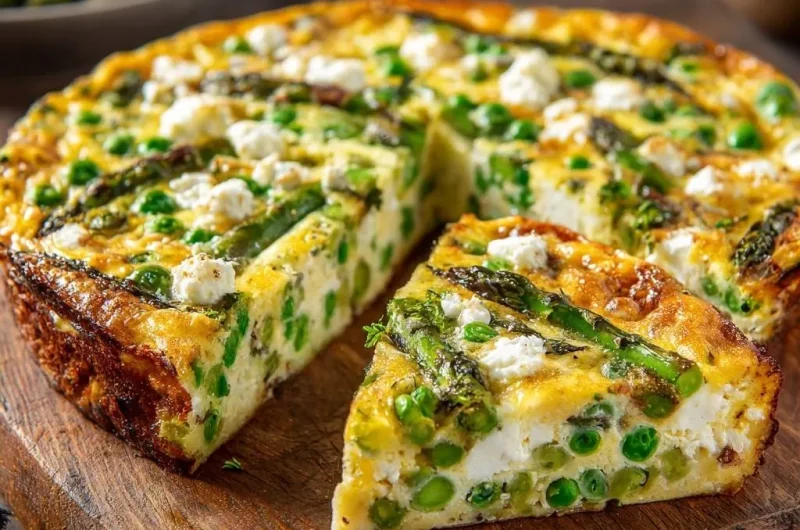
Frittata
Course: Main CourseCuisine: AmericanDifficulty: easy6
servings15
minutes30
minutes280
kcal45
MinutesTired of veggie-packed frittatas turning soggy and watery? This recipe solves it with a quick pre-cook step that evaporates excess moisture from asparagus and peas, locking in fluffy, sliceable perfection every time. Spring flavors, zero frustration.
Ingredients
8 large eggs
1 bunch asparagus (about 1 lb), trimmed and cut into 1-inch pieces
1 cup frozen peas, thawed
7 oz feta cheese, crumbled
1/2 cup milk
2 tbsp olive oil
Salt and black pepper to taste
Directions
- Preheat oven to 375F. Heat 1 tbsp olive oil in a 10-inch oven-safe skillet over medium heat.
- Add asparagus pieces. Saute 4-5 minutes until bright green and slightly tender. Stir in peas; cook 2 more minutes. This crucial step releases and evaporates veggie moisture, preventing watery eggs later, guaranteed. Remove from heat, spread evenly, and let cool slightly.
- In a bowl, whisk eggs, milk, salt, and pepper until smooth. Stir in 2/3 of the feta. Pour over veggies in skillet. Sprinkle remaining feta on top.
- Bake 20-25 minutes until puffed, golden, and set in center (knife inserted comes out clean). Edges crisp up perfectly, no sogginess.
- Cool 5 minutes before slicing. Serve warm. Stores in fridge up to 3 days.
Notes
- Stores in fridge up to 3 days. Crucial pre-cook step prevents watery eggs.