Why Balsamic Glazed Chicken Transforms Dry Breasts
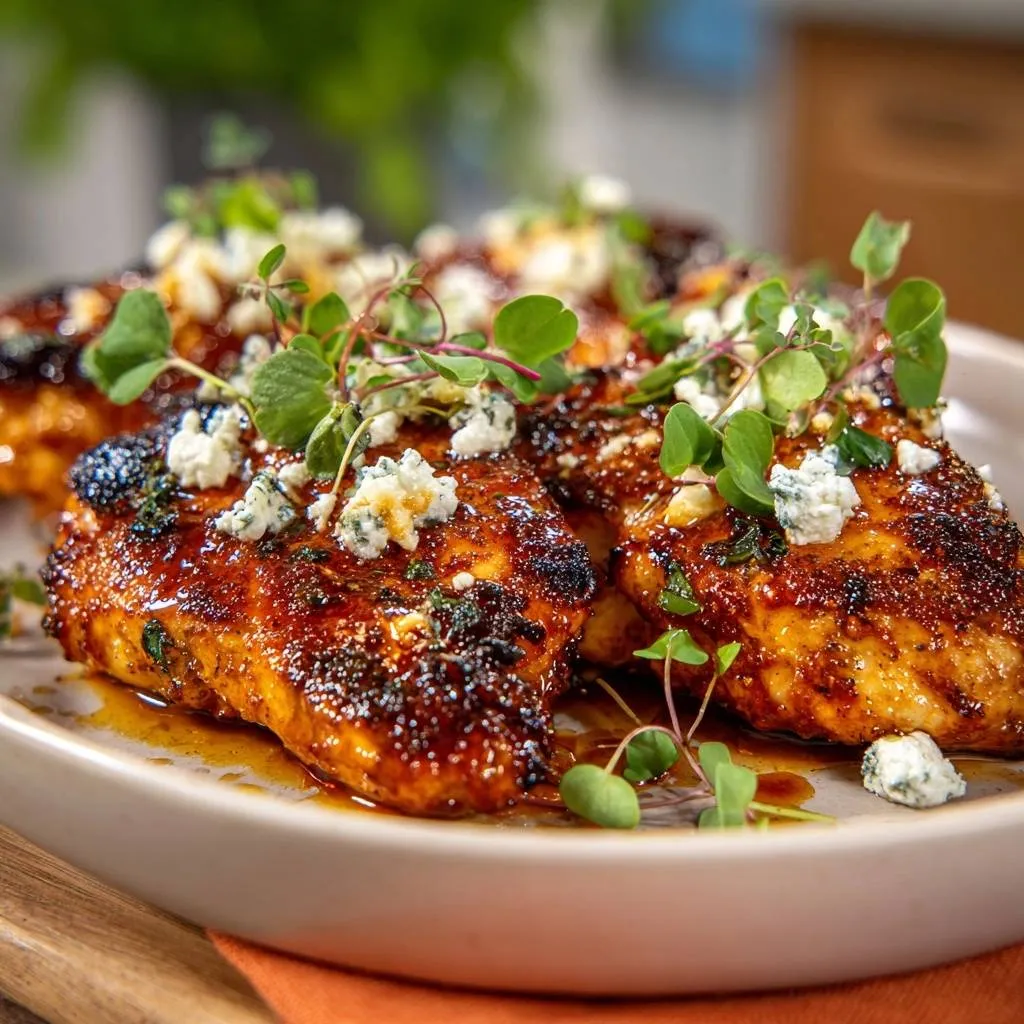
Chicken breasts come out dry way too often. You sear them hot to build that Maillard crust, which locks in all the juices. Then you baste with balsamic glaze on low heat, so it infuses moisture without overcooking. This balsamic glazed chicken with blue cheese stays juicy every single time.
I’ve ruined plenty of dinners with tough chicken. However, this method fixes that fast. The screaming-hot sear creates a barrier, and the sticky balsamic keeps everything tender. You’ll get restaurant-quality results right at home.
The secret lies in patting the chicken completely dry first. That plus room-temp resting lets the salt draw out moisture for the crispiest crust. Follow these steps, and your balsamic glazed chicken transforms boring breasts into pure gold.
Key Ingredients for Balsamic Glazed Chicken Success
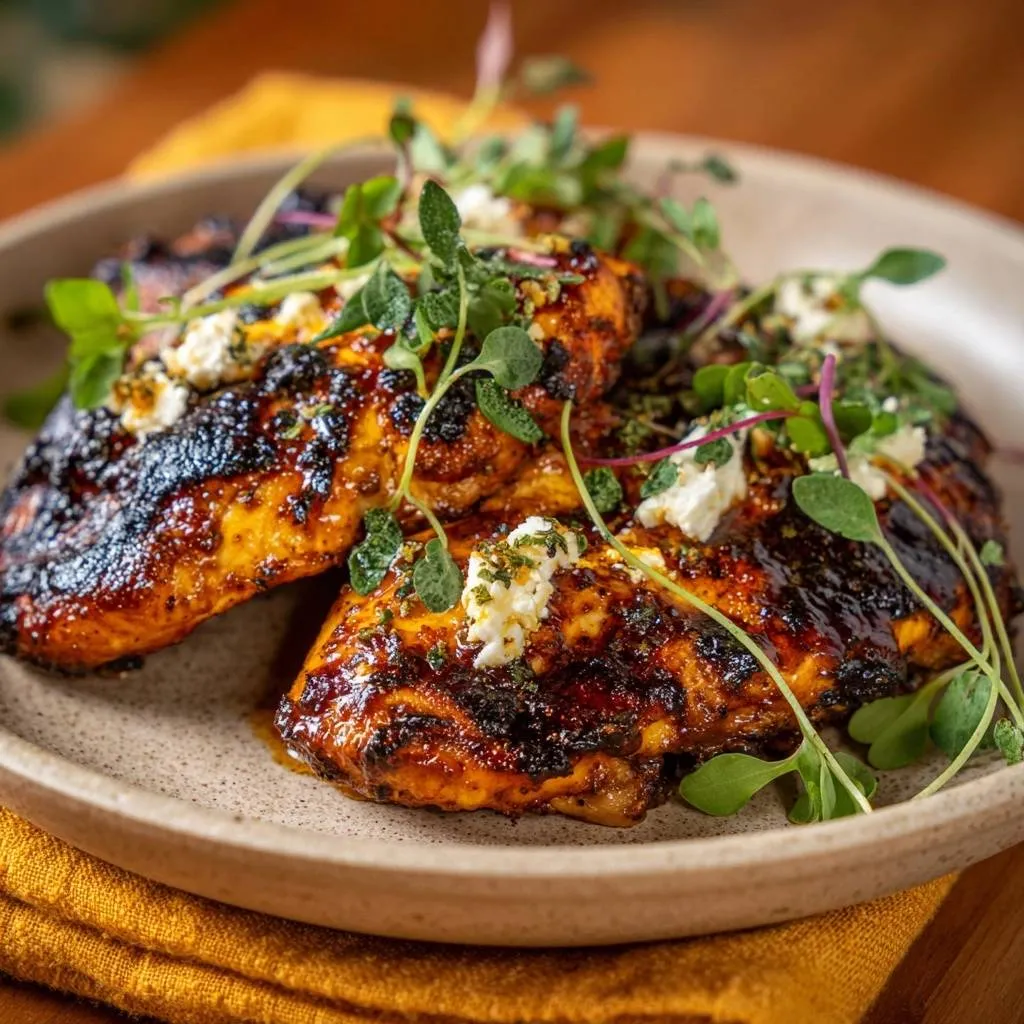
Start with 4 boneless skinless chicken breasts, about 6 oz each. They cook evenly without fiddly bones or skin getting in the way. Kosher salt draws out surface moisture better than table salt, so use 1 tsp. Freshly ground black pepper adds that essential bite.
Balsamic vinegar brings acidity that tenderizes as it reduces. Pair it with 1/4 cup honey to balance the tang into sweet stickiness. In addition, 2 tbsp olive oil fuels the high-heat sear for golden perfection.
Top it with 4 oz crumbled blue cheese. It melts from the chicken’s heat into creamy pockets of bold flavor. Finally, 2 cups mixed microgreens deliver a fresh, peppery crunch that cuts through the richness.
Chicken Breasts: Sizing and Prep Essentials
Stick to 6 oz breasts for even cooking. Boneless skinless means no flare-ups or uneven heat. Let them sit at room temp after seasoning. Therefore, they heat uniformly and stay juicy inside.
Balsamic and Honey: Glaze Chemistry Duo
Balsamic’s acidity breaks down proteins gently. Honey counters with sweetness for the perfect ratio. Boil them down, and you get that syrupy glaze clinging to every bite.
Blue Cheese and Microgreens Finish
Blue cheese crumbles melt just right from residual heat. Microgreens add peppery snap and color. Together, they elevate your balsamic glazed chicken with blue cheese to something special.
Science of Maillard Sear in Balsamic Glazed Chicken
Heat oil to 375F until it shimmers and smokes lightly. That’s when amino acids and sugars react for deep browning. A dry surface prevents steaming, so you build real crust and flavor compounds.
Most folks fail by skipping the dry pat or low heat. However, this sear in balsamic glazed chicken creates a barrier that traps juices. It’s the balsamic chicken glaze technique that makes all the difference.
Undisturbed cooking for 4-5 minutes lets it release naturally. Flip once, and you’ve got science-backed tenderness under that crust.
Equipment Choices for Perfect Balsamic Glaze Chicken
Grab a large skillet, preferably stainless steel. It holds heat steady for searing without non-stick’s weak crust. A wooden spoon scrapes up those browned bits, or fond, for max flavor.
Use an instant-read thermometer to hit 165F precisely. Paper towels blot the chicken bone-dry. Avoid cast iron here. It holds heat too long and overcooks during the simmer.
Phase 1: Prepping Balsamic Glazed Chicken Breasts
Pat the chicken breasts super dry with paper towels. Moisture kills crust, so get aggressive. Season both sides evenly with salt and pepper.
For another take on achieving wonderfully glazed cranberry chicken, consider this method.
Let it rest 10 minutes at room temp. This draws out extra water and seasons deeper. You’ll see tiny beads form. Wipe them off before searing.
Drying and Seasoning Technique
Press paper towels firmly into every crevice. Season generously but evenly. Rest uncovers so air dries the surface further.
Phase 2: High-Heat Sear for Golden Crust
Heat oil over medium-high until it shimmers and smokes. Add chicken in a single layer, no crowding. Sear undisturbed 4-5 minutes. It releases when ready, revealing a deep golden crust.
Flip and repeat on the other side. This high-heat step in balsamic glazed chicken builds flavor you can’t fake. Press gently; it should lift clean.
For crispier skin on chicken, explore skillet roasted lemon garlic chicken.
Crowding steams instead of sears. Therefore, use a big enough pan or batches.
Oil Temperature Cues
Shimmer means hot enough; faint smoke confirms it. Drop a speck of water. It dances if perfect. Too cool, and you get pale chicken.
Phase 3: Balsamic Basting and Low Simmer
Drop heat to medium-low. Pour in balsamic vinegar and honey. Scrape the pan bottom vigorously to dissolve fond into the glaze.
Spoon glaze over chicken repeatedly for 1 minute. It steams juices back in. Partially cover and simmer 4-6 minutes until 165F. Juiciness peaks here.
Internal Temp Monitoring
165F is the sweet spot. Proteins set, but moisture stays locked. Check thickest part without touching bone.
Phase 4: Thickening Glaze and Plating
Remove chicken to a plate. Crank heat to medium-high and boil glaze 1-2 minutes. It thickens to syrupy glory, coating the back of a spoon.
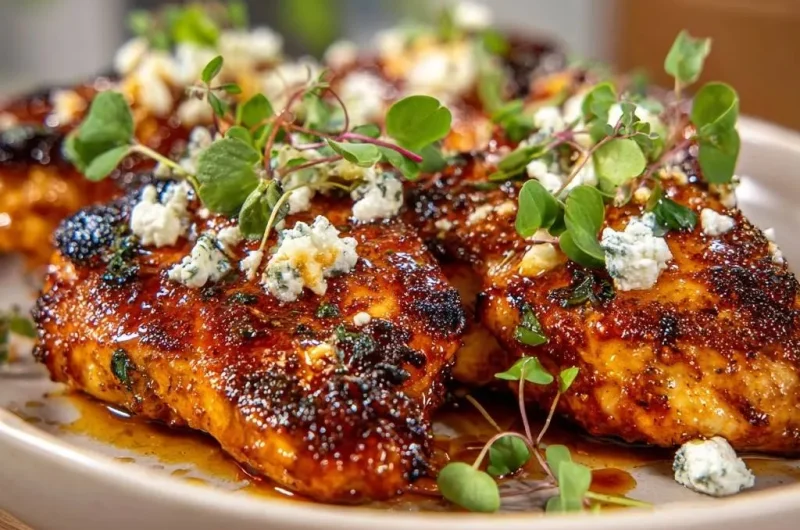
Drizzle over chicken. Scatter blue cheese; residual heat melts it soft. Finish with microgreens for crunch. Serve your balsamic glazed chicken with blue cheese right away.
Complementary Dishes
Round out your meal with these fresh companions to your Balsamic Glazed Chicken with Blue Cheese.
- For a crisp green addition with fruit, consider the Harvest Kale and Apple Salad, sharing a similar bright flavor profile.
- If you prefer a touch more crunch and warmth, the Harvest Apple and Walnut Salad offers a delightful texture contrast.
Avoiding Pitfalls in Balsamic Glazed Chicken
Crowding turns searing into steaming, so no crust forms. Low initial heat leaves pale chicken. Over-simmering dries it out past 165F.
For troubleshooting balsamic glazed chicken with blue cheese, pat drier next time. If glaze won’t thicken, boil longer or add a cornstarch slurry. Patience pays off.
Always rest at room temp. Therefore, you dodge cold centers and tough edges.
Crust Failure Fixes
Wet chicken steams, not sears. Pat twice if needed. Hotter oil helps too.
Glaze Too Thin Workarounds
Boil 30 seconds more, stirring. Reduce low and slow if nervous. Syrup test: coats spoon thickly.
Flavor Twists on Balsamic Glazed Chicken
Swap honey for maple syrup. It adds woodsy depth. Try gorgonzola instead of blue for milder creaminess.
Add smashed garlic and rosemary to the glaze. Chicken thighs work great too. They stay even juicier, just cook to 175F. Keeps the balsamic glazed chicken core intact.
Ideal Pairings for Balsamic Glazed Chicken
Roasted asparagus or broccoli soaks up the glaze beautifully. A quinoa salad with cherries echoes the sweet tang. Microgreens tie it fresh.
Crisp whites like sauvignon blanc cut the richness. Skip heavy starches. They overwhelm the balsamic glazed chicken with blue cheese.
Storage Guide for Balsamic Glazed Chicken Leftovers
Store in an airtight container in the fridge up to 3 days. Reheat gently in a skillet with a splash of water to loosen glaze. Microwave works, but cover to steam.
Freeze chicken up to 2 months, glaze separate in a bag. Thaw overnight, then re-crisp. Add fresh blue cheese and microgreens after. Keeps that just-made pop.
Balsamic Glazed Chicken FAQ
Can I use chicken thighs?
Yes, boneless thighs shine here. They’re fattier, so even juicier. Sear same way, but simmer to 175F internal. Takes 6-8 minutes extra.
Gluten-free balsamic glazed chicken?
Absolutely. Check balsamic labels for additives. Most are naturally gluten-free. Honey and other ingredients are safe too.
Substitute blue cheese options?
Goat cheese crumbles well and melts smooth. Feta adds salty tang. Both pair great with the balsamic glaze.
Why room temperature chicken?
Cold chicken shocks in hot oil, cooking unevenly. Room temp ensures the center hits 165F when crust perfects. Rest 10 minutes minimum.
Scale for more servings?
Double ingredients, but use two skillets or batches for searing. Don’t crowd. Glaze scales perfectly; just watch boil time.
Balsamic Glazed Chicken
Course: Main CourseCuisine: AmericanDifficulty: easy4
servings15
minutes20
minutes450
kcal35
MinutesDry chicken breasts ruining your dinners? This recipe fixes it with a screaming-hot sear to lock in juices via the Maillard crust, followed by a low-simmer baste in sticky balsamic glaze that infuses moisture without overcooking. Juicy perfection every time, topped with melty blue cheese.
Ingredients
4 boneless skinless chicken breasts (about 6 oz each)
1 tsp kosher salt
1/2 tsp black pepper
2 tbsp olive oil
1/2 cup balsamic vinegar
1/4 cup honey
4 oz blue cheese, crumbled
2 cups mixed microgreens (red and green)
Directions
- Pat chicken breasts completely dry with paper towels. Season both sides evenly with salt and pepper. Let sit at room temperature for 10 minutes. This preps for max crust.
- Heat olive oil in a large skillet over medium-high heat until shimmering and just smoking (about 375F if you have a thermometer). Add chicken in a single layer, no crowding. Sear undisturbed for 4-5 minutes until deep golden crust forms and releases easily. Flip and sear other side 4-5 minutes.
- Reduce heat to medium-low. Pour in balsamic vinegar and honey. Scrape up browned bits with a wooden spoon. Spoon glaze over chicken repeatedly for 1 minute to baste and steam juices in. Partially cover skillet, simmer 4-6 minutes until internal temp hits 165F (juicy sweet spot). Remove chicken to plate.
- Boil glaze in skillet over medium-high 1-2 minutes until thickened and syrupy.
- Drizzle chicken with glaze, top with crumbled blue cheese (it melts from residual heat) and microgreens. Serve immediately.
Notes
- Let chicken sit at room temperature for 10 minutes after seasoning for maximum crust formation. Use a thermometer to ensure internal temperature reaches 165°F for juicy results.