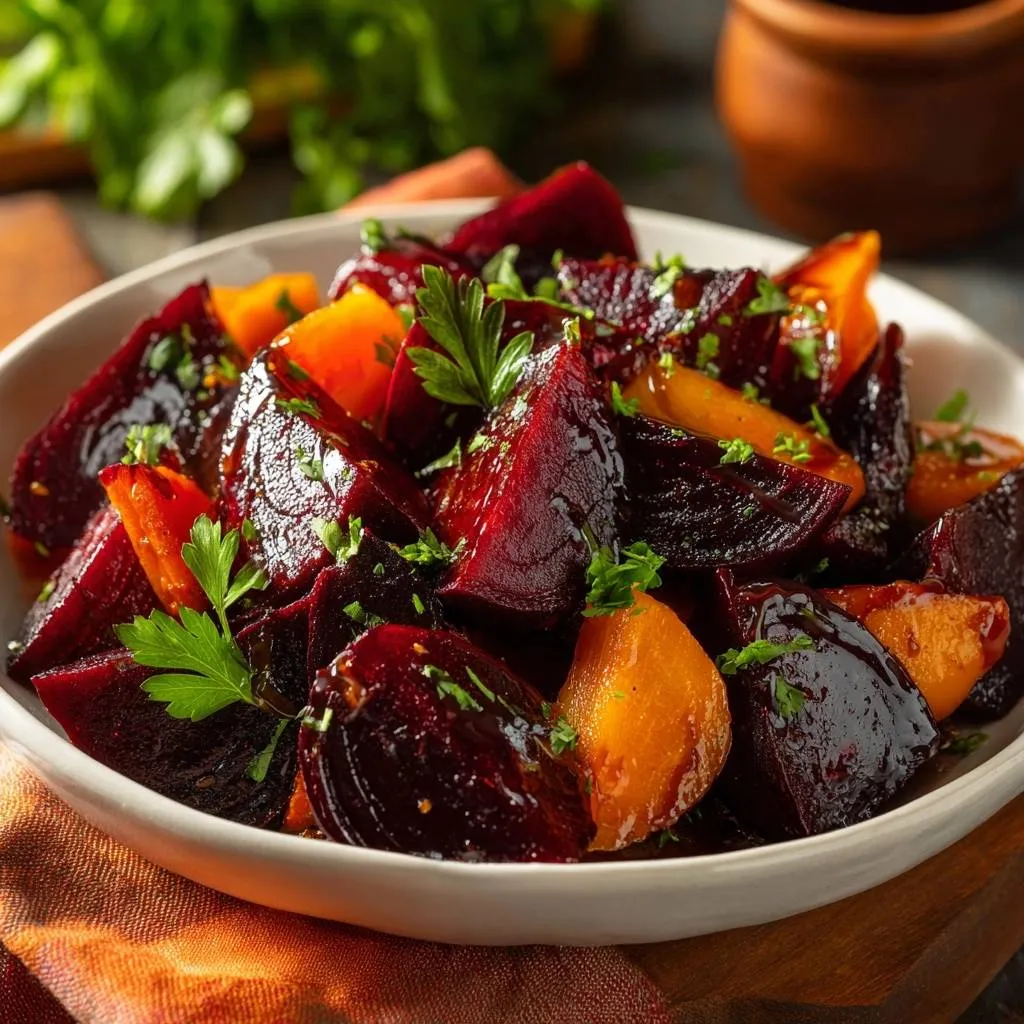
Why This Glaze Transforms Roasted Roots
Ever bitten into roasted beets that taste like dusty hockey pucks? You’re not alone. Most folks crank up the oven and hope for the best, but they end up dry and tough. This balsamic glazed roasted beets and carrots recipe fixes that with a simple foil-steaming trick first.
Therefore, you get juicy, tender roots every time. The steam breaks down their fibers gently, while the balsamic glaze caramelizes later for that shiny, sticky edge. Oh man, the earthy sweetness hits different, with a pop of antioxidants from the beets boosting your meal.
Here’s the pro tip: seal those foil packets tight for 25 minutes at 400°F. That trapped moisture guarantees tenderness, unlike straight dry-roasting fails. Your balsamic glazed roasted beets and carrots will shine with caramelized perfection.
Core Vegetables for Balsamic Glazed Roasted Beets and Carrots
Start with firm, medium beets about the size of a tennis ball. They roast evenly without turning mushy. Red beets give bold color, but mix in golden ones for variety and less staining mess.
In addition, grab large carrots, not skinny ones. Peel them to remove dirt, and cut everything into 1-inch chunks. This size matches cooking times, so nothing overcooks while the rest catches up.
Pro tip: wear gloves when peeling beets. They stain hands red for days otherwise. Uniform cuts mean steam penetrates evenly for that juicy balsamic glazed roasted beets and carrots texture.
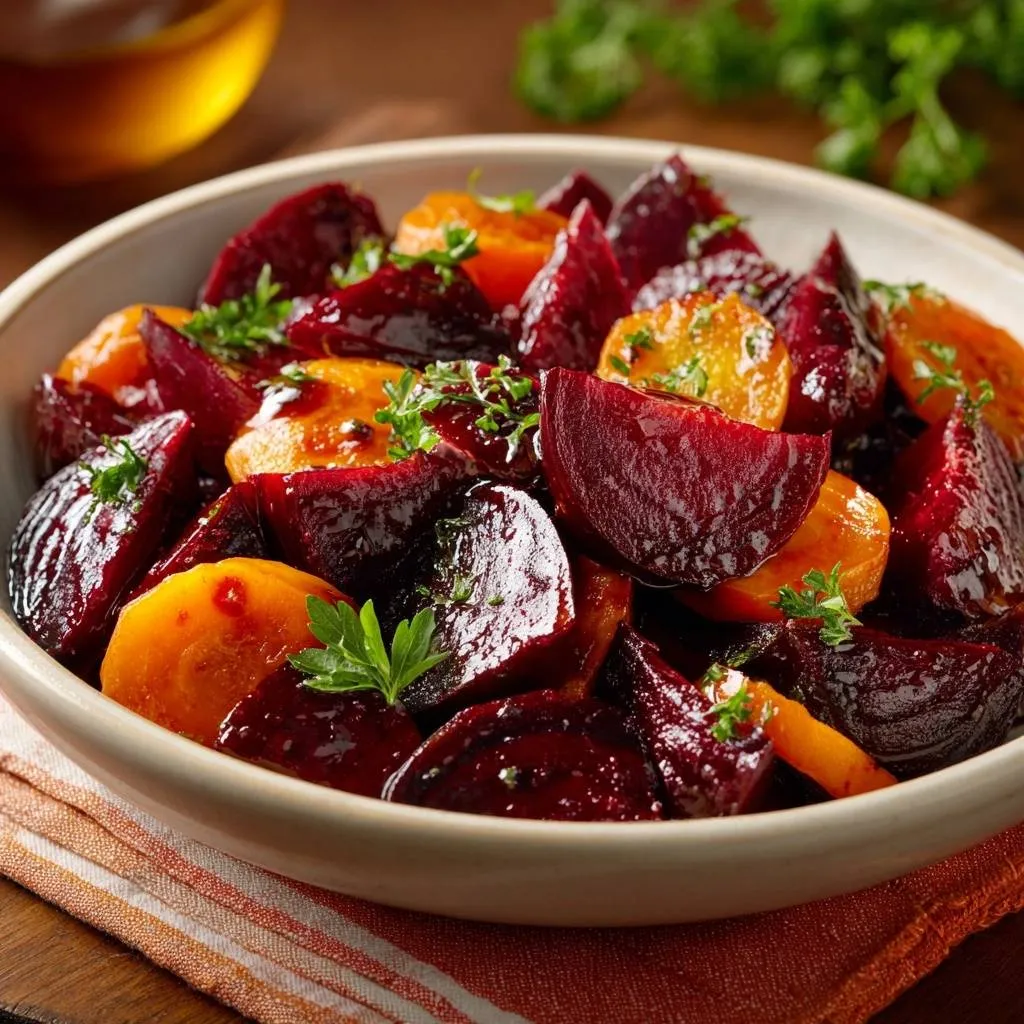
Beets: Choosing and Prepping for Tenderness
Pick beets with smooth skins and no soft spots. Golden beets taste milder and stain less. Peel under running water, then cube into 1-inch pieces for steam to work its magic inside.
Carrots: Best Varieties for Roasting Balance
Heirloom carrots add color and subtle sweetness over standard orange ones. Scrub if thin-skinned, but peel thick ones. Match 1-inch chunks to beets so they finish roasting together perfectly.
Flavor Builders in Balsamic Glazed Roasted Beets and Carrots
Olive oil conducts heat evenly and prevents sticking. Use good extra-virgin for fruity notes. Salt draws out moisture early, while pepper adds a subtle bite.
However, balsamic vinegar’s acidity balances the roots’ earthiness and sparks caramelization. Honey brings sticky sweetness that clings during the final roast. Fresh parsley at the end cuts through with bright green freshness.
Therefore, opt for aged balsamic if you can. It reduces to a thicker glaze without overpowering. These builders make balsamic glazed roasted beets and carrots crave-worthy.
Balsamic and Honey: Glaze Chemistry Duo
Balsamic’s sugars and acids trigger browning reactions when uncovered. Honey’s natural sugars promote shine without burning. Together, they form a glossy coat that locks in juices.
Equipment Essentials for Perfect Roasted Beets and Carrots
You need heavy-duty foil to hold steam without tearing. Rimmed baking sheets catch drips and make stirring easy. A large bowl ensures even tossing.
In addition, skip parchment here; foil does the work. Check your oven with a thermometer for true 400°F. This setup nails balsamic glazed roasted beets and carrots every time.
Foil Packets: Steaming Secret Weapon
Lay veggies on double-layered foil sheets. Drizzle, then fold edges tightly and crimp ends like a burrito. No leaks mean max steam for tender results.
Science of Steaming Then Roasting Balsamic Glazed Beets
Steam first breaks beet cell walls with humidity, keeping them juicy. Dry roasting alone toughens them. Then, uncovering triggers Maillard browning for caramelized edges.
Therefore, balsamic’s low pH speeds that reaction safely. You avoid waterlogged veggies but get fork-tender balsamic glazed roasted beets and carrots. It’s the best of both worlds.
Common fail: skipping steam leads to chewy beets. This method contrasts perfectly, delivering shine and snap.
For another way to achieve wonderfully tender roasted vegetables, consider skillet roasted butternut squash.
Why Foil Steam Locks in Beet Moisture
Foil traps released veggie water for 25 minutes, shifting them from al dente to tender. Timing matters; too long mushifies. Peek if needed, but tight seals rule.
Step-by-Step: Foil-Steaming Balsamic Glazed Roasted Beets and Carrots
Preheat to 400°F. Toss beets and carrots with oil, salt, and pepper. They should glisten evenly, no dry spots.
Divide onto two foil sheets. Drizzle each with 1 tablespoon balsamic and honey. Seal tight; place on a sheet. Roast 25 minutes till steam softens them inside.
Phase 1: Tossing and Packet Assembly
Oil coats for non-stick protection. Tight seals trap aroma; you’ll smell sweet earthiness building. Position packets side by side on the sheet.
Step-by-Step: Uncovering for Balsamic Glaze Caramelization
Open packets carefully; hot steam escapes. Drizzle remaining balsamic and honey, stir to coat. Spread in a single layer for air flow.
For a similar balsamic glaze experience, consider balsamic roasted brussels sprouts.
Roast 15-20 more minutes, stirring once. Edges caramelize golden; glaze turns shiny and thick. Fork-tender means done.
Phase 2: Final Roast and Glaze Thickening
Steam warning: use tongs. Mid-stir redistributes glaze. Look for caramelized bits and easy piercing.
Parsley Finish for Balsamic Glazed Roasted Beets and Carrots
Add chopped parsley right after roasting. It wilts slightly, releasing fresh aroma against the sweet glaze. Chop finely for even scatter.
Alternatives like dill or thyme work too. They brighten without overpowering. Timing keeps herbs vibrant in your balsamic glazed roasted beets and carrots.
Avoiding Pitfalls in Roasted Beets and Carrots
Dry beets? You over-roasted uncovered. Cut time next round. Uneven chunks cause some mush, others hard; measure 1-inch strictly.
In addition, too much early balsamic makes soggy glaze. Save half for phase two. Test doneness by forking; adjust racks if bottoms burn.
Pro tip: drain excess liquid post-steam. It prevents watery results in balsamic glazed roasted beets and carrots.
Fixing Overly Dense or Watery Results
Dense beets need longer steam; add 5 minutes. Watery? Pat dry after opening and roast extra. Density varies by freshness, so tweak accordingly.
Flavor Twists on Balsamic Glazed Roasted Beets and Carrots
Swap honey for maple syrup for woodsy notes. Infuse rosemary in the glaze for piney depth. Add goat cheese crumbles post-roast for creamy tang.
However, walnuts bring crunch; toast them first. Everything stays vegan base. Nut-free? Skip and double parsley.
Try thyme with caraway seeds. They amp earthiness in balsamic glazed roasted beets and carrots beautifully.
Herb and Nut Variations for Depth
Thyme-caraway combo warms spices. Pecans with parsley add buttery bite. Toss in last 5 minutes to avoid sogginess.
Pairing Balsamic Glazed Roasted Beets and Carrots
Serve with quinoa salad for a full plate. Grilled chicken soaks up the glaze nicely. Lentil stew makes it hearty.
Round Out Your Meal
Consider these dishes to complement your roasted root vegetables.
- For a fresh, vibrant addition, try this grilled chicken kale and cabbage power salad, which offers a crisp contrast.
- If you’re in the mood for poultry, the glazed cranberry roasted chicken thighs provide a sweet and savory partner.
Sparkling apple cider cuts the richness. Perfect for holiday tables as a vibrant side. Balances any main.
Pro tip: warm it slightly for best flavor pairing with balsamic glazed roasted beets and carrots.
Meal Ideas Beyond Side Dish
Layer in grain bowls with greens. Sheet-pan with tofu for dinners. Toss into warm salads for lunch appeal.
Storage Guide for Leftover Roasted Beets and Carrots
Cool completely before airtight containers. Fridge holds 5 days max. Reheat at 350°F for 10 minutes to crisp glaze without mush.
Freeze portions up to 3 months in bags. Thaw overnight, then roast 10 minutes to refresh. Avoid microwaving; it sogs them.
Nutrition in Balsamic Glazed Roasted Beets and Carrots
Beets pack nitrates that support blood pressure. Carrots deliver beta-carotene for eyes. Per serving: high fiber, low cal at 150 each.
In addition, balsamic adds antioxidants. Whole dish fuels you with vitamins minus heaviness. Roast often for health wins.
Troubleshooting Balsamic Glazed Roasted Beets and Carrots
Burnt edges? Move to middle rack. Bland glaze means stale balsamic; taste-test first. Soggy? Spread thinner next time.
Uneven color: rotate sheet halfway. Too sweet? Cut honey by half. Fixes keep your balsamic glazed roasted beets and carrots spot-on.
Common Questions on Balsamic Glazed Roasted Beets and Carrots
Can I use baby carrots?
No, they cook too fast and turn mushy next to beets. Stick to large, cut ones for even 1-inch sizing and balanced roast.
Can I use golden beets instead?
Yes, they’re milder and prettier with less staining. Mix with red for color pop; same prep and timing apply perfectly.
Is there a microwave alternative?
It’s subpar; no caramelization happens. Microwave covered 8 minutes, but you’ll miss the glaze shine and texture contrast.
Is this recipe vegan?
Absolutely, all ingredients are plant-based. Honey’s from bees, but swap maple for strict vegan; no other changes needed.
How do I scale for 8 servings?
Double everything and use four foil packets. Same oven time, but two sheets. Stir carefully to avoid overcrowding.
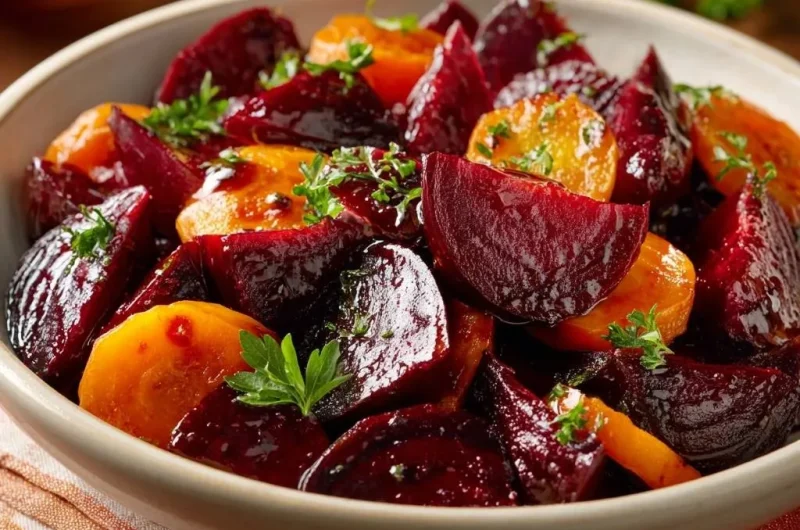
Balsamic Glazed Roasted Beets and Carrots
Course: Side DishCuisine: AmericanDifficulty: easy6
servings15
minutes45
minutes180
kcal60
MinutesDry roasted beets are a common kitchen fail, but this easy technique steams them first in foil for juicy tenderness, then uncovers for perfect caramelized glaze that locks in moisture every time.
Ingredients
6 medium beets, peeled and cut into 1-inch chunks
4 large carrots, peeled and cut into 1-inch chunks
3 tablespoons olive oil
3 tablespoons balsamic vinegar
2 tablespoons honey
1 teaspoon salt
1/2 teaspoon black pepper
1/4 cup fresh parsley, chopped
Directions
- Preheat oven to 400 degrees F. Toss beets and carrots with olive oil, salt, and pepper in a large bowl.
- Divide veggies between two large sheets of foil. Drizzle each with 1 tablespoon balsamic vinegar and 1 tablespoon honey. Seal foil packets tightly, creating steam pockets. Place on a baking sheet.
- Roast packets for 25 minutes. This steaming step is the key to no more dry beets: it gently cooks them through with trapped moisture for guaranteed tenderness without boiling away flavor.
- Open packets carefully (steam will escape). Drizzle remaining balsamic and honey over veggies. Stir to coat and spread out in a single layer on the baking sheet.
- Roast uncovered for 15-20 more minutes, stirring once, until edges caramelize and glaze thickens shiny.
- Transfer to a serving bowl. Sprinkle with fresh parsley. Serve warm.
Notes
- The steaming step in foil packets is key to tender, juicy beets without dryness. Adjust honey for desired sweetness.