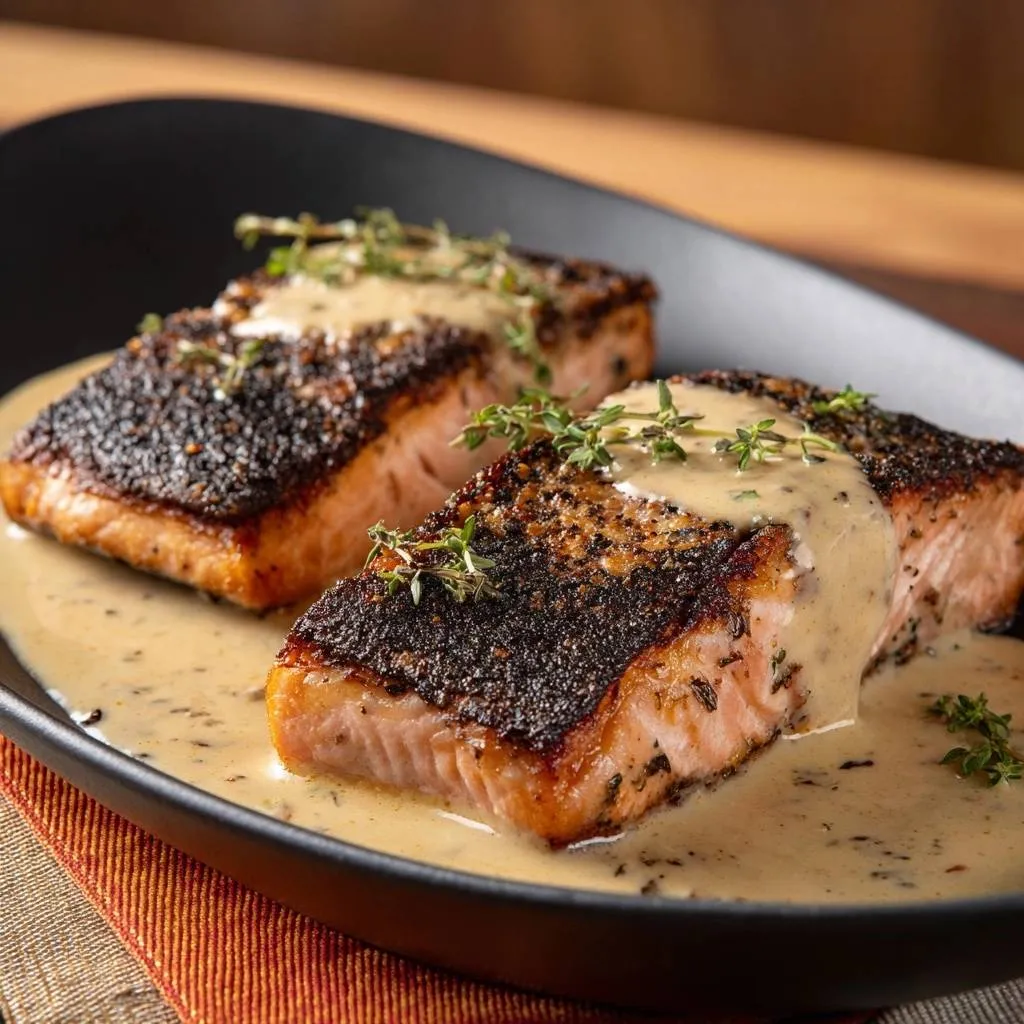
Why This Blackened Salmon Recipe Succeeds
Picture this: that flaky, charred crust on salmon that snaps under your fork, with juices locked in tight. No more dry, disappointing fillets. This blackened salmon with creamy thyme sauce nails it in just 20 minutes for 2 servings, clocking in at about 550 calories per serving.
Therefore, it fits right into your weeknight routine but tastes like a restaurant splurge. The screaming-hot sear creates the black crust through Maillard magic, while butter-thyme basting seals in moisture for perfection.
Here’s the pro tip that sets it apart: pat the salmon bone-dry and let it rest 10 minutes at room temp. That ensures even cooking and a crust that actually sticks around.
Key Ingredients for Blackened Salmon Perfection
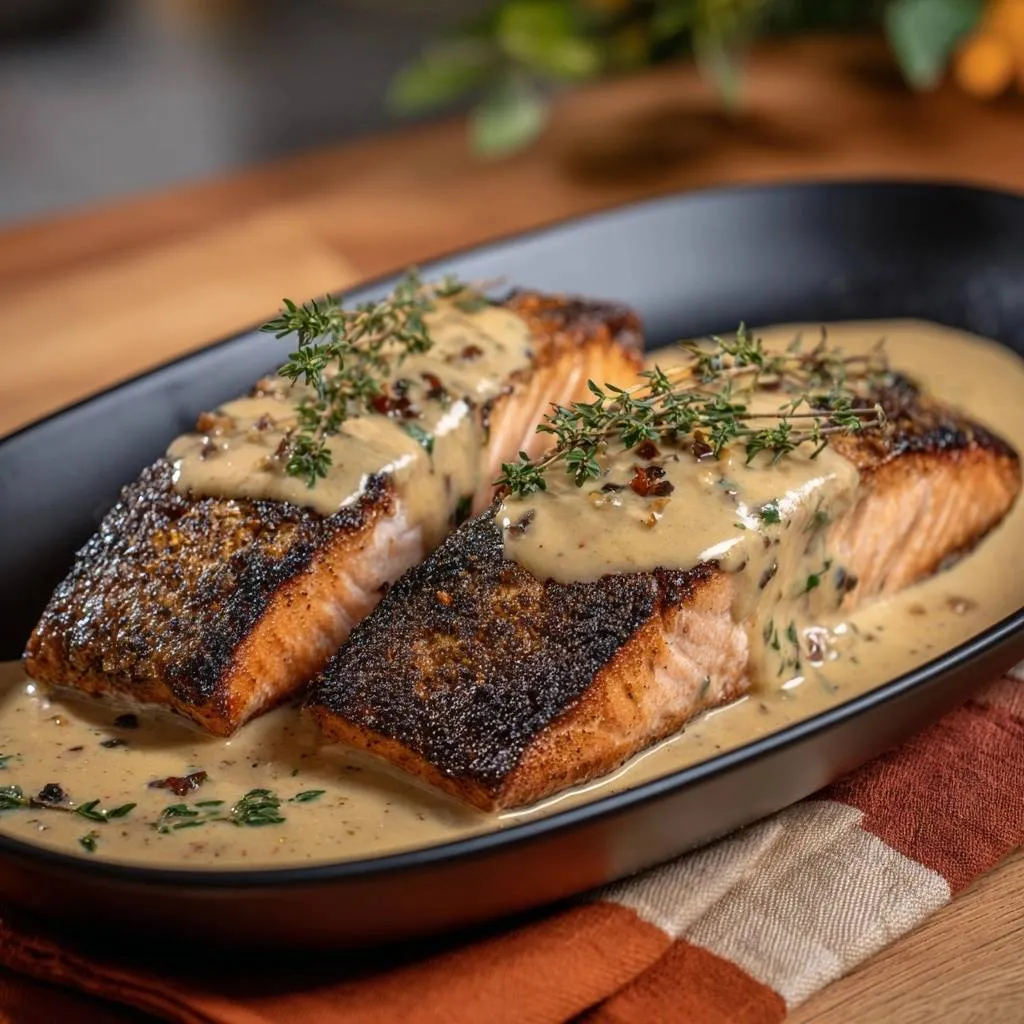
Start with 2 skinless salmon fillets, 6 oz each. Skinless ones sear evenly without curling, so you get consistent results. Go for wild-caught if you can; it’s firmer and less fatty.
In addition, 1 tsp kosher salt draws out moisture for better crust adhesion, unlike fine table salt that can oversalt. Then, 2 tsp freshly ground black pepper builds bold heat right into that blackened edge.
Olive oil’s high smoke point handles the intense heat without burning. Unsalted butter controls browning during basting, and heavy cream stabilizes the sauce for silky texture. Fresh thyme releases volatile oils through heat, way better than dried.
Salmon Fillet Selection Guide
Center-cut fillets beat tail pieces for even thickness and cooking. Stick to 6-oz sizes; they portion perfectly without overcooking the edges first.
Spice and Herb Precision
Heavy salt and pepper on both sides form the crust base. Strip leaves from one thyme sprig for the sauce, but keep whole sprigs for basting; they infuse flavor without bits in the butter.
Science of Blackening and Basting Salmon
The Maillard reaction happens at high heat, browning proteins and sugars for that deep black crust and nutty flavor. Pat dry to avoid steaming, which kills the sear.
However, room-temp rest prevents cold spots. Basting emulsifies butter and thyme into a barrier that traps juices, hitting 125°F internal for medium-rare juiciness as proteins denature just right.
Thyme’s oils dissolve in the fat, infusing herby goodness deeply. This combo guarantees flaky salmon every time.
Maillard Magic in the Skillet
Low heat steams fish blandly, but high-heat blackening triggers Maillard for smoky depth and crisp texture. You’ll smell the transformation instantly.
Basting’s Moisture-Locking Power
The butter-thyme emulsion coats the salmon, sealing in liquids. Spoon it over continuously to build that protective layer against dryness.
Essential Tools for Blackened Salmon Success
A cast-iron skillet retains heat like a champ for steady high temps. Nonstick works too, but cast-iron gives superior crust from its seasoning.
Therefore, grab an instant-read thermometer for precise 125°F checks. Use tongs to flip without tearing skin, and plenty of paper towels for drying.
Heat oil to shimmering smoke; that’s your cue. Stainless steel can sub in, but watch for sticking without enough oil.
Cast-Iron Skillet Advantages
Even heat distribution prevents hot spots, and natural seasoning boosts nonstick power for flawless release.
Step-by-Step Blackened Salmon Searing
Pat fillets completely dry; moisture is the enemy here. Season both sides generously with salt and pepper, then rest 10 minutes. This draws out extra water for crisp results.
Heat olive oil over high until smoking, about 2 minutes. Lay salmon presentation-side down. Sear undisturbed 3-4 minutes; you’ll see a dark crust form and smell charring.
Don’t peek or move it early, or the crust tears and dries out. Pro tip: one fillet per pan avoids steaming from overcrowding.
Prepping for the Perfect Crust
Dry thoroughly, season heavy, rest 10 minutes. The surface tightens up, ready for blackening.
Achieving Deep Black Sear
Oil shimmers then smokes; that’s perfect. Sear 3-4 minutes no-touch for deep color and aroma.
Mastering Butter-Thyme Baste and Finish
Flip salmon, drop heat to medium-low. Add butter and whole thyme sprigs; tilt pan and spoon the foaming mixture over top for 2-3 minutes until 125°F.
This basting infuses thyme while keeping it moist. Transfer to plates, then hit the pan with cream and stripped leaves.
Simmer 1-2 minutes; it thickens as cream reduces with pan fond. Spoon over salmon and garnish with sprigs. Serve hot for best flake.
Flipping and Basting Technique
Tilt pan toward you, scoop butter-thyme with a spoon, and drizzle back over salmon repeatedly. It sizzles and smells amazing.
Building Creamy Thyme Sauce
Cream integrates fond bits, simmering to coat-back consistency. Stir gently for smooth emulsion.
Avoiding Pitfalls in Blackened Salmon
Dry salmon? You skipped basting or used low heat. Failed crust means wet fish or early flipping; pat drier next time.
Overcooked centers come from ignoring the thermometer. Check thickest part, accounting for carryover rise of 5-10°F off heat.
Therefore, medium-rare at 125°F stays juicy. Scale up heat for more fillets, but don’t crowd.
Crust Failure Fixes
Extra-dry pat and no movement prevent steam. High smoke-point oil helps too.
Overcooking Prevention
Pull at 125°F; residual heat finishes it. Rest 2 minutes plated.
Flavor Twists on Blackened Salmon
Add lemon zest to sauce for brightness. Swap in garlic cloves during basting for punch, or dial up with Cajun blend minus salt.
For dairy-free, coconut cream works; it thickens similarly. Try rosemary sprigs instead of thyme for woodsy notes.
However, keep thyme central for that creamy herb vibe. Skin-on? Sear skin-down first for extra crisp.
Spice and Herb Adjustments
More pepper amps heat; sub rosemary for thyme earthiness. Fresh always beats dried.
Ideal Pairings for Blackened Salmon
Roasted asparagus cuts through richness with char. Quinoa salad adds nutty freshness, or garlic mashed potatoes soak up sauce.
For a similar creamy potato experience, check out these cast iron skillet potatoes au gratin.
Crisp Sauvignon Blanc balances spice. Herbal iced tea refreshes without overpowering.
Therefore, cool, green sides tame the blackening heat perfectly.
Vegetable and Grain Matches
Toss asparagus in oil, roast at 425°F 12 minutes. Quinoa with lemon vinaigrette cools the palate.
Common Questions on Blackened Salmon
Best Internal Temperature?
Aim for 125°F in the thickest part for medium-rare juiciness. It firms to flaky perfection with carryover cooking, avoiding dry overdoneness at 140°F+.
Can I Use Skin-On Fillets?
Yes, sear skin-down first for 4 minutes to crisp it up. Flip and baste as usual; the skin protects and adds texture if you like crunch.
Storage and Reheating Tips?
Store leftovers in an airtight container in the fridge up to 2 days. Reheat gently in a skillet over low with a splash of cream to revive moisture; avoid microwave to prevent drying. Don’t freeze; texture turns mushy.
Wild-Caught or Farmed Salmon?
Wild-caught offers firmer texture and bolder flavor for blackening. Farmed works fine if fresh, but pat extra dry as it’s fattier and steams easier.
Cast-Iron Substitute?
Use heavy nonstick or stainless with extra oil. Heat to smoke point same way, but stainless may need more basting liquid to prevent sticking.
Scaling for 4 Servings?
Double ingredients, use two skillets or batches to avoid crowding. Sear in shifts; keep first batch warm tented with foil while finishing.
Blackened Salmon
Course: Main CourseCuisine: AmericanDifficulty: easy2
servings10
minutes10
minutes750
kcal20
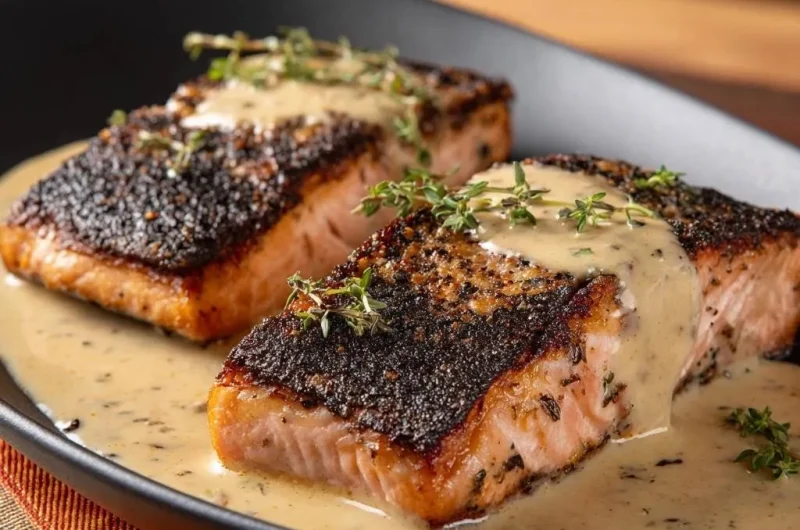
MinutesDry salmon is the worst. This recipe uses a screaming-hot sear for that perfect charred crust, then butter-thyme basting to lock in juices for flaky, moist perfection every single time.
Ingredients
2 skinless salmon fillets (6 oz each)
1 tsp kosher salt
2 tsp freshly ground black pepper
2 tbsp olive oil
3 tbsp unsalted butter
1/2 cup heavy cream
3 sprigs fresh thyme, leaves stripped from 1 sprig, whole sprigs for garnish
Directions
- Pat salmon fillets completely dry with paper towels. Season both sides generously with salt and heavy black pepper to form the blackened crust base. Let sit at room temperature for 10 minutes.
- Heat olive oil in a large cast-iron or nonstick skillet over high heat until shimmering and just starting to smoke, about 2 minutes. This ultra-hot pan is key.
- Place salmon presentation-side down (the heavily peppered side). Sear undisturbed for 3 to 4 minutes until a deep black crust forms. Do not move it, or the crust fails and moisture escapes.
- Flip salmon. Immediately reduce heat to medium-low. Add butter and whole thyme sprigs to the pan. Tilt pan and spoon melted butter-thyme mixture over salmon continuously for 2 to 3 minutes, until internal temperature hits 125 degrees F for juicy medium-rare. Basting creates a moisture barrier that guarantees no dryness while infusing thyme flavor.
- Transfer salmon to plates. Add cream and stripped thyme leaves to the pan juices. Simmer 1 to 2 minutes, stirring, until sauce thickens slightly. Spoon over salmon and garnish with fresh thyme sprigs. Serve immediately.
Notes
- Use a cast-iron skillet for the best crust. Aim for 125°F internal temperature for medium-rare.