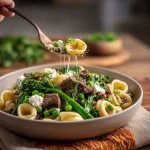
Why This Braised Beef Orecchiette Transforms Weeknight Dinners
Ever end up with chewy braised beef that turns your pasta night into a disappointment? This Braised Beef Orecchiette with Broccolini, Peas & Feta fixes that fast. You’ll get fall-apart tender beef in under an hour, thanks to a quick sear that locks in juices.
Therefore, you toss it with crisp broccolini, sweet peas, and creamy feta for a dish that beats takeout every time. The contrast hits perfect: rich beef against tangy cheese and fresh dill’s brightness. It’s weeknight comfort without the wait.
Here’s the expertise pro tip: pat the beef dry before searing. That simple step creates a crust via the Maillard reaction, trapping moisture so your beef shreds easily. No more tough bites ruining the bowl.
For a similar satisfying beef dish, consider skillet beef tortellini with ricotta.
Key Ingredients for Tender Braised Beef Orecchiette
Beef chuck shines here because its marbling melts into gelatin during braising. You cut it into 1-inch cubes for even cooking, and fresh peas add natural sweetness that balances the richness. In addition, broccolini brings crunch without the toughness of regular broccoli stems.
Feta crumbles in creamy and salty, while dill’s fresh chop cuts through the beefy depth. Use good olive oil; it handles high heat for searing. Beef broth builds the sauce base, so low-sodium lets you control salt.
No fresh peas? Frozen work fine, added last minute. However, skip pre-shredded feta; it doesn’t melt as smoothly as block-crumbled.

Selecting Beef Chuck for Fork-Tender Results
Chuck has plenty of marbling and connective tissue that braises into tenderness. Cut into 1-inch cubes so heat penetrates evenly. Always pat dry first; wet beef steams instead of sears.
Leaner cuts like sirloin toughen up. Therefore, stick with chuck for that shreddable texture every time.
Broccolini, Peas and Feta: Crisp, Sweet, Tangy Balance
Broccolini’s thinner stems stay tender-crisp, unlike broccoli’s woodiness. Fresh peas burst with sugars that sweeten the dish naturally. Feta adds creaminess and tang, melting slightly to coat everything.
Dill beats parsley with brighter, anise-like punch. In addition, its fronds stay vibrant when folded in last.
Science of Searing and Braising Beef Orecchiette
The sear triggers Maillard reaction, browning sugars and proteins for deep flavor and a crust that seals juices. Then, low braising breaks down collagen into silky gelatin. A covered pot keeps steam in, preventing dry-out.
Boiling toughens meat; uncovered simmering evaporates liquid. However, this method delivers fork-tender beef fast. You’ll smell the garlic and broth melding into savory heaven.
Pro tip: scrape up those browned bits after searing. They dissolve into the richest sauce base.
Maillard Magic: Building Beef Crust
Heat oil to shimmering, around 375-400F; a water drop should sizzle and dance. Sear in batches to avoid steaming from crowding. Dry surface is key; moisture kills the crust.
Look for deep brown, not black. Therefore, 2-3 minutes per side does it.
Braising Breakdown: Collagen to Gelatin
Simmer at 190-200F for 45 minutes; collagen turns to gelatin, making beef tender. Broth and fond add flavor depth. Keep the lid tight and don’t peek; steam stays trapped.
Undisturbed cooking builds pressure for even breakdown. Test by shredding; it pulls apart easily.
Equipment Essentials for Braised Beef Orecchiette Success
A Dutch oven’s thick walls retain even heat for braising. It seals steam perfectly under the lid. For pasta, use a wide pot; orecchiette needs room to cook without clumping.
Reserve that starchy pasta water; it thickens the sauce like magic. Tongs flip beef without piercing. In addition, a deep skillet works if you lack a Dutch oven, but watch heat spots.
Dutch Oven vs Skillet for Braising
Dutch ovens distribute heat evenly and seal lids tight for moisture lock-in. Enameled cast iron resists sticking. Skillets heat faster but lose steam easier; add a lid anyway.
Step-by-Step: Searing Beef for Braised Orecchiette
Pat beef dry, season with salt and pepper. Heat 2 tbsp oil over medium-high till shimmering. Sear batches 2-3 minutes per side; you’ll see a crust form and juices on the plate.
Don’t overcrowd, or it steams gray. Transfer to plate; those resting juices go back in later. The sizzle and beefy aroma tell you it’s right.
Perfect Sear Temperature and Timing
Medium-high shows oil rippling; beef shrinks slightly and browns deep. Rest on plate collects juices. Therefore, 2-3 minutes per side avoids over-charring.
Step-by-Step: Braising Beef with Broccolini and Peas
Saute garlic 1 minute till fragrant, return beef and juices. Add broth, scrape bits, simmer covered on low 45 minutes. Fork-test for shreddable tenderness.
Boil orecchiette al dente, add broccolini and peas last 2 minutes. Drain, reserve 1 cup water. Veggies stay crisp with color pop.
Low-Slow Simmer Without Disturbing
Reduce to low after boiling; lid seals tight. No peeking, or moisture escapes. Bubbles should be gentle, not rolling.
Step-by-Step: Combining Orecchiette, Veggies and Feta
Stir in pasta, veggies, and 1/2 cup pasta water over low heat; simmer 2 minutes to coat silky. Fold in most feta and dill off heat; residual warmth melts it creamy.
Taste for salt and pepper. Serve topped with extra feta and dill. The starch binds everything lush.
Pasta Water’s Role in Silky Sauce
Reserve 1 cup; starch emulsifies with broth for glossy sauce. Start with 1/2 cup, add more if needed. It clings to orecchiette’s ears perfectly.
Avoiding Mistakes in Braised Beef Orecchiette
Chewy beef means skipped sear or short braise; always crust first. Soggy veggies come from early add; blanch last. Bland sauce skips fond scraping.
Mushy pasta overcooks; hit al dente. Therefore, fold feta last to avoid grainy melt. Pro tip: shock veggies in ice water post-boil for extra snap.
Fixing Tough Beef and Watery Pasta
Braise extra 10-15 minutes if needed; test with forks. For watery pasta, use less water next time or reduce sauce longer. Shock broccolini in ice to crisp up.
Make-Ahead and Freezing Braised Beef Orecchiette
Braise beef a day ahead; flavors deepen overnight in fridge up to 3 days. Freeze beef and sauce portions 2 months; pasta separate to avoid mush. Thaw overnight.
Veggies taste best fresh, so add when reheating. It’s perfect for meal prep without losing tenderness.
Reheating for Peak Tenderness
Low oven at 300F with broth splash keeps moist. Stovetop simmer gently. Skip microwave; it toughens beef unevenly.
Flavor Variations for Braised Beef Orecchiette
Swap broccolini for rapini; it adds bitter edge. Edamame for peas brings protein pop. Goat cheese over feta for earthier tang.
Add chili flakes for heat or lemon zest for brightness. Mushrooms soak up broth nicely. For vegan, use seitan chunks and vegetable broth.
Pairing Sides with Braised Beef Orecchiette
A crisp green salad cuts the richness with vinaigrette tang. Garlic bread soaks up sauce perfectly. Roasted carrots add sweet earthiness.
More Flavorful Ideas
Round out your meal with these fresh and vibrant salads that complement the richness of the braised beef.
- For a bright and refreshing contrast, consider this Roasted Broccoli and Pineapple Salad, featuring similar roasted vegetables.
- Another excellent choice is the Harvest Kale and Apple Salad, offering a satisfying blend of textures and seasonal fruit.
Therefore, contrasts brighten the beefy pasta bowl. Sparkling cranberry juice refreshes alongside.
Braised Beef Orecchiette FAQ
Can I use different pasta for orecchiette?
Yes, short shapes like shells or cavatappi catch the sauce best in this Braised Beef Orecchiette with Broccolini, Peas & Feta. Avoid long strands like spaghetti; they slip off. Adjust cooking time per package for al dente, and reserve extra pasta water since starch varies.
How to ensure beef is fall-apart tender?
Sear first for crust, then braise covered 45-60 minutes on low till it shreds with forks. Choose well-marbled chuck; lean cuts stay tough. If needed, extend 10 minutes, but don’t boil hard or it dries out. The low simmer breaks collagen perfectly.
If you enjoy the tender braised beef here, you might also like our crispy gnocchi with beef.
Substitute frozen peas in this recipe?
Absolutely, add frozen peas in the last 1 minute of pasta cooking to avoid mushiness. No need to thaw; they cook fast and keep sweetness. Fresh peas pop more, but frozen hold up well without watering down the sauce.
Make it dairy-free braised orecchiette?
Omit feta or swap for crumbled vegan feta; it melts similarly. Sprinkle nutritional yeast for cheesy tang and umami. The beef and dill still shine, keeping the dish rich without dairy.
Scale up for crowd-sized orecchiette?
Double all ingredients, but braise in two pots or a larger Dutch oven to avoid crowding. Use a bigger pasta pot and reserve more water proportionally. Simmer extra 5-10 minutes for tenderness; it serves 8 easily with same steps.

Braised Beef Orecchiette
Course: Main CourseCuisine: AmericanDifficulty: medium4
servings15
minutes50
minutes650
kcal65
MinutesTired of chewy braised beef? This foolproof sear-and-simmer method locks in juices and delivers fall-apart tender beef in under an hour, tossed with crisp broccolini, sweet peas, creamy feta, and fresh dill for restaurant-worthy pasta.
Ingredients
1 lb beef chuck, cut into 1-inch cubes
12 oz orecchiette pasta
1 bunch broccolini, cut into 2-inch pieces
1 cup fresh peas
4 oz feta cheese, crumbled
1/4 cup fresh dill fronds, roughly chopped
3 tbsp olive oil
4 garlic cloves, minced
2 cups beef broth
Salt and black pepper to taste
Directions
- Pat beef cubes dry with paper towels and season generously with salt and pepper. Heat 2 tbsp olive oil in a large Dutch oven or deep skillet over medium-high heat until shimmering. Sear beef in batches, 2 to 3 minutes per side, until deeply browned on all sides. Transfer to a plate. This high-heat sear creates a crust that traps moisture for tenderness.
- Reduce heat to medium. Add remaining 1 tbsp oil and garlic. Saute 1 minute until fragrant. Return beef and any juices to pot. Pour in broth, scraping up browned bits. Bring to a simmer, then cover tightly and reduce heat to low. Braise 45 minutes, undisturbed. The no-more-tough-beef secret: low-and-slow covered simmer after searing builds tender, shreddable texture without drying out, guaranteed fork-tender every time. Check at 45 minutes; shred easily with forks.
- Meanwhile, cook orecchiette in salted boiling water per package to al dente, about 10 minutes. In last 2 minutes, add broccolini and peas. Reserve 1 cup pasta water, then drain.
- Stir pasta, veggies, and 1/2 cup reserved pasta water into beef pot over low heat. Simmer 2 minutes to coat. Remove from heat. Fold in most feta and dill, letting residual heat melt cheese slightly. Taste and adjust salt/pepper.
- Serve in bowls topped with remaining feta and dill. Enjoy melt-in-your-mouth beef perfection!
Notes
- The high-heat sear creates a crust that traps moisture for tenderness. Low-and-slow covered simmer after searing guarantees fork-tender beef every time.