Why This Braised Beef Recipe Succeeds
Tired of tough, chewy beef in your stews that leaves you frustrated after hours of cooking? This braised beef with beets, carrots and potatoes fixes that every time. You get fork-tender meat without any special tools or guesswork.
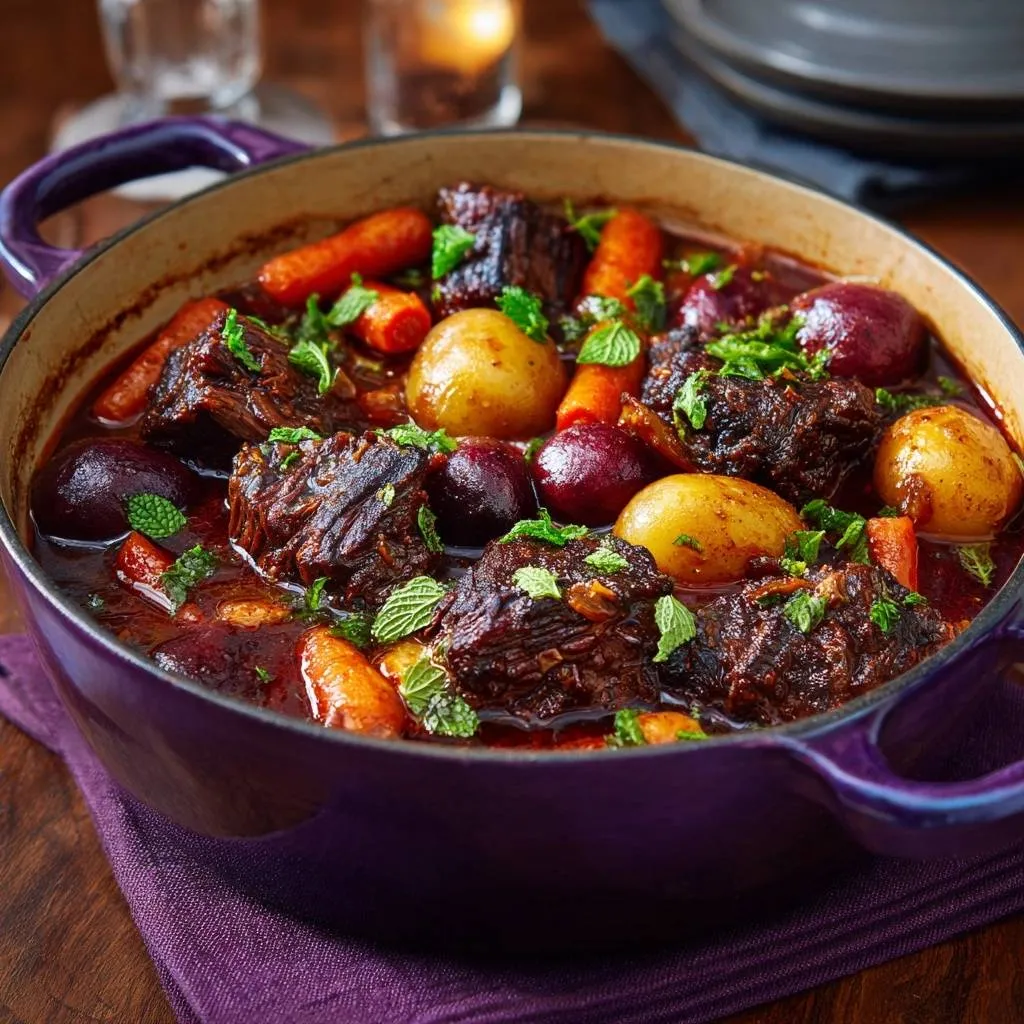
Here’s why it works so well. First, you sear the beef hot to create a crust that locks in juices. Then, low slow braising turns tough collagen into silky gelatin. In addition, the beets add earthy sweetness, carrots bring natural sugars, and potatoes thicken the gravy perfectly.
The real secret? Pat the beef completely dry before searing. That step prevents steaming and builds the deep flavor foundation. Oh man, the first bite melts in your mouth, rich and comforting like a hug on a chilly evening.
Key Ingredients for Tender Braised Beef
Beef chuck forms the star of this braised beef with beets, carrots and potatoes. Its marbling breaks down into tender, juicy bites during braising. Therefore, skip leaner cuts; they dry out fast.
Beets bring vibrant color and subtle sweetness that balances the beef’s richness. Fresh ones stain the broth beautifully, unlike jarred versions that taste vinegary. In addition, carrots’ natural sugars caramelize in the fond for extra depth.
Baby potatoes absorb all the flavors without turning mushy. Halve the larger ones for even cooking. Olive oil handles the high sear heat better than butter, which burns easily. Finally, fresh mint at the end cuts through the richness with bright notes.
Beef Chuck: Choosing the Right Cut
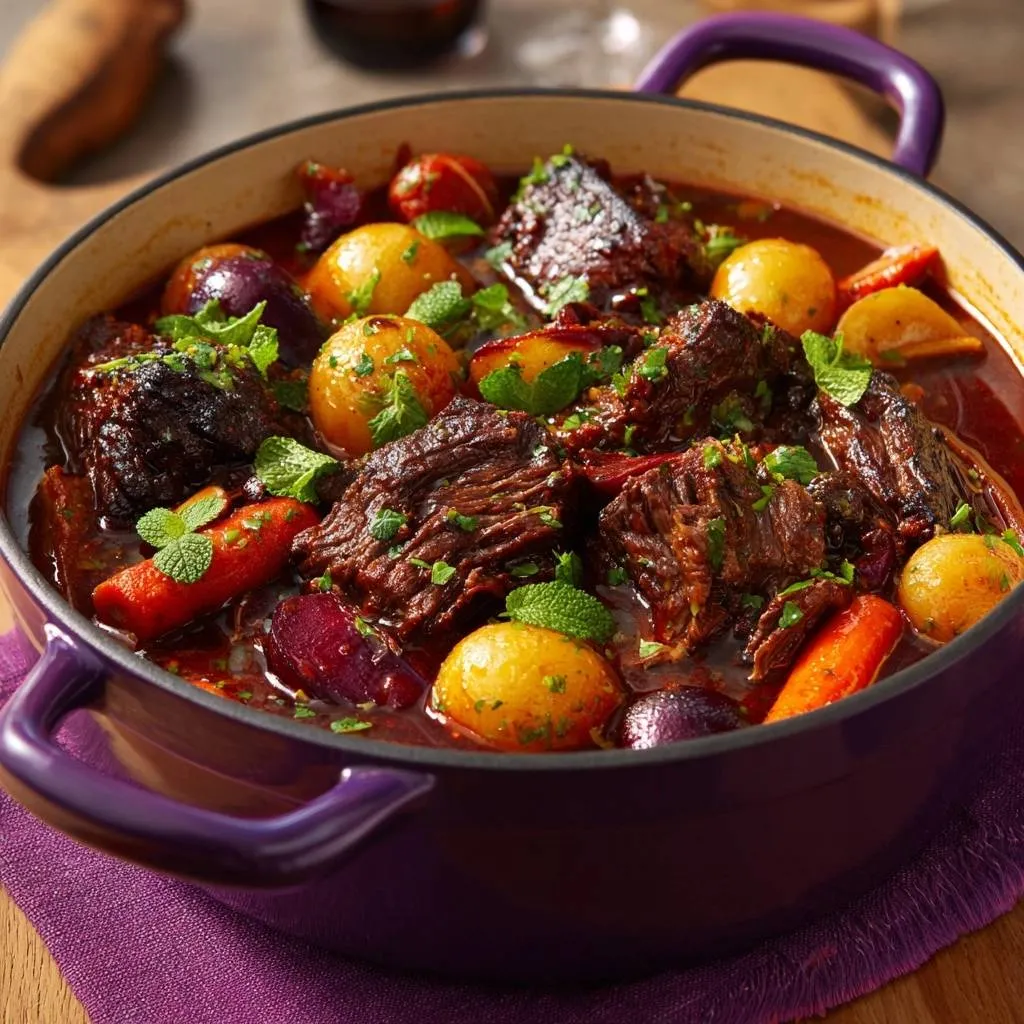
Cut chuck into 2-inch cubes for braised beef with beets, carrots and potatoes. The fat content melts into gelatin, tenderizing the meat. Leaner cuts like sirloin stay tough no matter how long you cook them.
Root Vegetables: Beets, Carrots, Potatoes Balance
Beets stain everything a gorgeous red while adding earthiness to braised beef. Carrots hold their slight crunch and sweeten the pot. Potatoes release starch to thicken the gravy naturally, creating perfect balance.
Science of Tender Braised Beef with Beets
The magic in braised beef with beets, carrots and potatoes comes from collagen turning to gelatin at low heat. Around 300°F, connective tissue breaks down over 2 hours. However, boiling toughens it by squeezing out moisture.
Searing triggers the Maillard reaction, browning proteins for nutty flavor. Those browned bits, or fond, dissolve into the broth, boosting the veggies. In addition, beets’ mild acidity helps tenderize further.
Oven braising beats stovetop because it distributes heat evenly. No hot spots mean consistent tenderness. Pro tip: always scrape up the fond when adding broth; it packs all the flavor.
Searing: Locking Juices in Beef Cubes
Pat beef dry to avoid steaming during the sear. High heat contracts surface proteins, forming a crust that traps juices. Therefore, you get rich flavor instead of gray, boiled meat.
Braising: Collagen Melts into Gelatin
A tightly sealed pot at 300°F creates steam pressure that dissolves collagen. No stirring keeps the seal intact. As a result, beef shreds easily after 2 hours.
Essential Equipment for Braised Beef Success
A Dutch oven shines for braised beef with beets, carrots and potatoes. Its thick cast iron retains heat evenly, preventing scorching. Thin pots lead to uneven cooking and burnt spots.
Go for a 5-7 quart size with a tight lid. That seal traps moisture for perfect braising. If you lack one, a heavy lidded pot works, but check temps more often.
No need for fancy thermometers, but preheat your oven accurately. Slow cooker alternative? Use low for 6-8 hours after searing on stovetop first.
Dutch Oven: Heat Distribution Key
Pick a 5-7 quart enameled cast iron Dutch oven. The heavy lid seals in steam perfectly. This ensures even braising for tender beef and veggies.
Step-by-Step: Searing Beef for Braised Dish
Pat 2 pounds of beef chuck cubes dry with paper towels. Season generously with salt and pepper. This dryness is crucial; wet beef steams instead of browns.
Heat 1/4 cup olive oil in your Dutch oven over medium-high until shimmering, about 2 minutes. Sear beef in batches, 8-10 minutes per batch, turning for deep brown on all sides. Crowding causes steaming, so don’t do it.
Remove beef to a plate; keep those juices. You’ll smell incredible caramelized aromas. Pro tip: the crust builds flavor compounds that make the final dish sing.
Building Flavor Base with Vegetables
Drop heat to medium. Add 4 chopped carrots, 1 pound quartered beets, and 1 pound halved baby potatoes. Stir 3 minutes to coat in the fond; those browned bits dissolve for max flavor.
You’ll see the veggies glisten with beefy goodness. Scrape the pot bottom gently as you stir. This step infuses every braised beef with beets, carrots and potatoes bite with depth.
Braising Phase: Oven Method for Perfection
Return beef and juices to the pot. Pour in 4 cups beef broth until ingredients are just covered; add water if short. Bring to a simmer, scraping up every bit of fond.
Cover tightly and slide into a 300°F oven for 2-2.5 hours. Beef is done when it shreds with a fork. No peeking; it releases steam and dries the dish.
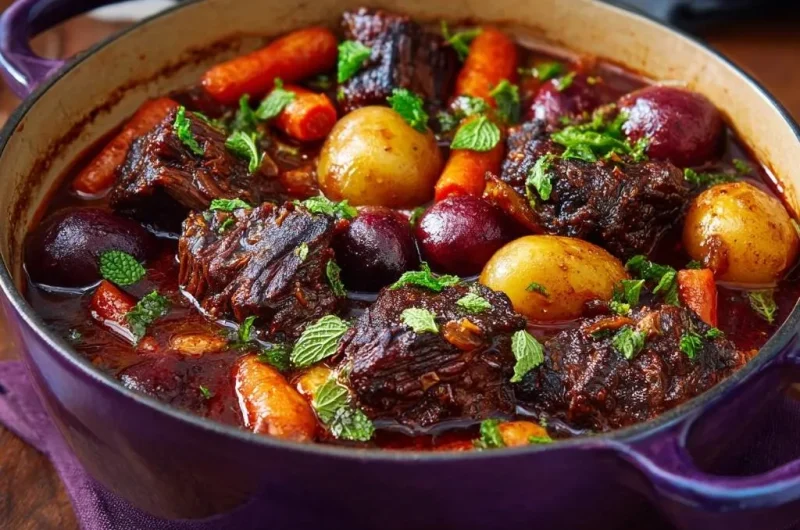
Taste, adjust salt, and garnish with fresh mint. The bright green pops against the rich red stew. Stovetop option works on low, but stir occasionally and watch the heat.
If you enjoy the root vegetables here, you might also like the sweetness in carrot raisin apricot muffins.
Monitoring Without Disturbing Seal
Avoid lifting the lid; it lets vapor escape and toughens the braise. Check at 2 hours with a quick fork test through a small gap if needed. Trust the timer for best results.
Avoiding Pitfalls in Braised Beef Recipes
Overcrowd the sear, and your braised beef with beets turns gray and steamed. Always batch it. Insufficient broth leads to dry meat, so cover ingredients fully.
High oven temps above 325°F toughen connective tissue. Stick to 300°F. Cut veggies uniformly; big chunks stay crunchy while small ones mush.
Salt early on beef, but taste broth before baking. Fixes for overcooked roots? Add fresh ones next time or pull early.
Fixing Undercooked Beef Cubes
If beef resists the fork at 2.5 hours, braise 30 minutes more. Add a splash of broth if low. It will tenderize fully without drying out.
Preventing Mushy Potatoes or Beets
Halve large baby potatoes and quarter small beets evenly. Add them after searing to control cook time. Firm cuts hold shape in the braise.
Make-Ahead and Storage for Braised Beef
Cool braised beef with beets, carrots and potatoes quickly after cooking. Store in an airtight container in the fridge up to 4 days. Flavors deepen overnight, so it’s even better reheated.
Freeze in portions with broth for 3 months. Thaw overnight and reheat gently on stovetop with a lid. Avoid microwaving; it toughens the beef.
Batch cook for easy meals. Pro tip: skim excess fat after chilling for a cleaner gravy next day.
Flavor Twists on Braised Beef with Roots
Swap parsnips for carrots in braised beef with beets; they add nutty sweetness. Thyme or rosemary boosts earthiness over mint. Garlic cloves roast beautifully in the pot.
For vegan, use mushroom chunks instead of beef; they soak up broth like sponges. Add a splash more broth if needed. These tweaks keep it fresh.
Pairing Sides with Braised Beef Dish
Serve braised beef with beets, carrots and potatoes alongside crusty bread to sop up the gravy. A crisp green salad cuts the richness perfectly.
Yogurt-dill sauce adds cool tang. Sparkling cranberry juice pairs great with the earthiness. Keep sides simple to let the main shine.
Common Questions on Braised Beef Braising
Can I Use a Slow Cooker?
Yes, sear beef first on stovetop. Add veggies and broth to slow cooker. Cook low 6-8 hours until fork-tender. It works well but lacks oven’s crust intensity.
Nutrition in This Root Vegetable Beef Braise?
Beef provides iron and protein. Beets and carrots pack vitamins A and C for immunity. Potatoes add potassium and fiber, making braised beef with beets nutritious and filling.
How Do I Store Leftovers?
Cool completely, then refrigerate in an airtight container up to 4 days. Freeze portions with broth for 3 months; thaw in fridge. Reheat gently on stovetop with a splash of broth to restore tenderness.
Why Is My Beef Still Tough?
Tough beef usually means insufficient braise time or high heat. Extend to 2.5-3 hours at 300°F. Always sear dry first; wet beef steams and stays chewy. Collagen needs low slow conversion to gelatin.
What Can I Substitute for Beets?
Try turnips or more carrots for earthiness without staining. They braise similarly and balance flavors. Avoid jarred beets; fresh roots hold texture better in braised beef.
Can I Make This Gluten-Free?
Absolutely, it’s naturally gluten-free. Use gluten-free beef broth and check your olive oil. Potatoes thicken without flour, so no changes needed for safe eating.
Braised Beef
Course: Main CourseCuisine: AmericanDifficulty: medium6
servings20
minutes2
hours30
minutes550
kcal170
MinutesTired of chewing through tough beef in stews? This recipe nails fork-tender results every time with a simple high-heat sear followed by low-slow braising that breaks down tough connective tissue without fancy gear.
Ingredients
2 pounds beef chuck, cut into 2-inch cubes
1 pound baby potatoes, halved if large
4 large carrots, peeled and cut into 2-inch chunks
1 pound small beets, peeled and quartered
1/4 cup olive oil
4 cups beef broth
Salt and black pepper to taste
Fresh mint leaves for garnish
Directions
- Pat beef cubes completely dry with paper towels. This is key for the sear that locks in juices and jumpstarts tenderness. Season generously with salt and pepper.
- Heat olive oil in a large Dutch oven over medium-high heat until shimmering hot (about 2 minutes). Working in batches to avoid crowding, sear beef on all sides until deeply browned, 8 to 10 minutes total per batch. Remove to a plate. This high-heat crust creates flavor compounds and tenderizes by contracting proteins.
- Reduce heat to medium. Add carrots, beets, and potatoes to the pot. Stir 3 minutes to coat in beef fond (browned bits).
- Return beef and any juices to pot. Pour in beef broth until just covering ingredients (add water if needed). Bring to a simmer, scraping up browned bits.
- Cover tightly and transfer to a 300°F oven (or simmer on stovetop over low heat). Braise undisturbed for 2 to 2.5 hours until beef shreds easily with a fork. No peeking, no stirring, the sealed low heat melts collagen into gelatin for unbeatable tenderness.
- Taste and adjust salt. Garnish with fresh mint. Serve hot.
Notes
- Pat beef completely dry before searing for best results. No peeking or stirring during braising to ensure tenderness.