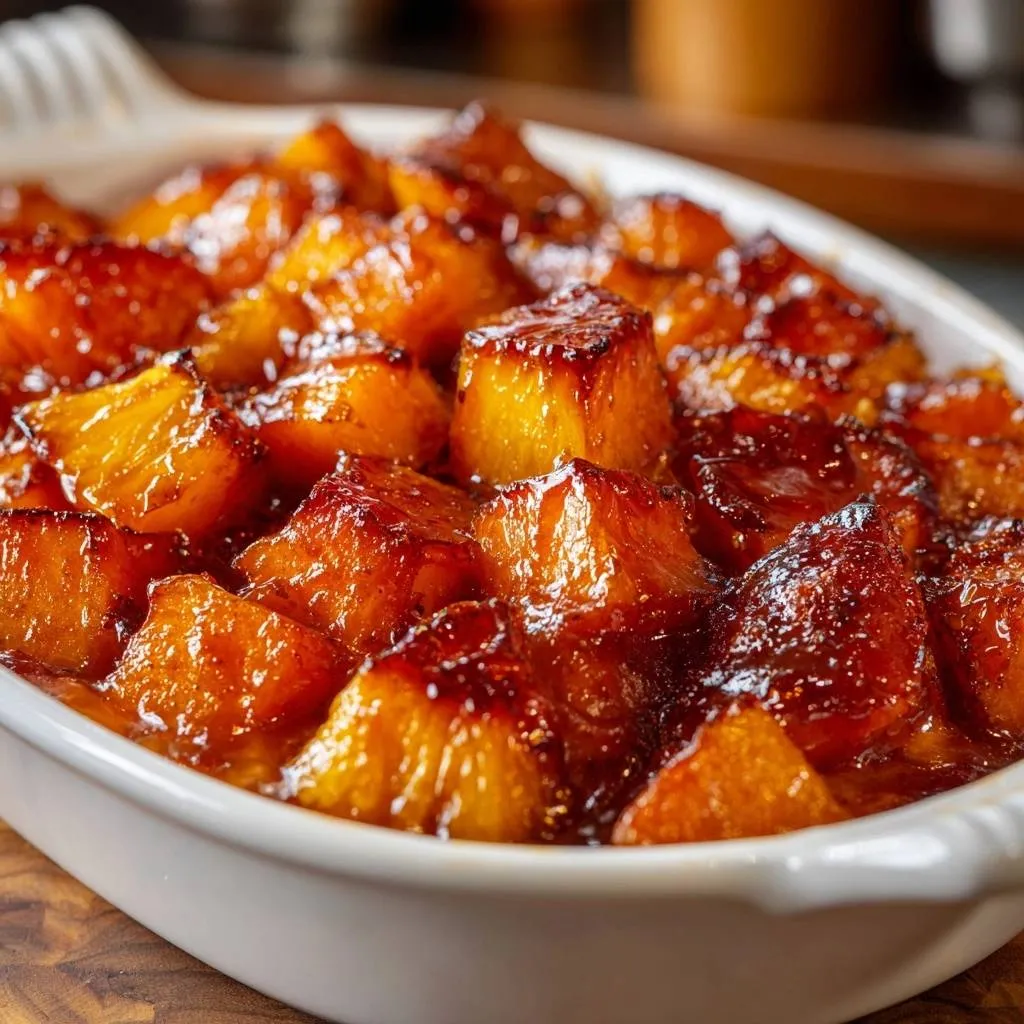
Ever pulled a pan of baked pineapple from the oven only to find a watery puddle instead of caramelized bliss? This brown sugar glazed baked pineapple fixes that frustration fast. You get firm, glossy chunks with edges that crisp up perfectly, thanks to a simple maceration and drain step. No more soggy messes.
Here’s why it works every time. The sugar pulls out excess pineapple juice before baking, so heat caramelizes the glaze instead of steaming everything. You’ll end up with that shiny, sticky coating that screams dessert or side dish perfection. Serve it warm over yogurt for breakfast or alongside grilled chicken for dinner.
The real secret lies in pressing out every drop after those 15 minutes. That one move concentrates flavors and delivers deep caramelization at 400 degrees F. Trust me, your kitchen will smell like tropical heaven.
For those who appreciate precise cuts, try our glazed pumpkin walnut donuts for similarly controlled texture.
Why Brown Sugar Glazed Baked Pineapple Succeeds
Standard baked pineapple recipes fail because fresh fruit releases tons of juice in the oven. Therefore, you get a soupy dish instead of caramelized bites. This method uses maceration to draw out moisture upfront.
More Sweet and Savory Ideas
To complement your brown sugar glazed baked pineapple, consider these recipes.
- For a breakfast treat that echoes the sweet spices, try these Apple Cinnamon Roll Pancakes.
- If you enjoy pineapple’s sweet and tangy notes in savory dishes, these Sticky Pineapple Glazed Chicken Wings offer a similar flavor profile.
In addition, brown sugar plays a starring role. Its molasses content melts into a thick glaze that clings beautifully once the liquid’s gone. You’ll notice the difference immediately: firm texture versus mush.
However, skipping the drain keeps things watery. This recipe contrasts sharply with no-prep versions. You achieve glossy, edge-browned perfection that holds up as a side or dessert topper.
Overcoming Soggy Baked Pineapple Challenges
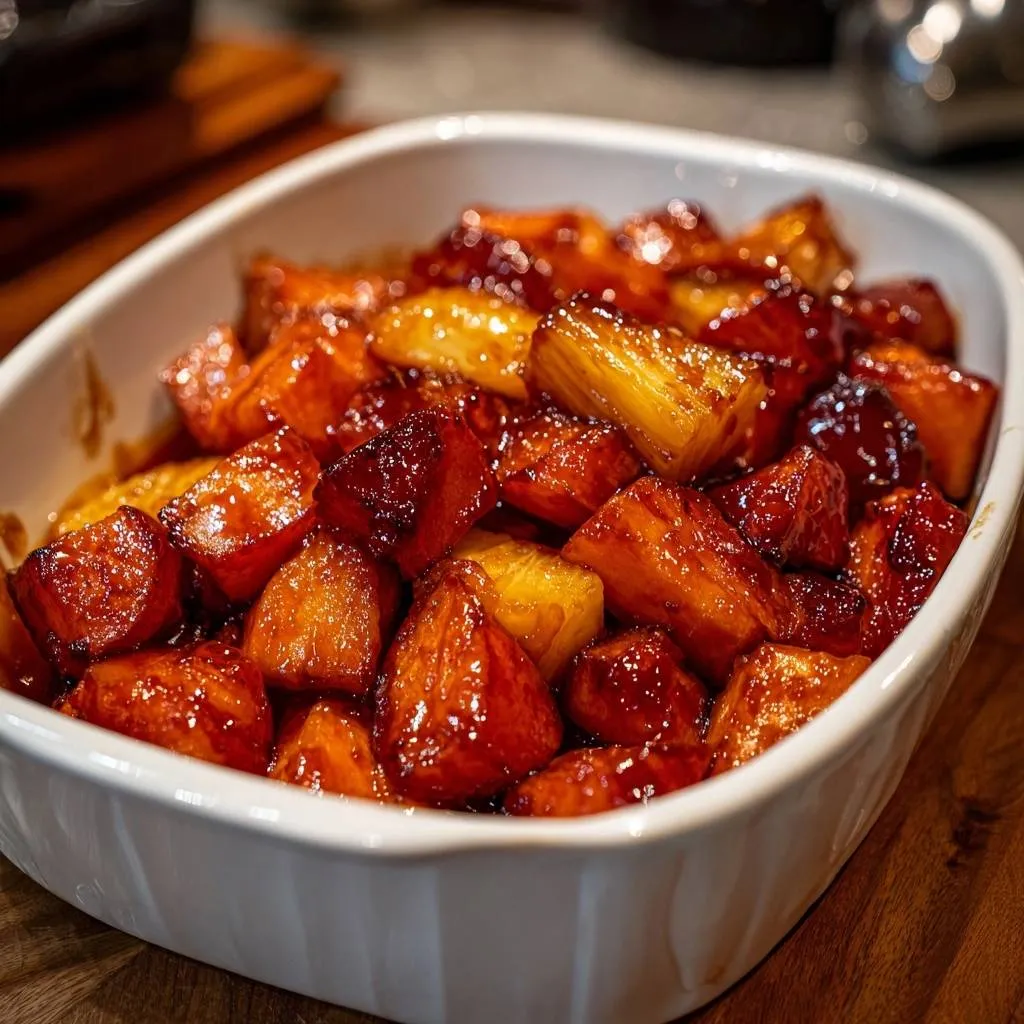
Common pitfalls hit when pineapple’s natural juices flood the pan. Therefore, edges stay pale, and the whole thing tastes diluted. Successful batches show deep golden caramel and a bubbly glaze.
Visually, failures look steamed and pale. In contrast, winners boast shiny, firm chunks with crisp tips. Taste-wise, it’s concentrated sweetness versus bland wetness.
Role of Maceration in Texture Perfection
Start by tossing pineapple with sugar, cinnamon, vanilla, and salt. The sugar triggers osmosis, pulling water from the fruit cells. After 15 minutes, you see a pool of juice form.
This simple science keeps things straightforward. Therefore, your chunks stay firm during baking. No fancy equipment needed, just patience for perfect results.
Key Ingredients for Brown Sugar Glazed Baked Pineapple
Fresh pineapple delivers the best results because it’s firmer and less watery than canned. Therefore, 2 pounds peeled and chunked gives about 5 cups of 1-inch pieces. Brown sugar melts smoothly for glaze, while butter coats evenly.
In addition, cinnamon adds warmth that pairs with pineapple’s acidity. Vanilla boosts aroma, and salt sharpens everything. Use packed brown sugar for its moisture-loving molasses.
Pick ripe pineapple by its sweet smell and slight give. Unsalted butter prevents overseasoning. These choices ensure emulsification and flavor balance every time.
Selecting Ripe Pineapple Chunks
Choose a pineapple with golden skin and a fruity scent. Peel, core, and cut into uniform 1-inch chunks for even baking. You’ll yield around 5 cups from 2 pounds.
Uniformity matters here. Therefore, smaller pieces cook faster, but 1-inch keeps texture intact.
Brown Sugar and Butter Glaze Components
Pack 1/2 cup brown sugar tightly; its molasses gives deeper flavor than white sugar. Melt 1/4 cup unsalted butter to coat without salting the dish extra.
Therefore, the glaze thickens perfectly. Unsalted keeps control over the pinch of salt later.
Spice and Extract Essentials
One teaspoon cinnamon warms the fruit’s tang. Vanilla extract adds floral notes, while a pinch of salt balances acidity. Together, they elevate the natural pineapple sweetness.
Science of Caramelization in Baked Pineapple
At 400 degrees F, sugars undergo the Maillard reaction with pineapple’s amino acids. Therefore, you get those nutty, browned flavors. Draining first prevents steaming, allowing dry heat for caramel.
In addition, bubbles form as glaze reduces. Watch for deep edges after 30 minutes. Cooling sets the sticky shine.
However, excess moisture blocks this. That’s why the maceration step shines. Your result? Glossy perfection.
Moisture Extraction via Maceration
Sugar’s hygroscopic nature draws juice via osmosis. Toss and wait 15 minutes; press in a colander to remove it all. Discard the liquid to concentrate pineapple flavors.
This maximizes drainage. Therefore, baking focuses on caramel, not evaporation.
Heat-Driven Glaze Thickening Process
Bake 30 to 35 minutes uncovered. Stir halfway at 15 minutes for even caramel on all edges. Bubbles and deep color signal doneness; cool 5 minutes to set.
Preparing Brown Sugar Glazed Baked Pineapple Step-by-Step
Total time runs about 50 minutes, with 15 minutes hands-off macerating. Preheat oven early to 400 degrees F. Follow steps closely for glossy results.
Pro tip: Taste the drained pineapple; it’s already sweet. Therefore, no extra sugar needed post-drain.
Macerate Pineapple for Juice Release
Toss 1-inch pineapple chunks in a bowl with brown sugar, cinnamon, vanilla, and salt. Let sit 15 minutes. You’ll see juices pool, softening the fruit slightly.
This order matters first. Therefore, spices infuse evenly.
Drain and Butter Coat Thoroughly
Drain in a colander, pressing gently with a spoon. Return to bowl, add melted butter, and toss. Discard juices to avoid sogginess.
Even coating here ensures glossy bites. Press firmly but don’t crush chunks.
Bake to Caramelized Perfection
Spread evenly in a 2-quart dish. Bake uncovered at 400 degrees F for 30 to 35 minutes, stirring once midway. Edges bubble and brown deeply.
Cool 5 minutes. Therefore, glaze thickens perfectly.
Equipment Choices for Baked Pineapple Success
A 2-quart oven-safe dish provides ideal surface area for evaporation. Glass conducts heat evenly, promoting caramel. Use a large bowl for tossing and a standard colander.
No fancy tools required. However, avoid overcrowding; it traps steam. A sheet pan works too for crispier edges.
Oven-Safe Baking Dish Impact
Two-quart size fits 5 cups snugly for even heat. Glass retains warmth steadily. Sheet pans increase surface for faster caramel but watch closely.
Avoiding Mistakes in Brown Sugar Glazed Baked Pineapple
Top errors include skipping drainage, leading to soup. Overpacking causes steaming, not browning. Low oven temp prevents caramelization.
Fixes? Always drain thoroughly. Stir halfway, and hit 400 degrees F. Visual cues like pale edges mean more time.
Therefore, follow the press step religiously. Your reward is firm, shiny pineapple.
Skipping Drainage Pitfalls
No drain means watery glaze and pale fruit. Press chunks gently in colander to squeeze out juice. This step transforms potential failure into success.
Overbaking and Stirring Errors
Overbaking dries edges; understirring leaves spots raw. Stir at 15 minutes for even exposure. Bubbly, golden means perfect.
Flavor Variations for Brown Sugar Glazed Baked Pineapple
Swap in 1/2 teaspoon ginger for spice kick. Add toasted coconut flakes post-bake for crunch. Coconut sugar works for milder sweetness.
In addition, reduce sugar by 2 tablespoons for lighter version; core method stays. These tweaks keep caramel magic intact.
However, test add-ins sparingly. Pineapple’s acidity shines through.
Spiced and Nutty Adaptations
Add ginger with cinnamon for zing. Sprinkle chopped toasted pecans after baking for nutty contrast. Keeps texture firm and adds crunch.
Sugar and Extract Twists
Swap half brown sugar for coconut sugar. Use maple extract instead of vanilla for woodsy notes. Maintain drain for best glaze.
Pairing Ideas for Brown Sugar Glazed Baked Pineapple
As a side, it contrasts grilled chicken or turkey beautifully. The sweet glaze balances savory meats. Serves 6 at 3/4 cup each.
For dessert, spoon over yogurt or ice cream. Therefore, warm pineapple melts toppings into joy. Holiday roasts love it too.
For another sweet bake with a beautiful glaze, check out these salted caramel apple turnovers.
Savory Mains and Sides
Pair with grilled chicken for sweet-savory pop. Balances veggie plates or rice bowls. Tang cuts richness perfectly.
Dessert and Breakfast Uses
Top oatmeal or pancakes warm. Layer in yogurt parfaits. Turns breakfast into tropical treat.
Common Questions on Brown Sugar Glazed Baked Pineapple
Can I Use Canned Pineapple?
Yes, but drain and rinse chunks thoroughly first. Canned is softer, so reduce bake to 25 minutes. Fresh still wins for firmness and flavor.
How to Store Leftovers?
Keep in an airtight container in the fridge up to 4 days. Reheat at 350 degrees F for 10 minutes to revive crisp edges. Freezes well up to 2 months; thaw overnight and reheat.
Make It Vegan?
Swap butter for coconut oil, melted. All else stays the same. Oil’s solidity mimics butter for great glaze.
Scaling for Larger Batches?
Double ingredients for 12 servings; use 4-quart dish. Add 5 to 10 bake minutes. Don’t overcrowd for even caramel.
Why Drain the Maceration Juice?
Draining prevents sogginess and steaming. It lets glaze caramelize thickly. Use juice in smoothies or sparkling cranberry juice if you like.
Baked Pineapple
Course: DessertCuisine: AmericanDifficulty: easy4
servings20
minutes35
minutes250
kcal55
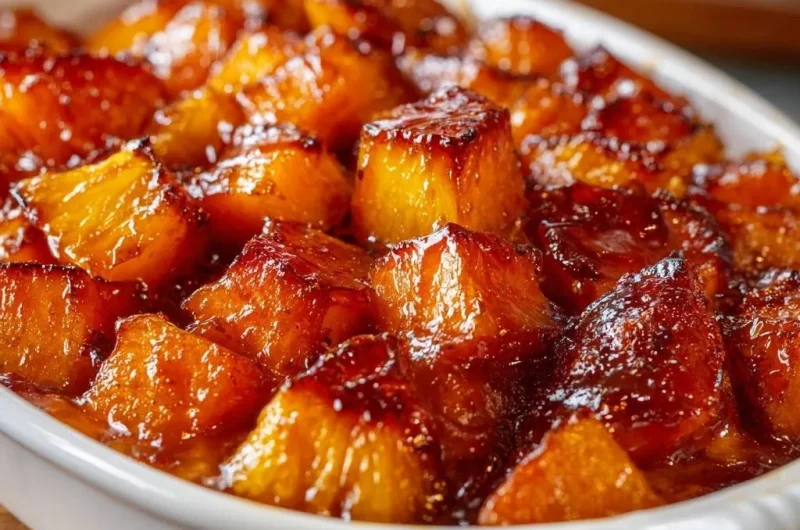
MinutesBaked pineapple often releases too much juice, leaving you with a soggy mess. This recipe solves it with a quick maceration and drain step that draws out excess moisture for firm, glossy chunks every time.
Ingredients
2 pounds fresh pineapple, peeled, cored, and cut into 1-inch chunks
1/2 cup packed brown sugar
1/4 cup unsalted butter, melted
1 teaspoon ground cinnamon
1 teaspoon vanilla extract
Pinch of salt
Directions
- In a large bowl, combine pineapple chunks, brown sugar, cinnamon, vanilla, and salt. Toss well and let sit for 15 minutes. This maceration draws out the pineapple’s excess juices.
- Preheat oven to 400 degrees F.
- Drain the pineapple thoroughly in a colander, pressing gently with a spoon to remove as much liquid as possible. This is the key step: it prevents watery results and lets the glaze caramelize perfectly. Discard the drained juices.
- Return drained pineapple to the bowl. Add melted butter and toss to coat evenly.
- Spread pineapple in an even layer in an oven-safe 2-quart baking dish.
- Bake uncovered for 30 to 35 minutes, stirring once halfway through, until edges are deeply caramelized and glaze is thick and bubbly.
- Let cool for 5 minutes before serving warm. Perfect as a side or dessert topping!
Notes
- Drain thoroughly after maceration to prevent watery results and achieve perfect caramelization. Serve warm as a side dish or dessert topping.