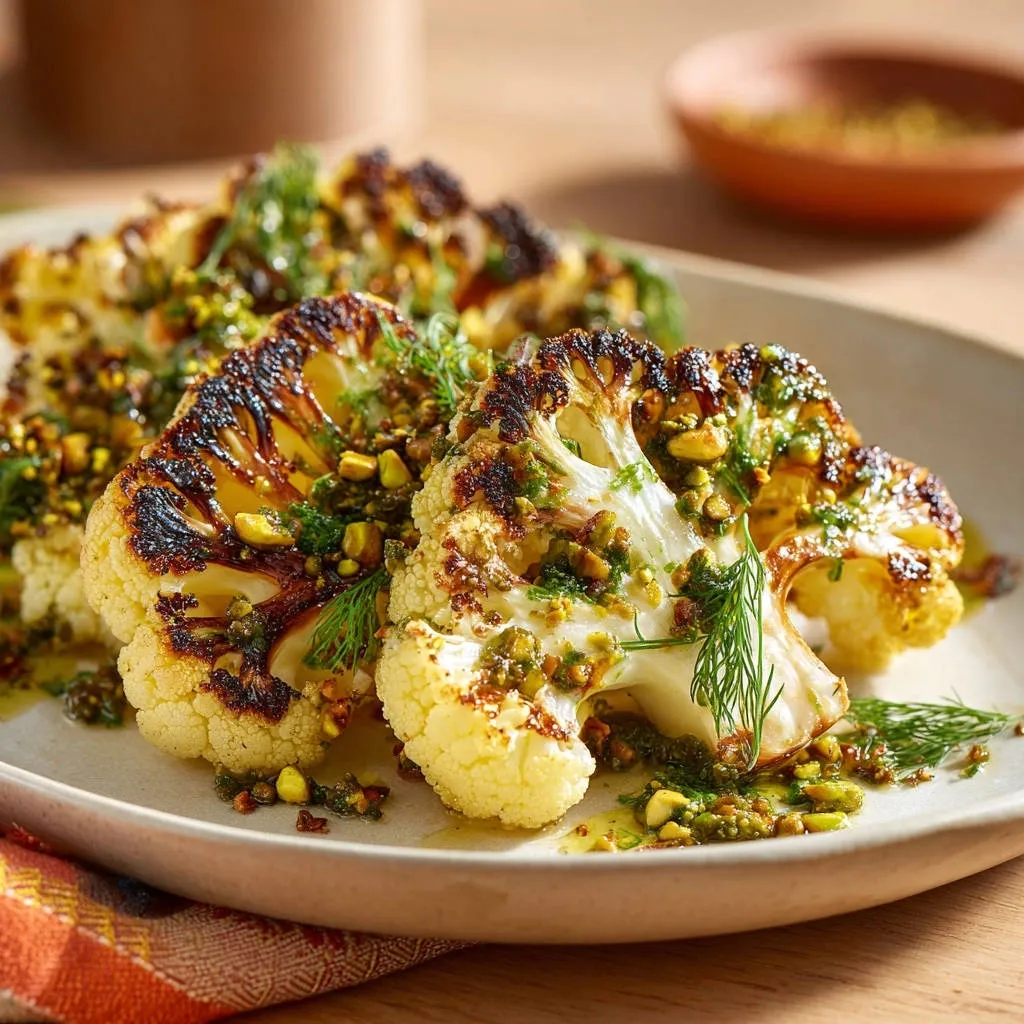
If you’ve struggled to roast thick vegetable steaks that are golden brown on the outside yet still raw and crunchy in the middle, you are definitely not alone. I cracked the code using a simple dual-phase method, ensuring every bite of these Caramelized Cauliflower Steaks with Pistachio Dill Vinaigrette is deeply tender and perfectly caramelized.
This “Tender Core Secret” transforms a humble head of cauliflower into an elegant, foolproof centerpiece that boasts incredible depth of flavor and texture.
Beyond Basic Roasting: Why This Cauliflower Steaks Recipe Is Foolproof
This method moves beyond basic sheet pan roasting by utilizing steam, guaranteeing restaurant-quality tenderness without sacrificing that coveted charred exterior.
The End of Raw Centers: The initial 15-minute cover-and-steam technique traps moisture and gently pre-cooks the dense interior of the cauliflower. This means the core is already tender before the high-heat phase even begins.
Maximum Flavor Penetration: The two-phase process separates cooking from caramelizing. We achieve a soft texture first, then transition to intense, high-heat roasting that creates rich savory depth and delicious charring on the surface.
A Vinaigrette That Pops: The complementary brightness and essential crunch provided by the Pistachio Dill Vinaigrette cuts through the deep, earthy richness of the roasted vegetable. Pistachios provide necessary texture, while dill provides freshness.
Elegance Meets Efficiency: By serving the cauliflower in thick, hearty slices-vegetable steaks-you transform an everyday side dish into a sophisticated centerpiece or high-impact vegetarian main meal.
The Building Blocks of Flavor: Essential Ingredients List
Selecting and Prepping the Perfect Cauliflower Head
Focus on choosing a large, firm head with tightly packed florets that feels heavy for its size.
Size and density are crucial because they allow you to slice sturdy, thick steaks that hold their shape impeccably during the rigorous roasting process.
The Roasting Essentials: Oil, Salt, and Pepper
Using the specified 3 tablespoons of olive oil is important for effective surface contact, creating a protective layer, and achieving even, deep caramelization.
Roasted vegetables generally require a generous hand with salt and pepper to truly enhance their natural sweetness and depth.
Building the Bright, Nutty Pistachio Dill Vinaigrette
The vinaigrette is essential for textural contrast and brightness against the rich, dark caramelization of the vegetable.
Pistachios (Shelled): These provide the necessary textural contrast-a wonderful, crunchy foil to the soft cauliflower interior. Rough chopping the nuts ensures noticeable texture in every bite.
Fresh Dill Fronds: This is the essential herbaceous component; using only fresh dill is critical for achieving the vinaigrette’s signature vibrant, clean flavor that cuts the richness.
Lemon Juice: The balancing acidity instantly wakes up the flavor profile. It cuts through the oil and earthiness of the roasted vegetable, making the dish feel fresh and light.
For a different take on a tender core, explore perfectly tender-crisp roasted cauliflower steaks.
Extra Virgin Olive Oil (Vinaigrette): A high-quality finishing oil is highly recommended for the dressing. It provides a distinct, fruitier note than the standard olive oil used for the high-heat roasting phase.
Essential Tools for Mastering the Caramelized Cauliflower Steaks
While the recipe is simple, having the right equipment ensures clean cuts and even heating, which is fundamental to the “Tender Core Method.”
The Sharp Chef’s Knife: Necessary for clean, vertical slices through the dense core of the cauliflower head. A dull knife will cause the florets to crumble.
Heavy-Duty Baking Sheet: A quality pan ensures even heat distribution across the surface, which is vital for consistent caramelization during both the steaming and roasting phases.
Aluminum Foil: The secret weapon for the Tender Core Method-stress the importance of sealing the pan tightly. The foil creates a closed environment for steam.
Small Bowl and Whisk: Essential for quickly emulsifying the oil and acid for the vinaigrette base before gently folding in the chopped nuts and herbs.
The Tender Core Technique: Step-by-Step Guide to Perfection
This two-phase approach guarantees a perfect balance of tenderness inside and deep caramelization outside.
-
Preparation and Precision Slicing:
Set your oven to 400°F. Trim the base of the cauliflower slightly but ensure the dense core remains completely intact, as this holds the steaks together.
Guide the knife vertically, slicing 1 to 1.5 inch thick steaks directly through the center of the core. The remaining outer florets can be tossed and roasted alongside the steaks.
-
Seasoning and Sealing (The Critical Step):
Thoroughly rub the steaks on all sides with the 3 tablespoons of olive oil, salt, and pepper until well coated. Place them directly onto the baking sheet.
Tightly covering the baking sheet with heavy-duty aluminum foil locks in all the moisture. This creates a powerful steam environment, ensuring the dense interior begins to cook immediately without the exterior burning.
-
Phase One: Initial Tenderizing Roast (Steam):
Roast the fully covered steaks for exactly 15 minutes at the initial 400°F setting.
This initial steaming guarantees a tender center before we expose the vegetable to the high heat needed for intense caramelization later on.
-
Phase Two: High-Heat Caramelization:
Remove the baking sheet and carefully peel back the foil, allowing the steam to escape safely. Immediately increase the oven temperature to 425°F.
Achieving that tender core is key, and for more on this technique, check out how to roast cauliflower steaks.
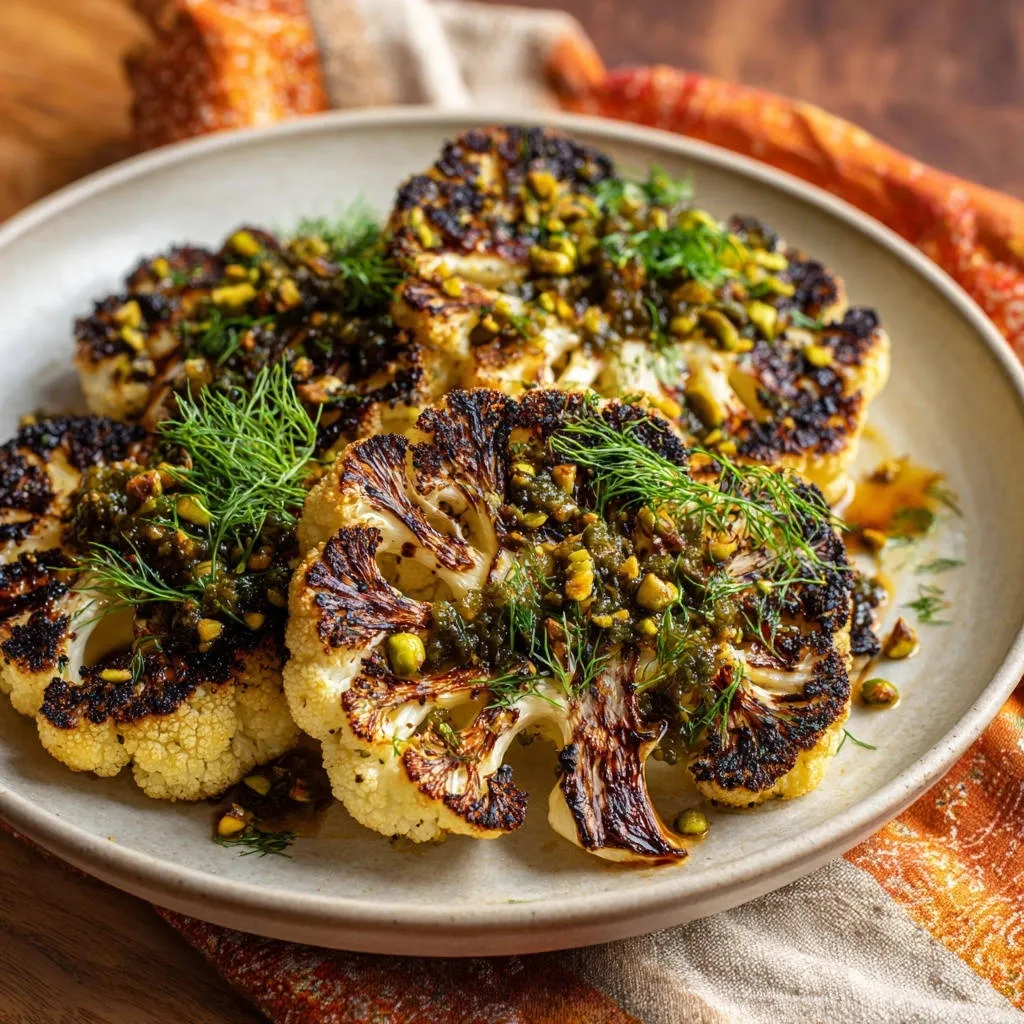
Return the uncovered steaks to the hotter oven and roast for an additional 15 to 25 minutes, flipping them once halfway through for uniform browning. The steaks are done when they are deep golden brown, charred in spots, and a fork slides easily through the center without resistance.
-
Constructing the Pistachio Dill Vinaigrette:
While the steaks finish roasting, whisk the EVOO, lemon juice, minced garlic, and a pinch of salt until slightly emulsified and cloudy.
Gently fold in the fresh pistachios and dill last to maintain their vibrant color, fresh aroma, and crisp texture.
-
Finishing and Presentation:
Remove the finished steaks from the oven and transfer them immediately to a serving platter.
Spoon the bright, nutty vinaigrette generously over the warm Caramelized Cauliflower Steaks with Pistachio Dill Vinaigrette. Serving them warm maximizes flavor absorption into the porous, caramelized surface.
Chef’s Secrets: How to Elevate Your Cauliflower Steaks Game
These professional tips ensure your vegetable steaks are as flavorful and visually stunning as possible.
Maximize the Flavor Crust
For an extra crispy exterior and deeper caramelization, always ensure the cauliflower steaks are patted completely dry with a paper towel before oiling and seasoning.
Moisture on the surface inhibits the Maillard reaction, which is the chemical process needed for achieving that essential deep brown, savory crust.
Adjusting Vinaigrette Consistency
If the vinaigrette is too thick, thin it slightly with a teaspoon of hot water or additional lemon juice for brightness.
If it is too runny, a small amount of Dijon mustard (not listed in ingredients but highly recommended) can be whisked in to help naturally bind and emulsify the oil and acid.
Handling High Heat Safely
The steam trapped during the first roast is extremely hot and pressurized. When removing the foil, stand back and lift the edge away from your face and hands to prevent steam burns.
Make it a Main Course (The Protein Boost)
To turn this impressive dish into a complete meal, scatter toasted chickpeas, white beans, or generous crumbles of salty feta cheese over the steaks immediately after adding the vinaigrette.
Troubleshooting Your Roasting: Fixing Common Mistakes
Problem: The Steaks Are Crunchy in the Center
Solution: This occurs when the initial steaming phase was ineffective. You likely didn’t seal the foil tightly enough around the edges of the pan, allowing the essential steam to escape.
Ensure the foil creates a snug tent, pressing the edges down to trap the necessary moisture needed for pre-cooking the dense interior.
Complementary Flavors
Explore more dishes featuring cauliflower and vibrant vegetable combinations.
- For a similar roasted cauliflower experience with a crispy finish, try the Roasted Cauliflower & Chickpea Flatbread.
- If you enjoy sheet pan cooking and hearty vegetable bowls, you’ll appreciate the Roasted Veggie and Chickpea Power Bowl.
Problem: My Remaining Florets Are Dry
Solution: The smaller remaining florets cook significantly faster than the thick steaks. If you roast them alongside, they must be checked and removed 5 to 10 minutes earlier than the steaks during the final high-heat phase.
Problem: The Pistachio Dill Vinaigrette Tastes Bitter
Solution: Bitterness usually stems from over-crushing the garlic, or sometimes excessive scraping of lemon zest into the dressing.
To remedy, whisk in a small pinch of granulated sugar or slightly more extra virgin olive oil to mellow the sharp, pungent flavors and restore balance.
Perfect Pairings: What to Serve with Caramelized Cauliflower Steaks
Because the pistachio dill vinaigrette provides a powerful combination of herbs, crunch, and acidity, it is best paired with complementary textures and balanced proteins.
Balanced Proteins: Suggest mains with neutral or simple seasoning, such as beautifully roasted chicken breast, simple grilled beef tenderloin, or flaky baked cod. These dishes allow the caramelized cauliflower steaks to provide the main flavor punch.
Textural Sides: Pair the crunchy, caramelized steaks with soft sides for contrast. Creamy polenta, smooth mashed potatoes, or a simple green salad dressed lightly with oil and vinegar work perfectly.
Make-Ahead Note: The vinaigrette is highly stable and can be made up to 2 days in advance. Store it in an airtight container in the refrigerator and stir vigorously before serving to easily re-combine the oil and herbs.
Frequently Asked Questions About Roasting Cauliflower Steaks
Can I make this recipe in an air fryer?
You can use an air fryer for cauliflower steaks, but it is challenging to achieve the full steam-then-roast effect due to airflow.
If using an air fryer, brush the steaks with oil and wrap them tightly in foil for 10 minutes at 400°F (200°C), then remove the foil and continue air frying until they are adequately caramelized.
Is it necessary to use fresh dill?
Yes, absolutely. Dried dill lacks the bright, herbaceous aroma and fresh taste that is absolutely essential for balancing the rich, caramelized flavor of the vegetable steaks.
If you cannot find fresh dill, substitute with fresh parsley or fresh tarragon, but never use dried dill in this specific vinaigrette recipe.
What makes the core stay intact when slicing?
The fibrous core acts as the natural stabilizer, a structural spine that holds the thick steak slices together during handling and roasting.
When slicing, ensure your knife passes directly through the center of the core, guaranteeing a portion of that stem structure remains attached to both halves of the slice, preventing crumbling.
Ready to Impress? Share Your Caramelized Cauliflower Steaks Masterpiece!
This Caramelized Cauliflower Steaks with Pistachio Dill Vinaigrette recipe proves that vegetable roasting doesn’t have to be a gamble, even with thick cuts.
By applying the “Tender Core Secret” method of steam-first, roast-second, you achieve perfectly tender, restaurant-quality results every single time.
We encourage you to trust the dual-phase technique and enjoy this vibrant, flavorful vegetarian dish-we’d love to see your masterpiece!
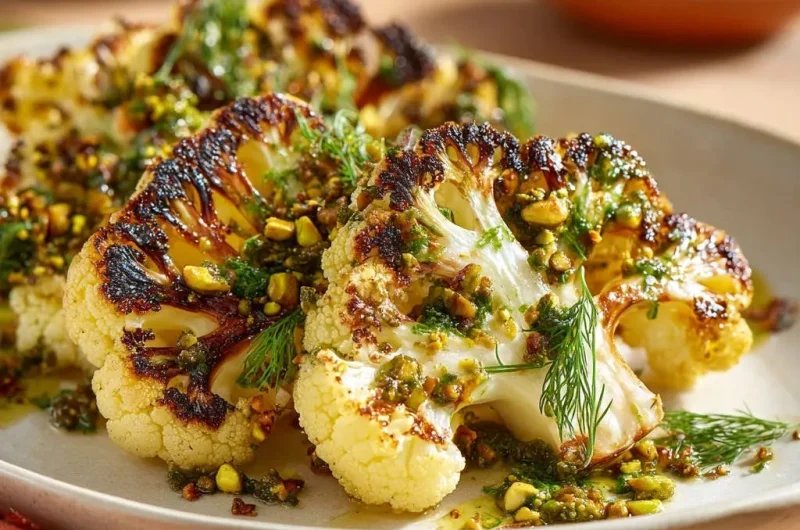
Caramelized Cauliflower Steaks
Course: Side DishCuisine: InternationalDifficulty: easy2
servings15
minutes40
minutes550
kcal55
minutesThis foolproof method uses steaming and roasting to achieve perfectly caramelized, crispy cauliflower steaks that are tender inside. Finish this gorgeous side dish with a bright, nutty pistachio dill vinaigrette.
Ingredients
1 large head of cauliflower
3 tablespoons olive oil (for steaks)
Salt and black pepper to taste
1/4 cup shelled pistachios, roughly chopped
2 tablespoons fresh dill fronds, chopped
1 tablespoon lemon juice
4 tablespoons extra virgin olive oil (for vinaigrette)
1 small clove garlic, minced (optional for depth)
Directions
- Prepare the Steaks (The Tender Core Method): Preheat your oven to 400 degrees F. Remove the outer leaves from the cauliflower. Using a large, sharp knife, trim the bottom stem slightly but keep the core intact. Stand the cauliflower up and slice it vertically into thick 1 to 1.5 inch wide steaks (you should get 2 to 4 large steaks, depending on the size of the head; remaining florets can be roasted alongside).
- Season and Seal (The Secret to Success): Rub the cauliflower steaks thoroughly with the 3 tablespoons of olive oil, salt, and pepper. Place the steaks directly on a baking sheet. Crucial Step: To ensure a tender core, cover the baking sheet tightly with foil. This traps steam and gently cooks the center without drying out the exterior prematurely.
- First Roast (Steaming): Roast the covered cauliflower steaks for 15 minutes.
- Deep Caramelization: Remove the baking sheet from the oven and carefully remove the foil. Increase the oven temperature to 425 degrees F. Return the uncovered steaks to the oven and roast for an additional 15 to 25 minutes, flipping them once halfway through. The steaks are done when the edges are deep golden brown and charred in spots, and a fork slides easily through the center.
- Prepare the Pistachio Dill Vinaigrette: While the steaks finish roasting, whisk together the 4 tablespoons of extra virgin olive oil, lemon juice, minced garlic (if using), and a pinch of salt. Stir in the chopped pistachios and fresh dill.
- Finish and Serve: Remove the steaks from the oven and transfer immediately to a serving platter. Spoon the bright, nutty pistachio dill vinaigrette generously over the warm cauliflower. Serve immediately.
Notes
- Crucial Step: Covering the steaks with foil for the first 15 minutes ensures a tender, perfectly cooked center.